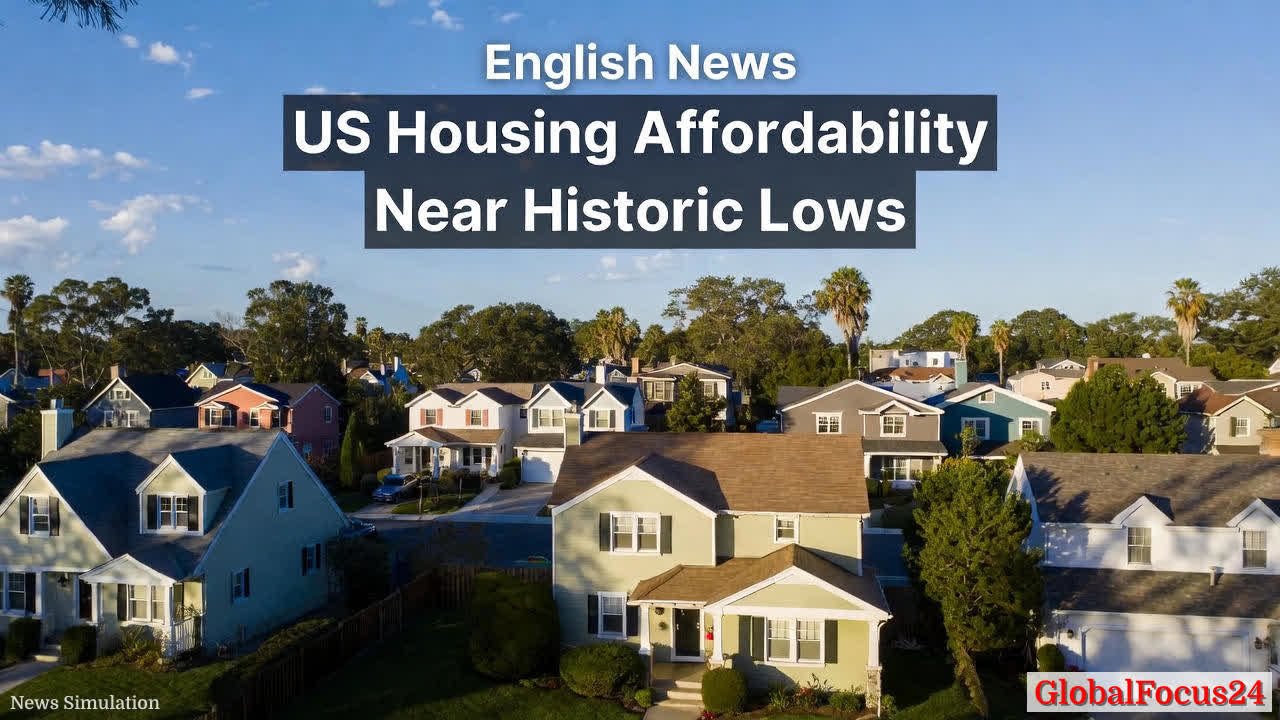
Housing Affordability in the United States Reaches Historic Lows as Home Price to Income Ratio Surges
The United States is confronting a redefining moment in housing affordability. Data tracking the relationship between typical home prices and median household income shows the home price to income ratio climbing to 7.0 times—the highest level on record. This measure, which indicates how many years of median income would be required to purchase a representative single-family home, paints a stark picture: a country where homeownership is increasingly out of reach for many families, even as mortgage availability remains comparatively constrained and population growth continues to intensify demand in desirable regions.
Historical Context: From Postwar Growth to the Latest Gap To understand the current spike, it helps to recall the broader arc of American housing over the past century. The post-World War II era witnessed a surge in homeownership driven by rising wages, suburbia’s expansion, and policy supports such as the GI Bill. In the ensuing decades, price growth tended to track income growth, with periodic accelerations tied to economic cycles and supply dynamics. The late 1990s and early 2000s featured a brief period of affordability relative to later years, aided by relatively low interest rates and steady population growth. The 2006 peak in the price-to-income ratio—an echo of the housing bubble—serves as a historical ceiling that the market subsequently eclipsed, signaling how far prices have moved beyond what typical households can sustainably bear.
In the current cycle, structural factors have reinforced price pressure. Construction costs have risen, zoning and permitting frictions persist in many metropolitan areas, and land-use constraints limit new development in high-demand corridors. Meanwhile, demand remains buoyant in major urban centers and sunbelt destinations, where job opportunities, quality of life, and climate considerations attract buyers, investors, and renters alike. The growth in remote work over the past several years has also shifted demand toward regions that blend affordability with opportunity, creating a two-tier dynamic: some markets experience intense price appreciation, while others lag behind.
Economic Impact: Homeownership Gap, Rental Market Pressure, and Household Finance The widening gap between home prices and incomes has several consequential effects. First, the purchasing barrier for aspiring homeowners becomes higher, pushing many into longer rental tenures or into housing markets farther from central employment hubs. The aging cohort of first-time buyers—now averaging around 40 years old in many analyses—reflects the longer horizon required to accumulate down payments, qualify for mortgages, and balance competing financial priorities.
Second, rental markets respond to these affordability dynamics. When aspiring buyers encounter barriers, demand for rental housing intensifies, often with higher rents and tighter vacancies in sought-after cities. Property owners respond to price signals and demand patterns with incremental rents, sometimes sharpening the contrast between occupancy costs and household budgets. This has implications for consumer spending, saving rates, and overall discretionary income, as households allocate more of their budgets toward shelter costs.
Third, lenders and policymakers face a delicate balancing act. Mortgage rates and underwriting standards influence the number of households that can secure financing, while affordability pressures can affect delinquencies, household debt servicing, and long-term financial stability. Differences in regional economies—technology and finance hubs versus manufacturing corridors, for example—mean that affordability outcomes vary significantly from city to city and state to state. In places with higher incomes and robust job markets, the price-to-income ratio can stay elevated, while in regions with slower growth orSupply constraints, affordability challenges may persist in different forms.
Regional Comparisons: Divergent Paths Across the United States Diversity in regional housing markets is a defining characteristic of the current affordability landscape. In coastal metropolises with high wage levels and dense demand, prices have appreciated rapidly, but incomes have not always kept pace proportionally, maintaining a high price-to-income ratio. In many of these markets, even households with dual incomes struggle to enter ownership, despite strong employment opportunities. By contrast, some inland and southern regions have experienced more moderate price growth or have benefited from population influxes that outpaced supply, leading to a mixed picture where affordability pressures shift from one metro to another over time.
A few illustrative patterns emerge:
- High-cost coastal corridors continue to experience the sharpest affordability squeeze, with entry into ownership requiring sizable down payments and longer savings horizons.
- Sunbelt and growth-state markets attract migration and investment, supporting price gains in many cases, but with a broader mix of outcomes as wage growth varies by sector.
- Midwestern and southern markets often offer more favorable price-to-income dynamics, though selective pockets of scarcity can still complicate affordability, especially in cities with limited new construction or strong job ties to specific industries. These regional differences underscore that national metrics, while informative, can obscure the lived realities of households across communities. Local policy responses, market cycles, and infrastructure investments determine the practical path to homeownership for many families.
Policy and Market Responses: What Could Help Addressing affordability requires a multi-pronged approach that aligns supply with demand while preserving fiscal and financial stability. Several avenues are commonly discussed by economists, policymakers, and industry observers:
- Expanding housing supply: Streamlining approvals, reducing regulatory barriers where appropriate, and encouraging higher-density development in suitable areas can help alleviate supply bottlenecks. Investments in infrastructure, transit-oriented development, and land-use reform can support more affordable construction and reduce long commutes that amplify the perceived value of central locations.
- Targeted affordability programs: Down payment assistance, favorable loan terms for first-time buyers, and publicly supported incentives aimed at underserved communities can help households cross the ownership threshold without compromising credit quality.
- Rental-market interventions: Policies that promote stable, affordable rental housing—such as inclusionary zoning, rental subsidies, and anti-speculation measures—can mitigate the pace at which ownership barriers translate into rental cost pressures.
- Macroeconomic balance: Monitoring mortgage rate movements and ensuring prudent underwriting standards helps sustain a healthy housing finance system. While rate levels influence affordability in the near term, a longer-term view emphasizes sustainable demand and supply matches rather than episodic shifts driven by monetary policy alone.
- Regional planning investment: Strategic investments in transportation, schools, and public services can enhance the attractiveness and productivity of affordable areas, encouraging development without sacrificing community quality of life.
Historical context informs policy design. Lessons from past housing cycles emphasize the importance of supply responsiveness, prudent lending standards, and the dangers of overreliance on credit expansion to mask affordability shortcomings. A measured policy approach that coordinates federal, state, and local efforts often yields more durable outcomes than isolated, one-off interventions.
Economic Implications for Households and Communities For individual households, the rising price-to-income ratio translates into longer horizons for wealth-building milestones such as home equity. Homeownership has historically been a key channel for household wealth accumulation, and when it becomes less accessible, the transmission of wealth and generational mobility can be affected. The broader economic signal is one of cautious consumer sentiment: households may adjust saving, investment, and consumption patterns to accommodate higher shelter costs and the risk of rising mortgage payments linked to interest-rate cycles.
Communities feel the effects in housing market dynamics and long-term growth trajectories. Cities that successfully expand supply and enhance affordability may attract talent, stimulate entrepreneurship, and sustain population growth. Conversely, places with persistent affordability constraints risk shortages of affordable housing stock, increased displacement pressures, and potential strain on social and economic cohesion.
Public Reaction and Market Psychology Public reaction to affordability challenges tends to be nuanced. Homebuyers, renters, real estate professionals, and economists frequently express concern about the reliability of access to affordable housing in the near term. Stakeholders weigh the immediate implications for household budgets against longer-run opportunities for asset growth through ownership. Market psychology—shaped bys about price swings, mortgage rates, and policy developments—plays a non-trivial role in shaping decision-making, influencing whether households speed up or delay purchases, rentals, or relocations.
Looking Ahead: What to Watch in the Housing Market The trajectory of the price-to-income ratio will hinge on multiple interrelated factors. Demographic trends, employment growth, wage dynamics, and regional development patterns will interact with supply-side constraints to determine whether affordability improves, deteriorates, or plateaus in the near term. Indicators to monitor include new construction activity, permitting yields in various metros, mortgage origination volumes, delinquency rates, and the pace of wage growth across sectors. Additionally, the balance between renter demand and rental supply will influence both cash-flow viability for landlords and housing stability for tenants.
Conclusion: A Complex, Evolving Landscape The 7.0 times ratio marks a historically high watermark for housing affordability in the United States. It serves as a bellwether for broader economic health and household financial security, signaling how deeply housing costs have stretched relative to income in an economy characterized by innovation, opportunity, and regional diversity. Whilenumbers can reveal the scale of the challenge, the real story unfolds in neighborhoods where aspiring homeowners navigate savings targets, down payments, and mortgage qualification standards. The housing market remains dynamic, with policy, market forces, and community planning continuing to shape outcomes for families across the country. As communities respond with tailored solutions—balancing development with stewardship of neighborhoods—the path toward more attainable housing will depend on coordinated efforts that align supply expansion, financial stewardship, and equitable access to opportunity.