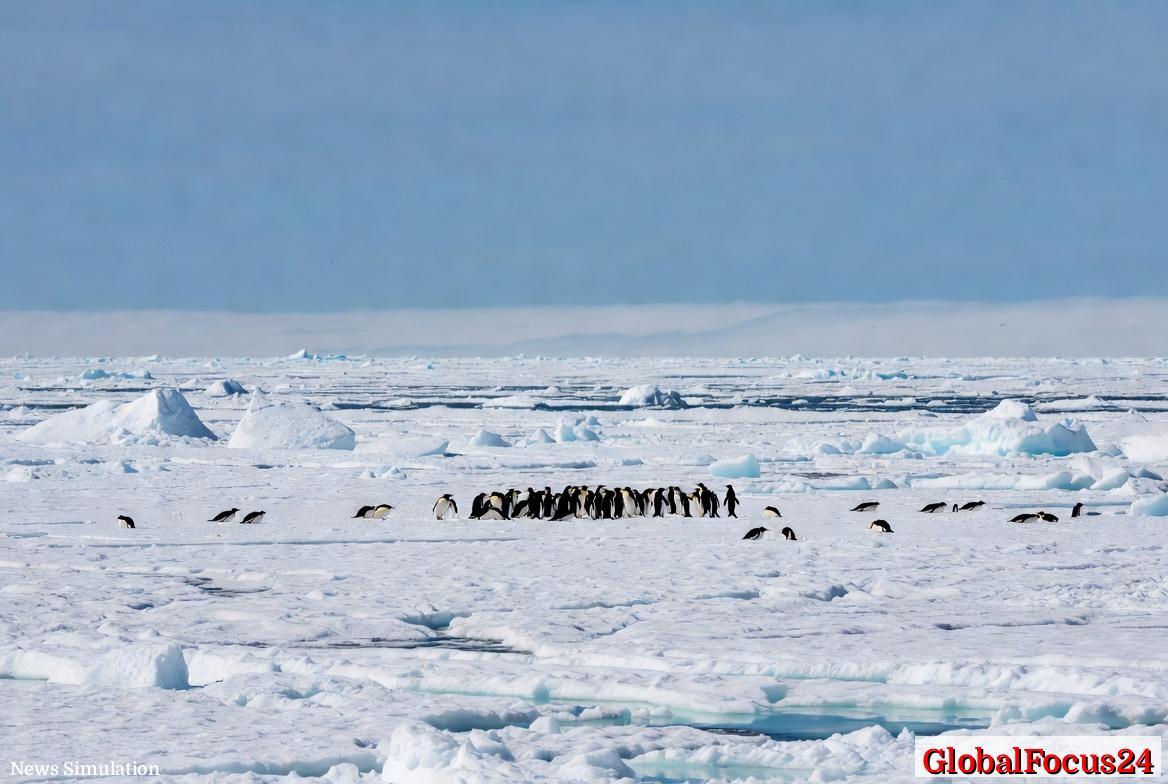
Emperor Penguins and Antarctic Fur Seals Declared Endangered as Sea Ice Vanishes
Rapid Ice Loss Pushes Iconic Antarctic Species Toward Extinction
Two of Antarctica’s most emblematic species—the emperor penguin and Antarctic fur seal—have officially been classified as endangered, marking a dramatic escalation in the global conservation community’s alarm over accelerating climate impacts in the Southern Ocean. The International Union for Conservation of Nature (IUCN) confirmed the new designations following extensive scientific reviews linking drastic population declines to the rapid deterioration of sea ice, which serves as the foundation for their breeding and feeding ecosystems.
The announcement highlights the extraordinary rate at which the Antarctic region is changing. Once considered one of Earth’s most stable environments, the continent now exhibits record-breaking reductions in sea ice extent, threatening not only wildlife but global ocean circulation patterns and climate stability.
Emperor Penguins: A Species on Thinning Ice
The emperor penguin—known for its regal stature and remarkable breeding rituals in temperatures below −50°C—has long symbolized the resilience of life in extreme conditions. However, that resilience is faltering. The IUCN’s upgrade from “threatened” to “endangered” follows mounting evidence that the species’ dependence on stable fast ice is becoming untenable in a warming world.
Unlike smaller penguin species, emperor penguins breed during the Antarctic winter, laying eggs on platforms of thick sea ice that must remain intact for about nine months, until chicks grow their waterproof feathers. But in recent years, that crucial stability has disappeared. In 2022, satellite imagery documented the collapse of five major breeding colonies near the Bellingshausen Sea. When the ice broke up weeks earlier than normal, more than 10,000 chicks plunged into the freezing water, most perishing before rescue was possible.
Population surveys now estimate approximately 595,000 adult emperor penguins remain, a decline between 10 and 22 percent since 2009. Modeling projections suggest that, barring a stabilization of ice coverage, the species could lose half its population by 2080.
The Role of Sea Ice in Emperor Penguin Survival
Sea ice provides emperor penguins with far more than a nesting ground. It acts as a protective barrier from predators such as leopard seals, gives access to food-rich waters under the ice shelves, and ensures chicks remain isolated from open ocean storms. The timing of ice formation and breakup is critical: small shifts in seasonal patterns can devastate entire generations.
Historically, Antarctic ice reached its maximum extent around the austral winter, providing an ample window for breeding. Today, the formation occurs later and melts earlier—sometimes by several weeks—compressing the penguins’ breeding cycle. Scientists warn this pattern is accelerating as ocean temperatures rise faster near the Antarctic Peninsula than anywhere else on Earth.
Researchers liken the emperor penguin’s plight to that of the polar bear in the Arctic—both are poster species for the cascading effects of melting polar ice. Their loss, experts say, would reflect more than individual extinction; it would signal systemic failure across polar ecosystems.
Antarctic Fur Seals Face Parallel Decline
While penguins suffer above the surface, Antarctic fur seals are struggling beneath it. Once considered a conservation success story after recovering from 19th-century commercial hunting, the species’ population peaked in the late 20th century. But the rebound has since reversed. New IUCN figures reveal a collapse from 2.187 million adult seals in 1999 to roughly 944,000 by 2025—a drop of over 55 percent.
The culprit mirrors that facing penguins: the changing dynamics of sea ice and temperature. Fur seals depend on abundant krill populations, tiny crustaceans that form the backbone of the Antarctic food web. Krill feed on algae growing underneath sea ice; as that ice disappears, so does their habitat. Rising ocean heat drives surviving krill deeper into the water column, out of reach of foraging seals.
Young fur seals are hit hardest. Pup survival rates during the first year have plummeted, particularly around South Georgia and the South Shetland Islands—historically dense breeding areas now increasingly barren of the teeming swarms that once sustained them.
Ecosystem Collapse on the Horizon
The simultaneous decline of two apex species underscores a broader unraveling within Antarctica’s food chain. Emperor penguins and fur seals occupy distinct but interconnected ecological niches. Penguins are key consumers of fish and krill near the surface, while seals act as predators lower in the food web and regulators of fish population dynamics. When both begin to vanish, the balance that underpins the Southern Ocean destabilizes.
This disruption reverberates beyond wildlife. Antarctic sea ice plays a crucial role in global thermohaline circulation—the ocean conveyor that distributes heat and nutrients worldwide. As ice melts prematurely, it alters salinity patterns, potentially shifting weather systems across the Southern Hemisphere and even affecting tropical rainfall cycles. The economic implications of such climate feedbacks are profound, from fisheries and tourism to international shipping routes.
Comparing Regional Impacts: Antarctica and Beyond
While the Antarctic crisis is unique in scale, similar trends appear across the high latitudes. In the Arctic, polar bears face comparable declines as sea ice retreats, reducing access to seals and shrinking denning sites. Pacific walruses and ivory gulls have also experienced sharp collapses. Yet scientists emphasize that Antarctica’s transformation is happening faster than models predicted, with 2023 marking the lowest sea ice extent since satellite records began in 1979.
By contrast, regions such as the sub-Antarctic islands, including South Georgia and the Kerguelen Archipelago, have seen temperature anomalies of up to 1.5°C above the historical average over the past decade. This warming influences krill distribution, reducing biomass near continental shelves—an early warning of ecosystem displacement that may trigger further migratory stress among predators.
Historical Context: From Exploration to Conservation
Human fascination with emperor penguins and fur seals dates back centuries. Early explorers, from James Cook to Ernest Shackleton, documented vast colonies as symbols of the continent’s pristine isolation. Yet even then, the seeds of disruption were sown. The 18th and 19th centuries saw intense sealing, driving several fur seal populations to near extinction by 1830. Protection finally came through international agreements and the development of the Antarctic Treaty System in 1959, which banned commercial exploitation and designated the continent for peace and science.
The recovery of fur seals during the 20th century was once heralded as proof that coordinated conservation could succeed. But today’s environmental threat—climate-driven rather than human hunting—poses a far greater challenge. It is not confined to one species or region but woven into Earth’s entire atmospheric and oceanic fabric.
Economic and Scientific Significance
The implications of losing these species extend well beyond biodiversity. Antarctica supports a vast scientific research economy centered on climate modeling, glaciology, and marine biology. Emperor penguins and fur seals serve as natural indicators—what researchers call “sentinel species”—revealing the pace and scale of environmental change. Their decline offers crucial data for forecasting global sea-level rise and atmospheric shifts.
Tourism and ecotourism industries are also affected. Emperor penguins are among the most sought-after wildlife attractions on guided expeditions, contributing millions annually to cruise and research station operations. Fewer sightings and shrinking habitat zones could reduce travel demand and reshape local employment dynamics tied to polar tourism. Moreover, fisheries relying on krill—a growing global commodity for fish meal and nutritional supplements—face potential shortages as Antarctic stocks diminish, tightening market supplies and raising international competition.
Calls for Urgent Global Action
Conservation scientists describe the IUCN announcement as both a warning and a call for coordinated intervention. Protective measures under the Commission for the Conservation of Antarctic Marine Living Resources (CCAMLR) could include expanding marine protected areas (MPAs), restricting industrial krill harvesting, and boosting climate adaptation funding for polar research stations. However, progress remains slow. Proposals for new MPAs in the Weddell Sea and East Antarctica have faced repeated delays due to diplomatic gridlock.
Long-term survival will depend not only on Antarctic management but on global reductions in greenhouse gas emissions. Limiting warming to below 1.5°C, as outlined in the Paris Agreement, remains vital to preserving winter sea ice formation—a prerequisite for emperor penguin breeding success and krill sustainability.
A Fragile Future for Antarctica’s Wildlife
As the icy continent faces the converging pressures of climate change, the plight of emperor penguins and Antarctic fur seals epitomizes the fragility of polar ecosystems. Their new endangered status represents more than a bureaucratic reclassification—it is a sobering reminder that species once considered resilient to extreme cold are now overwhelmed by the planet’s accelerating heat.
Antarctica, long viewed as Earth’s frozen stronghold, is rapidly becoming a frontier of ecological vulnerability. Unless global efforts to curb warming and protect marine habitats intensify, the haunting image of emperor penguins huddling on melting ice may soon become a memory from a planet’s colder past.