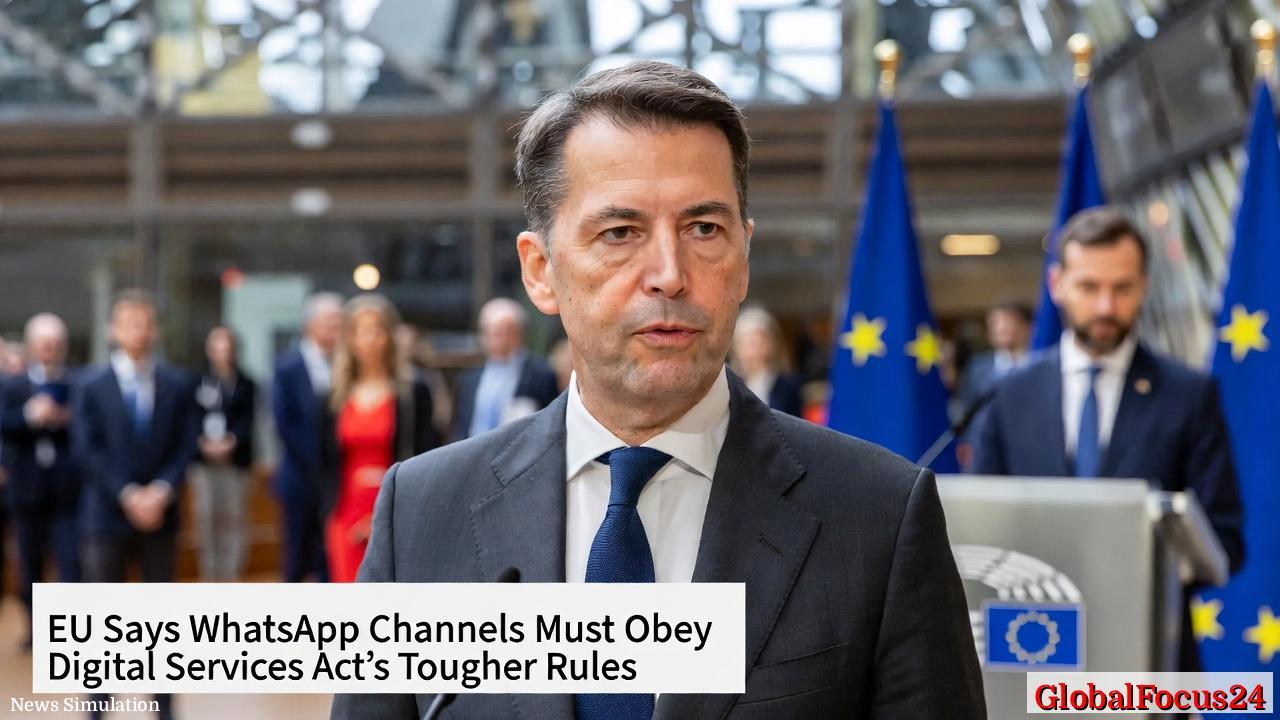
EU Enforces Stringent Digital Services Act Rules on WhatsApp Channels
In a landmark alignment with the European Union’s Digital Services Act (DSA), WhatsApp Channels are now subject to a broader set of compliance requirements designed to increase transparency, bolster user protections, and strengthen authorities’ oversight. The move marks a notable expansion of regulatory reach into a communication feature that has grown rapidly in popularity across Europe, the United States, and other regions where WhatsApp maintains a broad user base. As the digital ecosystem continues to evolve, industry observers are watching closely how these rules will shape content governance, platform accountability, and the balance between user trust and operational complexity.
Historical context: a shifting regulatory landscape for digital platforms
The Digital Services Act, introduced to modernize the rules governing online platforms, represents a decisive shift in accountability for digital services that operate within the EU. Its core aim is to create a safer digital space by requiring platforms to monitor and mitigate illegal content, provide more transparent information about how algorithms influence what users see, and empower authorities with targeted enforcement tools. The DSA builds on a tradition of evolving regulatory frameworks that began with early online safety measures and expanded through data protection and competition initiatives. The newest wave of compliance obligations targets not only marketplaces and social networks but also a diverse set of communication tools that facilitate mass information sharing.
WhatsApp, as a widely used messaging and broadcasting platform, has long emphasized privacy, security, and end-to-end encryption as hallmarks of its service. The Channel feature—designed to allow organizations, creators, and public figures to disseminate updates to large audiences—presents a distinct regulatory challenge: while direct messages remain private, channels can serve as a broadcast channel that reaches thousands or millions of subscribers. The EU’s interpretation of the DSA in this context seeks to ensure that channels operating within its jurisdiction adhere to consistent standards for transparency, moderation, and risk assessment, without compromising the fundamental privacy guarantees that users associate with the app.
Regulatory requirements: what changes for WhatsApp Channels
The DSA-based requirements now applying to WhatsApp Channels cover several key areas:
- Transparent governance and traceability
- Channel owners must provide verifiable information about the entity behind the channel, including official contact details and, where applicable, licensing or registration information.
- Platforms are expected to maintain accessible records about channel activities that relate to ongoing compliance with safety and consumer protection standards, making it easier for authorities to perform targeted investigations when concerns arise.
- Content responsibility and risk mitigation
- While private messages remain encrypted, channels are subject to enhanced oversight regarding potentially illegal or harmful content distributed at scale.
- WhatsApp must implement mechanisms to identify, review, and, where necessary, limit problematic broadcast content, particularly material that could facilitate fraud, scams, or the dissemination of misleading information.
- Moderation and user safety measures
- Channel operators are encouraged to adopt clear community guidelines and to communicate these rules to subscribers. Platforms provide guidance and tooling to help channel owners enforce standards effectively.
- Users benefit from improved reporting pathways for concerning content, with processes designed to be accessible and timely.
- Data minimization and user rights
- Data processing associated with channels is regulated to ensure privacy protections remain robust. The EU framework emphasizes minimizing the collection of personal data and enabling subscribers to exercise rights related to their data, including access, correction, and deletion where appropriate.
- Transparency around data usage—such as how subscriber data may be used for analytics or promotional purposes—must be clearly disclosed by channel operators and supported by user-friendly disclosures.
- Market-specific disclosures
- Channel operators may be required to disclose certain information about sponsored content or commercial messages, enabling users to distinguish between editorial content and promotional material more readily.
- Where applicable, authorities may require periodic reporting on compliance performance, including any incidents that affected user safety or data integrity.
Economic impact: implications for businesses, creators, and consumers
The expanded regulatory scope for WhatsApp Channels is likely to have several material economic consequences:
- Compliance costs for channel operators. Businesses, media organizations, and creators using WhatsApp Channels may incur investment in governance tools, staff training, and documentation to meet the DSA standards. Small operators could be disproportionately affected if the required processes are resource-intensive, potentially influencing channel strategy, pricing, or subscriber pricing models in the short term.
- Administrative burden for platform providers. WhatsApp’s compliance infrastructure must scale to handle EU-specific reporting, auditing, and moderation workflows while maintaining performance and security. The challenge is balancing robust oversight with the user experience that has driven WhatsApp’s adoption in Europe and beyond.
- Potential reduction in misinformation and scam exposure. With stronger moderation and clearer disclosures, subscribers may encounter fewer deceptive broadcasts or scams, which could reduce financial losses for households and increase trust in channel communications as a reliable information channel.
- Impacts on cross-border operations. EU-aligned rules affect not only European channel operators but any global entity that uses WhatsApp Channels within the EU footprint. This may prompt broader adoption of uniform internal policies to ensure consistency across regions, potentially raising the strategic importance of compliance investments for multinational brands and media networks.
Regional comparisons: how the EU stance stacks up against other markets
The EU’s approach with the DSA contrasts with regulatory trajectories in other regions, where digital safety and transparency initiatives vary in scope and emphasis:
- United States: Regulation of digital platforms remains more fragmented, with a combination of sector-specific rules, antitrust scrutiny, and state-level privacy laws. The absence of a unified national framework similar to the EU’s DSA has historically led to more variable enforcement and compliance requirements for cross-border platforms.
- United Kingdom: Post-Brexit, the UK has pursued its own set of online safety and consumer protection measures. While there are synergies with EU standards, the UK’s regime reflects national priorities and enforcement practices, creating a near-term landscape where operators must manage overlapping requirements.
- Asia-Pacific: Territories within this region display a wide spectrum of regulation, from stringent content moderation mandates in some jurisdictions to more permissive regimes in others. The regulatory environment often emphasizes content governance, data localization, and consumer protection, with regional variations shaping how platforms implement transparency and safety features.
- Global influence: The EU’s DSA often acts as a de facto global standard due to the size of the EU market and the reach of widely used platforms. Companies may implement harmonized practices to meet EU requirements, which then ripple into global policy and product design.
Consumption patterns and public reaction: trust, adoption, and behavior shifts
Subscribers and channel operators are adjusting to the new regulatory environment in several ways:
- Increased emphasis on clarity. Subscribers expect straightforward disclosures about who is behind a channel and how content is managed. This transparency helps users make informed choices about following channels and engaging with broadcast content.
- Caution around monetization. Channel operators may rethink sponsored content strategies to comply with disclosure rules while maintaining effectiveness. Advertisers and brands are watching how compliance influences engagement metrics and audience trust.
- Demand for consistent experiences. Users value consistent moderation quality and predictable safety controls across channels. Platforms that deliver reliable reporting and quick responses to concerns tend to earn higher trust and continued engagement.
- Public perception of platform responsibility. As regulatory attention intensifies, the public often views compliance as a marker of platform maturity and accountability. This can influence perceptions of the platform’s overall reliability and long-term value as a communications tool.
Operational best practices for channel operators under the DSA framework
To navigate the new requirements successfully, channel operators may consider adopting several practical steps:
- Establish comprehensive channel governance. Define ownership, responsibilities, and escalation paths. Publish clear terms of service and community guidelines to set subscriber expectations.
- Implement transparent disclosures. Ensure channel descriptions include identifying information, contact channels, and a plain-language explanation of content moderation practices.
- Develop robust moderation workflows. Create scalable processes for reviewing reported content, addressing violations, and communicating outcomes to subscribers.
- Monitor data practices. Map data flows related to channel activity, minimize data collection where possible, and provide accessible rights management options for subscribers.
- Invest in user education. Provide easy-to-read information about how channels operate, what content is allowed, and how users can report issues or opt out of certain data processing activities.
- Prepare for audits and reporting. Establish internal dashboards and documentation to facilitate periodic regulatory reporting and independent reviews, minimizing disruption to channel operations.
Technological considerations: balancing privacy with accountability
The DSA framework prompts operators to design technical solutions that support both user privacy and platform accountability. Key considerations include:
- Privacy-preserving analytics. Where insights are needed for safety or quality control, operators can employ aggregated, anonymized data to monitor trends without exposing individual subscriber details.
- Transparent ranking and visibility. If algorithms influence content distribution within a channel or across platform surfaces, operators should disclose the nature of such systems and provide opt-out mechanisms where feasible.
- Incident response architecture. Rapid detection, containment, and remediation of harmful content require well-defined incident response protocols paired with user communications that preserve trust.
Conclusion: shaping a safer, more transparent broadcast environment
The EU’s assertion of DSA compliance for WhatsApp Channels reaffirms a broader regulatory ambition: to foster safer digital ecosystems while preserving the innovative potential of online communication tools. For channel operators, this moment means aligning governance, moderation, data practices, and transparency with a unified standard that speaks to user safety, corporate responsibility, and regulatory clarity. As the regulatory, economic, and social dimensions of digital messaging continue to unfold, stakeholders across Europe and beyond will closely observe how these channels adapt to the new rules, how enforcement evolves, and what this signals for the future of direct-to-audience communications in a connected world.