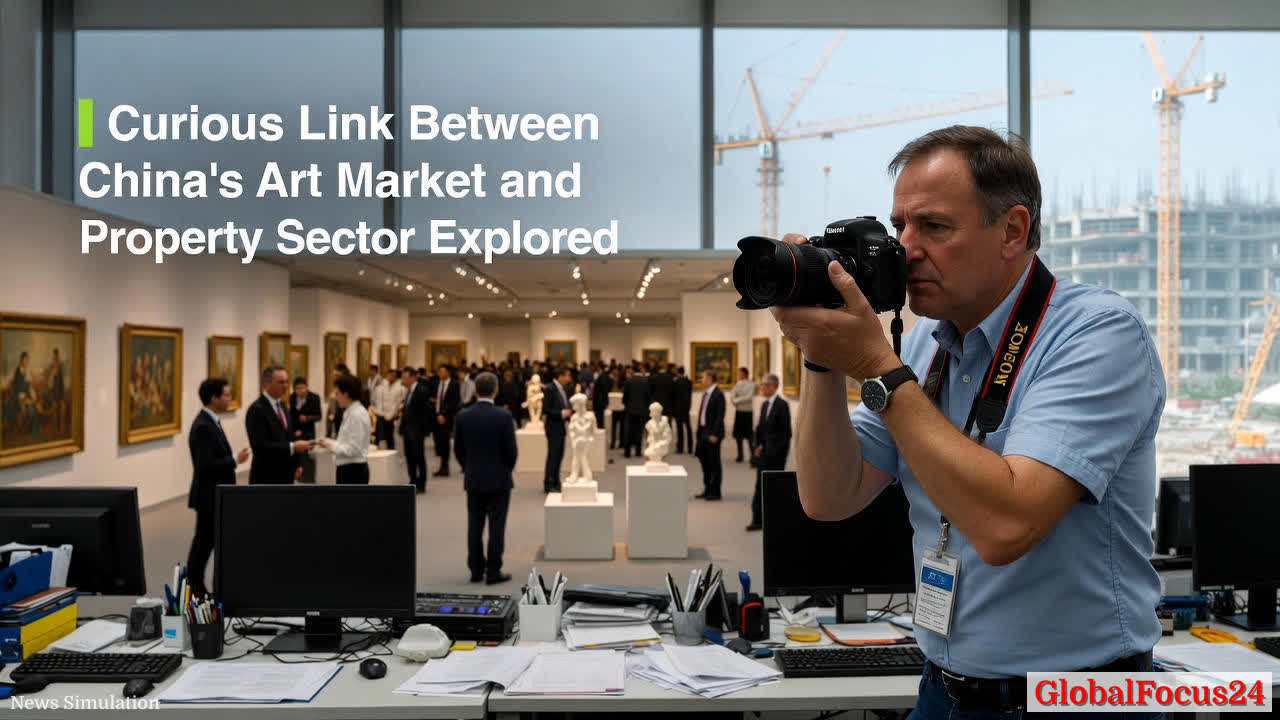
Curious Link Between China’s Art Market and Property Sector Explored
Art and Real Estate: A Reflection of Shifting Wealth
China’s art market has long been a mirror of the nation’s rapid economic transformation, but new financial analyses suggest it may also act as a barometer for shifts in the property sector. As developers face mounting challenges and investors search for alternative safe havens, attention has increasingly turned to art collections as both a store of value and a cultural statement. The relationship between these two sectors—real estate and fine art—reveals not just market dynamics, but the evolving psychology of China’s wealthy elite at a moment of profound economic change.
Over the past decade, China’s property boom drove enormous wealth creation, funding luxury consumption from high-end automobiles to multimillion-dollar paintings. Now, as property values cool and liquidity tightens, the art world seems to be absorbing both the caution and creativity of this transition. Experts note that the ebb and flow of real estate capital often ripple through art auctions, private galleries, and emerging digital marketplaces for art assets.
The Property Slowdown’s Ripple Effect
China’s real estate sector has been under pressure for several years due to tightening regulations, debt restructuring, and a cautious lending environment. Developers have struggled to refinance projects, while many middle-class families, who previously viewed property as a secure investment, are reassessing their portfolios. The resulting slowdown has reduced construction activity, employment, and consumer confidence—factors that collectively weigh on luxury spending.
For China’s wealthiest citizens, however, the downturn has inspired a reassessment of how and where to store value. Art, with its potential for appreciation and global liquidity, is emerging as a favored alternative. Unlike property—which is often constrained by domestic policy—art can be bought, sold, and stored overseas, giving investors greater flexibility in turbulent times. Major auction houses have reported increased interest from Chinese buyers, even as domestic property prices continue to soften.
A Brief History of China’s Art Boom
To understand the present connection, one must look back at how rapidly China’s art market evolved. In the early 2000s, the country’s economic liberalization and explosive urban development created a new class of wealthy collectors. Landmark sales—such as record-breaking Chinese ink paintings and contemporary works by artists like Zhang Xiaogang and Yue Minjun—sparked global attention. Between 2008 and 2015, China frequently vied with the United States for the position of the world’s largest art market by sales volume.
Much of this growth was underpinned by property-derived wealth. Developers, contractors, and early real estate investors poured money into collectibles, not only as financial assets but as cultural achievements. Art collection became a reflection of status and sophistication, a symbol of successful modernization. Entire museum districts in cities like Shanghai, Shenzhen, and Beijing were funded by corporate entities whose core business was real estate.
Now, two decades later, this close relationship is showing signs of inversion. Where once property profits financed art collections, today the search for stable art assets may be compensating for declining performance in property holdings.
The New Role of Art as Capital Preservation
High-net-worth individuals across China are turning to blue-chip artworks as a way to hedge against inflation, yuan depreciation, and uncertainties in traditional investment avenues. Paintings by international artists such as Gerhard Richter and Jean-Michel Basquiat have joined the portfolios of Chinese collectors who once focused exclusively on domestic masters. Meanwhile, contemporary Chinese artists with global reputations—like Zeng Fanzhi or Ai Weiwei—have become favored investments due to their cross-border recognition and resale potential.
Art investment funds, which bundle artworks as shared financial instruments, have also gained popularity. These funds appeal to investors seeking partial exposure to the art market without assuming the risks of individual ownership. This shift mirrors similar patterns observed in regions like Hong Kong, Singapore, and South Korea, where art has become deeply intertwined with wealth management.
Comparing Market Strategies Across Asia
The influence of real estate capital on art is not unique to mainland China. In Hong Kong, for instance, art collecting has often paralleled property cycles: when property prices soar, art sales follow. However, Hong Kong’s status as a free port has made its art market more resilient to local downturns. Singapore, too, has leveraged its position as a financial hub to attract art investors, who view the city’s stable legal framework as conducive to art storage and trade.
Mainland China, by contrast, operates within stricter capital controls. This has led investors to view art not just as decoration or prestige, but as a mechanism to diversify assets beyond the domestic property market. In recent years, cross-border art fairs and auctions in Hong Kong have recorded strong participation from mainland collectors seeking international exposure. Analysts point out that these cross-regional links are strengthening, creating a pan-Asian network of wealth and art exchange.
Art as an Index of Economic Confidence
Art trends often reveal more about national sentiment than they do about artistic preference. When the economy slows, collectors tend to favor classical works and museum-quality pieces, signaling a move toward stability and lower risk. During economic booms, speculative enthusiasm fuels interest in emerging artists and experimental forms. In China’s case, the recent cooling of enthusiasm for speculative property purchases coincides with a turn toward more cautious, historically grounded art investments.
Auction data from 2024 and early 2025 show a gradual contraction in mid-tier sales but resilience at the top end of the market. Ultra-wealthy buyers continue to compete for works valued above ¥10 million, while smaller collectors appear to be pausing acquisitions—a pattern reminiscent of previous economic adjustment periods. These trends suggest that while the general market is consolidating, confidence among the most affluent remains intact.
Cultural Policy and Institutional Influence
The Chinese central government has also played a role in shaping the landscape where property and art intersect. In recent years, authorities have encouraged cultural investment as part of a broader effort to transition from a construction-driven economy toward one emphasizing innovation, culture, and domestic consumption. Local governments have supported museum development, artist residencies, and cultural-industrial zones designed to attract both creative professionals and financial backers.
These initiatives align with a wider cultural diplomacy effort aimed at boosting China’s global soft power. Art patronage—especially by major property developers—has thus become not merely an economic activity but a contribution to national cultural prestige. Real estate groups sponsoring art fairs, museum wings, and biennales embody this intersection of financial power and cultural influence.
The Digital Dimension: NFTs and Online Auctions
Beyond traditional canvases, digital art has opened new possibilities for China’s investors. Although regulations on cryptocurrency remain strict, blockchain-backed art certificates and regulated digital asset platforms have given collectors new ways to trade and authenticate art. Major Chinese tech companies have entered the space, experimenting with digital collectibles linked to licensed artworks.
The surge of online auctions during the pandemic exposed a new generation of buyers to art investment, many of whom came from financial or property backgrounds. For these participants, the shift from physical property to digital art represents a logical evolution—one that maintains prestige and exclusivity while bypassing regulatory obstacles tied to land and construction ownership.
Economic Implications for the Decade Ahead
The growing correlation between China’s art market and property sector could have complex implications for the broader economy. On one hand, the migration of capital from real estate to art reflects diversification and financial sophistication. On the other, it signals caution—an acknowledgment that traditional assets may no longer guarantee consistent returns.
Much depends on how policymakers manage structural changes in property. If confidence returns through debt reform and stabilized prices, art investment may stabilize as part of a balanced portfolio rather than a defensive allocation. Conversely, if real estate remains sluggish, art could become an increasingly important—and volatile—component of China’s wealth ecosystem.
The Shape of Affluence in a Changing China
In the final analysis, China’s evolving art market offers more than a story of commerce; it provides a window into the shifting architecture of national wealth. The same forces that built gleaming urban skylines are now reshaping the country’s cultural landscape. As property developers recalibrate and investors broaden their horizons, art stands as both a beneficiary and a barometer of these wider structural changes.
The interplay between property and art underscores a distinct moment in China’s economic journey—one where stability is sought not in square meters of urban real estate, but in brushstrokes, canvases, and the enduring allure of cultural capital.