DeepSeek’s R1 Model Redefines AI Reasoning with Cost-Efficiency and Broad Impact
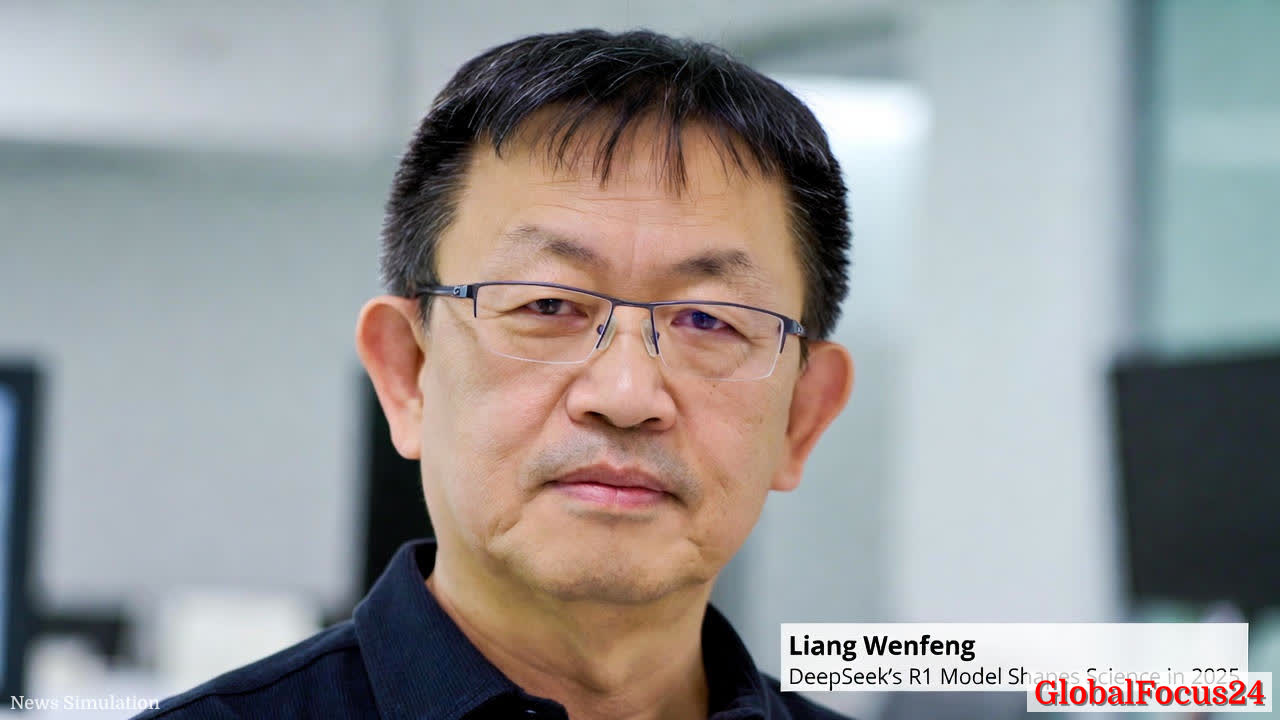
In 2025, a distinctive blend of affordability and advanced reasoning capabilities in artificial intelligence has captured the attention of researchers, industry leaders, and policy makers alike. DeepSeek’s R1 model, developed under the leadership of founder and CEO Liang Wenfeng, stands at the center of this shift. The model’s emergence as a notable force in science and technology reflects a broader trend toward scalable, transparent AI systems capable of complex inference without prohibitive computing costs. This development arrives at a time when regional markets, investment ecosystems, and workforce dynamics are recalibrating to accommodate rapid advances in machine intelligence.
Historical context anchors the current moment in a longer arc of AI development. The journey from rule-based systems to neural networks evolved through waves of investment, research breakthroughs, and policy debates about ethics and governance. Early milestones included breakthroughs in natural language processing, image recognition, and reinforcement learning, each contributing to a landscape where AI increasingly acts as a critical tool across sectors. As models grew in size and capability, concerns about resource intensity and accessibility intensified, prompting researchers to explore more efficient architectures, better data efficiency, and improved interpretability. It is within this milieu that R1’s emphasis on reasoning—paired with economical design—emerges as a natural and timely evolution.
Technical overview and notable features
- Efficient reasoning: The R1 model is engineered to perform disciplined, multi-step reasoning with reduced computational overhead. This accelerates tasks that require logical deduction, planning, and sequential thought while keeping total cost of ownership comparatively lower than large, resource-intensive counterparts.
- Cost-conscious architecture: By prioritizing efficiency without sacrificing accuracy, R1 lowers barriers to deployment across enterprises of varying sizes, research labs, and public sector initiatives. The model’s design aims to deliver robust performance on common inference tasks with a more favorable energy and carbon footprint.
- Practical versatility: The model demonstrates strong capabilities across domains such as scientific literature analysis, technical documentation comprehension, and complex data reasoning. This aligns with ongoing demands for AI that can assist researchers, engineers, and analysts in translating insights into actionable conclusions.
Economic impact and market implications
- Lowered entry barriers for research and development: Organizations previously constrained by high compute costs can now experiment with advanced reasoning models more freely. This democratization of capability supports startups, academic labs, and regional tech hubs seeking to accelerate innovation without prohibitive infrastructure investments.
- Competitive dynamics among AI providers: The R1 model’s efficiency creates a benchmark for cost-per-performance that influences pricing strategies and product roadmaps across the AI ecosystem. As operators seek to balance performance with operating expenses, R1-style architectures may prompt a broader shift toward more energy-conscious AI deployments.
- Labor market effects: More affordable and capable AI systems can augment researchers and engineers, enabling higher output and enabling teams to scale exploratory projects. This may drive demand for roles in model evaluation, safety, data curation, and specialized integration work, contributing to a nuanced shift in tech employment trends.
- Supply chain and regional investment: Regions prioritizing advanced computing infrastructure, data centers, and AI talent can position themselves as attractive hubs for AI-driven research and development. The affordability of reasoning-focused models may encourage local collaborations with universities, government research initiatives, and industry consortia.
Regional comparisons and adoption patterns
- North America: The North American market continues to be a focal point for AI experimentation and commercial deployment. Enterprises leveraging efficient reasoning models are reporting faster prototyping cycles and reduced time-to-market for AI-assisted products, particularly in sectors such as healthcare informatics, financial services, and scientific research.
- Europe: European institutions emphasize responsible AI deployment, data governance, and interoperability. R1-like models that balance capability with cost efficiency align with regional strategies to promote innovation while maintaining strict compliance and privacy standards. Public-sector use cases, including policy simulation and environmental modeling, are among the anticipated beneficiaries.
- Asia-Pacific: The APAC region’s rapid digital transformation and growing AI talent pool position it as a dynamic arena for scalable AI solutions. Efficient reasoning models support applied research, industrial automation, and multilingual capabilities essential to servicing diverse markets. Local partnerships and government-backed AI initiatives could accelerate broader adoption.
- Emerging markets: In economies where resources are constrained but the demand for intelligent automation is high, cost-effective reasoning models offer a practical route to leverage AI for productivity gains. These markets may prioritize use cases such as education technology, agricultural analytics, and small to mid-sized enterprise optimization.
Industry reactions and public sentiment
- Scientific research communities welcome tools that expedite hypothesis testing, data synthesis, and cross-disciplinary collaboration. Researchers highlight the importance of rigorous benchmarking and transparent methodologies to ensure results are reproducible and trustworthy.
- Corporate users emphasize the trade-off between performance and efficiency, seeking models that integrate smoothly with existing data pipelines, security frameworks, and regulatory requirements. Vendors are responding with hybrid deployment options, on-premises and cloud-based, to address diverse governance needs.
- Public discourse gravitates toward questions of safety, bias, and accountability. As with any AI advancement, stakeholders advocate for robust evaluation, explainability, and governance frameworks that align with societal values and legal frameworks.
Technical challenges and ongoing research directions
- Robust evaluation metrics: The community continues to refine benchmarks that accurately reflect real-world reasoning tasks, including multi-hop inference, causal reasoning, and domain-specific problem solving. Ensuring fair comparisons across models remains a priority.
- Interpretability and auditability: Users seek clearer insights into how R1 arrives at conclusions, especially in high-stakes contexts. Research into provenance traces, confidence estimates, and modular reasoning components is instrumental to building trust.
- Data efficiency and generalization: Tailoring models to perform well with diverse, high-quality datasets while avoiding overfitting remains a focal point. Transfer learning, continual learning, and few-shot generalization are key areas of development.
Public policy and governance considerations
- Safety and accountability: As AI systems become more capable, regulatory frameworks around safety testing, risk assessment, and human-in-the-loop controls gain prominence. Policymakers and industry groups advocate for standards that promote responsible innovation without stifling progress.
- Data privacy and security: Efficient models must be deployed in ways that protect sensitive information. Compliance with data protection laws and robust encryption, access controls, and auditing capabilities are essential components of responsible deployment.
- Economic resilience: Regions investing in AI infrastructure and talent may experience positive spillovers, including productivity gains and new business models. Policymakers weigh incentives, cybersecurity safeguards, and workforce development programs to maximize benefits while mitigating risks.
A look ahead: sustainability and long-term impact
The pursuit of efficient AI reasoning aligns with broader societal goals around sustainability and responsible technology. By reducing the energy intensity associated with advanced AI, models like R1 contribute to lower carbon footprints and more scalable solutions. As AI becomes more embedded in daily operations—from laboratory simulations to industrial optimization—the cumulative effects on efficiency and economic resilience could be substantial. At the same time, maintaining ethical standards, ensuring equitable access to benefits, and fostering transparent governance will determine how these technologies shape society over the coming years.
Conclusion
DeepSeek’s R1 model embodies a pivotal moment in AI development, where advanced reasoning capabilities are paired with a cost-conscious design to broaden impact. The model’s reception within scientific circles, industry, and public policy spheres underscores a growing demand for AI that is both powerful and accessible. As regional markets adapt to the implications of efficient AI and as researchers continue to push the boundaries of what machines can infer, R1 stands as a practical exemplar of how thoughtful engineering can accelerate discovery, collaboration, and innovation without compromising governance, safety, or inclusivity. The years ahead are likely to see continued investment in efficient AI architectures, broader cross-sector adoption, and a more nuanced understanding of how reasoning-enabled models can complement human expertise across disciplines.