Aliko Dangote’s Expanding Industrial Empire Redefines Africa’s Economic Future
The Rise of Africa’s Wealthiest Industrialist
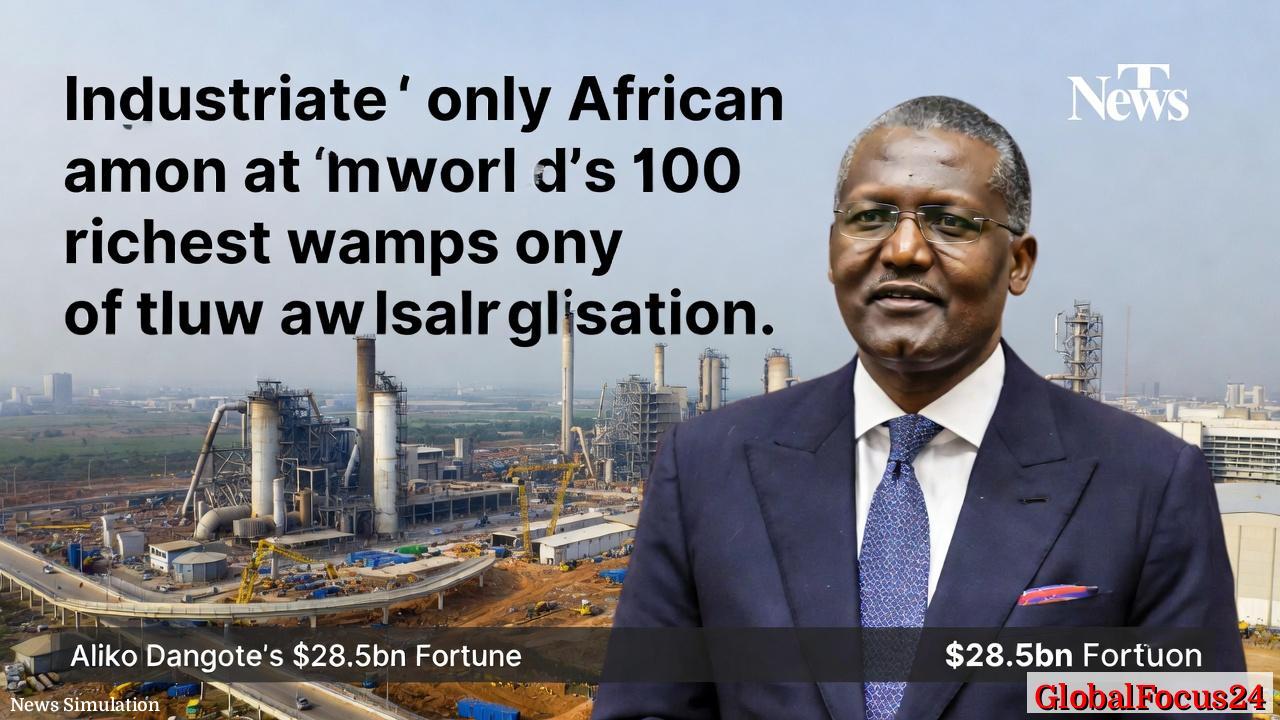
Aliko Dangote, the Nigerian entrepreneur whose name has become synonymous with industrial ambition, now commands an estimated fortune of $28.5 billion, cementing his position as the only African among the world’s 100 richest individuals. His journey from a modest trading venture in the late 1970s to the helm of a global-scale conglomerate illustrates the rapid evolution of Africa’s private sector and its growing potential to compete on the international stage.
Dangote’s empire, the Dangote Group, spans key sectors such as cement, sugar, salt, fertilizer, and most recently, oil refining. Built over four decades, the conglomerate’s projects reflect a strategic drive to reduce Africa’s dependency on imported goods and strengthen local manufacturing. In doing so, Dangote has emerged as a pivotal figure in the continent’s modernization effort—ushering in a wave of industrialization that is reshaping economic priorities and regional value chains.
Cementing Africa’s Industrial Backbone
The cornerstone of Dangote’s business success remains Dangote Cement, the largest cement producer in Africa. Operating in more than 10 countries, the company has transformed access to construction materials across the continent. Its production capacity of over 50 million metric tons annually supports major infrastructure growth from Nigeria to Ethiopia, underpinning urban development and transportation networks essential for economic expansion.
Africa’s cement industry, once heavily reliant on imports, has witnessed a shift toward domestically produced materials thanks in large part to Dangote’s investments. The company’s model—vertically integrated and reliant on local raw materials—has insulated it from foreign supply disruptions and volatile global prices. This transformation not only strengthens local economies but also drives down construction costs, enabling governments and developers to pursue large-scale infrastructure projects more efficiently.
The Dangote Refinery: A New Era in Energy Independence
The most ambitious project in the conglomerate’s portfolio is the Dangote Petroleum Refinery, located in Lagos. Valued at over $19 billion, it is one of the largest oil refineries in the world, designed to process up to 650,000 barrels of crude oil per day. For decades, Nigeria—Africa’s biggest oil producer—exported crude oil while importing refined petroleum products, a paradox that strained its foreign currency reserves and kept consumer prices high. Dangote’s refinery aims to reverse that pattern.
Once fully operational, the refinery is expected to meet the fuel needs of Nigeria and much of West Africa, reducing import dependence and stabilizing energy supply in the region. The facility’s impact is already reverberating through the economy: from job creation to infrastructure development, it has energized ancillary industries such as petrochemicals, logistics, and construction. Analysts view the refinery as a strategic asset that could save Nigeria billions of dollars annually in import costs while generating new export revenues.
Building a Sustainable Manufacturing Base
Beyond oil and cement, Dangote’s diversification into agriculture and fertilizer production underscores his long-term vision for a self-sustaining African economy. The Dangote Fertilizer Plant, also situated in Lagos, is Africa’s largest granular urea fertilizer facility, with an annual capacity exceeding 3 million metric tons. Its output supports farmers across the continent, increasing crop yields and improving food security.
By improving access to affordable fertilizer, the project also strengthens Africa’s agricultural value chains, reducing reliance on imported agricultural inputs. Coupled with the company’s investments in sugar and flour refining, Dangote’s strategy demonstrates how industrial integration can address multiple economic challenges—from currency depreciation to food scarcity—while empowering small-scale producers and local businesses.
Historical Context: From Trader to Titan
Dangote’s entrepreneurial story began in 1977 with a small trading firm that imported commodities such as sugar, rice, and cement. At a time when Nigeria’s economy was heavily dependent on imports and foreign corporations, Dangote’s business acumen was evident in his ability to anticipate domestic demand and capitalize on inefficiencies. By reinvesting profits into manufacturing, he leveraged Nigeria’s growing population and consumption trends to build local capacity.
Throughout the 1990s and early 2000s, Dangote benefited from economic liberalization and privatization policies that encouraged private investment in sectors once dominated by state enterprises. His decision to move into large-scale cement production in 2003 marked a turning point. Instead of importing finished goods, the Dangote Group began producing them, setting an industrial standard that has since become a model for African entrepreneurs aspiring to scale regionally.
Economic Impact and Job Creation
Dangote’s ventures collectively employ tens of thousands of workers across Africa. In Nigeria alone, his companies have created direct employment for over 30,000 people and indirect opportunities for countless others in transport, construction, and agriculture. Economists credit his projects with boosting domestic GDP, improving export performance, and fostering skills development within technical fields.
In regions such as East and Central Africa, Dangote’s investments have driven demand for locally sourced materials and spurred infrastructure development. His cement plants in Tanzania, Zambia, and Ethiopia have contributed to stabilizing supply chains and lowering regional construction costs. The multiplier effect of these investments on community income, education, and housing has been significant, turning industrial zones into thriving economic clusters.
Regional Comparisons: Industrialization Across Emerging Economies
Dangote’s model mirrors the industrial strategies of major emerging economies such as India, Brazil, and Indonesia, which leveraged domestic markets to nurture globally competitive companies. Like India’s Reliance Industries or Brazil’s Vale, the Dangote Group has pursued a “resource-to-market” approach—developing raw material supply chains alongside production and distribution networks to capture more value locally.
In sub-Saharan Africa, similar trends are emerging as governments prioritize manufacturing and infrastructure over commodity exports. Countries like Ethiopia, Kenya, and South Africa are expanding industrial clusters and special economic zones, aiming to replicate the scale and sustainability of Dangote’s operations. Yet, Nigeria’s advantage lies in its large domestic market of over 200 million people, providing a foundation for long-term industrial demand and diversification.
Challenges and Future Prospects
Despite his success, Dangote faces challenges familiar to industrialists in developing economies. Currency instability, inconsistent power supply, and logistics bottlenecks continue to affect production and distribution. Financing large projects in volatile markets also exposes firms to interest rate fluctuations and regulatory delays. Nevertheless, the Dangote Group’s consistent reinvestment in local capacity and technology has helped mitigate these risks.
The conglomerate’s future trajectory points toward further expansion across Africa and into global markets. Dangote Cement has already begun exporting to Latin America and parts of Europe, demonstrating the growing competitiveness of African industrial products. The refinery, meanwhile, could position Nigeria as an energy hub for the continent, while fertilizer exports strengthen the agrichemical trade within the region.
A Catalyst for Africa’s Economic Self-Reliance
Dangote’s influence extends beyond business. His success has shifted global perceptions of African enterprise—from resource extraction to value creation. By developing industries that transform local materials into finished products, he has provided a blueprint for economic self-reliance that aligns with Africa’s long-term development goals.
Young entrepreneurs across the continent view Dangote as proof that global-scale success is achievable from within Africa. His philanthropic work, channeled through the Dangote Foundation, further amplifies this impact by funding health, education, and poverty alleviation programs across Nigeria and beyond.
Conclusion: Industrial Power as a Path to Prosperity
Aliko Dangote’s rise from local trader to global industrial magnate encapsulates a broader narrative—the emergence of Africa as a potential manufacturing powerhouse. His ventures in cement, energy, and agriculture serve not only his business interests but also the economic aspirations of millions of Africans seeking opportunity through industrial growth.
As Dangote’s refinery comes online and his manufacturing network continues to expand, his legacy may ultimately be measured not just in personal wealth but in the enduring transformation of Africa’s economic landscape. Through industrial empowerment and infrastructure investment, Dangote stands at the forefront of a new era—one where Africa’s resources, talent, and innovation converge to drive sustainable growth and self-sufficiency.