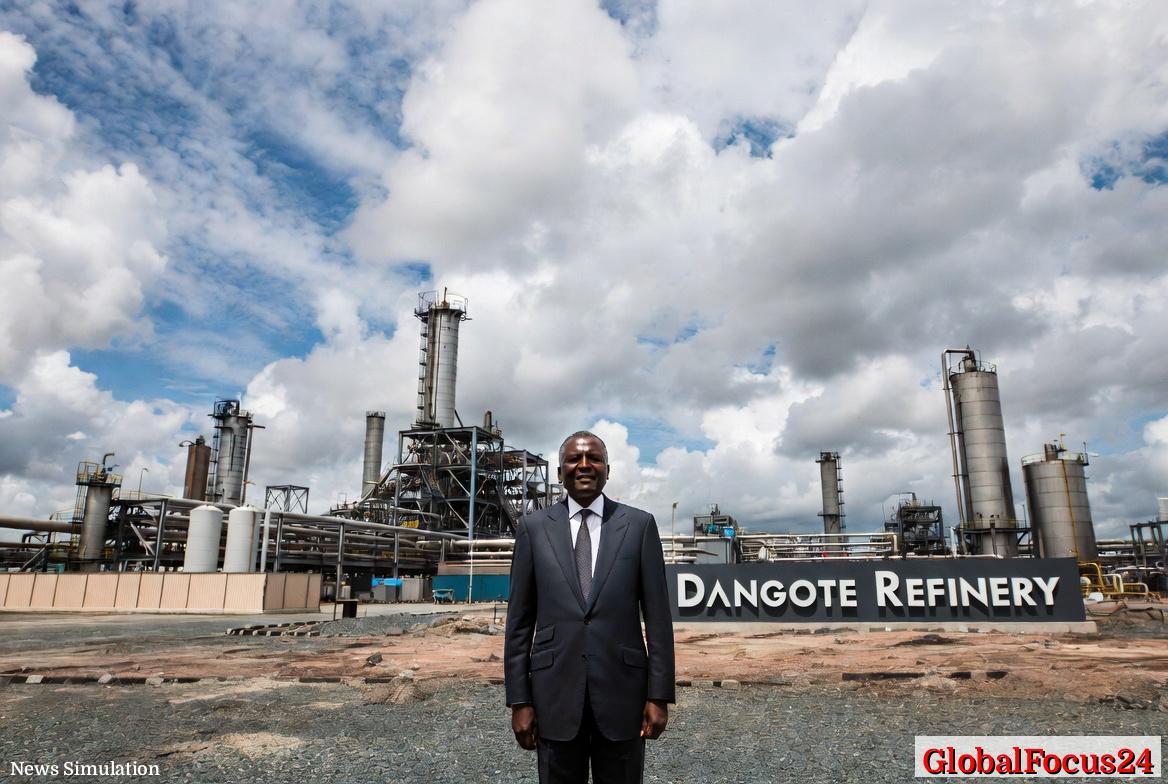
Aliko Dangote’s Vision: Transforming Africa’s Energy Economy Through Industrial Ambition
The Rise of Africa’s Industrial Titan
On the outskirts of Lagos, Nigeria, an enormous complex hums with activity, its gleaming towers visible from miles away. This is the Dangote Refinery, the centerpiece of Aliko Dangote’s bid to transform Africa’s energy sector and reduce the continent’s dependence on imports. Opened in 2023, the refinery is the largest in Africa, with a processing capacity of 650,000 barrels of oil per day — a staggering figure that positions it among the most capable refineries in the world.
Dangote, now 68, has become synonymous with African industrial ambition. From cement and fertilizer production to sugar and oil, his conglomerate — Dangote Group — touches nearly every sector of Nigeria’s economy and reaches far beyond its borders. For over three decades, he has built an empire that not only generates immense private wealth but also reshapes Africa’s economic infrastructure.
A Project of Historic Proportions
The scale of the Dangote Refinery is unprecedented in Africa. Built on 2,635 hectares of reclaimed land near the Lekki Free Zone, the $19 billion complex blends oil refining, petrochemicals, and gas processing into a single integrated operation. Its construction spanned nearly a decade, involving thousands of engineers, technicians, and industry experts from around the world. The refinery’s launch marked a pivotal moment for Nigeria, a country paradoxically rich in crude oil yet heavily reliant on fuel imports due to decades of inadequate refining capacity.
Africa’s refining gaps have long been a structural economic disadvantage. Despite producing over 8 million barrels of crude daily, the continent imports more than half its petroleum products. Dangote’s project challenges that status quo, aiming to make Nigeria a net exporter of refined fuels for the first time in its history. For Dangote, this is not merely a business opportunity; it’s a bid to rewrite the continent’s industrial narrative.
Breaking the Cycle of Dependence
Nigeria has faced chronic fuel shortages, ballooning subsidy costs, and currency pressures linked to imported petroleum. The launch of the Dangote Refinery promises a potential end to that cycle. If fully operational, the refinery could save Nigeria billions of dollars annually in foreign exchange spent on imports while generating new export revenues from surplus production.
The impact extends beyond Nigeria’s borders. West African neighbors such as Ghana, Benin, and Togo have also struggled with refining shortfalls. The Lagos facility could serve regional demand, supplying fuel across coastal ports and inland markets that previously depended on European or Middle Eastern imports. Economists project that the refinery’s output could alter trade balances across Africa, spurring secondary industries in transport, logistics, and energy infrastructure.
Dangote’s Broader Business Empire
The refinery represents the latest triumph in a long list of industrial successes. Dangote Cement, launched in 1992, revolutionized construction across Africa by localizing production and reducing dependence on costly imports. Today, it is Africa’s largest cement producer, with operations in over ten countries. Dangote’s fertilizer plant — also located near Lagos — began production shortly before the refinery’s completion, forming a multi-pronged industrial hub designed to supply agriculture, housing, and energy sectors.
This model of vertically integrated operations reflects Dangote’s philosophy of self-reliance: build local capacity, retain value chains within the continent, and create jobs on African soil. It’s a vision reminiscent of the post-independence industrialization wave of the 1960s, though now realized at a far more sophisticated scale through private investment rather than state-led programs.
Historical Context: From Oil Wealth to Resource Reform
Nigeria’s relationship with oil has been both a blessing and a burden. Since crude exports began in 1958, oil revenues have powered national budgets but often failed to translate into industrial development. Government refineries built decades ago — in Port Harcourt, Warri, and Kaduna — have repeatedly faltered amid corruption and mismanagement. The result has been an embarrassing contradiction: Africa’s largest oil producer importing nearly all its fuel.
Dangote’s refinery, privately financed and meticulously managed, breaks from that pattern. It embodies a shift toward private-sector leadership in resource development — a model increasingly seen across Africa, from mining ventures in Zambia to renewable energy projects in Kenya and South Africa. Analysts view Dangote’s approach as a blueprint for future large-scale investments driven by African capital rather than foreign aid.
Economic Implications and Market Response
The refinery’s potential economic impact is vast. Nigeria’s central bank estimates that the project could contribute up to 1% of national GDP once fully operational. Reduced importation could stabilize the naira and ease pressure on foreign reserves, while domestic fuel production could lower transportation costs and inflation. The ripple effects may reach manufacturing, agriculture, and services sectors dependent on reliable energy supply.
Energy analysts note that global oil majors are watching closely. If Dangote’s model proves commercially viable, it could encourage private refinery initiatives in other African nations, such as Angola, Egypt, and Uganda, where crude production often outpaces refining capacity. Investors are already exploring partnerships to replicate the Lagos blueprint, with supply chain development poised to accelerate across regional corridors.
Regional Comparisons: How Africa Stacks Up
By global standards, Africa has lagged in refinery construction. While Asia experienced a boom in refining capacity throughout the 2000s — led by China and India — African nations saw minimal investment. South Africa’s refineries in Durban and Cape Town remain modest by comparison, each handling roughly 100,000 to 180,000 barrels per day. Egyptian facilities are larger but still fall short of Dangote’s megaproject.
The refinery not only redefines Nigeria’s role in global energy markets but also signals a larger continental awakening. African nations are increasingly prioritizing domestic value creation over raw exports, with investments in mining refineries, steel fabrication, and agro-processing. Dangote’s refinery stands at the forefront of this industrial renaissance, bridging the gap between Africa’s natural resources and its emerging consumer economies.
Challenges Ahead: Logistics and Policy Pressures
Despite optimism, challenges remain. Infrastructure bottlenecks — including port inefficiencies, power supply fluctuations, and road congestion — could hinder distribution. Regulatory delays and uncertainties over pricing policy have already slowed full operations since the refinery’s inauguration. Dangote’s team continues to negotiate supply and pricing frameworks with Nigeria’s national oil company, seeking clarity on crude availability and payment mechanisms.
Additionally, as global energy transitions accelerate toward cleaner fuels, the refinery faces long-term strategic questions. Environmental advocates urge balanced investment in renewables to complement fossil fuel advances. Dangote has acknowledged these concerns, emphasizing plans to include petrochemical diversification and gas supply that support cleaner combustion technologies.
Employment and Social Impact
The refinery’s social impact is profound. During construction, the project employed over 30,000 workers, including engineers trained under specialized programs funded by Dangote Group. Thousands of permanent jobs are expected as operations expand, from refinery technicians to logistics personnel and port operators. Local businesses in the Lekki area have already seen surging demand for housing, retail, and services, transforming the region into one of West Africa’s most dynamic industrial zones.
For Nigeria’s youth, long plagued by unemployment, the refinery offers new pathways for technical careers and industrial training. Universities and vocational institutes are partnering with the Dangote Foundation to establish programs aligned with refinery operations, merging education and enterprise in a rare synergy.
A Continental Vision for Growth
Aliko Dangote’s ambitions extend far beyond oil. He envisions a self-sufficient Africa, capable of producing what it consumes and exporting value-added goods globally. Through strategic investments in infrastructure, manufacturing, and logistics, he seeks to reduce the continent’s reliance on imports and increase competitiveness on the world stage. His approach has earned comparison to iconic industrial builders of the 20th century — Rockefeller, Carnegie, and Tata — whose enterprises reshaped their nations’ economies and labor markets.
The refinery’s success could become the keystone of Dangote’s legacy, not only generating wealth but marking a turning point in Africa’s industrial story. As global energy dynamics evolve, his project underscores the importance of local vision, private capital, and pragmatic execution in shaping Africa’s economic destiny.
Conclusion: The Power of African Enterprise
Three years after its opening, the Dangote Refinery stands as both a monument and a promise — a testament to what can be achieved when ambition meets capacity. It represents a critical inflection point for Nigeria and the continent, proving that large-scale industrial transformation is possible within African borders.
While challenges persist, the momentum is undeniable. Aliko Dangote’s vision is giving tangible form to the idea of a self-reliant Africa built on enterprise, innovation, and strategic investment. In reshaping the continent’s energy future, he may well be laying the foundation for the next century of African economic progress.