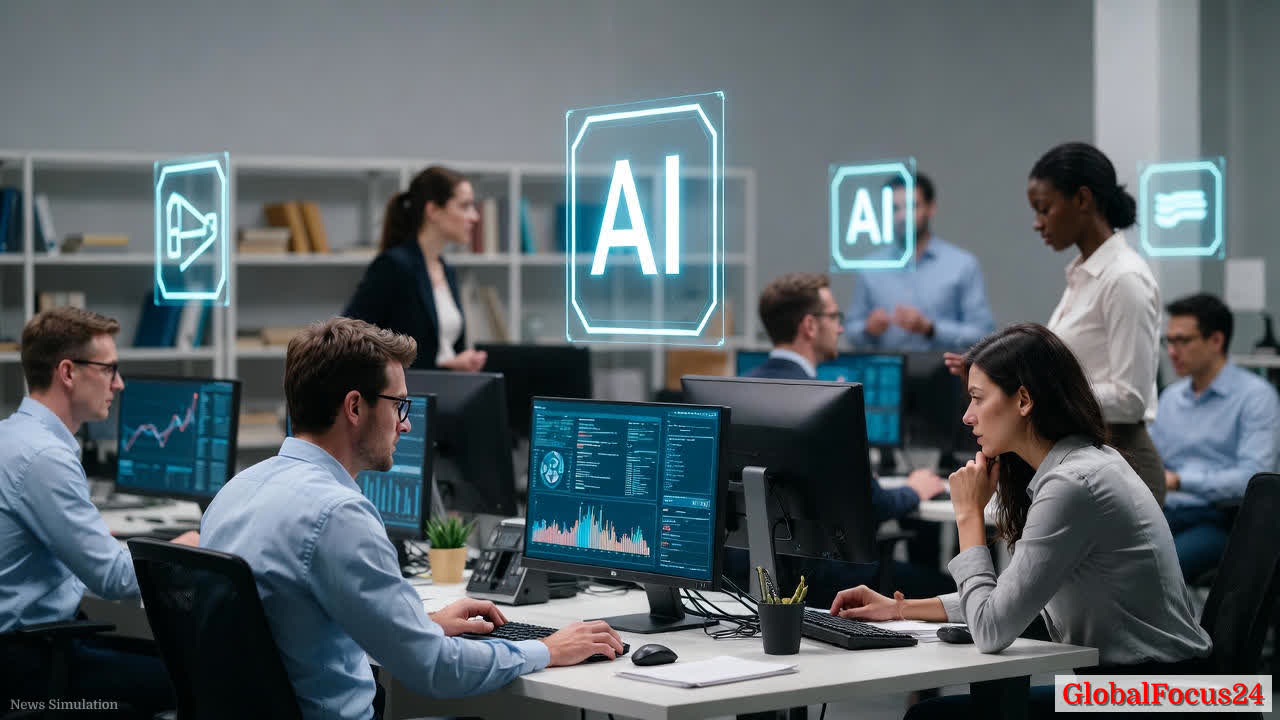
AI Is Creating Brand-New Occupations New roles emerge to train, integrate, and govern intelligent agents across industries
In laboratories of innovation and on the factory floors alike, artificial intelligence is sparking the birth of entirely new professional roles. These positions center on training AI agents, embedding them into organizational workflows, and overseeing their decisions to minimize errors and misalignment. As companies rush to adopt increasingly capable AI systems, a growing cadre of human experts is stepping in to bridge the gap between machine capability and practical, ethical, and reliable performance.
Historical Context: From Automation to Augmentation The current wave of AI-driven job creation sits atop a longer arc of automation in the workplace. The early days of computerization replaced repetitive tasks with software that could be programmed to perform them more efficiently. Later, robotics and industrial automation reshaped manufacturing floors, creating roles for technicians who could design, program, and maintain automated systems. What distinguishes today’s trend is the escalation from automation of routine tasks to automation of decision-making and knowledge work.
Experts point to a continuum that stretches back to information technology workers who built the backbone of digital operations. As AI matured—from narrow, task-specific systems to broader, adaptable agents—the demand increased for human specialists who can train models to understand nuanced contexts, align machine behavior with organizational goals, and govern AI-driven processes within real-world constraints. The new occupations are not merely additions to the payroll; they represent an evolution in how enterprises think about work, risk, and accountability in a data-rich environment.
Economic Impact: New Roles, New Value, New Risks The emergence of AI-centric roles carries several notable economic implications. First, these positions create avenues for career progression within data science and AI teams, offering pathways that emphasize governance, ethics, and integration rather than purely technical depth. Second, they can drive efficiency gains by reducing model drift, ensuring compliance with internal policies, and accelerating the deployment of AI-enabled workflows. By embedding agents into business processes—such as customer service, supply chain planning, or product development—organizations can realize faster iteration cycles and more consistent results.
However, the economic ripple extends beyond direct employment. The need to hire and train specialists who understand both the business domain and AI systems can uplift the skills premium in regions with strong technical ecosystems. Firms are investing in education partnerships, re-skilling programs, and apprenticeship models to build a workforce capable of guiding AI through unfamiliar terrain. In regions that have cultivated centers of AI research and development, the new roles often catalyze broader investments in local infrastructure, data governance, and digital utilities that underpin modern enterprise operations.
Regional Comparisons: Global Patterns in AI Talent Demand Across North America, Europe, and Asia-Pacific, the appetite for AI governance and integration roles is accelerating, albeit with regional variations in emphasis. In the United States and parts of Western Europe, emphasis is shifting toward enterprise-wide AI governance—designing frameworks for model validation, risk assessment, and policy enforcement within large organizations. In these markets, demand is highest for professionals who can translate policy requirements into actionable deployment strategies, bridging the gap between engineers and business units.
Asia-Pacific, with its rapid digital transformation and expanding cloud ecosystems, is witnessing a surge in roles focused on embedding AI agents into supply chains and customer-facing platforms. Here, professionals adept at cross-functional collaboration—combining operational knowledge with AI literacy—are particularly sought after. In some regions, state-supported initiatives and industry consortia are accelerating the standardization of practices around AI risk management, creating a more predictable labor market for these new positions.
A common thread across regions is the importance of human capability that AI cannot easily replicate. Contextual understanding, ethical judgment, and creative problem-solving remain uniquely human strengths that equip these professionals to interpret model outputs, anticipate edge cases, and adjust strategies in response to evolving real-world dynamics. This concentration of human-AI collaboration is shaping organizational cultures, as teams learn to work alongside intelligent agents rather than simply supervise them.
What the New Roles Look Like in Practice The field is coalescing around several core categories of job roles, each with a distinct focus and set of responsibilities:
- AI Training and Alignment Specialists: These professionals curate and refine datasets, calibrate prompts and reward systems, and guide AI agents toward desired behaviors. They often work closely with data scientists and product teams to ensure that models perform reliably across diverse scenarios and user contexts.
- AI Integration Architects: Tasked with embedding autonomous agents into existing workflows, these experts design the interfaces, protocols, and orchestration logic that allow AI systems to operate in harmony with human teams. They must understand legacy systems, data flows, and business processes to minimize disruption while maximizing impact.
- AI Governance and Compliance Officers: Focused on risk management, these specialists establish policies, monitoring regimes, and audit procedures to ensure AI decisions comply with legal, ethical, and organizational standards. They translate regulatory requirements into practical controls and reporting mechanisms.
- AI Quality and Reliability Engineers: These engineers monitor model performance in production, implement testing strategies, and manage incident response for AI-driven processes. Their work ensures consistency, traceability, and resilience against unexpected inputs or adversarial manipulation.
- Human-AI Interaction Designers: Centered on user experience, these professionals design the ways humans interact with AI agents, optimizing clarity, transparency, and trust. They craft feedback loops, explainability features, and intuitive controls that empower users to steer AI behavior.
- AI Ethics and Responsible Innovation Leads: Charged with guiding organizations through responsible AI adoption, these leaders evaluate societal impact, bias, and fairness considerations, establishing governance practices that reflect organizational values.
Public Reaction and Societal Implications As AI begins to populate job descriptions that did not exist a few years ago, public interest has grown alongside concern about job security. Analysts emphasize that the trend toward new roles is not a simple substitution of human labor with machines. Instead, AI is evolving into a complementary force that creates opportunities for workers to upskill and move into more strategic, creative, and supervisory positions. Communities investing in ongoing education and apprenticeship programs may experience higher resilience against automation shocks, as workers transition into roles that leverage uniquely human strengths.
Organizations in industries as varied as manufacturing, finance, healthcare, and logistics are reporting early successes from these new roles. In manufacturing corridors, for example, AI integration architects work to streamline plant floor operations by coordinating autonomous systems with human operators, reducing downtime and increasing throughput. In financial services, AI governance specialists help ensure that automated decision-making aligns with risk appetite and regulatory constraints, while ethics leads scrutinize AI-driven advisory tools for bias and fairness.
Case Studies: Practical Examples in Action
- Manufacturing and Logistics: A multinational electronics manufacturer deployed AI integration architects to embed intelligent agents into production planning and inventory management. By coordinating automated scheduling with human line managers, the company achieved measurable gains in on-time delivery and reduced material waste. The team also established governance dashboards that track model drift and anomaly rates, enabling rapid interventions when performance deviates from expectations.
- Healthcare and Pharmaceuticals: A health tech firm piloted AI training specialists to curate medical data and validate assistant tools used by clinicians. This approach improved the accuracy of clinical decision support while maintaining strict adherence to patient privacy regulations. The role emphasized collaboration with clinicians to ensure that AI recommendations were interpretable and actionable within complex patient care pathways.
- Financial Services: A regional bank introduced AI ethics and governance leads to oversee automated credit scoring and customer service bots. By instituting explainability standards and monitoring for biased outcomes, the bank improved trust with customers and reduced regulatory risk as it expanded digital services.
- Public Sector and Infrastructure: A city government piloted human-AI interaction designers to enhance citizen-facing platforms. The roles focused on making AI-assisted guidance more accessible, with clear explanations of how decisions are made and what data informs them. The public sector reported improved user satisfaction and more consistent service delivery across departments.
Future Prospects: Scaling the Talent Pipeline Looking ahead, experts anticipate that the workplace will increasingly resemble a collaborative environment in which human professionals and AI agents operate in tandem. The talent pipeline for these roles is expected to expand through a combination of higher education programs, corporate training, and industry certifications that emphasize practical governance, risk management, and human-centered design.
Universities and vocational schools are responding with curricula that blend AI literacy with domain expertise. Programs that teach data ethics, model validation, and human-AI collaboration are gaining traction, helping to prepare graduates for roles that require both technical fluency and strategic thinking. On the corporate side, companies are investing in internal boot camps and cross-functional teams designed to accelerate proficiency in deploying and governing AI-enabled workflows.
Industry leaders stress that successful implementation will hinge on organizational commitment to reskilling and ongoing professional development. They argue for a multidisciplinary approach that integrates technical, legal, ethical, and operational perspectives. In practice, this means teams that include data scientists, software engineers, operations managers, compliance professionals, and end users who provide continuous feedback on AI system performance.
Public Policy and Ethical Considerations As the labor market evolves, policymakers face questions about training subsidies, wage insurance, and lifelong learning incentives that can help workers transition into new roles. Proponents argue that public investment in AI education can yield broad economic benefits, including higher productivity, more resilient supply chains, and greater international competitiveness. Critics caution that rapid skill shifts can leave some workers behind if training opportunities are not widely accessible.
Ethical considerations also come to the fore as AI governance roles assume greater importance. Ensuring transparency in automated decisions, safeguarding against bias, and maintaining accountability for AI-driven outcomes are central to building trust in AI-enabled workplaces. Organizations that prioritize responsible innovation are likely to see sustained adoption and improved public perception, as workers and customers respond positively to clear explanations and ethical safeguards.
Conclusion: A New Chapter in the Labor Market The emergence of brand-new occupations centered on training, integrating, and governing AI agents marks a significant shift in the labor market. Rather than replacing human labor wholesale, AI is redefining the nature of work and creating pathways for upskilling and career progression. By emphasizing human strengths—contextual understanding, ethical judgment, and creative problem-solving—these roles enable organizations to harness AI responsibly, efficiently, and innovatively.
As regions invest in education, industry partnerships, and governance frameworks, the adoption of AI-driven workflows is likely to accelerate. The result could be a more dynamic and resilient economy in which AI acts as a powerful collaborator, amplifying human potential rather than diminishing it. The stories of early adopters, from factory floors to financial centers, illustrate a shared trajectory: AI creates opportunities that hinge on human expertise, guiding intelligent systems toward reliable, interpretable, and ethically sound outcomes.