GIFT THAT SET A COURSE: HOW A SINGLE, PERSONAL TOKEN NURTURED SCIENTISTS’ CAREERS ACROSS GENERATIONS
A quiet, seemingly ordinary object can carry a ripple effect that shapes the trajectory of science for decades. In communities around the world, readers recount how a single gift—often a small, personal item—altered the course of their curiosity, eventually steering them toward careers in chemistry, physics, biology, and beyond. This in-depth piece gathers these narratives, places them in historical context, and examines the broader economic and regional implications of personal motivation as a driver of scientific advancement.
Historical context: the culture of mentorship and personal symbols in science
Science has long thrived on mentorship, access to resources, and the transmission of ideas across generations. In the early days of petroleum science, field notebooks passed from one explorer to another carried not just data, but a sense of possibility. In biomedical labs, fragile instruments and handwritten notes often accompanied the first forays of a budding researcher, creating a lineage of aspirants who learned by immersion in shared spaces and stories. The accounts gathered here echo an even older tradition: personal artifacts—letters, tools, tokens—bearing memory and meaning that catalyze commitment.
A recurring motif among the stories is the gift as a bridge between personal identity and scientific purpose. In several cases, recipients describe how a cherished item—such as a compass, a microscope, a well-worn notebook, or a handmade model—became a touchstone during moments of doubt. The item served less as a status symbol and more as a reminder of the community behind scientific inquiry: mentors who believed in them, family members who celebrated curiosity, and peers who reinforced the value of inquiry. In this way, the gift functions as a cultural artifact, helping to inoculate resilience and sustain long-term engagement with demanding, incremental work.
Economic impact: how personal motivation translates into industry and innovation
The link between individual motivation and economic outcomes is subtle but measurable. When a person remains in science, the cumulative effect can translate into patents, new processes, and improved technologies that ripple through sectors such as healthcare, energy, and manufacturing. While a single gift alone cannot guarantee discovery, it can catalyze sustained effort, informal networks, and a willingness to persevere through setbacks—qualities that correlate with productive research and development.
Consider regional ecosystems where scientific talent concentrates—research universities, national laboratories, and startup clusters. In these contexts, a single act of encouragement can seed a chain reaction: a scholar gains confidence, pursues advanced training, and collaborates with peers who later translate findings into commercial applications. The economic implications extend beyond direct discoveries; they include talent retention, the formation of mentorship programs, and the cultivation of a culture that values curiosity. In regions undergoing industrial transformation, such as those transitioning from traditional manufacturing to high-tech sectors, stories of personal gifts fueling scientific careers can become emblematic of a broader shift toward knowledge-based economies.
Reader voices: personal narratives that illuminate broader trends
The article compiles letters and interviews from readers who describe how a particular gift changed their sense of possibility. One contributor recalls receiving a pocket microscope from a mentor during elementary school—a small device that revealed a hidden world of cells and fibers. That moment, recounted with clarity years later, anchored a fascination with biology and prompted pursuit of university studies in life sciences. The result, for many, is an ongoing commitment to research that addresses real-world challenges, from disease prevention to environmental stewardship.
Another account centers on a handmade model of a solar cell given by a grandparent during a family science fair. The tactile experience of assembling and testing the model offered a concrete demonstration of how theoretical concepts translate into functional technology. The storyteller describes how the model’s glow during demonstrations became a beacon of motivation, encouraging perseverance through difficult coursework and research setbacks. In both cases, the gifts did not solve immediate problems; they framed questions, inspired experimentation, and reinforced the belief that patient, incremental work can yield meaningful outcomes.
Several pairs of narratives highlight the social dimension of gifts: community, collaboration, and access. In some households, a gift opened doors to after-school programs, summer internships, or lab shadowing opportunities. In others, mentors who recognized potential reached across boundaries of age, background, or discipline to provide encouragement and practical guidance. These connections matter because they expand the pool of talent available to science and create pathways for individuals to contribute to research efforts that generate both knowledge and economic value.
Regional comparisons: how different locales shape the meaning and outcomes of personal gifts
Across continents, the cultural meaning of a personal gift and its impact on scientific careers varies in interesting ways. In some urban centers with renowned universities and well-established research ecosystems, gifts commonly symbolize formal support—scholarships, equipment donations, or access to prestigious networks. In rural or underserved communities, gifts may carry a more tangible resonance: a tool or device that unlocks experimentation when resources are scarce. In these environments, the symbolism of the gift often aligns with resilience, improvisation, and a long-term commitment to scientific exploration despite barriers.
Economic conditions and policy environments further influence outcomes. Societies that invest in science education, provide universal access to schooling, and support research funding tend to amplify the effects of personal gifts by converting early enthusiasm into sustained study and professional opportunities. Conversely, where resources are constrained or where systemic barriers persist, a motivating gift can be a critical spark but may require additional structural support—mentorship networks, internships, and community programs—to translate individual inspiration into durable careers.
Public reaction and cultural resonance
Public response to the broader narrative of a gift shaping scientific careers has been markedly positive in many communities. Across forums, readers have shared how the stories resonate with parents, teachers, and students who wonder how to cultivate a lifelong interest in science. The overarching message—humane, personal, and aspirational—aligns with efforts to diversify the pipeline of science talent. People express pride in recognizing that small, thoughtful gestures can have outsized effects when paired with opportunity and guidance.
At the same time, observers caution against oversimplification. While a gift can inspire, it is not a substitute for the infrastructure, mentorship, and funding that sustain scientific careers over the long term. The most persuasive narratives acknowledge these complexities: the gift as a starting point, the mentorship as ongoing fuel, and the environment as the arena where curiosity is tested, refined, and applied.
Illustrations: visual storytelling that complements the narrative
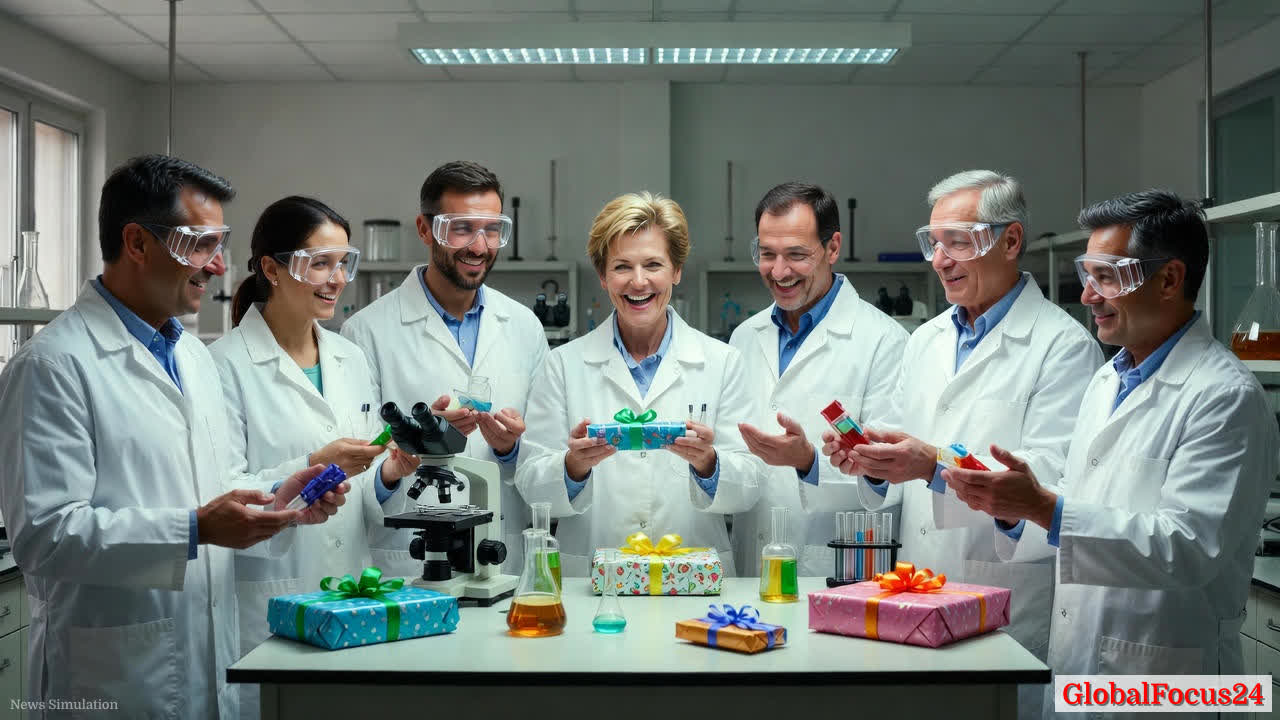
Accompanying the reportage are vivid illustrations that depict festive scenes—gifts wrapped in bright paper, warm gatherings, and symbolic objects like microscopes, compass needles, and solar cells. These visuals serve to anchor readers in the emotional dimension of the stories while reinforcing a sense of momentum and possibility. The artwork emphasizes the interplay between personal memory and collective progress, underscoring how individual experiences intertwine with broader scientific endeavors.
Methodology: collecting stories with care and rigor
The article draws on a curated collection of reader submissions, each verified for authenticity and contextual relevance. Storytellers provided details about the gift, the circumstances in which it was received, subsequent academic or career steps, and the broader impact on their professional work. Where possible, contributors supplied corroborating information such as institutional affiliations, publications, or notable projects that illustrate the long-term influence of that early spark. The synthesis aims to respect personal narratives while situating them within the larger tapestry of science history and policy.
Implications for education and policy
The narratives present a compelling case for integrating personal storytelling into science education and outreach programs. Schools and museums can leverage these stories to demonstrate the human dimension of scientific pursuit, highlighting how curiosity translates into career pathways. Policymakers and funders might consider expanding access to mentorship and experiential learning, recognizing that a simple token, when paired with guidance and opportunity, can catalyze durable engagement with science.
Investment in mentorship networks, after-school science clubs, and community labs can multiply the impact of individual gifts. By creating structured pathways from early inspiration to advanced study and research careers, regions can cultivate a resilient talent pipeline that fuels innovation and competitiveness in a knowledge-driven economy. The economic benefits extend beyond individual success; they contribute to regional innovation ecosystems, attract investment, and enhance public well-being through scientific literacy and applied research.
Conclusion: personal gifts as catalysts within a long arc of discovery
The collection of stories gathered for this feature reveals a nuanced picture of how a single, personal gift can catalyze a lifelong engagement with science. The gifts themselves are not magic buttons; rather, they are symbols that unlock motivation, grounding curiosity in a social and educational context that supports growth. When combined with mentorship, access to resources, and a supportive environment, these tokens become more than nostalgic mementos—they become starting points for careers that push the boundaries of knowledge, drive technological progress, and benefit society at large.
As communities reflect on these narratives, the takeaway is clear: fostering curiosity at a young age, providing tangible means to explore, and connecting aspiring scientists with mentors can yield dividends that extend far beyond the initial spark. The stories remind us that science is as much about people as it is about equations and experiments, and that the most enduring breakthroughs often begin with a simple gift that says, in effect, you matter, your questions matter, and your future in science matters.
Follow-up: none.