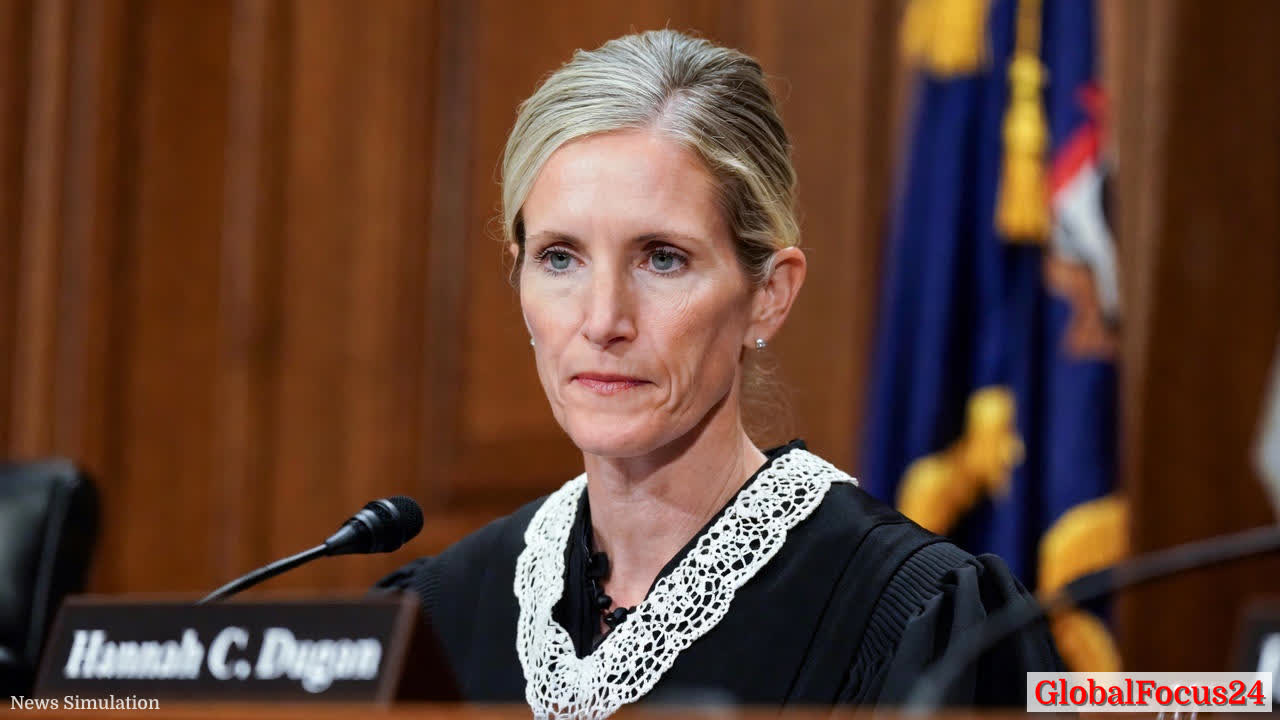
Judge Who Helped Illegal Migrant Escape ICE Resigns
A Milwaukee County Circuit Court judge who was found guilty of obstructing federal immigration agents has stepped down from the bench, marking a notable moment in the ongoing dialog between state judicial independence and federal immigration enforcement. The resignation, submitted to Governor Tony Evers on a Saturday, follows a federal jury’s conviction last month on a felony obstruction charge tied to an incident involving an immigrant in the courtroom.
The case centered on Hannah C. Dugan, who presided over a domestic violence hearing in which prosecutors say she facilitated the escape of Eduardo Flores-Ruiz, a Mexican national in the United States illegally. Court records indicate that Dugan allowed Flores-Ruiz and his attorney to exit through a back door to evade U.S. Immigration and Customs Enforcement (ICE) agents stationed in the courthouse lobby. Flores-Ruiz was later captured and deported to Mexico.
Dugan’s resignation letter characterizes her departure as a response to a political and legal process she describes as unprecedented. She asserts that the federal proceedings endangered judicial independence and asserts that her actions were taken in accordance with her interpretation of her duties as a judge. The letter notes regret over the circumstances while defending the actions as aligned with due process and courtroom responsibility.
The legal proceedings and the resignation come amid broader debates over the balance of responsibilities between state courts and federal immigration authorities. Wisconsin lawmakers from the Republican party had urged impeachment in the wake of the conviction, arguing that a felony conviction for obstructing federal agents constitutes grounds for removal from the bench. Dugan’s resignation eliminates the immediate question of impeachment and opens the door for a gubernatorial appointment to fill the vacancy on the Milwaukee County bench.
Historical context helps illuminate why this incident resonates beyond a single courtroom. The friction between state judicial processes and federal immigration enforcement has persisted for years, shaped by legal doctrines surrounding due process, the separation of powers, and the practical realities of courtroom administration. Historically, state judges have been tasked with interpreting state and constitutional law, while federal immigration authorities enforce nationwide policies. When the actions of a state official intersect with federal enforcement, concerns invariably arise about where accountability lies and how to preserve the integrity of judicial proceedings in both arenas.
From an economic standpoint, the event touches on several interrelated factors. First, the resignation and associated investigations can influence public perceptions of the court system’s stability and predictability, which in turn can affect local business confidence and the willingness of residents and organizations to engage with the community’s legal institutions. Second, staffing changes in a major urban county can have downstream effects on court efficiency, backlog management, and the delivery of services to victims of domestic violence and others who rely on timely judicial processes. While a single resignation may not yield measurable long-term economic impact, it contributes to the narrative of how political and legal dynamics interact with resource allocation for courts and public safety.
Regional comparisons help place this incident in a broader context. In several neighboring states, cases involving judges, prosecutors, or law enforcement intersecting with immigration enforcement have prompted debates about accountability mechanisms and the role of the judiciary in national policy debates. Some jurisdictions have pursued impeachment or disciplinary measures following convictions or serious misconduct findings, while others have sought to preserve judicial independence by emphasizing due process protections and confirming resignations or retirements rather than pursuing removal. These patterns underscore the importance of clear standards for ethical conduct, transparency in disciplinary processes, and consistent communication with the public about the role of courts in upholding the rule of law.
Public reaction to the resignation has been mixed, reflecting a spectrum of views on immigration policy, judicial independence, and the integrity of the courtroom. Supporters of Dugan’s actions have argued that she acted to safeguard due process and to prevent the disruption that could arise from a high-profile ICE operation in a sensitive domestic violence case. Critics contend that allowing a suspected violator of immigration law to leave through a back door undermines the principle that all individuals in a courtroom are subject to equal enforcement of the law, potentially eroding public trust in the judiciary. The resignation reframes the conversation around how judges should navigate complex moments at the intersection of state responsibilities and federal immigration enforcement.
In the aftermath, Governor Evers faces the task of appointing a replacement who can maintain continuity within the Milwaukee County judiciary. The appointment process will likely consider factors such as judicial philosophy, professional experience, and demonstrated commitment to upholding the rights of litigants while ensuring public safety. The new judge will be expected to address any procedural lessons from the case, reinforce clear courtroom protocols, and reassure the public that the integrity of the judicial process remains paramount.
The implications for victims and families involved in domestic violence cases are also worth noting. In such cases, timely access to the courts is essential for protection orders, legal relief, and safety planning. A court planning for efficient operations must balance the need for secure proceedings with the imperative of due process. The resignation itself does not alter the protections afforded to victims, but it highlights the ongoing need for robust procedures that minimize opportunities for interference while preserving the dignity and safety of all participants in court proceedings.
From a legal analysis perspective, the conviction raises questions about the boundaries of judicial discretion and the extent to which judges may be subject to criminal liability for actions taken in the course of their duties. The jury’s finding indicates that, beyond mere procedural missteps, prosecutors established that the conduct constituted obstruction of federal agents. The subsequent resignation underscores the seriousness of the charge and its consequences on a judge’s career, while also illustrating the complex interplay between legal accountability and public service.
The broader national landscape continues to monitor similar dynamics in other jurisdictions. As immigration policy evolves and federal enforcement strategies adapt to changing circumstances, courts will increasingly encounter cases that test the limits of judicial discretion in high-stakes settings. Legal scholars, policymakers, and practitioners are likely to debate the appropriate balance between protecting procedural rights and ensuring effective law enforcement. In this context, the Wisconsin case serves as a reference point for how judicial bodies respond when confronted with allegations of misconduct related to immigration enforcement.
Looking ahead, the immediate focus for Milwaukee County will be to restore continuity in the bench and to reaffirm commitments to fair and impartial adjudication. The new appointee will be expected to uphold the highest standards of professional conduct, maintain public confidence, and ensure that courtroom operations proceed with clarity and accountability. Community engagement and transparent communication about court procedures can help mitigate concerns and reinforce the essential role of the judiciary in safeguarding civil liberties while supporting public safety.
In summary, the resignation of a Wisconsin judge following a felony obstruction conviction marks a pivotal moment for the state’s judiciary and its relationship with federal immigration enforcement. The decision to step down reflects the seriousness of the charges and the consequences for judicial careers, while prompting a broader conversation about accountability, due process, and the ongoing need to balance state and federal responsibilities in the administration of justice. As the curtailment of the vacancy moves forward, the community awaits the appointment of a successor who can uphold the integrity of the bench and continue delivering impartial justice for all residents.