)
Billionaire’s Gift: Public Response to a High-Profile Donation and Its Wider Context
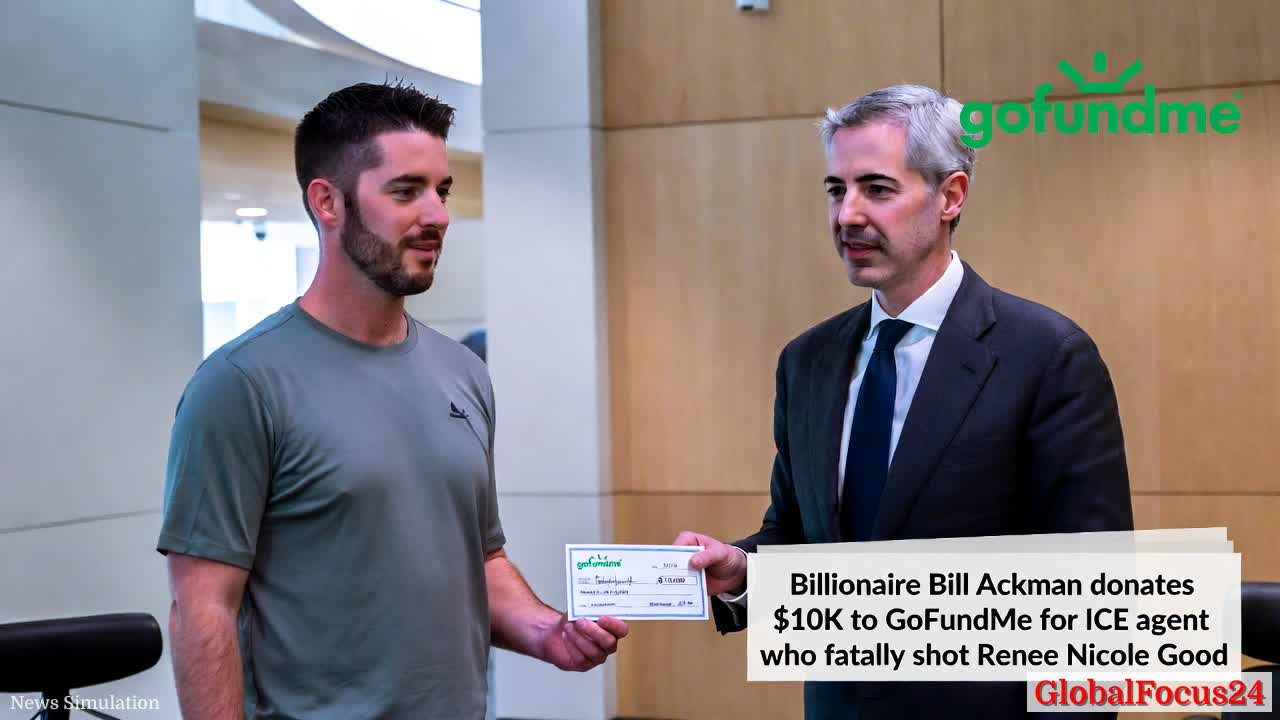
A prominent financier’s $10,000 donation to a GoFundMe campaign supporting a federal agent involved in a fatal shooting has stirred national conversation about charity, accountability, and the human costs surrounding law enforcement operations. This article examines the incident with historical context, economic implications, and regional comparisons, while maintaining an objective, fact-based lens.
Historical Context: The Road from Community Support to Public Scrutiny
- The use of GoFundMe campaigns to assist individuals involved in controversial incidents is not new. Communities have long mobilized to support families or professionals facing tragic or legally precarious circumstances, but the patterns and scale of modern crowdfunding reflect a broader shift toward private philanthropy supplementing public responses.
- Historically, financial assistance in high-profile cases has served dual purposes: easing immediate financial hardship for the individuals involved and signaling societal attitudes toward the incident. The evolving role of philanthropy in crisis moments mirrors broader trends in civil society where private actors take on aspects of social insurance during periods of uncertainty.
- The incident under discussion sits within a lineage of public debate about law enforcement risks, use-of-force standards, and transparency. As social media amplifies each case, the economic gestures by high-profile donors can become part of the narrative arc, influencing public perception and, in some instances, policy discourse.
Economic Impact: Philanthropy, Public Perception, and Resource Allocation
- A donation of $10,000 from a high-profile investor can have a meaningful symbolic impact, potentially encouraging others to contribute and increasing the campaign’s visibility. Small-dollar donations, when aggregated, can significantly alter the fundraising trajectory, improving financial stability for families facing legal and logistical challenges amid an incident.
- Beyond the immediate campaign, such gifts can affect local community morale and philanthropic dynamics. They may prompt regional foundations, corporations, or individuals to reassess their charitable giving strategies in response to high-profile cases, potentially influencing where money is directed in future crises.
- The public presentation of philanthropy in these cases can also interact with perceptions of accountability. When a businessman’s donation is prominently associated with a controversial event, it can prompt conversations about how private wealth intersects with public accountability mechanisms in the justice system and in law-enforcement oversight.
Regional Comparisons: How Localities Respond to Similar Incidents
- Across different regions, responses to civilian-involved law enforcement incidents show notable variation in crowdfunding activity, media coverage, and philanthropic engagement. Some regions experience concentrated local fundraising efforts that mobilize larger community participation, while others see more dispersed support that relies on national networks. These patterns often reflect local trust in institutions, the burden of legal costs, and the accessibility of crowdfunding platforms to residents.
- Economic conditions in a region—such as median incomes, unemployment rates, and the presence of robust charitable networks—shape how campaigns perform. In areas with well-established nonprofit ecosystems, crowdfunding can complement traditional assistance, whereas in regions with fewer formal supports, campaigns may become the primary source of relief for families during protracted legal cliffs.
- Comparative data from past cases suggests that the resonance of a donor’s contribution often depends on the perceived legitimacy of the cause, the transparency of fund management, and the speed with which funds are disbursed to beneficiaries, all of which can influence regional philanthropy trends over time.
Public Reaction: What People Are Saying and Why It Matters
- In public discourse, reactions to such donations typically reveal a spectrum of views. Some see philanthropy as a humane response that helps hard-working families navigate the consequences of violent encounters, while others view it as a reminder of wealth disparities in the justice system and as a potential incentive for costly, emotionally charged legal fights. These reactions reflect broader tensions between private charity and public accountability in contemporary society.
- The media environment surrounding high-profile donations often shapes the narrative, focusing on the individuals involved, the outcomes of the underlying case, and the broader implications for law enforcement policy. This dynamic can influence public opinion, potentially affecting legislative debates on funding for policing reforms, mental health resources for officers, or support programs for families affected by violent incidents.
- Public sentiment can also drive volunteerism and community engagement. Even when a donation is controversial, the attention it generates may spur local groups to organize educational events, fundraisers for related causes, or initiatives aimed at improving civilian oversight of police activities. Such grassroots responses can contribute to a more informed and engaged citizenry.
Contextual Background: The Case in Focus
- The incident at the heart of the discussion involved a GoFundMe campaign for an ICE agent connected to a fatal shooting. While the specific details and legal outcomes require careful, case-by-case review, the scenario underscores ongoing debates about use of force, authority, and civilian safety. Contextualizing the event within a broader history of similar cases helps readers understand why philanthropic gestures have become focal points in public discourse.
- Throughout the United States, cases involving law enforcement confrontations with civilians have prompted a wide range of responses, from heightened calls for transparency and reform to private fundraising efforts intended to stabilize families affected by legal battles and trauma. The convergence of these responses illustrates the multi-layered nature of contemporary crisis management, where legal, social, and economic dimensions intersect.
- It is important to note that any discussion of such cases must be anchored in verified information and respect for due process. Public understanding benefits from transparent reporting on case developments, fund allocation, and the outcomes of related investigations, ensuring that philanthropy complements, rather than substitutes for, official processes.
Historical Context and Economic Implications: A synthesis
- The interplay between historical context and current philanthropic responses reveals a consistent pattern: communities mobilize support during moments of deep uncertainty, drawing from longstanding cultural norms of mutual aid while adapting to modern mechanisms like crowdfunding platforms. This evolution reflects how social safety nets adjust as public institutions face challenges in crisis management and accountability.
- Economically, donor generosity—whether from billionaire benefactors or grassroots supporters—can affect families’ immediate financial stability, reduce stress associated with legal proceedings, and influence public conversations about the costs of policing, detention, and related policies. While a single donation may appear modest in the wire of national finance, its ripple effects in local economies and community morale can be meaningful.
- Regional dynamics show that philanthropic responses to controversial law-enforcement incidents are not monolithic. They reveal how local economies, cultural expectations, and the strength of civil society shape the pace and style of charitable giving, as well as how communities interpret duty and responsibility in the face of tragedy.
Conclusion: A Nuanced View of Charity, Accountability, and Society
- philanthropy in the wake of controversial law-enforcement incidents sits at the intersection of personal generosity, public accountability, and social resilience. The dialogue around donations and GoFundMe campaigns highlights both the compassionate impulse to support families and the complex debates about justice, transparency, and policy reform that such cases inevitably provoke.
- As communities continue to navigate these difficult topics, the sustainability and effectiveness of private giving depend on clear disclosures, ethical fund management, and constructive engagement with public institutions. In regions with strong nonprofit ecosystems, philanthropy can complement public resources, support families in crisis, and foster informed civic participation that strengthens democratic processes over time.
- Readers are encouraged to seek verified information about the specifics of any incident and to consider the broader context—historical patterns, economic impacts, and regional variations—when forming judgments about charitable actions and their broader societal implications. This careful, evidence-based approach supports a more informed public discourse that respects due process and acknowledges the human dimensions of every case.