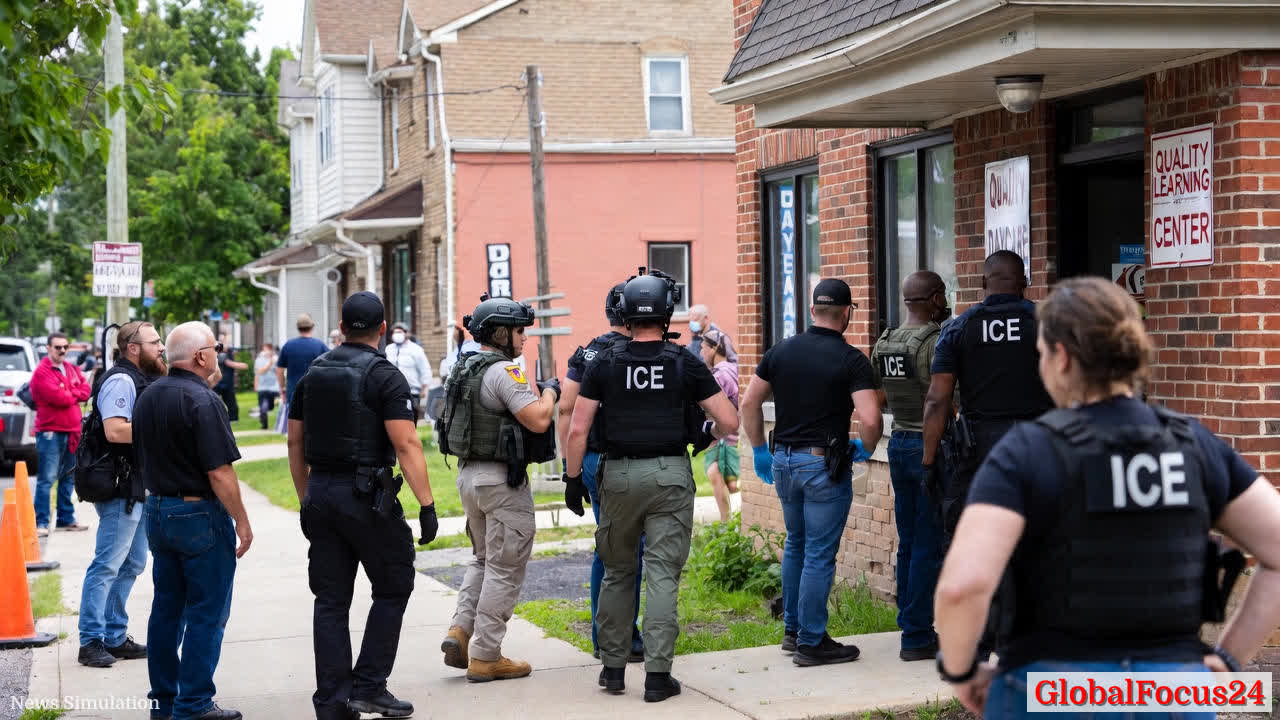
WALZ CLOSE IN: ICE RAIDS IN MINNESOTA FOLLOW $9B FRAUD ALLEGATIONS
In a high-stakes development that has riveted Minnesota and drawn national attention, federal law enforcement conducted a series of raids across several Minnesota counties in connection with a sprawling fraud scheme alleged to involve billions of dollars and members of Minnesota’s Somali community. The operation, carried out by Immigration and Customs Enforcement (ICE) agents among others, marks a rare moment of direct intervention in a financial scandal with far-reaching implications for community relations, regional economies, and political accountability ahead of national elections.
Historical context and tracing the thread
To understand the magnitude and potential impact of this investigation, it helps to place it within a broader historical frame of Minnesota’s economic and demographic evolution. Minnesota has long served as a hub for immigrant communities, including a sizable Somali population that has contributed to the state’s labor force, entrepreneurship, and cultural diversity. The Somali community’s presence in Minnesota, concentrated in major urban areas and some regional corridors, has paralleled the state’s ups and downs in manufacturing, healthcare, and service sectors. When fraud allegations surface in such a context, they do not exist in a vacuum: they intersect with trust in local institutions, perceptions of governance, and the complex dynamics of newly formed or rapidly expanding communities.
Economy and regional impact
A fraud scheme of this scale, if proven, could reverberate across several layers of Minnesota’s economy. Direct financial losses, disrupted small businesses, and reduced access to credit can ripple through local supply chains, particularly in sectors with tight margins such as service industries, childcare, and community-based enterprises. The involvement of a daycare facility as part of the scrutiny—such facilities frequently operate with narrow budgets and heavy regulatory requirements—highlights the delicate balance between safeguarding children and ensuring sustainable, compliant operations within diverse community businesses. The judicial and regulatory response will inevitably influence investor confidence, contractor participation in state programs, and the pace of public funding disbursements designed to support immigrant entrepreneurship and workforce development.
Regional comparisons illuminate the scale and stakes. In similar urban-adjacent markets with vibrant immigrant communities, large-scale financial investigations have historically produced mixed outcomes: some lead to strengthened oversight, improved compliance cultures, and targeted reforms; others risk stigmatizing entire communities and fostering financial disintermediation if fear of retribution or collateral damage deters legitimate business activity. Minnesota’s experience will be watched closely by neighboring states with comparable immigrant economies, including those with significant Somali diaspora presence. Analysts will assess whether the investigation prompts systemic improvements in grant oversight, auditing practices, and the monitoring of programmatic disbursements that support childcare, healthcare, and small business incubation.
Legal and procedural dimensions
The raids signal a transition from preliminary inquiries to what could become a more formal, multi-agency enforcement effort. Federal investigators, in coordination with local partners, are examining financial records, grant allocations, and program compliance. The allegations center on a possible misappropriation of funds and fraudulent activity involving multiple entities that operate under or alongside community-based organizations. Investigators typically examine cash flows, procurement practices, and the disposition of funds tied to public or quasi-public programs. While the exact mechanisms of alleged fraud remain under investigation, the process underscores the essential role of rigorous, transparent accounting in public-sector contracting and nonprofit or quasi-governmental operations.
Public reaction and political landscape
The unfolding events have placed public leaders under intense scrutiny. Within Minnesota’s political sphere, questions are being raised about oversight, governance, and accountability. The matter has drawn attention to prominent figures associated with the state’s political landscape, including individuals who have previously served in key state roles and now occupy national platforms. Observers stress that safeguarding public trust requires a careful separation of ongoing investigations from political narratives, ensuring that information is accurate, timely, and contextualized. As investigators disclose more details, residents will seek clarity on how program funds were allocated, what safeguards were in place to prevent misuse, and how recourse will be provided to communities and individuals affected by any identified discrepancies.
Implications for Democratic leadership and policy discussions
The case has intersected with broader national conversations about governance, fraud prevention, and the integrity of social and economic programs that support immigrant communities. While avoiding political commentary, it is clear that any credible findings could influence policy discussions at multiple levels of government, including how funding streams are monitored, how accuracy in reporting is enforced, and how communities trust public institutions when public funds touch family services, childcare, and workforce development. The public dialogue may prompt lawmakers and administrators to review compliance frameworks, strengthen anti-fraud measures, and invest in capacity-building for organizations receiving federal and state support.
Operational specifics and what to watch next
As investigators continue to assemble evidence, several threads warrant close attention:
- Scope of funds and programs involved: Analysts will determine which grants, contracts, or reimbursements are implicated, and whether the funding streams include public welfare programs, childcare subsidies, or economic development initiatives intended to spur local job growth.
- Entities under scrutiny: While initial reports highlighted a daycare center as an example within the broader network, investigators examine the full roster of organizations tied to the alleged scheme, including possible subcontractors and partner nonprofits.
- Oversight and controls: The investigation will likely assess the efficacy of internal controls, external audits, and the enforcement of procurement rules. The results could lead to recommendations for enhanced due diligence, more robust reporting requirements, and clearer lines of accountability.
- Community impact: Local families, childcare workers, and small-business owners may experience short-term uncertainty as regulatory changes take hold or compliance burdens shift. Community leaders are expected to coordinate with state and federal agencies to minimize disruption while ensuring rigorous protections against fraud.
- Timeline and transparency: In cases of this scale, daily developments, court filings, and procedural updates help shape public understanding. Expect a steady stream of information as authorities release findings, identify suspects, and outline potential charges or settlements.
Historical context of accountability in immigrant-led economies
Historically, immigrant-led economies contribute vibrancy and resilience to regional markets, bringing new skills, networks, and entrepreneurial energy. Yet, rapid growth can also outpace the capacity of smaller organizations to maintain rigorous governance structures, especially in sectors with rapid cash flows and frequent grants or reimbursements. The balance between encouraging entrepreneurship and enforcing strict financial stewardship remains a central theme in policy discussions about how best to support diverse communities without enabling malfeasance. Policymakers often respond with a combination of enhanced audits, improved training for nonprofit leaders, and targeted technical assistance to strengthen internal financial controls.
Public communications and responsible journalism
As coverage continues, journalists will aim to deliver precise, verifiable information that contextualizes allegations without inflaming tensions or stigmatizing entire communities. Responsible reporting emphasizes corroborated facts, the timelines of investigations, and the human dimension—the families, workers, and small business owners who rely on steady, legitimate access to public and private resources. In a climate where misinformation can spread quickly, transparent updates about what is known, what remains under review, and what steps authorities plan to take next are essential to maintaining public trust.
Impacting policy and regional economic planning
Local and state authorities may use this moment to revisit economic development strategies, particularly those that intersect with immigrant entrepreneurship and childcare services. Policymakers might consider strengthening grant oversight, standardizing reporting formats for program disbursements, and offering targeted support to organizations navigating complex regulatory requirements. Such measures could improve overall program integrity while preserving the important role of community-based organizations in supporting families, workers, and small businesses in Minnesota.
Conclusion
The Minnesota investigation represents a critical juncture for public institutions, community organizations, and the residents who rely on a robust, transparent economic environment. As federal investigators delve deeper into the alleged $9 billion fraud scheme, the coming days will likely bring more detailed findings, formal charges, and public disclosures. The case underscores the importance of rigorous financial governance, thorough auditing practices, and proactive community engagement to uphold trust and accountability in an economy that thrives on diversity, entrepreneurship, and inclusive opportunity. The outcome will shape conversations about how best to protect public funds, reinforce institutional integrity, and support the communities that form the backbone of Minnesota’s economic landscape.