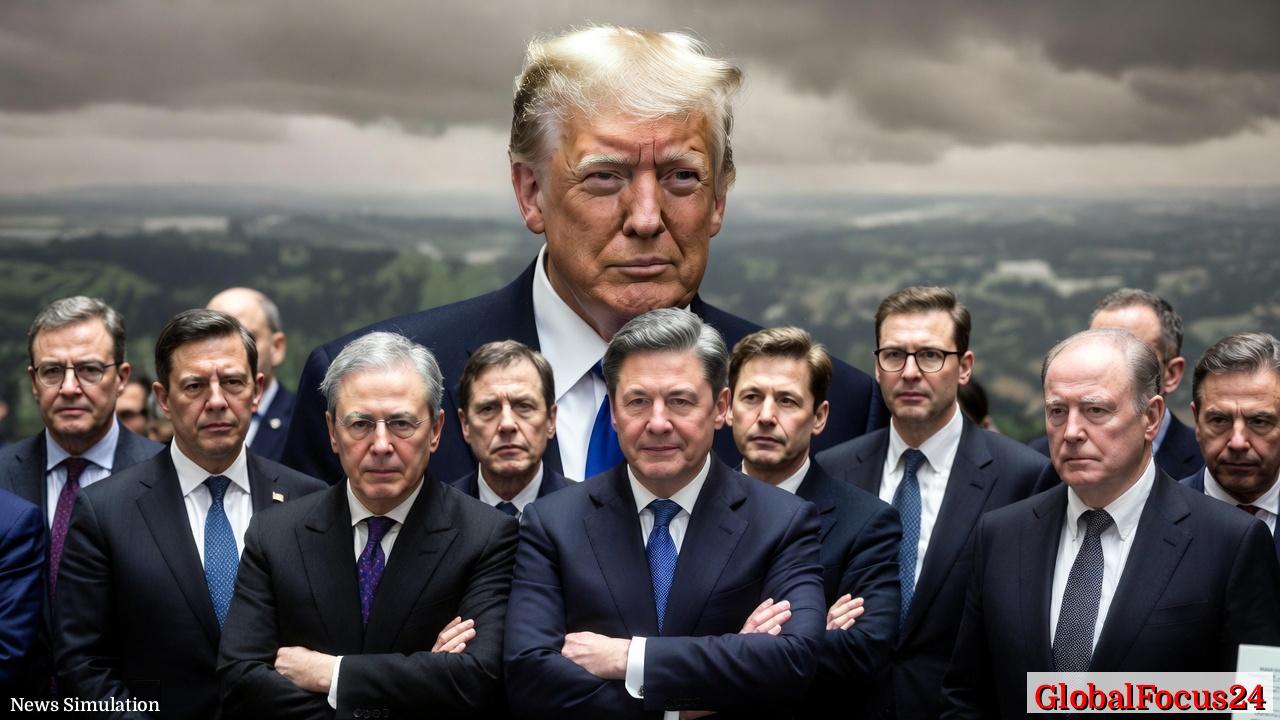
Western Leaders Face a Lonely Year in 2026 Amid Shifting Global Alliances
In 2026, mid-size liberal democracies find themselves navigating a geopolitical landscape marked by strategic realignments, rising protectionism, and evolving security needs. The dynamic is not merely about who sits across the negotiating table, but about how these nations sustain economic resilience, secure supply chains, and maintain credibility on the world stage in a world where traditional guardrails are being redefined. This year’s strategic challenge is shaped by the interplay of a volatile American political climate, a recalibrated Western alliance framework, and the accelerating ascent of regional powers that complicate the idea of a unified global order.
Historical context: the long arc of alliance building To understand the present moment, it helps to revisit the post-World War II order that created enduring Western alliances. The transatlantic bond, built on shared democratic values, mutual defense commitments, and integrated economic systems, transformed into a dense network of institutions, treaties, and norms. The late 20th and early 21st centuries saw expansion of NATO, deeper European integration, and a global trade regime that favored open markets and predictable diplomacy. Yet, history also reminds us that alliances are not static: they endure by adapting to new threats, sharing costs, and maintaining a credible deterrence posture.
Economic interdependence has always been both a strength and a vulnerability. Supply chains that once crossed continents with relative ease now face geopolitical pressure, sanctions regimes, and the rising cost of maintaining strategic stockpiles of critical goods. The 2020s, in particular, exposed vulnerabilities in technology, energy, and critical minerals sectors. In response, many mid-size liberal democracies pursued diversifying suppliers, onshoring certain capabilities, and investing in domestic research and development to reduce strategic dependencies. The year 2026 sits atop this evolving foundation, where economic resilience and alliance cohesion are tested in real time.
Current landscape: a fragmented yet interconnected world In 2026, Western leaders confront a world where American domestic politics significantly shape foreign policy. With debates over alliance burden-sharing, defense modernization, and strategic priorities intensifying, traditional expectations of automatic American leadership are giving way to a more guarded, transactional approach. This shift affects allied nations that rely on U.S. security guarantees while seeking greater strategic autonomy. The result is a more fluid security environment, where partners must balance reliance on alliance commitments with independent diplomacy and diversified security partnerships.
At the same time, China emerges as a consequential factor in global affairs without assuming the role of a straightforward regional savior for Western democracies. China’s economic heft, technological prowess, and extensive overseas investments complicate the calculus of regional security and economic policy. While Beijing remains a powerful partner for trade and investment, it is cautious about deep political entanglements with Western defense commitments, fearful of delivering a dependency that could constrain its strategic latitude. For mid-size democracies, this creates a complex “choose your partner” dilemma: seek closer ties with Beijing to secure markets and capital, or uphold traditional Western alignment to preserve security guarantees and shared norms.
Regional comparisons: how peers fare in a changing order
- Europe: The European Union and its member states face a delicate balance between protecting technological leadership and maintaining unity amidst divergent national interests. Energy security, industrial policy, and defense modernization are priorities, particularly as Europe reassesses its strategic autonomy. The deployment of next-generation defense capabilities, increased defense spending, and renewals of joint procurement programs illustrate Europe’s commitment to resilience, even as political winds within member states shift.
- the Indo-Pacific rim: Nations in this region navigate a landscape where competition between major powers intensifies. Alliances with the United States, coupled with regional security arrangements, aim to deter coercion and safeguard sea lanes. Yet countries in this sphere also diversify partnerships with other powers to sustain economic growth and technological development, highlighting a pragmatic approach to security that emphasizes resilience and diplomacy over exclusivity.
- North America: The United States remains a central but recalibrated anchor. Domestic political dynamics influence international timing and tone, while the broader strategic framework—naval power, advanced technologies, and economic heft—continues to shape allied calculations. Mid-size partners in North America and beyond watch governance debates closely, seeking clarity on long-term commitments, especially in critical areas such as cybersecurity, supply chain security, and defense modernization.
Economic impact: costs, opportunities, and adaptation The economic dimension of 2026’s geopolitical realignment is significant. For mid-size liberal democracies, sustaining economic growth while maintaining robust defense and resilience investments requires disciplined policy choices. Several themes stand out:
- Supply chain diversification and resilience: Nations accelerate redundancy in critical sectors such as semiconductors, pharmaceuticals, rare earths, and energy. Investments in domestic manufacturing capabilities, regional supply hubs, and strategic stockpiles aim to tamp down the risk of disruption from geopolitical shocks.
- Defense modernization and industrial policy: Increased defense spending and collaborative procurement initiatives reduce duplication and increase interoperability among allied forces. This approach helps ensure that modern platforms—whether in air, land, sea, or space—are compatible across partner nations, enabling faster collective responses to crises.
- Innovation ecosystems: Government incentives, private sector investment, and public-private partnerships fuel research in areas like artificial intelligence, cyber defense, quantum technologies, and resilient infrastructure. The objective is to protect strategic advantage while fostering inclusive economic growth.
- Trade realignments: While multilateral trade frameworks remain influential, nations explore regional agreements and targeted trade deals to safeguard access to markets. Industry competitiveness improves as standards converge and regulatory barriers are addressed through constructive diplomacy.
Public reaction and societal dynamics The public mood across Western societies in 2026 is shaped by concerns about security, economic security, and the daily realities of global competition. Voter interest in defense, technology policy, and domestic social resilience rises, reinforcing calls for transparent governance and accountable leadership. Public discourse emphasizes:
- The promise and risk of strategic autonomy: Citizens weigh the benefits of diversified partnerships against the value of deep, long-standing alliances. The perceived reliability of assurances, coupled with tangible capabilities, informs public opinion.
- Economic security and cost-of-living pressures: As governments invest in defense and resilience, households monitor the impact on taxes, energy costs, and consumer prices. Balanced messaging from authorities focuses on long-term stability and near-term relief where possible.
- Global tourism, education, and cultural exchange: Open exchange continues to bolster soft power and economic vitality, even as policy discussions emphasize security and resilience. This dynamic underscores the interconnected nature of modern liberal democracies.
Case studies: regional narratives in practice
- Europe’s defense and energy strategy: Several European countries accelerate defense modernization while pursuing diversified energy sources. Cross-border infrastructure projects and sovereign investment funds back strategic priorities, enhancing resilience without sacrificing economic performance. The region demonstrates how coordinated procurement and shared research initiatives can yield economies of scale and improved interoperability.
- The Baltic states’ deterrence posture: Facing proximity to a major power, Baltic nations invest in layered defense mechanisms, including cyber resilience, intelligence-sharing, and rapid-response forces. Their approach illustrates how smaller states can punch above their weight through coordinated partnerships and proactive national security planning.
- Nordic resilience model: Nordic countries emphasize social cohesion, robust welfare states, and high-quality infrastructure to cushion citizens from economic shocks. Their strategy blends soft power diplomacy with hard security measures, underscoring the value of reputational capital in global leadership.
Conclusion: navigating a lonely yet resilient path The year 2026 presents mid-size liberal democracies with a nuanced challenge: sustain economic vitality, preserve essential security guarantees, and maintain influence in a world where old certainties are fading. The path forward hinges on practical diplomacy, credible defense modernization, and intelligent economic policy that reduces dependencies while expanding global partnerships. Rather than seeking a single alternative partner, these nations prioritize resilient networks—strong alliances, diversified trade relationships, and vibrant domestic innovation ecosystems—that can weather a shifting international environment.
Public sentiment and policy outcomes will hinge on credible leadership that communicates a clear, shared vision for security, prosperity, and democratic resilience. As Western leaders balance the benefits of longstanding alliances with the realities of a more complex global stage, the measure of success will lie in tangible improvements to everyday life—safeguarded supply chains, reliable energy and technology access, and continued opportunities for citizens to participate in a dynamic, interdependent world.