)
Trump Envoys Fail to Calm European Fears of a U.S. Retreat
Uneasy Transatlantic Mood in Europe
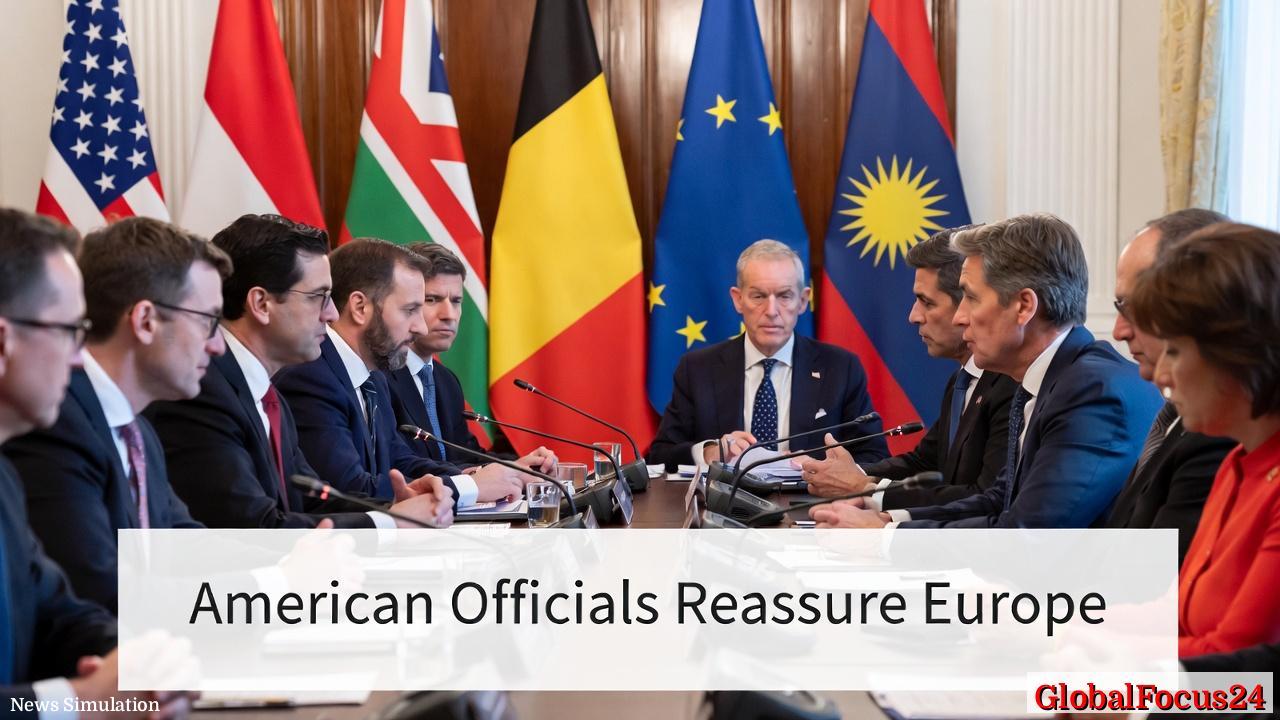
Senior American officials travelled across Europe this month with a clear mission: to convince nervous allies that Washington is not walking away from its longstanding security commitments. Their private meetings, public remarks and closed-door briefings were designed to send a reassuring signal that, despite heated rhetoric and shifting priorities, the United States remains a committed partner in European security and defense.
Yet the reception was notably cool. European ministers, diplomats and military planners listened carefully but came away unconvinced that U.S. policy is anchored in the durable, predictable framework that has underpinned the transatlantic alliance since the end of the Second World War. Instead, many officials left the encounters more concerned that the current American approach could herald a lasting redefinition—if not a partial retreat—of the U.S. role in Europe.
Against a backdrop of war on the continent, energy shocks and mounting economic pressures, the failure of the delegations to provide genuine reassurance has deepened a sense of strategic anxiety in European capitals. That unease is now shaping political debates, budget decisions and long-term defense planning from Brussels to Berlin and from Warsaw to Paris.
A Legacy of Transatlantic Dependence
For much of the post‑1945 era, European security has been built around an American guarantee. Through NATO, the U.S. committed its troops, nuclear deterrent and political weight to the defense of Europe, while European states gradually reduced their own defense spending and focused on welfare systems, infrastructure and integration within the European Union.
During the Cold War, this arrangement reflected a clear division of labor: the United States acted as strategic protector, while Western Europe concentrated on reconstruction and economic growth. Even after the fall of the Soviet Union, the pattern endured. Although NATO expanded eastward and European militaries participated in missions from the Balkans to Afghanistan, the U.S. remained the indispensable actor—setting strategic direction, providing critical capabilities and often paying a disproportionate share of the bill.
Periodic disputes over burden‑sharing, from debates about intermediate-range missiles in the 1980s to arguments over Iraq in 2003, never fundamentally altered this dependency. Each crisis was followed by a return to business as usual, with Washington at the center. That historical experience is one reason why some American officials assumed that a well-timed diplomatic tour could again smooth ruffled feathers. This time, however, the atmosphere is markedly different.
Europe’s New Strategic Vulnerability
The war on Europe’s eastern flank has starkly exposed how deeply the continent still relies on U.S. military power. American intelligence, logistics, air defense systems and ammunition stockpiles have been central to supporting Ukraine and reinforcing NATO’s eastern members. European governments have increased spending and transferred significant quantities of equipment, but they are acutely aware that their militaries, on their own, remain stretched and in some cases hollowed out.
In this context, any hint of a significant American pullback is felt immediately in European defense ministries. Officials worry not only about troop levels or specific weapons deliveries, but about the overall reliability of U.S. commitments in a crisis that could escalate quickly and unpredictably. The fear is not simply of abandonment, but of volatility—sudden shifts in policy driven by domestic politics or personal decisions in Washington.
That unease is magnified by long procurement timelines and limited industrial capacity. European rearmament cannot be completed in a year or two; it requires sustained investment, predictability and coordination. If American engagement is perceived as uncertain, governments face difficult choices: accelerate their own spending and seek new security arrangements, or continue to rely on Washington and hope that the current turbulence will eventually subside. For now, many are attempting to do both.
Mixed Messages from Washington
The delegations that arrived in Europe this month used familiar language about shared values, collective defense and the importance of NATO. They emphasized that American troops remain deployed on the continent, that joint exercises continue and that the U.S. still sees European security as closely tied to its own. In formal terms, no treaty has been revoked, no formal alliance structure dismantled.
Yet European counterparts focused less on the scripted assurances and more on the broader pattern of statements from Washington. Public comments questioning the value of certain alliances, suggesting conditional support for partners, or framing security guarantees in transactional terms have raised doubts about the depth of U.S. commitment. European officials note that even if day‑to‑day military cooperation remains strong, strategic direction and political messaging ultimately flow from the top.
This disconnect—between operational continuity and political uncertainty—lies at the heart of Europe’s unease. Diplomats describe the visits as polite but tense, marked by direct questions about how far America is prepared to go in a future crisis and how stable current promises really are. The absence of clear, detailed answers has left many European officials more skeptical than reassured.
Historical Echoes and New Realities
The present moment invites comparisons with earlier periods of transatlantic friction. In the late 1960s and 1970s, disagreements over Vietnam, détente and economic policy strained relations, while calls for greater European autonomy periodically surfaced. More recently, the early 2000s saw sharp divisions over the Iraq war, and the global financial crisis of 2008–09 generated resentment on both sides of the Atlantic.
However, today’s situation is distinct in several respects. First, Europe is again facing a major land war on its own continent, something not seen at this scale since 1945. The stakes for European security are therefore more immediate and existential than in many previous disputes. Second, the balance of global power has shifted considerably, with the Indo‑Pacific region now demanding a larger share of U.S. attention and resources.
Third, internal European politics have changed. The European Union has taken on a greater role in defense coordination and industrial policy, but it remains a collection of sovereign states with differing threat perceptions. Eastern members prioritize deterrence on NATO’s frontline, while some southern states remain more focused on instability across the Mediterranean. Against this complex backdrop, ambiguous signals from Washington can quickly amplify intra‑European disagreements about the right strategic course.
Economic Implications of Strategic Uncertainty
The concerns stirred by the American visits are not confined to defense establishment circles. They also carry significant economic implications for both sides of the Atlantic. Defense budgets across Europe have already risen in response to the deteriorating security environment, and uncertainty over U.S. intentions is likely to push them higher still.
In the short term, increased military spending can provide a boost to domestic industry, particularly in countries with sizeable defense sectors. Shipyards, aerospace manufacturers and producers of artillery, drones and air‑defense systems are seeing order books fill. However, the fiscal space for such spending is not unlimited. Many European economies are grappling with sluggish growth, high public debt and structural challenges such as aging populations and energy transition costs.
If governments feel compelled to sustain elevated defense budgets over the long term without a stable, predictable framework of transatlantic cooperation, they may face difficult trade‑offs in social spending, infrastructure, and climate investments. The uncertainty also complicates industrial planning, as firms hesitate to commit to large expansions without clear signals about future procurement volumes and multinational programs.
On the American side, questions about alliance reliability may gradually affect commercial relationships. European policymakers are already exploring ways to diversify supply chains, reduce dependencies and strengthen homegrown technologies—including in areas such as defense, cybersecurity and energy. While the U.S. remains a key economic partner, political volatility can encourage an incremental shift toward more autonomous European industrial strategies.
Diverging Regional Responses Within Europe
Across Europe, reactions to the U.S. delegations’ messages have varied according to geography, history and perceived threat. In Central and Eastern Europe, where memories of occupation and domination by larger powers are still vivid, officials express some of the strongest concerns. For governments close to the front line, American credibility is not an abstract question but a matter of immediate national security. Their leaders are therefore among the most outspoken in calling for both stronger U.S. commitments and accelerated European defense buildups.
In Western Europe, the response has been more mixed but no less serious. Some governments, particularly in larger states, see the current situation as a catalyst for strategic autonomy—an argument that Europe must be able to defend itself even if U.S. engagement wanes. Others, especially those with deeply integrated defense ties to the U.S., worry that talk of autonomy could itself provoke further American disengagement.
Northern European countries, many of which have recently deepened their involvement in NATO structures, are focused on practical steps such as improving infrastructure for rapid troop movements, investing in modern air defense and expanding ammunition production. For them, the question is less whether the U.S. remains engaged today than how quickly Europe can reach a position where it could manage a crisis with less reliance on American capabilities if circumstances demand it.
Public Opinion and Political Debate
The diplomatic efforts of the American envoys have also played out against shifting public opinion in Europe. Polling in several countries shows a complex picture: citizens recognize the importance of the transatlantic alliance and, in many cases, express favorable views of U.S. cooperation, yet they also doubt that foreign policy in Washington will remain stable across election cycles.
This ambivalence is increasingly reflected in parliaments and political campaigns. Some parties argue that Europe must “wake up” to the possibility of a more distant United States and accelerate its own defense integration. Others caution against overreacting, warning that moves perceived as seeking to sideline Washington could weaken NATO and fragment the Western response to ongoing security threats.
The failure of the recent delegations to fully dispel concerns has given additional weight to voices advocating for more European responsibility. It has also put pressure on national leaders, who must reassure their own citizens while negotiating within both NATO and the European Union. The result is a dense web of debates and negotiations, with the tone in Washington now exerting more influence than ever on domestic political landscapes in Europe.
Strategic Choices Facing Europe
The immediate outcome of the envoys’ tour is a clearer recognition in European capitals that the old assumption of a permanently stable American umbrella can no longer be taken for granted. This does not mean that the alliance is collapsing. Military cooperation remains intense, intelligence sharing continues, and joint exercises are still underway. But the perception of uncertainty at the political level is driving a reassessment of long‑term strategy.
European leaders now face several broad options. One is to double down on efforts to convince Washington that a robust presence in Europe is in America’s own strategic interest, offering greater burden‑sharing and more coordinated policies in return. Another is to use the current anxiety as a spur for deepening European defense integration, including shared capabilities, coordinated procurement and more ambitious joint planning. A third, more cautious path is to move gradually on both fronts, strengthening European capacities while seeking to maintain as much U.S. engagement as possible.
Whichever course is chosen, the decisions made over the next few years will shape not only military postures but also industrial policy, public finances and the broader political relationship across the Atlantic. The inability of recent American delegations to calm European nerves has underscored that the transatlantic partnership is entering a period of adjustment in which credibility, predictability and long‑term planning may matter as much as raw military power.
A Relationship at an Inflection Point
For decades, the transatlantic alliance has been described as resilient, adaptable and rooted in shared history and interests. Those qualities have allowed it to weather disagreements over trade, strategy and international interventions. The current tensions do not automatically spell a break with that pattern, but they do signal that Europe is starting to prepare for a future in which American engagement cannot be assumed to be constant.
The recent round of visits was intended to steady the relationship; instead, it has highlighted how much trust has eroded and how difficult it will be to restore. As European planners look ahead, they are now working from a new baseline—one in which contingency plans for a more limited U.S. role are no longer a theoretical exercise but a practical necessity.
Whether this moment becomes a turning point toward a more balanced and durable partnership, or the first stage of a gradual strategic separation, will depend on decisions taken in both Washington and European capitals. For now, what is clear is that words of reassurance alone are no longer enough to calm Europe’s fears of American withdrawal from its transatlantic commitments.