Africa’s Demographic Leap: Density, Development, and the Path to Economic Momentum
A new demographic and economic analysis paints a nuanced picture of Africa’s prospects in the coming decades. With the continent’s population projected to surge by roughly 300 million people each decade, Africa could reach about 2.5 billion people by 2050, representing roughly a quarter of the world’s total population. As many regions face aging populations, Africa’s young demographic promises to shape the global labor force, consumer markets, cultural trends, and innovation in a way that could redefine regional and global economic dynamics.
Historical context and the density challenge Africa’s current development path is deeply rooted in a history of uneven resource extraction, limited broad-based education access, and artificial political borders that have sometimes amplified ethnic divisions. These factors have contributed to persistent poverty and slower economic convergence with other regions. A central point raised by recent analyses is the chronically low population density that characterizes many parts of the continent. This density has posed a significant obstacle to economies of scale, infrastructure development, and the emergence of robust domestic markets—elements that typically accompany sustained economic growth in other world regions.
In contrast, Asia’s ascent to middle- and high-income status benefited from a combination of high population density in certain areas, strong labor force participation, and decisive policy interventions. Those historical conditions enabled large-scale manufacturing, rapid urbanization, and the creation of export-oriented value chains. Africa now contends with a different set of density dynamics: while some areas remain sparsely populated, others—urban corridors, port-rich littoral zones, and rapidly expanding cities—are beginning to exhibit the agglomeration effects that underlie modern growth.
From density to momentum: the threshold effect Economists describe a threshold effect in which population density interacts with infrastructure, education, and financial systems to unlock economic momentum. When the density of a productive population meets a critical mass, economies of scale in housing, transport, energy, and services become more feasible. This can translate into more efficient production networks, larger domestic markets that attract investment, and stronger productivity through knowledge spillovers. The threshold is not an automatic lever; it requires complementary policies and institutions—education by design, reliable energy, predictable rule of law, and targeted financing.
Literacy, fertility, and human capital Beyond sheer numbers, literacy rates and fertility trajectories are pivotal in shaping Africa’s near- to mid-term prospects. Improvements in schooling, especially among girls, correlate with lower fertility rates over time, which can help balance population growth with the pace at which the economy can create jobs and absorb new workers. Countries that pair investments in human capital with growth-oriented policies tend to experience more sustained development outcomes. In this sense, Africa’s future hinges not only on how many people are born, but how many of them gain skills, find work, and contribute to innovation ecosystems.
Notable growth stories and shared lessons Certain African nations have emerged as notable growth stories by aligning population dynamics with strategic development approaches. Botswana, Rwanda, Mauritius, and Ethiopia illustrate how a mix of productive agriculture, export-oriented manufacturing, and targeted public investment can yield meaningful progress. These cases often involve cross-ethnic developmental alliances that help marshal resources and political consensus around long-term economic goals. While each country faces distinct challenges—ranging from governance concerns to regional disparities—the underlying theme is that deliberate, policy-driven development can translate demographic opportunities into tangible economic gains.
- Productive farming and agricultural modernization: Smallholders, when supported by access to credit, modern inputs, and reliable markets, can generate steadier incomes and contribute to broader value chains. This creates a platform for domestic demand growth and for export opportunities.
- Export-oriented manufacturing: Linking local production to global demand provides a pathway for technology transfer, job creation, and balance-of-payments improvements. Export-driven sectors can generate spillovers into logistics, services, and urban development.
- Public financing and policy direction: Government-led financing, often via development banks or public-private partnerships, can align investment with strategic sectors, improve infrastructure, and nurture the capabilities needed for industrialization.
Ethiopia and Mauritius stand out for implementing these approaches effectively Ethiopia and Mauritius illustrate how targeted, policy-informed strategies can generate momentum even amid challenges. Ethiopia has pursued industrialization through a mix of public-led investment, Special Economic Zones, and a focus on manufacturing linked to regional demand. Mauritius, with its diversified economy and openness to trade, has built a credible track record in services, tourism, and light manufacturing, supported by a robust financial services sector and a favorable business environment. Both nations demonstrate that even in contexts of political complexity or regional volatility, clear development priorities, credible institutions, and investment in people can help convert demographic potential into economic outcomes.
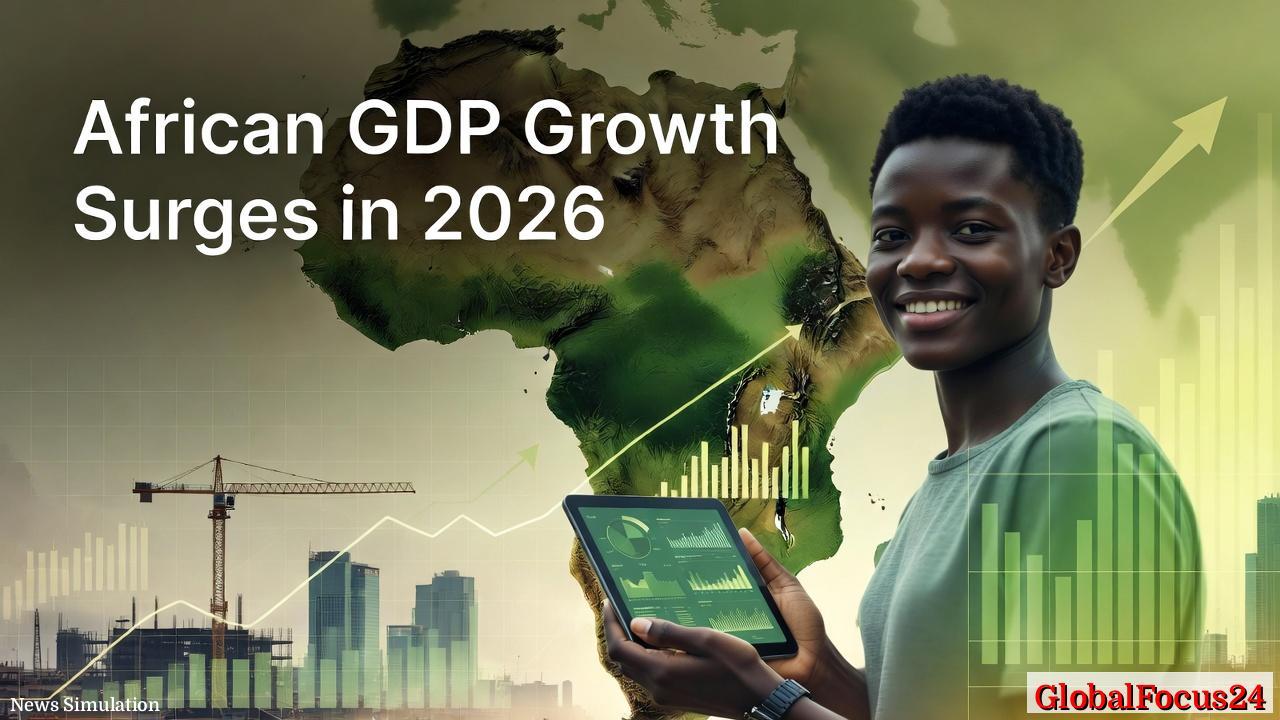
The 2026 outlook: growth, investment, and regional dynamics Looking ahead to 2026, projections point to Africa’s GDP growth outpacing the Asia-Pacific region in some scenarios, driven in part by a combination of resilient commodity prices and a decelerating growth trajectory in China. This shift has spurred a wave of investor interest, with capital seeking opportunities in infrastructure, energy, manufacturing, and services. For investors, Africa is increasingly seen not primarily as a recipient of aid but as a destination for capital investment and partnership, underscoring a broader transition in the continent’s development model.
Key regional comparisons and implications
- Sub-Saharan Africa vs. Asia: Asia’s historical growth relied on dense urban networks and factory-based manufacturing; Africa’s dense and sparse mix requires building out urban infrastructure, logistics, and regional markets to replicate those scale benefits. The comparative challenge is to accelerate urbanization in a way that creates productive jobs and reduces informal sector reliance.
- Northern Africa vs. Sub-Saharan Africa: Differences in energy access, water security, and diversification of the economy influence growth trajectories. Regions with diversified energy mixes, resilient water management, and strong services sectors may experience steadier growth even amid global commodity cycles.
- East Africa vs. West Africa: East Africa’s transport corridors, manufacturing zones, and cross-border trade initiatives illustrate a pattern where regional integration can unlock economies of scale. West Africa’s potential strengths lie in diversified mineral and agricultural outputs, with governance reforms and financial inclusion crucial for deeper investment.
Public reaction, social dynamics, and policy priorities A rising young population can generate optimism about future innovation, entrepreneurship, and cultural exchange, but it also heightens the need for employment generation and social stability. Policymakers face the task of aligning education systems with market needs, expanding technical and vocational training, and fostering a business climate that encourages investment in job-creating sectors. Social safety nets and inclusive growth strategies help ensure that rapid population growth does not outpace the capacity to provide basic services such as healthcare, housing, and clean water.
The role of technology and digital economy Technology and digital platforms hold promise in accelerating development by enabling access to finance, markets, and information for small-scale producers and entrepreneurs. Mobile banking, e-commerce, and data-driven agriculture can expand financial inclusion, improve productivity, and create new avenues for value capture. Investments in digital infrastructure, cybersecurity, and local tech ecosystems can amplify the impact of traditional industries while opening doors to export-oriented services.
Environmental and resilience considerations As populations grow, so does the importance of resilience to climate-related risks. Agriculture remains sensitive to weather patterns, and water scarcity in some regions underscores the need for climate-smart farming, irrigation efficiency, and sustainable land management. Integrating climate resilience into development plans helps protect gains from population growth and supports long-term economic stability.
Strategic recommendations for sustainable growth
- Invest in human capital: Prioritize universal access to quality education, particularly for girls, and expand vocational training tied to high-potential sectors such as manufacturing, logistics, and information technology.
- Build infrastructure for density-enabled growth: Targeted investments in energy, roads, ports, and urban housing can unlock agglomeration benefits and reduce the cost of doing business.
- Promote export-oriented diversification: Blend agriculture modernization with value-added manufacturing and services to create diversified growth engines that are resilient to commodity cycles.
- Strengthen institutions and governance: Transparent regulatory frameworks, credible anti-corruption measures, and predictable policy environments attract long-term investment.
- Expand regional integration: Cross-border markets, harmonized standards, and shared infrastructure projects enable scale economies and regional resilience.
- Harness the digital economy: Invest in digital infrastructure, fintech, and data-driven services to accelerate inclusion and productivity.
Conclusion: a continent poised for transformative growth, with caveats Africa’s demographic trajectory offers a potential source of sustained economic momentum if density, human capital, infrastructure, and institutions align to unleash scalable growth. The potential is amplified when nations pursue coordinated policies that translate population growth into productive capacity, export strength, and inclusive development. While the path forward is not without challenges—political stability, regional disparities, and climate risks remain salient—the region’s youthful population provides a powerful engine for change. As investors, policymakers, and communities collaborate to capitalize on this moment, Africa’s role in the global economy could expand from a resource-rich continent to a hub of production, innovation, and resilient growth.