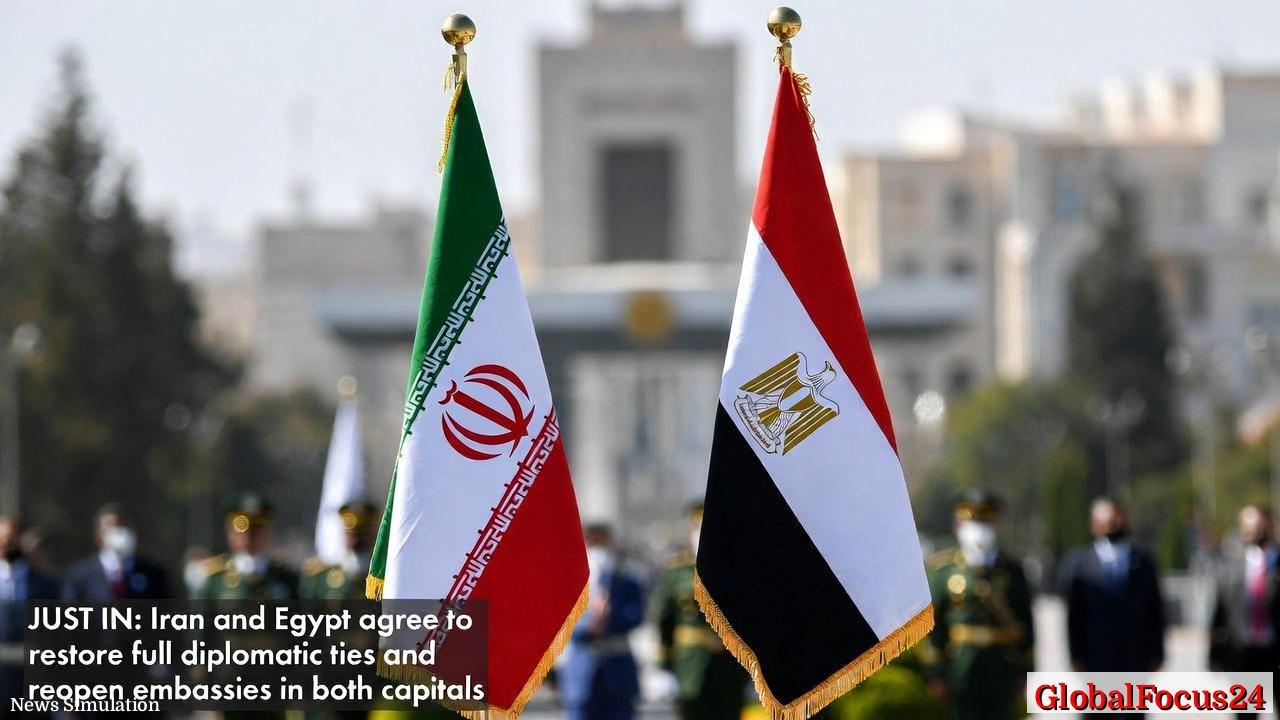
Iran and Egypt Restore Full Diplomatic Ties After 47 Years
A milestone in Middle East diplomacy unfolded as Iran and Egypt moved to fully restore diplomatic relations, signaling a new chapter in a region historically shaped by multiple proxy conflicts, shifting alliances, and evolving economic imperatives. The accord, which envisions the exchange of ambassadors and the reopening of embassies in Tehran and Cairo, arrives after decades of limited engagement and marks a formal end to the estrangement that began in 1980 when Egypt offered refuge to Iran’s deposed shah. The announcement, framed as a concrete roadmap rather than a symbolic gesture, sets the stage for intensified bilateral cooperation across political, economic, and security dimensions, while prompting regional and international responses that reflect the broader recalibration underway in the Middle East.
Historical context and turning points
The severance of full diplomatic ties between Iran and Egypt dates to a period of sharp realignment in the wake of the 1979 Islamic Revolution in Iran and Egypt’s own peace trajectory with Israel. For decades, the two nations operated with limited diplomatic contact, relying on interest sections rather than full embassies. These arrangements, though functional for routine consular matters, constrained higher-level dialogue on sensitive issues ranging from security, border management, and cross-regional influence to trade policy and cultural exchange.
In recent years, a confluence of internal reforms, regional normalization efforts, and a desire to diversify economic partnerships has prompted governments to reassess the costs of prolonged polarization. Analysts point to the growing importance of regional connectivity, energy security, and investment as critical incentives for re-establishing full diplomatic channels. The new accord is framed not as a departure from past disagreements but as a pathway to manage them through formalized channels, better information sharing, and joint problem solving.
Economic impact and investment momentum
The restoration of diplomatic ties opens a breadth of economic opportunities that can influence both economies in tangible ways. Trade between Iran and Egypt today is shaped by regional supply chains, manufacturing capacity, and consumer markets, and the prospect of re-engaged formal diplomacy reduces transactional friction. Businesses on both sides anticipate streamlined licensing procedures, clearer regulatory frameworks, and stronger protection for bilateral investments. The agreement is seen as a catalyst for diversified commerce, including energy exchanges, manufacturing collaboration, and tourism development, all of which can contribute to broader regional growth.
Egypt, with its strategic位置 as a regional hub in North Africa and a gateway to African markets, stands to benefit from enhanced logistics corridors, port operations, and investment in industrial zones. Iran, positioned along major energy transit routes and with a growing priority on diversification away from heavy reliance on a limited set of partners, could leverage renewed ties to access regional markets and attract joint venture projects. Analysts emphasize that the scale of economic gains will depend on sustained policy alignment, regulatory transparency, and the ability to translate statements into concrete deals, particularly in sectors such as energy, infrastructure, and tourism.
Regional comparisons and implications
The move to restore full diplomatic ties mirrors broader shifts underway in the Middle East, where countries are recalibrating alliances to balance security, economic development, and geopolitical influence. In several neighboring states, normalization efforts—whether with Gulf, Levant, or North African partners—have been driven by shared interests in energy diversification, water and climate resilience, and cross-border commerce. The Iran-Egypt accord can be viewed within this wider mosaic as part of a gradual trend toward pragmatic engagement, where diplomacy is increasingly preferred as a tool to manage risk, reduce confrontation, and unlock markets.
Compared to other regional exchanges, the Iran-Egypt agreement stands out for its potential to create a direct bilateral axis that complements existing regional frameworks. If the two countries successfully translate diplomacy into tangible cooperation, a visible shift in regional dynamics could emerge, affecting trade routes, investment flows, and even security calculations among neighboring states. Local business communities and chambers of commerce are watching closely for early indicators of policy alignment, such as visa facilitation for business travelers, streamlined customs processes, and bilateral agreements on standards and certifications.
Security and tourism dimensions
Diplomatic normalization often carries implications for regional security architecture. While the immediate focus is on rebuilding channels for dialogue, the potential for coordinated efforts in counterterrorism, border management, and crisis response is a recurrent theme in such agreements. Both Iran and Egypt possess substantial security interests in neighboring regions, and enhanced communication can improve risk assessment, information sharing, and coordinated responses to evolving security challenges. The roadmap accompanying the agreement emphasizes confidence-building measures across political, security, and diplomatic tracks, underscoring a holistic approach to bilateral relations.
Tourism is another area poised to benefit from renewed engagement. Egypt’s appeal as one of the world’s premier historic and cultural destinations, combined with Iran’s rich architectural heritage and diverse landscapes, can attract higher cross-border visitation and collaborative cultural programs. Tourism development can serve as a visible, consumer-facing indicator of normalized relations, helping to humanize diplomacy and build people-to-people ties that contribute to long-term stability. In the near term, expect joint cultural exchanges, academic partnerships, and regional tourism promotions that highlight shared heritage while respecting each country’s distinct narratives.
Public reaction and media landscape
Public sentiment in both nations reflects a mix of cautious optimism and pragmatic curiosity. For many citizens, the restoration of full diplomatic ties signals a hopeful sign of stability and opportunity, particularly in cities where business and tourism flow are essential to local economies. Opinion leaders emphasize the importance of transparent processes and clear timelines for ambassadorial exchanges and embassy reopening to build trust domestically and internationally. Media coverage, while careful to avoid sensationalism, tends to frame the development as a test case for how effectively two historically adversarial states can manage disagreements through formal channels.
Operational next steps and timelines
A formal announcement outlining the specifics of the restoration process is anticipated to be made at a mutually agreed time. In practical terms, the first phase will likely involve the exchange of ambassadors and the reopening of embassies, followed by regular high-level dialogues on political, economic, and regional issues. Working-level committees may be established to monitor progress in sectors such as trade, investment, energy cooperation, tourism, education, and technology transfer. The roadmap may also include joint statements on regional crises, shared interests in global forums, and mechanisms for dispute resolution to prevent minor disagreements from escalating.
Strategic challenges and risk management
Despite the forward momentum, several challenges require careful navigation to ensure the arrangement yields durable gains. Trust-building will be essential, given the long period of limited contact and the complexity of regional geopolitics. Translating diplomatic optimism into enforceable agreements will depend on credible policy commitments, transparent governance, and predictable regulatory environments. Economic expectations must be grounded in solid project pipelines, with milestones and accountability measures to measure progress. Additionally, regional actors will be attentively watching to assess how the Iran-Egypt dynamic interacts with existing alliances, sanctions regimes, and international diplomacy, making consistent messaging and reliability crucial.
Public policy implications for the broader region
The normalization between Iran and Egypt has potential policy implications for neighboring countries and regional organizations. Governments may consider updating bilateral trade frameworks, visa policies, and investment incentives to capture the anticipated economic upside. Regional blocs and multilateral forums might respond with renewed focus on integration, standardization, and cross-border collaboration. For policymakers, the task is to balance national interests with the benefits of broader regional stability, ensuring that economic opportunities translate into sustainable development that benefits diverse communities.
Conclusion
The decision to restore full diplomatic ties between Iran and Egypt marks a historically significant step toward greater regional engagement and stability. While the road ahead will include hurdles—ranging from policy alignment to implementation of concrete economic projects—the underlying shift signals a readiness to move beyond decades of limited contact toward a more interconnected future. As embassies reopen and ambassadors take their posts, observers will watch how quickly the two nations translate diplomatic symbolism into real-world benefits for their economies, their citizens, and the broader Middle East landscape. The coming months will reveal how this redefined relationship interacts with ongoing regional initiatives, global energy markets, and the evolving structure of international diplomacy.