U.S. Consumer Sentiment Sinks to Record Low as Markets Near Historic Highs
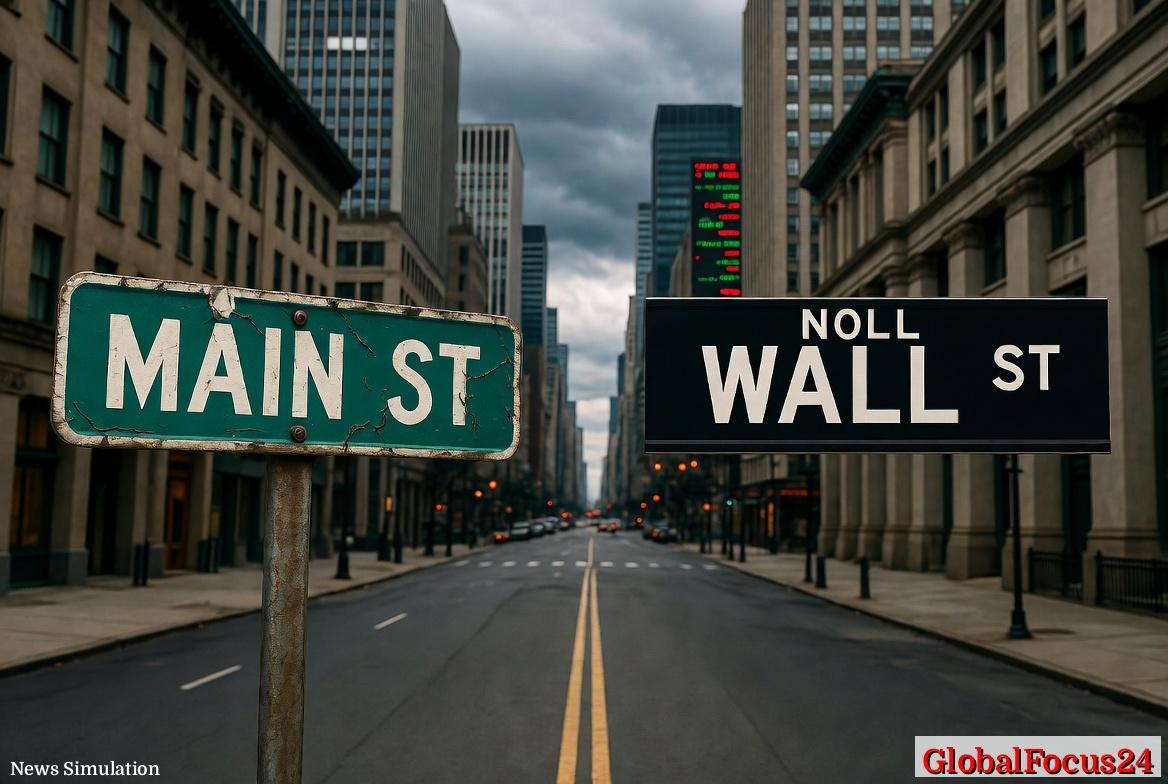
A Growing Divide Between Wall Street and Main Street
In a striking illustration of America’s two-speed economy, U.S. consumer sentiment has fallen to an unprecedented 47.6 points, marking its lowest level on record. The sharp decline comes even as the S&P 500 hovers just 3 percent below its all-time high, underscoring a widening gulf between financial markets and the lived experiences of everyday Americans.
This divergence has been steadily growing since the COVID-19 pandemic upended the global economy six years ago. According to recent data, consumer sentiment has dropped by half during that period, while the benchmark S&P 500 has soared 205 percent. The figures paint a stark picture of prosperity concentrated among the nation’s asset holders—especially the wealthiest 10 percent of households, who now control 87 percent of all U.S. equities.
The phenomenon raises fundamental questions about the health of the economic recovery, as high stock valuations appear increasingly disconnected from household confidence and purchasing power. Economists warn that such a decoupling, if sustained, could undermine both long-term growth and public trust in the financial system.
Why Consumer Sentiment Is Falling
The record-low sentiment reflects accumulating pressure on American households from several fronts—persistent inflation, soaring housing costs, and a labor market showing early signs of softening.
Consumer prices, while having cooled from their 2022 peaks, remain well above pre-pandemic levels. Housing affordability has deteriorated further, with median home prices up by more than 40 percent since 2020 and mortgage rates hovering near multi-decade highs. Renters fare no better: national rents have risen by roughly 30 percent over the same period, eating into disposable income.
Meanwhile, cracks are emerging in the job market. Hiring has slowed across sectors once considered resilient, such as technology and logistics, while layoffs have picked up pace among mid-level professionals. Wage growth, which briefly outpaced inflation in 2023, has now stagnated relative to consumer prices—eroding real purchasing power.
For millions of Americans, especially younger workers and lower-income households, these trends have begun to reshape spending behavior. Surveys show a growing majority cutting back on discretionary purchases, delaying major life milestones such as homeownership, and increasingly relying on credit to maintain living standards. The result is a national mood characterized by caution, frustration, and uncertainty about the future.
Market Optimism in the Face of Consumer Strain
In sharp contrast, equity markets have displayed remarkable resilience. The S&P 500’s near-record levels reflect investor optimism driven by strong corporate earnings, robust productivity gains from advances in artificial intelligence, and expectations of moderating interest rates later this year.
Large-cap technology firms continue to dominate market performance, with several posting double-digit gains since January. Investor enthusiasm remains buoyed by the belief that automation and AI-driven efficiency will underpin long-term profitability—even as the benefits of these trends remain largely confined to the upper tier of the economy.
Financial analysts attribute the sustained rally partly to capital concentration. The wealthiest households and institutional investors—who hold nearly nine out of every ten dollars of equity—are insulated from the day-to-day pressures of inflation and wage stagnation. Their investment decisions are guided by future earnings potential rather than immediate consumer weakness. This dynamic, experts note, amplifies market gains even when public sentiment sours.
Historical Patterns of Divergence
Such disparity between market strength and public confidence is not entirely unprecedented. Similar episodes have emerged throughout U.S. economic history, often marking turning points in business cycles.
During the late 1990s dot-com boom, for example, stock valuations soared even as wage growth slowed and household debt mounted. Again in 2017–2019, financial markets raced to new highs despite stagnating median incomes. In both cases, the eventual corrections—triggered by external shocks or policy tightening—brought asset values back closer to fundamentals.
What differentiates the current moment, economists say, is the magnitude and duration of the divergence. Consumer sentiment has plunged far below levels seen in previous expansions, suggesting deeper structural concerns about affordability and economic inclusion. At the same time, corporate profits and stock prices remain robust, powered by technologies and global capital flows that operate largely independent of domestic consumption patterns.
The result is an economy that feels vibrant on paper yet hollow on the ground—one where financial wealth grows rapidly while broad-based prosperity stalls.
Regional Disparities Across the United States
The downturn in sentiment is not evenly distributed. Coastal metropolitan areas such as San Francisco, New York, and Boston—where living costs are highest—report some of the steepest declines in consumer confidence. Residents cite runaway housing prices and rising service costs as key sources of anxiety.
In contrast, several Sun Belt states including Texas, Florida, and Arizona show comparatively higher sentiment levels, buoyed by stronger job creation in manufacturing, logistics, and energy. These states continue to attract inflows of residents and businesses seeking lower taxes and more affordable real estate.
Midwestern industrial regions tell a mixed story. Job growth has slowed as global demand for durable goods wanes, but lower housing costs have partially cushioned consumers from the worst inflationary effects. This geographic mosaic illustrates how local economic conditions—rather than national averages—increasingly shape perceptions of economic health.
Economic Implications of the Sentiment Slump
Low consumer confidence carries real-world consequences. Historically, sustained drops below the 50-point threshold have signaled reductions in household spending, which accounts for roughly two-thirds of U.S. GDP.
If sentiment remains depressed, retail sales and small business activity could weaken further, especially in sectors tied to discretionary spending such as travel, entertainment, and home improvement. Analysts estimate that even a modest decline in consumer outlays might shave up to 0.5 percentage points off annual growth rates.
Policy decisions also become more complex under such conditions. The Federal Reserve, already navigating a delicate balance between inflation containment and economic support, faces mounting pressure to act. Cutting interest rates too aggressively could risk reigniting price increases, while maintaining elevated rates might deepen the consumer malaise. Fiscal policymakers confront similar trade-offs, as stimulus proposals are weighed against concerns about national debt and long-term deficits.
In financial markets, prolonged pessimism among households occasionally precedes volatility. When public discontent translates into political or social instability, investor confidence may waver—potentially puncturing an otherwise booming market landscape.
The Wealth Gap and Its Broader Consequences
Underlying the current sentiment collapse is the expanding concentration of wealth. The top decile of households now owns 87 percent of all equities, a level that surpasses even the inequality seen before the Great Recession. That concentration has made market performance increasingly irrelevant to the daily struggles of the majority of Americans.
While soaring asset prices have enriched shareholders and strengthened corporate balance sheets, they have done little to alleviate economic hardship for non-investors. The rising cost of living continues to outpace savings growth, leaving those without investments vulnerable to financial shocks.
Economists and sociologists alike warn that such disparities can erode social cohesion and limit the effectiveness of monetary policy. When wealth becomes too concentrated, consumer demand—traditionally the engine of the U.S. economy—loses momentum. That dynamic could eventually constrain economic expansion, even amid strongindicators.
Looking Ahead: Uncertain Path to Recovery
The challenge now is bridging the widening chasm between an exuberant financial sector and a fatigued public. Restoring consumer confidence will likely require more than monetary adjustments—it will depend on tangible improvements in affordability, wage growth, and access to opportunity.
Some analysts predict modest relief later this year if inflation continues to ease and mortgage rates decline. Others remain cautious, noting that confidence typically lags economic stabilization by several quarters. The structural issues—such as housing supply shortages and unequal wealth distribution—could take years to resolve.
For policymakers and business leaders, the message in the sentiment data is clear: the stock market’s resilience should not be mistaken for universal prosperity. Until households feel secure in their financial futures, the U.S. recovery will remain uneven and fragile.
As the country contends with this historic divide, the contrast between gleaming market tickers and the weary pulse of Main Street has rarely been more pronounced. Whether the coming months bring renewed optimism or deeper disillusionment will depend on how effectively America confronts the imbalances defining its post-pandemic economy.