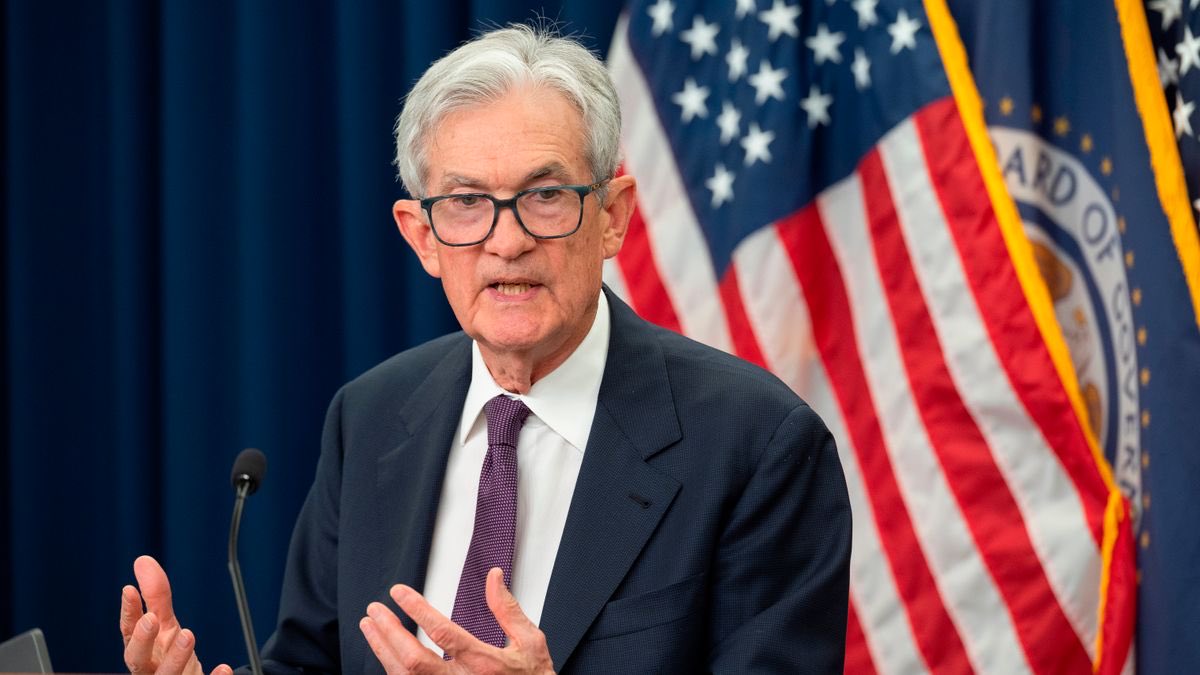
Jerome Powell Concludes Historic Tenure as Federal Reserve Chair After 3,018 Days
A Defining Era for U.S. Monetary Policy
Jerome Powell formally concluded his tenure as Chair of the Federal Reserve today, ending a 3,018-day period marked by extraordinary economic upheaval, aggressive policy shifts, and evolving global financial dynamics. His departure closes a chapter that reshaped the central bank’s approach to inflation, employment, and crisis response, while setting the stage for a new era of monetary leadership in the United States.
Powell assumed the role in February 2018, inheriting an economy in steady expansion. Within two years, however, the global COVID-19 pandemic triggered one of the most severe economic disruptions in modern history. The Federal Reserve, under Powell’s leadership, responded with unprecedented measures aimed at stabilizing financial markets and supporting economic recovery.
Crisis Management During the Pandemic
The early months of 2020 presented immediate and severe challenges. Financial markets experienced sharp volatility, unemployment surged, and economic activity contracted rapidly. In response, the Federal Reserve cut interest rates to near zero and implemented large-scale asset purchases, commonly referred to as quantitative easing.
These actions were complemented by emergency lending facilities designed to maintain liquidity in credit markets. Programs targeting corporate bonds, municipal debt, and small business lending reflected a broad-based effort to prevent systemic collapse.
The scale and speed of the response were notable. By mid-2020, the Fed’s balance sheet had expanded significantly, underscoring the central bank’s willingness to deploy its full range of tools. Economists widely credited these interventions with stabilizing markets and supporting a relatively swift recovery compared to previous downturns.
Inflation Surge and Aggressive Rate Hikes
As the economy rebounded, new challenges emerged. Supply chain disruptions, labor shortages, and strong consumer demand contributed to rising inflation, which reached levels not seen in decades. Initially characterized as transitory, inflation proved more persistent, prompting a significant shift in monetary policy.
Beginning in 2022, the Federal Reserve embarked on one of the most aggressive rate-hiking cycles in its history. Interest rates were increased rapidly in an effort to curb price growth and anchor inflation expectations. These moves had far-reaching implications:
- Borrowing costs for consumers and businesses rose sharply.
- Housing markets cooled as mortgage rates climbed.
- Financial markets adjusted to tighter monetary conditions.
Powell’s leadership during this period emphasized the importance of restoring price stability, even at the risk of slower economic growth. The central bank’s messaging evolved to reflect a more resolute stance, signaling its commitment to controlling inflation despite potential short-term economic pain.
Balancing Growth and Stability
One of the defining features of Powell’s tenure was the balancing act between fostering economic growth and maintaining financial stability. While aggressive rate hikes helped moderate inflation, they also raised concerns about potential recession risks.
Labor markets remained relatively resilient throughout much of the tightening cycle, with unemployment rates staying historically low. However, sectors sensitive to interest rates, particularly housing and manufacturing, experienced noticeable slowdowns.
The Federal Reserve’s approach reflected a broader shift in monetary policy philosophy. Greater emphasis was placed on flexibility and responsiveness, with policymakers adapting strategies as new data emerged. This adaptive framework became a hallmark of Powell’s leadership style.
Historical Context of Federal Reserve Leadership
Powell’s tenure stands out when compared to previous Federal Reserve chairs. His leadership spanned multiple economic phases, including expansion, crisis, recovery, and inflation control. Few chairs have navigated such a diverse set of challenges within a single term.
Historically, Federal Reserve leaders have often been defined by singular events or policy priorities. For example:
- Paul Volcker is remembered for aggressive measures to combat inflation in the 1980s.
- Alan Greenspan oversaw a long period of economic expansion and financial market growth.
- Ben Bernanke guided the economy through the 2008 financial crisis.
Powell’s legacy incorporates elements of each of these eras, combining crisis management with inflation control and evolving policy frameworks. His tenure reflects the increasing complexity of modern central banking in a globally interconnected economy.
Economic Impact and Market Reactions
Financial markets reacted cautiously to the conclusion of Powell’s tenure, with investors closely monitoring signals from incoming leadership. Bond yields have remained elevated, reflecting ongoing concerns about inflation and future interest rate paths.
Energy prices, hovering near $100 per barrel, add another layer of complexity. Elevated energy costs contribute to inflationary pressures and influence consumer spending patterns. These factors underscore the challenges facing the next Federal Reserve chair.
The broader economic impact of Powell’s policies includes:
- Stabilization of financial markets during crisis periods.
- A strong post-pandemic labor market recovery.
- Persistent inflation followed by gradual moderation.
- Increased sensitivity of markets to interest rate changes.
Globally, Powell’s policies also influenced other central banks. Many followed similar tightening cycles in response to inflation, highlighting the interconnected nature of global monetary policy.
Regional and Global Comparisons
The Federal Reserve’s approach under Powell can be compared to strategies adopted by other major central banks. While each institution faced unique domestic conditions, several common themes emerged:
- The European Central Bank also shifted from accommodative policies to rate hikes, though at a more gradual pace.
- The Bank of England implemented tightening measures amid persistent inflation and economic uncertainty.
- Emerging market central banks often moved earlier to raise rates, aiming to protect currencies and manage capital flows.
These comparisons illustrate how Powell’s decisions fit within a broader global context. The synchronization of monetary tightening across regions has had implications for exchange rates, trade flows, and global investment patterns.
In the United States, regional economic differences also played a role. High-growth technology hubs experienced different impacts compared to manufacturing regions, reflecting varying sensitivities to interest rates and global demand.
Public Perception and Institutional Legacy
Public perception of Powell’s tenure has been shaped by both achievements and challenges. His early response to the pandemic earned widespread recognition for preventing deeper economic damage. However, the persistence of inflation and the delayed response to its rise drew criticism from some economists and policymakers.
Despite differing views, Powell maintained a consistent emphasis on transparency and communication. Regular press conferences and clear policy guidance became central components of the Federal Reserve’s strategy, helping to manage market expectations.
Institutionally, Powell leaves behind a Federal Reserve that is more flexible and data-driven. The central bank’s willingness to adapt its policy framework, including its approach to inflation targeting, reflects lessons learned during his tenure.
Challenges Ahead for the Federal Reserve
As new leadership takes over, several key challenges remain:
- Managing inflation expectations amid ongoing economic uncertainty.
- Navigating elevated bond yields and their impact on financial markets.
- Addressing global economic headwinds, including energy price volatility.
- Maintaining labor market strength while avoiding overheating.
The transition comes at a time when monetary policy decisions carry heightened significance. Markets will be closely watching for continuity or shifts in strategy, particularly in relation to interest rates and balance sheet management.
A Lasting Impact on Central Banking
Jerome Powell’s tenure as Federal Reserve Chair will be remembered as a period of transformation and resilience. His leadership spanned unprecedented challenges, requiring decisive action and constant adaptation.
The policies implemented during his time in office have left a lasting imprint on the U.S. economy and global financial system. From emergency interventions during crisis to aggressive measures against inflation, Powell’s decisions shaped the trajectory of economic recovery and stability.
As the Federal Reserve enters a new chapter, the foundations established over the past 3,018 days will continue to influence policy decisions and economic outcomes for years to come.