US Wages Barely Keeping Pace with Inflation Since 2020
Real Earnings Lag Behind Nominal Growth
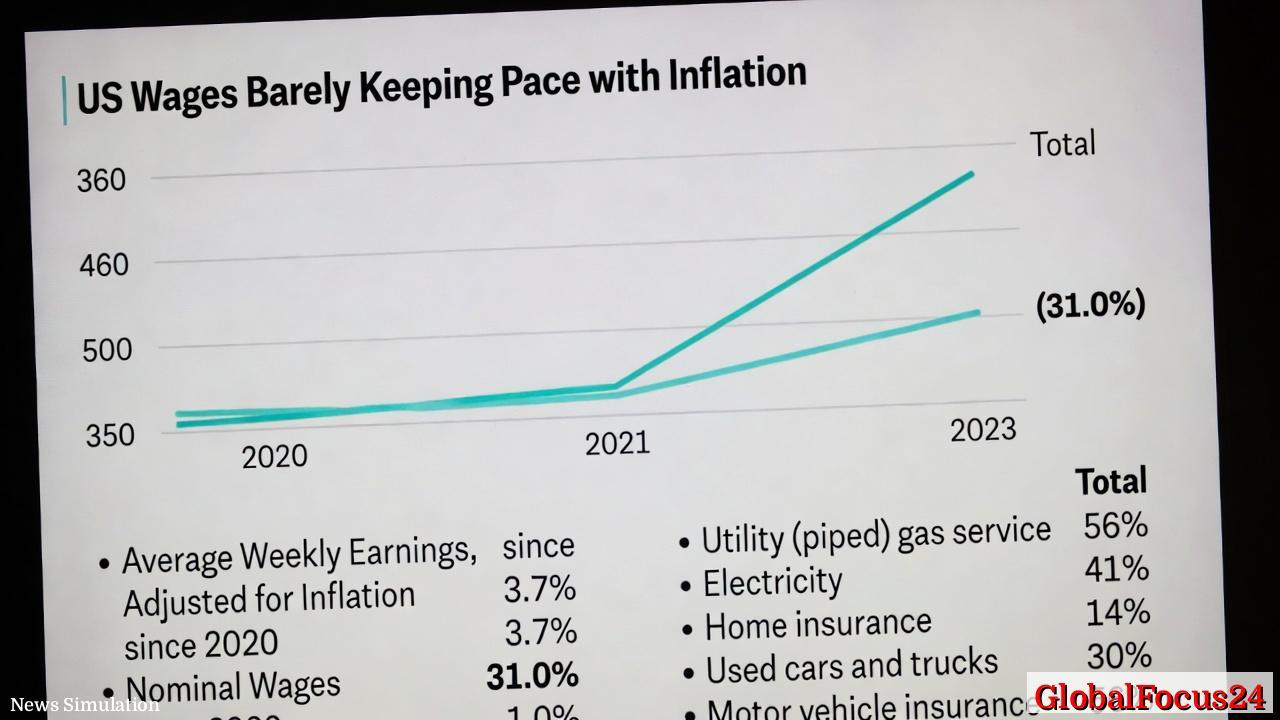
Since 2020, American workers have seen their average weekly earnings increase by 31% in nominal terms, but after adjusting for inflation, those gains shrink dramatically. Real earnings have risen only 3.7% over the same period, illustrating how inflation continues to erode the spending power of U.S. households. The widening gap between nominal wage growth and real purchasing power highlights one of the most persistent economic challenges of the past six years: the cost of living has outpaced income growth for millions of Americans.
At the height of post-pandemic inflation, real wages briefly fell back to levels seen in early 2020. While recent moderation in price increases has provided some relief, many essential goods and services remain significantly more expensive than they were before the pandemic. As a result, for most Americans, paychecks are buying less than they did just a few years ago.
Inflation’s Impact on Essential Costs
The steepest price increases since 2020 have come from basic household necessities. Utility gas service prices have surged by 56%, driven by volatile energy markets and higher global demand. Electricity prices have climbed 41%, reflecting both domestic supply constraints and rising infrastructure costs. Home insurance premiums are up 14%, as insurers face larger claims from extreme weather events and rising property values.
Transportation costs have also weighed heavily on family budgets. Used car and truck prices have jumped 30%, a legacy of pandemic-era supply shortages and ongoing vehicle production challenges. Motor vehicle insurance costs have soared 56%, partly due to higher repair expenses and an increase in severe accidents. Together, these price pressures have absorbed much of the wage growth that workers have received over the past six years.
“People feel the pinch every time they pay a bill or visit the grocery store,” said a senior economist at a California-based research institute. “Even though wages have grown in nominal terms, high inflation has eaten away much of the real value.”
Historical Context: Wages, Inflation, and Recovery Cycles
To understand the current wage stagnation, it helps to look at previous economic cycles. In the aftermath of the Great Recession of 2008–2009, inflation remained subdued for nearly a decade, allowing modest nominal wage gains to translate into real improvements in income. Between 2010 and 2019, real weekly earnings grew around 8%, a slower but steadier increase than the volatile swings seen in the 2020s.
The COVID-19 pandemic disrupted this dynamic. Lockdowns and supply chain breakdowns restricted global production, while monetary and fiscal stimulus boosted household demand. The result was the steepest inflationary spike in four decades, peaking at more than 9% in mid-2022. During that period, real wages fell sharply, wiping out much of the progress made in the first years of the 2010s.
Although inflation has since cooled to around 2.7% as of early 2026, the cumulative effect remains profound. Prices overall are roughly 22% higher than they were six years ago. As a result, wage increases that might once have lifted living standards instead largely compensated for rising costs.
A Regional Divide in Wage Growth and Purchasing Power
The impact of inflation on real income has varied widely across the United States. In high-cost regions such as California, New York, and Washington, wage growth has been above the national average—driven by tech, finance, and professional services—but so have living expenses. Housing, utilities, and transportation costs in these states have climbed faster than the national rate, often offsetting higher paychecks.
By contrast, some southern and midwestern states, including Texas, Ohio, and Tennessee, have seen slower nominal wage growth but also lower inflation in housing and utilities. In these areas, real wages have recovered more fully since the pandemic, leaving households slightly better off in purchasing power terms. However, affordability remains constrained by rising insurance premiums, auto costs, and medical expenses.
The regional divergence in wage dynamics underscores the uneven nature of the U.S. recovery. While major metropolitan areas continue to attract high-growth industries, they also face the steepest cost burdens. Meanwhile, smaller cities and rural communities often experience slower growth but lower living costs, creating a patchwork of economic outcomes from state to state.
The Role of Labor Market Tightness
The post-pandemic labor market has played a crucial role in wage dynamics. With unemployment dipping below 4% for much of 2023–2025, employers were pressured to raise wages to attract and retain workers. Sectors like hospitality, logistics, and healthcare saw some of the sharpest pay increases as they scrambled to fill persistent labor shortages.
However, economists caution that tight labor markets do not automatically translate into sustained real wage growth if inflation remains elevated. When companies face higher costs for materials, transportation, and insurance, they often pass those costs along to consumers. As prices rise in response, the nominal gains in worker pay are partially neutralized.
The Federal Reserve’s efforts to tame inflation through higher interest rates slowed demand and cooled hiring in some sectors by mid-2024. Wage growth subsequently stabilized, but not enough to significantly outpace inflation. The delicate balance between employment strength and price stability remains a defining challenge for policymakers heading into 2026.
How Rising Costs Strain Households
For many families, the gap between rising prices and modest income gains has made financial planning more difficult. Credit card balances reached record highs in 2025, according to Federal Reserve data, as households relied more on borrowing to cover essential expenses. Household savings, which spiked early in the pandemic due to government stimulus programs, have largely been depleted.
Housing affordability remains a pressing concern. Rents have increased nearly 30% nationally since 2020, and home prices continue to rise in most metropolitan areas. Even as mortgage rates began to ease slightly in early 2026, affordability remains out of reach for many first-time buyers. For renters, higher utility and insurance bills are stretching budgets thin. These conditions have fueled renewed interest in cost-saving measures such as remote work relocation, shared housing, and the expansion of suburban and exurban communities.
Comparison With Other Advanced Economies
The United States is not alone in facing sluggish real wage growth. Across much of the developed world, inflation has eroded pay gains, though with varying degrees of intensity. In the European Union, real wages fell an estimated 2% between 2020 and 2025 before beginning to recover, as energy prices spiked after supply disruptions. In the United Kingdom, real wages have stagnated for nearly a decade, constrained by productivity stagnation and persistent inflationary pressures.
What distinguishes the U.S. experience is the speed of nominal wage increases, driven by a resilient labor market and strong consumer demand. However, this momentum has not translated into broad improvements in living standards, as inflation has largely offset income gains. Compared to countries like Germany and Japan, where inflation remained lower, American households have experienced more dramatic swings in purchasing power over the past six years.
Looking Ahead: The Outlook for Real Income Growth
As inflation gradually cools, economists are cautiously optimistic that real wage growth could strengthen in 2026 and beyond. Forecasts suggest nominal wage increases of around 4.5% for the year, with inflation projected near 2.4%. If those trends hold, real earnings could finally see modest but sustained improvement.
However, structural cost pressures remain. Energy and insurance costs are projected to stay high due to rebuilding and climate-related risks, while housing supply remains limited in many metropolitan regions. Technology-driven productivity gains and continued investments in infrastructure and manufacturing could help offset some of these pressures, but the timeline for a meaningful rebound in real incomes is uncertain.
For households still grappling with stretched budgets, even small improvements in real wages could offer relief. The test for the U.S. economy in 2026 will be whether cooling inflation, steady employment, and balanced growth can finally combine to restore the purchasing power Americans have steadily lost since 2020.
The Bottom Line
Despite robust nominal wage growth since 2020, the average American’s paycheck buys only slightly more than it did six years ago. Inflation, fueled by energy costs, housing shortages, and insurance increases, has diminished the real value of income gains. While inflationary pressures are easing, the cumulative toll on household budgets remains evident across the country.
Real wage recovery will depend on sustained moderation in prices and continued economic resilience. For now, the data tell a sobering story: even in a strong job market, rising costs have left many Americans feeling as though they’re running just to stay in place.