Voters Shift Economic Accountability Toward Trump as Concerns Over Performance Grow
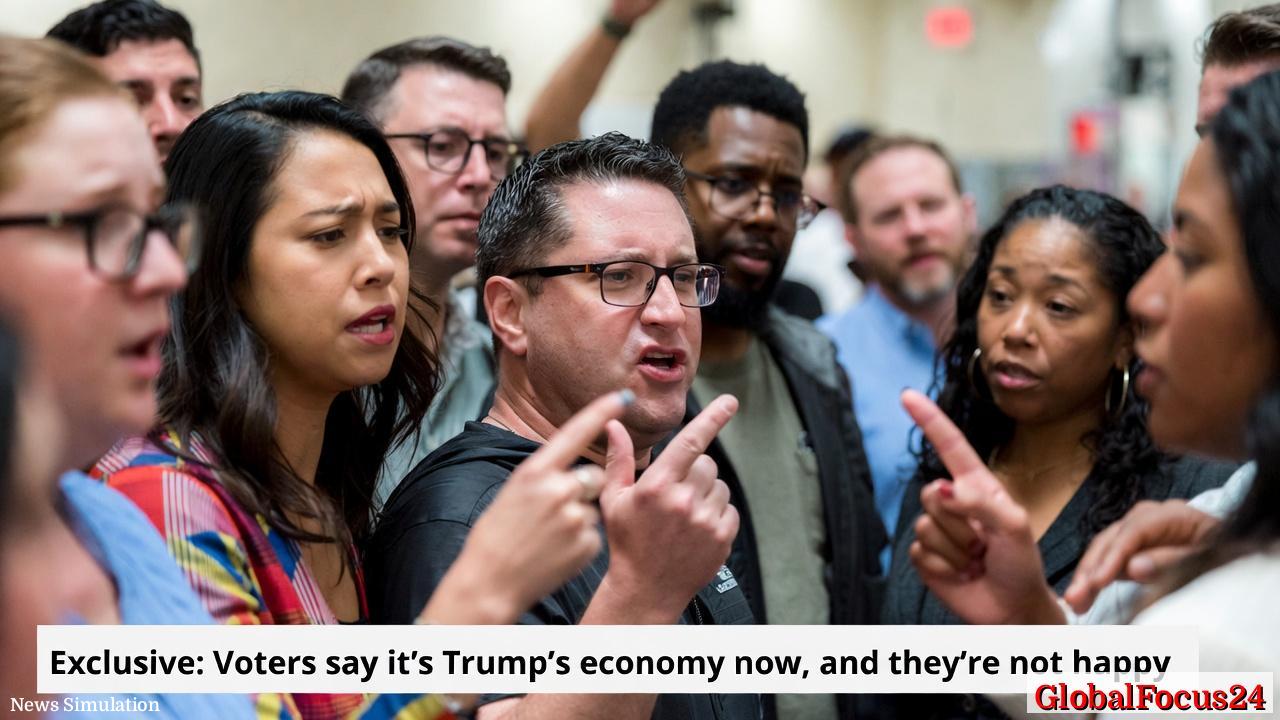
As the U.S. economy grapples with uneven growth and persistent uncertainty, a new national poll reveals a significant shift in public opinion: more voters now consider the current economic landscape to be the direct responsibility of President Donald Trump. The findings mark a turning point in how Americans view accountability for the nation’s financial health—and signal growing dissatisfaction with his administration’s handling of economic policy.
A Changing Measure of Responsibility
The survey, conducted in early January, shows that a clear majority of respondents now link the state of the economy to decisions made under Trump’s leadership. This marks a notable change from earlier years, when many voters cited global factors, congressional gridlock, or the lingering aftereffects of pre-2020 disruptions as the main drivers of economic turbulence.
The new perception underscores a broader shift: after years of debate over external versus domestic causes, economic responsibility has become personalized. Voters now identify the White House not simply as a symbolic seat of power, but as the central actor in shaping economic outcomes—from inflation and job creation to trade, energy, and housing costs.
A Steady Decline in Economic Approval
The poll also highlights a decline in approval of Trump’s economic management, echoing sentiments found in numerous regional studies over the past six months. While some continue to credit the administration for maintaining high employment levels and bolstering certain manufacturing sectors, the overall approval numbers have dipped below the midpoint for the first time since his return to the presidency.
When asked about specific issues, respondents expressed the highest disapproval on inflation control, housing affordability, and budget priorities. Approval remained relatively stronger in areas such as energy production and small-business incentives, sectors that have seen active deregulation and investment incentives under the current administration.
Inflation and Household Pressures
Persistent inflation remains the most significant factor shaping voter sentiment. Although consumer prices have moderated from their post-pandemic peaks, the pace of relief has slowed. Wage gains have struggled to match living costs in key categories such as housing, healthcare, childcare, and groceries. This imbalance has contributed to a sense that everyday life feels more expensive, even when macroeconomic metrics show recovery in growth or employment.
Economists note that inflation’s impact on voter psychology can outlast its numerical presence. Once household budgets adapt to higher costs, the perception of decline becomes entrenched. For families in middle and lower income brackets, small fluctuations in rent or fuel prices continue to signal unease—magnified by the public’s expectation that the federal government should act decisively in response.
Economic Expansion Meets Uneven Recovery
While GDP growth remains positive, regional disparities cloud the national picture. The Sunbelt states—particularly Texas, Florida, and North Carolina—continue to report strong job growth and inward investment, benefiting from a combination of population gains and business relocations. By contrast, parts of the Midwest and Northeast have faced slower rebound rates, weighed down by industrial contraction, higher borrowing costs, and urban commercial vacancies.
These regional differences complicate the administration’s messaging. The White House has emphasized overall job creation and energy independence as indicators of strength, but voters in economically stagnant counties report feeling left behind. The gap between aggregate success and local hardship is fueling skepticism about whether federal policy adjustments are reaching the people most affected.
Historical Context: The Burden of Ownership
Presidential accountability for the economy is a phenomenon with deep historical precedent. In the postwar era, presidents from both parties have discovered that public opinion tends to hold them responsible for economic outcomes, regardless of legislative or external influences.
During the early 1980s, Ronald Reagan faced sharp criticism during a recession that followed efforts to curb inflation through aggressive monetary tightening. Subsequent recovery cemented his reputation for economic stewardship. Likewise, George H. W. Bush’s approval rating plummeted amid a brief 1991–1992 recession despite a comparatively mild downturn. In later years, presidents such as Barack Obama and Joe Biden were also judged on household economic well-being as much as on overall growth or stock market performance.
That historical cycle appears to be repeating. Trump’s administration, having overseen significant shifts in energy policy, trade relations, and tax reform, now encounters the same inflection point: whether voters perceive short-term discomfort as part of a necessary adjustment or as evidence of mismanagement.
Economic Communication and Public Trust
Another challenge lies in messaging. Economically literate voters increasingly seek data transparency, detailed fiscal plans, and clear explanations of policy mechanics. In recent months, analysts have noted that government communications have grown more assertive but not necessarily more effective. While formal briefings emphasize resilience and future competitiveness, the messaging often struggles to connect with households feeling constrained by debt, rent, and tightening credit.
Trust, as one analyst put it, has become the currency of economic politics. The more voters feel their day-to-day experiences diverge from official optimism, the more they attribute responsibility—fairly or not—to presidential decision-making. This erosion of confidence has surfaced across demographic lines, including younger voters disillusioned with housing costs and older voters frustrated by fixed-income erosion.
Comparisons with Other Advanced Economies
Internationally, the American economy occupies a complex position. Compared to Europe, U.S. inflation has been slower to recede but accompanied by stronger real wage performance and lower unemployment. When contrasted with major economies like the United Kingdom or Germany, the U.S. retains a competitive advantage in technology investment and consumer spending power.
However, compared to several Asia-Pacific nations, particularly South Korea and Australia, the U.S. faces greater fiscal strain due to its expanding budget deficit. These cross-national comparisons illustrate the difficulty of isolating any one administration’s influence over such a vast and interconnected economy. Nonetheless, the political reality remains that domestic voters rarely weigh performance on a global curve—they judge by the bill at the grocery store and the mortgage payment each month.
Capital Markets and Investor Sentiment
Equity markets have reflected mixed confidence. The Dow Jones Industrial Average and S&P 500 both remain above their early-2025 levels, yet recent trading patterns suggest hesitancy rather than exuberance. Analysts attribute this caution to uncertainty around future interest rates, debt ceiling negotiations, and trade policy signals. For investors, the administration’s approach to tariffs and monetary coordination carries outsized importance, particularly as the U.S. seeks to anchor domestic production against import competition.
Corporate leaders, while largely supportive of lower regulation, have expressed concern about policy unpredictability. Business sentiment surveys show slight declines in long-term investment confidence—an early indicator, economists warn, that could translate to hiring slowdowns later this year if clarity does not improve.
The Political Implications Ahead
While the survey centers on economic perception rather than electoral choice, the findings inevitably feed into the broader political landscape. Historically, economic approval has been one of the strongest predictors of presidential performance ratings. Analysts often invoke the adage, “It’s the economy, stupid”—a reminder from the 1992 campaign that financial sentiment tends to outweigh nearly every other issue when voters make up their minds.
If current dissatisfaction deepens, it could present a formidable challenge for Trump’s administration moving forward. Yet the picture is far from static. Should inflation trends continue downward, wages rise more consistently, or major energy projects begin yielding visible local benefits, voter confidence could rebound within months.
A Divided Economic Mood
For now, however, the national mood remains balanced between resilience and restlessness. Economic optimism persists among homeowners, investors, and workers in ascending industries such as construction, logistics, and technology. Meanwhile, frustration grows among renters, retirees, and public employees navigating reduced purchasing power.
This polarity mirrors a split economy—robust for some, fragile for others. As the poll results circulate, they encapsulate a fundamental American tension: a belief in opportunity coupled with an acute awareness of cost. Whether the administration can bridge that gap may determine not only public confidence in its economic management, but also the trajectory of national sentiment in the months ahead.