)
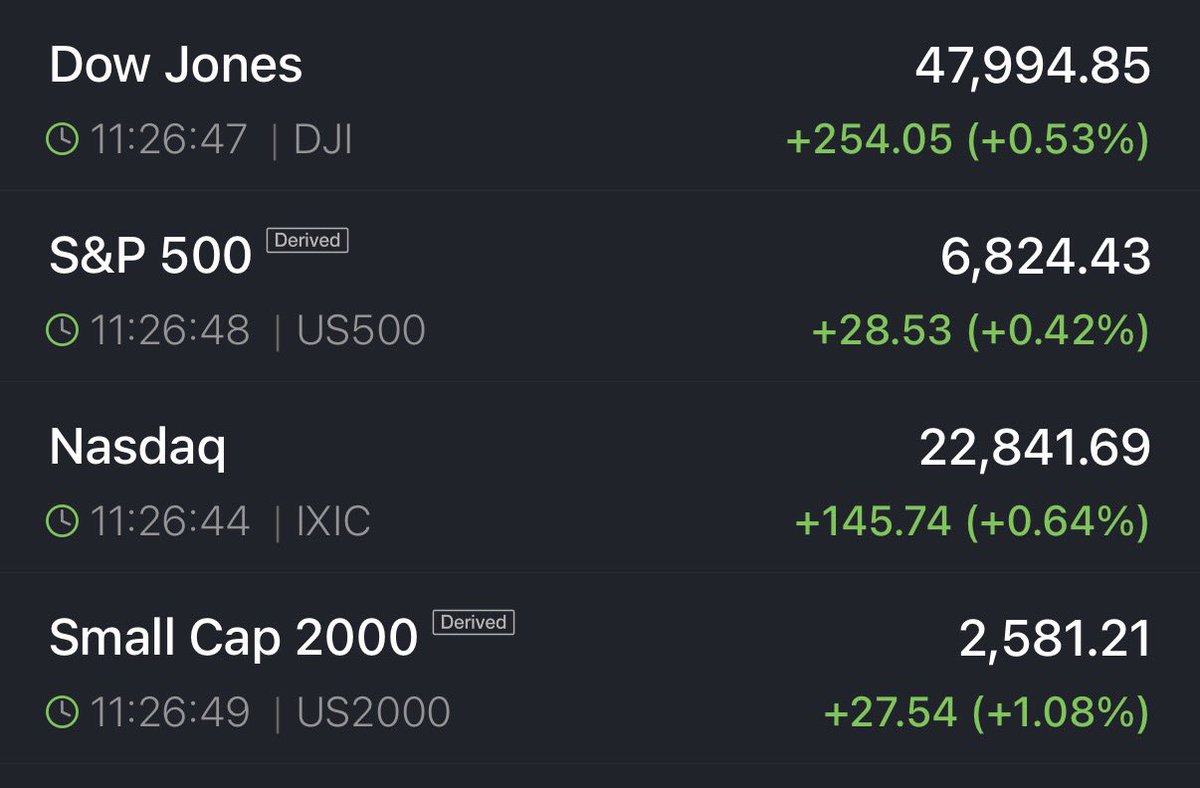
Markets climb to fresh intraday highs as investors weigh steady macro signals and corporate earnings
In a session defined by steady momentum and broad participation across sectors, major U.S. stock indices extended gains to fresh intraday highs, with the S&P 500 approaching a record-led milestone 2.5% away from its all-time peak. The rally, underscored by durable earnings, resilient consumer demand, and evolving macro indicators, reflects a market environment where risk appetite remains buoyant even as investors parse inflation data, monetary policy expectations, and global growth signals.
Historical context: the arc of recent market strength To understand the current lift, it helps to situate it within a broader historical frame. Over the past several years, the equity market has navigated periods of volatility driven by inflation pressures, shifting Federal Reserve posture, and geopolitical uncertainty. Yet, the pattern that has persisted is the tendency for equities to trend higher when corporate earnings grow in tandem with productive capacity and when monetary policy remains calibrated—neither overdosing liquidity nor choking off capital formation.
In this cycle, technology and consumer discretionary sectors have often led the way during episodes of optimism, while financials have benefited from rising interest rate expectations and a steeper yield curve, occasionally supported by stronger credit conditions. The current move into new highs echoes a longer-term trend where investors reward durable earnings growth and the resilience of prices at or near all-time highs, rather than chasing short-term noise.
Economic backdrop: earnings, inflation, and growth signals
- Corporate earnings: Early-season report cards have generally reflected a mix of solid revenue expansion and efficiency gains, with many firms citing disciplined cost controls, stronger pricing power, and strategic investments in high-margin areas. Analysts have tilted expectations toward sectors that benefit from domestic demand resilience and secular tailwinds, such as technology-enabled services, energy transition-related activities, and healthcare innovation.
- Inflation dynamics: Though inflation has shown signs of slowing from the peaks seen in previous years, the persistence of core price pressures remains a focal point for policymakers and markets. The latest readings have reinforced a narrative wherein pricing power may be moderating in some sectors while remaining entrenched in others, prompting a cautious but confident market stance that policy will remain supportive but not overly accommodative.
- Growth indicators: Broad-based indicators of economic activity—ranging from manufacturing surveys to consumer spending metrics—continue to point to a steady expansion, albeit with uneven strength across regions and industries. Investors are interpreting these signals as a foundation for continued corporate profitability and a favorable environment for equity valuations, particularly as longer-term interest rates stabilize at levels consistent with ongoing investment and risk-taking.
Regional comparisons: how other markets stack up
- Europe: European equity markets have shown a differentiated rhythm, with some major indices trading in lockstep with global risk sentiment and others reacting more to regional energy dynamics and anticipated policy moves. The mood among investors has been cautiously constructive, supported by improving growth indicators in several larger economies and a willingness by central banks to maintain gradual, transparent communication on policy trajectories.
- Asia-Pacific: In Asia, markets have reflected a mix of export demand considerations, domestic consumption trends, and supply-chain realignments. While some economies have benefited from a rebound in manufacturing activity and consumer sentiment, others have faced ongoing geopolitical and supply-side headwinds. The regional performance adds a complementary dimension to the U.S. equity rally, highlighting how global capital is increasingly cross-pollinated across markets during periods of positive earnings surprises and macro stability.
- Canada and other North American peers: Cross-border asset flows and hedging strategies have been influenced by relative valuation, commodity prices, and currency dynamics. Canadian equities, in particular, often track energy and financials closely, offering a near-term barometer for how commodity exposures feed into broader market performance.
Sector dynamics and notable contributors
- Technology and communications services: The tech-heavy weight of major indices continues to contribute to upside with favorable demand for cloud computing, cybersecurity, semiconductors, and software-as-a-service models. Investors monitor capital expenditure cycles, innovation pipelines, and capacity expansion that underpin earnings growth in these high-margin areas.
- Financials: Banks and other financial firms are benefiting from improving credit conditions and a more favorable interest rate environment that supports net interest income. The sector’s performance often serves as a gauge for domestic economic health and the effectiveness of monetary policy transmission at the consumer and business level.
- Energy and materials: As commodity prices exhibit relative steadiness and supply-side constraints ease in some regions, energy and materials companies contribute to breadth in the rally. Capital allocation discipline, dividend sustainability, and exposure to shift toward a lower-carbon economy influence how these sectors perform in different market phases.
- Consumer staples and healthcare: Defensive pockets remain steady anchors in a diversified portfolio, offering resilience during brief periods of volatility and contributing to overall market stability as investors balance growth-oriented players with more predictable cash-generation profiles.
Public reaction and market psychology Investors are reacting to a confluence of positive signals: strong corporate earnings trajectories, a degree of policy clarity, and a sense that the economy can sustain incremental growth without reigniting inflation. The mood in trading rooms and on financial media has shifted toward cautious optimism, tempered by an awareness that markets can correct swiftly if macro surprises emerge. Public sentiment has been shaped by a combination of institutional positioning, retail participation, and the evolving narrative around risk management in a late-cycle environment.
Key indicators to watch moving forward
- Inflation and wage growth: Ongoing attention to core inflation metrics and wage trends will help determine whether price pressures are becoming more embedded or gradually easing. A continued moderation in wage gains could reinforce confidence that inflation is on a downward trajectory without derailing job creation.
- Monetary policy expectations: Market pricing for rate cuts or the path of policy normalization will influence equity valuations and sector-relative performance. Clear communication from central banks about the pace and sequencing of adjustments will help reduce volatility during transition periods.
- Earnings quality and revenue diversification: Companies that demonstrate resilient top-line growth, strong margins, and diversified revenue streams are likely to sustain outperformance. Investors will favor earnings quality indicators such as free cash flow generation, return on invested capital, and discipline in capital allocation.
- Global growth and supply chains: Improvements in global demand or a successful easing of supply-chain constraints can amplify the favorable earnings backdrop. Conversely, renewed disruption in major trade corridors could test valuations and risk appetites.
Strategic implications for investors
- Diversification remains essential: While the market breadth has broadened, the interplay between cyclicals, defensives, and growth-oriented sectors calls for well-balanced portfolios that can weather shifting macro tides.
- Focus on quality and cash flow: In a market approaching peak optimism, companies with solid balance sheets, sustainable competitive advantages, and robust cash generation tend to offer better downside protection and reliable returns.
- Evaluate valuation context: Even as indices reach new highs, relative valuations across sectors and regions provide important context. Investors should assess price-to-earnings ratios, price-to-sales metrics, and discounted cash flow estimates to gauge where risk-reward seems most favorable.
- Risk management: With the possibility of volatility surges around macro data releases or policy signals, a disciplined approach to risk—such as defined exposure to leverage, hedging strategies, and a clear exit plan—remains prudent.
Regional and sector-specific case studies
- Case study: cloud software providers in North America have maintained strong bookings velocity and expanding margins as enterprises continue digital transformation efforts. This subsector has benefited from recurring revenue models and high switching costs, delivering resilient earnings streams even in varied macro scenarios.
- Case study: energy-related equities have seen incremental gains tied to price stability in crude markets and ongoing investments in energy transition projects. While cyclical, these companies often exhibit defensive characteristics through long-lived assets and regulated or policy-aligned revenue streams.
- Case study: healthcare technology firms are advancing through innovations in telemedicine, diagnostics, and personalized medicine. Their growth narratives are supported by favorable demographics and payer dynamics, with an emphasis on scalable platforms and value-based care integration.
Conclusion: a sustained yet prudent climb The ascent toward new highs in major U.S. stock indices reflects a market that remains buoyant on the back of steady earnings, supportive but measured policy signals, and a resilient domestic economy. While the path ahead includes potential headwinds—rising interest-rate expectations, geopolitical developments, and varying regional growth rates—the current momentum suggests that investors remain confident in the durability of the expansion. As markets continue to price in a harmonious blend of corporate discipline, macro stability, and global demand, the focus for capital allocation will likely remain on quality, diversification, and disciplined risk management to navigate the nuances of a complex, interconnected economy.