)
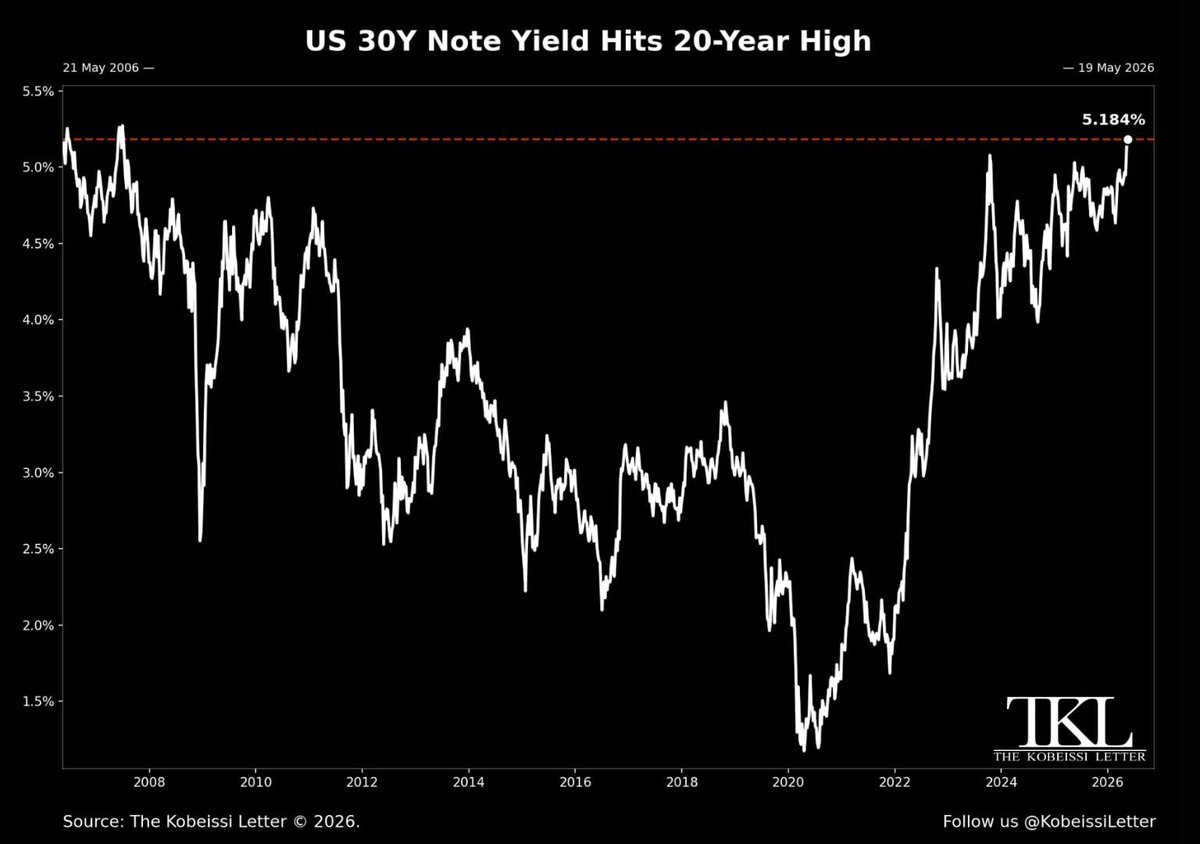
Bond Market Turmoil Escalates as 30-Year Yield Surges to 5.19%
In a sharp turn for financial markets, the U.S. Treasury 30-year note yielded 5.19% today, its highest level since July 2007. The move, driven by a confluence of inflation concerns, shifting expectations on monetary policy, and evolving demand from investors, signals a significant shift in the long end of the yield curve. As households, businesses, and policymakers digest the implications, the broad economy faces a complex array of financial dynamics that could ripple through borrowing costs, investment decisions, and public finances over the coming months.
Historical context: from the pre-crisis era to today To understand the significance of a 30-year yield near 5.2%, it helps to place it in historical context. In the mid-2000s, yields in the 5% range were common as the economy approached the global financial crisis. After the turmoil of 2008 and the subsequent long period of accommodation by the Federal Reserve, long-duration yields remained historically low for years, with policy tools designed to support borrowing and growth. The past decade has witnessed a broad reset in expectations: inflation pressures, supply chain dynamics, and fiscal stimulus have periodically pushed yields higher, while the Fed’s rate decisions have aimed to balance price stability with growth. A rise to the 5% area for the 30-year note marks a return to levels not seen in over a decade and a half, underscoring the renewed sensitivity of long-term financing to interest-rate trajectories and inflation readings.
Economic impact: financing costs, housing, and business investment
- Mortgage rates and housing affordability: The 30-year yield is a key determinant for conventional mortgage rates. A move above 5% on the long end typically translates into higher monthly payments for new mortgages and refinances, potentially cooling demand in housing markets that have already faced affordability pressures. Higher long-term borrowing costs can temper the pace of home price appreciation and influence decisions by buyers, developers, and lenders.
- Corporate financing: Corporations rely on long-duration debt for capital expenditures, project financing, and refinancing. A higher 30-year yield raises the cost of issuing long-term bonds, which can influence investment calendars, mergers and acquisitions activity, and the timing of large-scale capital projects. While some firms can offset higher costs through equity markets or cash flow strength, others may delay or scale back initiatives pending clearer financial signals.
- Government financing: The federal government borrows heavily across the yield curve, and elevated long-term rates increase debt service costs. This can affect budgetary planning, deficits, and fiscal multipliers, particularly in periods of elevated inflation or when contingent liabilities (such as aging infrastructure or social programs) are in focus. Policymakers often weigh the economic benefits of borrowing against the risks of higher interest payments over time.
- Financial markets and fixed income strategy: A rising long-end yield reshapes the landscape for bond investors, pension funds, insurance companies, and asset managers. Duration risk becomes more pronounced, and the risk-reward profile of long-duration securities shifts. Market participants may rebalance portfolios toward shorter maturities or inflation-protected vehicles, influencing liquidity and volatility across fixed-income markets.
Regional comparisons: how other economies are positioned
- Developed markets: Yields on long-dated government securities in major economies have shown sensitivity to inflation dynamics and central-bank policy paths. When U.S. long-term yields rise, global capital flows can rebalance as international investors adjust duration exposure and currency risk. Regions with more accommodative monetary stances or different fiscal trajectories may experience spillover effects in borrowing costs, exchange rates, and growth forecasts.
- Domestic affordability and regional housing markets: Within the United States, the impact of rising long-term yields is not uniform. Regions with high housing demand and supply constraints may see more pronounced price adjustments or slower activity, while areas with diverse housing stock or stronger local economies might exhibit more resilience. Local fiscal conditions and state or municipal borrowing costs also interact with national benchmark yields.
- Private-sector implications: Sectors most sensitive to long-term financing—such as infrastructure, utilities, and real estate development—may adjust capex plans in response to the new rate environment. Conversely, industries with robust cash flows or shorter investment horizons could weather the shift more smoothly, though the broader cost of capital still informs strategic choices.
Investor sentiment and public reaction: a shift in expectations Market participants are closely watching for guidance from monetary authorities, inflation data, and growth indicators. A sustained rise in long-term yields can recalibrate expectations about future policy rate paths and the trajectory of inflation. Public reaction tends to vary: some households may feel the pinch through higher loan costs, while businesses may view higher yields as a signal to optimize capital structures and operations. Analysts also emphasize the role of inflation expectations; if investors anticipate higher inflation persisting, real returns on fixed-income assets can be pressured, influencing diversification decisions across portfolios.
Policy clarity and forward guidance: what to watch next
- Inflation indicators: Fresh readings on consumer prices, wage growth, and core inflation will shape expectations for how long elevated yields might persist. A clearer picture of inflation dynamics helps market participants price in the terminal policy rate and the pace of monetary normalization.
- Federal Reserve communications: Statements, minutes, and projections provide crucial signals about the central bank’s assessment of inflation, labor markets, and financial stability. Clarity on balance-sheet adjustments and the pace of rate moves will influence the shape of the yield curve.
- Fiscal considerations: Government borrowing plans, debt issuance strategies, and potential fiscal reforms contribute to the demand-supply balance in long-duration Treasuries. Any changes in deficits or debt dynamics can influence long-term yield levels and market stability.
Public infrastructure and regional resilience: implications beyond markets Rising long-term yields affect not only investors but also public priorities. Higher borrowing costs can influence decisions on infrastructure investments, transit projects, and energy resilience programs. In regions grappling with aging infrastructure or climate-related resilience needs, the cost of financing large capital projects becomes a more prominent consideration. At the same time, if higher yields reflect healthier long-term growth expectations, certain projects with strong returns on investment may move forward despite elevated funding costs.
Global capital flows and currency considerations As U.S. long-term yields climb, foreign exchange dynamics come into play. International investors often evaluate U.S. Treasuries as a benchmark for risk-free income, but higher yields can attract capital from abroad, strengthening the dollar. A stronger currency can have mixed effects: it can reduce the price competitiveness of U.S. exports while widening the trade deficit, yet it can also lower import costs for domestic consumers and firms with international supply chains. The net effect depends on a constellation of factors, including global growth, commodity prices, and central-bank policies in other economies.
What this means for households and businesses
- Mortgage and loan planning: Homebuyers and refinancers should monitor rate trends and explore options such as lock-in strategies, adjustable-rate loans with rate caps, or shorter commitment horizons when appropriate. Financial advisers emphasize aligning debt maturities with cash flow realities to manage uncertainty.
- Investment strategy: For savers and institutions, a higher long end can encourage diversification into inflation-linked securities, shorter-duration bonds, or alternative assets. Active management strategies may focus on credit quality, duration, and hedging to navigate a steeper yield curve.
- Budgeting and cash flow: Businesses and households alike may adjust budgets to account for higher borrowing costs, particularly for large-ticket purchases or project financing. Scenario planning that incorporates rate trajectories and inflation paths becomes increasingly valuable.
Conclusion: navigating a new lending landscape The swift move higher in the 30-year Treasury yield signals a meaningful shift in the market’s pricing of long-term risk. While the broader economy benefits from disciplined inflation control and transparent monetary policy, elevated long-duration rates challenge borrowers and policymakers to balance growth, stability, and affordability. As markets assimilate this development, investors and consumers will be watching for further data on inflation, employment, and growth to gauge how long the current trend may endure and what the next period of rate normalization could look like.
Note: The information above reflects current market conditions and could change with new economic data, policy announcements, or unusual external events.