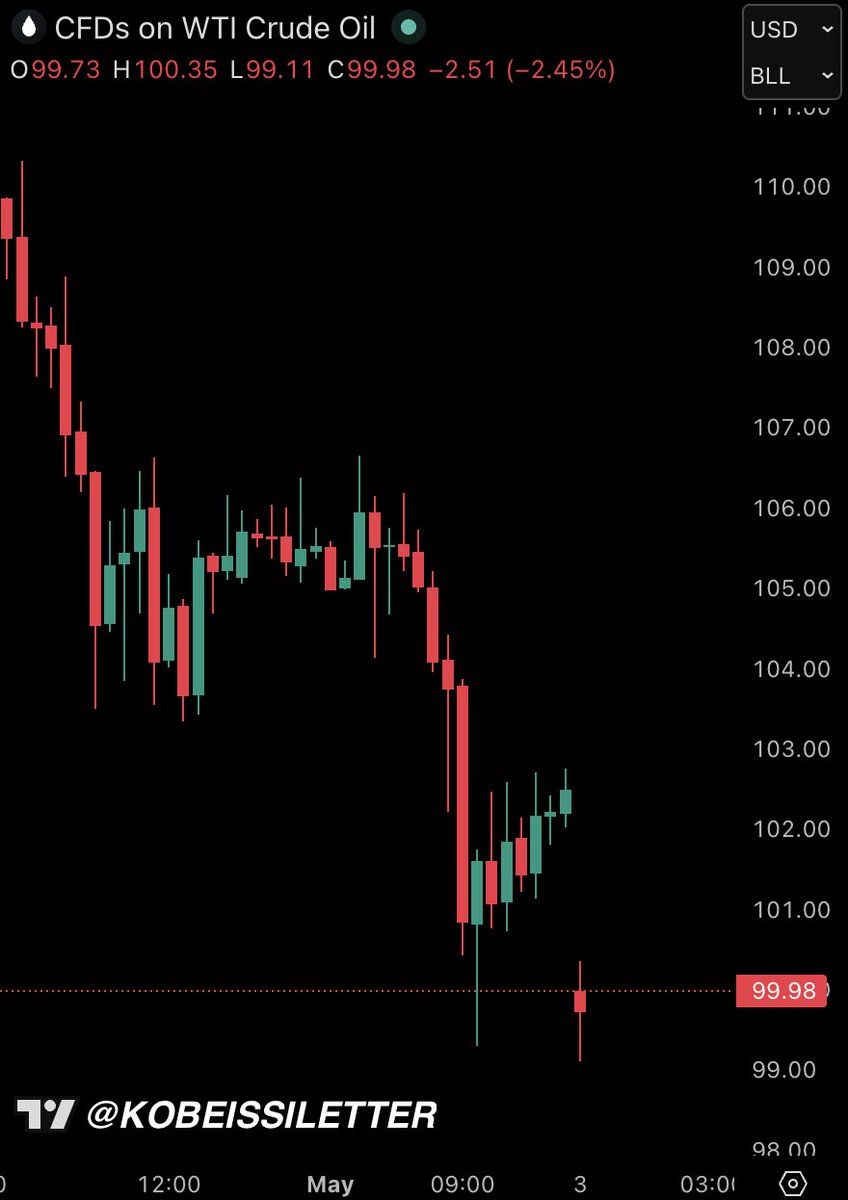
Oil Markets React to Strait of Hormuz Announcement as Prices Dip Under $100
A leadership announcement from the United States on naval passage through the Strait of Hormuz sent ripples through global energy markets, with crude benchmarks slipping below the $100-per-barrel mark for the first time in weeks. The development, framed as a strategic move to safeguard shipping lanes, arrived amid long-running regional tensions and heightened concerns about supply disruptions that could reverberate across economies and industries. In the days after the statement, traders, policymakers, and industry executives weighed the implications for prices, insurance costs, and regional security dynamics, while consumers and businesses considered what steadier flows could mean for energy budgets.
Historical backdrop: the Strait of Hormuz and energy security
The Strait of Hormuz has long stood as a pivotal artery for global energy trade. Positioned at the mouth of the Persian Gulf, this narrow waterway links the Gulf to the open seas and, by extension, to major refining centers and consuming markets across Asia, Europe, and the Americas. Roughly a fifth to a quarter of global oil shipments pass through the strait on any given day, depending on the year and geopolitical conditions. Because of this concentration of traffic, even modest disruptions—whether from maritime incidents, sanctions, or military standoffs—can trigger outsized reactions in crude prices and financial markets.
Over the past several decades, the international community has watched tensions flare and recede in the region, with corresponding volatility in energy markets. Every flare-up has a different texture—ranging from naval maneuvers and embargo threats to incidents at sea and broader shifts in alliances. Market participants often assign a premium to shipments through chokepoints such as Hormuz when risk assessments rise, and they ease that premium when assurances of safe passage appear credible. The latest development, promising safer passage, can be read as a recalibration of risk rather than a definitive resolution of underlying geopolitical fault lines.
Economic impact: a potential shift in price dynamics and risk premia
Crude oil prices are a delicate balance of supply expectations, demand signals, and risk assessments. When a country or coalition signals increased protection for shipping lanes, traders tend to adjust their risk pricing. A reduction in perceived supply disruption risk can translate into tighter, more competitive pricing, or at least a move away from extreme risk premiums that had been inflating near-term futures. In practice, such shifts often show up most clearly in front-month futures markets, which react quickly to newss and policy signals, while longer-dated contracts reflect a more nuanced view of longer-run fundamentals.
Beyond theprice level, there are several interrelated economic channels to consider:
- Inventory and refining margins: If market participants anticipate steadier flows, inventories in consuming regions may be re-priced with a modestly improved outlook for refinery throughput. This can influence crack spreads—the differential between crude and refined product prices—which in turn affect downstream profitability for domestic refiners and their capacity decisions.
- Inflation and consumer energy costs: A pullback in crude prices can ease pressure on energy- or transport-related inflation for some periods. The pass-through to gasoline prices at the pump, however, varies by region due to local taxes, distribution costs, and seasonal demand cycles. The net effect on household budgets centers on how quickly any price relief travels from wholesale markets to retail outlets.
- Investment and energy discipline: A stabilizing narrative around safe passage may reduce near-term volatility, potentially encouraging capital planning for energy projects in regions tied to global demand. Conversely, if tensions escalate again, investors could reprice risk, pulling forward or delaying investments in exploration, production, or infrastructure.
Regional comparisons: how different markets respond to Hormuz-related developments
- North America: U.S. and Canadian energy markets typically react to global price movements, but domestic supply dynamics—such as shale production trends and refining capacity utilization—also shape price responses. A dip in global risk premia can support marginal reductions in domestic crude prices, though the scale depends on local production costs and pipeline constraints. The overarching message from North American energy stakeholders is prudent optimism: a clearer path to secure flows reduces the probability of abrupt price spikes, even if domestic demand remains shaped by broader macroeconomic conditions.
- Europe and Asia: Regions that import a large share of their oil from outside the region may be more exposed to shifts in tanker routes, insurance costs, and freight rates. A perceived improvement in shipping certainty can translate into steadier import bills and less volatile energy-import funding requirements. In Asia, where demand growth has been a major driver of energy markets, the potential for more predictable shipments can support economic planning for manufacturing and transportation sectors.
- Middle East and global producers: Producers in the region monitor security dynamics closely, as the Strait of Hormuz carries strategic significance beyond economics. While a temporary easing of risk premia can dampen short-term price spikes, long-term outcomes depend on regional alliances, security protocols, and the durability of committed naval protections. For producers, any sustained improvement in market stability complements longer-term investment strategies and fiscal planning.
Market nuance: assessing risk premiums and price pathways
Analysts emphasize that a single policy signal, even one involving naval assurance, rarely rewrites the entire supply-demand equation. Rather, it alters sentiment and risk reassessment, which can cause a re-pricing of near-term futures. Traders examine several indicators to gauge the durability of the price move:
- Futures curve behavior: A backwardation or contango pattern in the futures curve provides clues about storage expectations and near-term demand resilience. A move toward a more neutral or mildly backwardated curve can reflect a confidence in supply continuity.
- Insurance and freight costs: Widened shipping insurance and higher tanker rates often accompany real or perceived risk. When geopolitical tensions ease, these costs can retreat, reinforcing lower overall carrying costs for oil in transit.
- Economic growth signals: Slower or faster-than-expected growth in key consuming regions influences how much price relief translates into real economic activity. If manufacturing and transportation sectors gain from lower energy costs, throughput and logistics costs may improve, supporting broader economic momentum.
Public reaction: confidence, concern, and the broader energy narrative
Public response to shifting oil price dynamics around Hormuz is nuanced. Consumers tend to notice price changes at the pump, but these movements often lag behind wholesale adjustments and can be smoothed by seasonal factors, retail competition, and regulatory mechanics. Business owners in energy-intensive industries welcome any stabilization that reduces input costs and plan for capital investments with greater certainty. Meanwhile, policymakers watch the longer arc—how steady shipments through Hormuz might influence energy security strategies, strategic reserves policies, and international cooperation on maritime safety.
Policy implications: safety, security, and strategic oil reserves
The announcement underscores the alignment of naval safety with economic security objectives. It highlights a broader approach that some governments pursue: maintaining open sea lanes as a public good that reduces systemic risk in energy markets. Governments also balance this with commitments to international law, rules of engagement, and de-escalation protocols designed to prevent any inadvertent incidents at sea.
From a strategic standpoint, governments may recalibrate their energy resilience measures. This can include diversifying import sources, expanding strategic petroleum reserves, and investing in infrastructure that enhances energy security. In regions with significant refining capacity, policymakers often weigh the trade-offs between maintaining open access to global crude supplies and supporting environmental and social objectives tied to energy transitions.
The regional dimension remains critical: while Hormuz is a global chokepoint, its ripple effects are most acutely felt in markets that rely on uninterrupted imports from the Gulf, as well as in cost-sensitive segments such as transport, manufacturing, and agriculture. The balance between ensuring safe passage and maintaining stable pricing continues to shape policy conversations among energy ministers, central banks, and international trade bodies.
Outlook: what comes next for prices and supply stability
Looking ahead, several scenarios could unfold:
- Scenario A: Sustained improved visibility. If naval protections prove reliable and regional tensions remain contained, markets could experience a gradual easing of risk premiums, with wholesale prices stabilizing near current levels and retail prices following with a lag.
- Scenario B: Renewed shocks. If incidents or escalations reappear, risk premia could surge again, leading to renewed price volatility and tighter supply expectations, particularly in short- to medium-term horizons.
- Scenario C: Structural shifts. Over time, persistent diversification of energy trade routes and continued global energy efficiency gains could reduce the sensitivity of prices to a single chokepoint, even as the global energy system remains interconnected and responsive to geopolitical developments.
In any scenario, the underlying demand landscape—driven by economic activity, vehicle efficiency, and ongoing transitions in energy markets—will continue to shape how quickly price movements translate into consumer costs and business planning. Market participants will monitor shipping data, tanker bookings, and refinery maintenance schedules to gauge near-term risk and longer-run stability.
Historical context reinforces the complexity of interpreting a single policy move. Oil markets have repeatedly shown that confidence in supply routes can momentarily ease price pressures, while lasting stability requires a durable, multilateral approach to energy security and regional diplomacy. That context matters for investors, policymakers, and the public as they navigate a constantly evolving energy landscape.
Conclusion: a turning point with cautions and opportunities
The reported development surrounding the Strait of Hormuz marks a noteworthy moment in the ongoing dialogue between energy security and geopolitical risk. By signaling a path toward safer passage for vessels, the United States seeks to reduce the immediate likelihood of supply disruptions that could trigger sharp price spikes. While this intervention may ease near-term volatility, it does not automatically resolve the broader, structural tensions that have long defined energy markets in the Gulf region.
For market participants, the immediate takeaway is careful optimism: a potential path to price stability and more predictable energy costs, tempered by the recognition that global oil markets remain intricately connected to regional security dynamics. As the world watches how this policy unfolds, stakeholders across industries will remain attentive to developments in maritime safety, international cooperation, and the evolving landscape of energy resilience.
Public and market sentiment will continue to hinge on the durability of assurances, the conduct of allied naval forces, and the broader trajectory of regional diplomacy. In the meantime, energy users and suppliers alike will adapt to a more stabilized environment, while remaining vigilant for any new developments that could alter the balance between supply, demand, and the risks inherent in one of the world’s most critical trade corridors.