U.S. Budget Deficit Surges to Recession-Level 7% of GDP Despite Stable Labor Market
A Deficit Typically Seen in Crisis
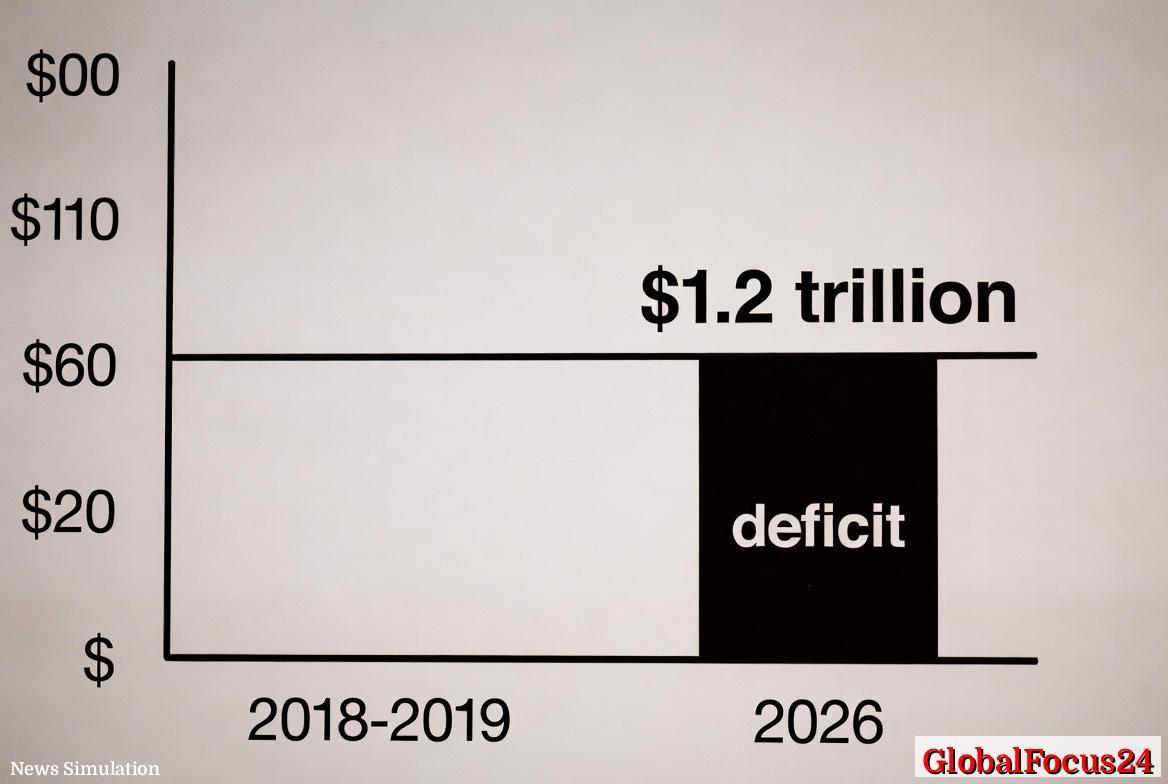
The United States is currently running a federal budget deficit equivalent to 7.0 percent of its nominal gross domestic product, a level historically associated with severe economic downturns rather than periods of steady growth. In nominal terms, the deficit reached $1.2 trillion during the first six months of fiscal year 2026, marking the third-largest first-half shortfall ever recorded.
Such figures stand in stark contrast to the pre-pandemic fiscal landscape of 2018 and 2019, when deficits hovered closer to 3.5 percent of GDP. The current gap is roughly double those levels, signaling a structural shift in government finances that has raised concerns among economists and fiscal analysts.
Traditionally, deficits of this magnitude have coincided with periods of sharp economic contraction, such as the 2008 financial crisis or the early stages of the COVID-19 pandemic. During those times, government spending surged in response to collapsing demand, rising unemployment, and emergency stabilization measures.
A Disconnect Between Deficit and Unemployment
One of the most notable aspects of the current fiscal situation is the divergence between deficit levels and labor market conditions. Historically, a deficit equal to 7.0 percent of GDP has been associated with unemployment rates near 8.5 percent. Today, however, unemployment remains significantly lower, indicating a break from past patterns.
This discrepancy suggests that federal spending is playing a critical role in sustaining economic activity. Analysts point to continued government outlays across infrastructure, healthcare, defense, and social programs as key drivers preventing a sharper slowdown in hiring.
Rather than responding to a crisis, current deficit spending appears to be acting as a buffer against potential economic weakness. In effect, fiscal policy is maintaining demand at levels that support employment, even as other indicators show signs of cooling.
Historical Context of Elevated Deficits
Large budget deficits are not unprecedented in U.S. history, but their timing typically aligns with economic distress. During the Great Recession of 2008–2009, the deficit peaked at nearly 10 percent of GDP as federal authorities deployed aggressive stimulus measures to stabilize financial markets and support households.
Similarly, during the pandemic in 2020 and 2021, deficits exceeded 12 percent of GDP amid unprecedented relief efforts. Those periods were characterized by widespread job losses, business closures, and emergency fiscal interventions.
In contrast, the current environment lacks the defining features of a severe downturn. Consumer spending has remained relatively resilient, corporate earnings have not collapsed, and financial markets have avoided systemic disruption. Yet, fiscal metrics resemble those seen in crisis conditions.
This unusual combination has led some economists to describe the present moment as a “synthetic deficit cycle,” where government spending substitutes for the absence of private-sector weakness.
Drivers Behind the Expanding Gap
Several factors contribute to the widening federal deficit. Among them are:
- Elevated interest payments on government debt, driven by higher interest rates in recent years.
- Continued investment in infrastructure and industrial policy initiatives aimed at long-term economic competitiveness.
- Persistent spending on entitlement programs such as Social Security and Medicare, reflecting demographic shifts.
- Defense expenditures that have increased amid evolving global security dynamics.
- Slower-than-expected revenue growth, partly due to moderating economic expansion.
Interest costs, in particular, have become a significant component of federal spending. As borrowing costs rise, a larger share of the budget is allocated to servicing existing debt, creating a feedback loop that can further widen deficits.
Economic Impact and Market Implications
The immediate economic impact of sustained high deficits is complex. On one hand, government spending supports growth by injecting capital into the economy, sustaining demand, and stabilizing employment levels. This effect is especially pronounced during periods of uncertainty.
On the other hand, prolonged deficits can exert upward pressure on interest rates, crowd out private investment, and contribute to long-term fiscal imbalances. Financial markets are closely monitoring Treasury issuance levels, as increased borrowing can influence bond yields and broader credit conditions.
Despite these concerns, investor appetite for U.S. debt remains strong, reflecting confidence in the country’s economic fundamentals and the dollar’s role as a global reserve currency. However, analysts note that continued reliance on large-scale borrowing could test that confidence over time.
Regional and Global Comparisons
Compared to other advanced economies, the U.S. deficit stands out for both its size and timing. Many developed nations expanded fiscal spending during the pandemic but have since moved toward consolidation as economic conditions stabilized.
In Europe, for example, several countries have reduced deficits to below 4 percent of GDP, guided by fiscal rules and debt sustainability targets. Japan, while historically maintaining higher deficits, faces unique structural challenges tied to its aging population and long-standing low-growth environment.
The United States, by contrast, continues to operate with elevated deficits even as its economy outperforms many peers in terms of growth and employment. This divergence underscores differences in fiscal strategy, policy priorities, and institutional frameworks.
Emerging markets, meanwhile, often face tighter constraints on deficit spending due to currency volatility and capital flow risks. The U.S. benefits from greater fiscal flexibility, though that advantage does not eliminate long-term risks.
The Role of Fiscal Policy in Economic Stability
The current deficit raises broader questions about the role of fiscal policy in managing economic cycles. Traditionally, governments increase spending during downturns and reduce deficits during expansions. This countercyclical approach aims to smooth fluctuations and maintain stability.
However, the persistence of large deficits outside of recessionary periods suggests a shift toward a more proactive fiscal stance. Policymakers appear to be prioritizing sustained investment and economic resilience over immediate deficit reduction.
This approach has contributed to steady job creation and consumer activity, but it also blurs the line between emergency support and baseline spending. As a result, the fiscal framework is evolving in ways that may redefine how deficits are interpreted.
Public Perception and Political Landscape
Public awareness of the deficit has grown asfigures reach historic levels. While fiscal policy is often viewed through a political lens, broader concerns about economic stability, inflation, and government debt are shaping public discourse.
Surveys indicate that many Americans remain focused on near-term economic conditions, such as wages and cost of living, rather than abstract fiscal metrics. However, rising interest payments and discussions around national debt are increasingly entering mainstream conversation.
Financial experts emphasize that while deficits can support growth, their sustainability depends on long-term economic performance and policy choices. The balance between stimulus and discipline remains a central issue.
Looking Ahead: Risks and Uncertainties
The trajectory of the federal deficit will depend on several key variables, including economic growth, interest rates, and policy decisions. A slowdown in growth could further widen the deficit if revenues decline while spending remains elevated.
Conversely, stronger economic performance could help stabilize fiscal metrics by boosting tax receipts and reducing reliance on government support. Interest rate trends will also play a critical role, as lower rates could ease debt servicing costs.
Uncertainty surrounding global economic conditions, supply chains, and financial markets adds another layer of complexity. Policymakers face the challenge of navigating these dynamics while maintaining confidence in fiscal sustainability.
A Deficit Without a Downturn
The current fiscal environment represents a departure from historical norms. A deficit of 7.0 percent of GDP, typically associated with recession, is now occurring alongside a relatively stable labor market and ongoing economic activity.
This unusual alignment highlights the evolving nature of fiscal policy and its role in shaping economic outcomes. While government spending is helping to sustain employment and demand, it also raises important questions about long-term balance and financial resilience.
As the fiscal year progresses, attention will remain focused on whether this pattern persists or begins to shift, offering further insight into the changing dynamics of the U.S. economy.