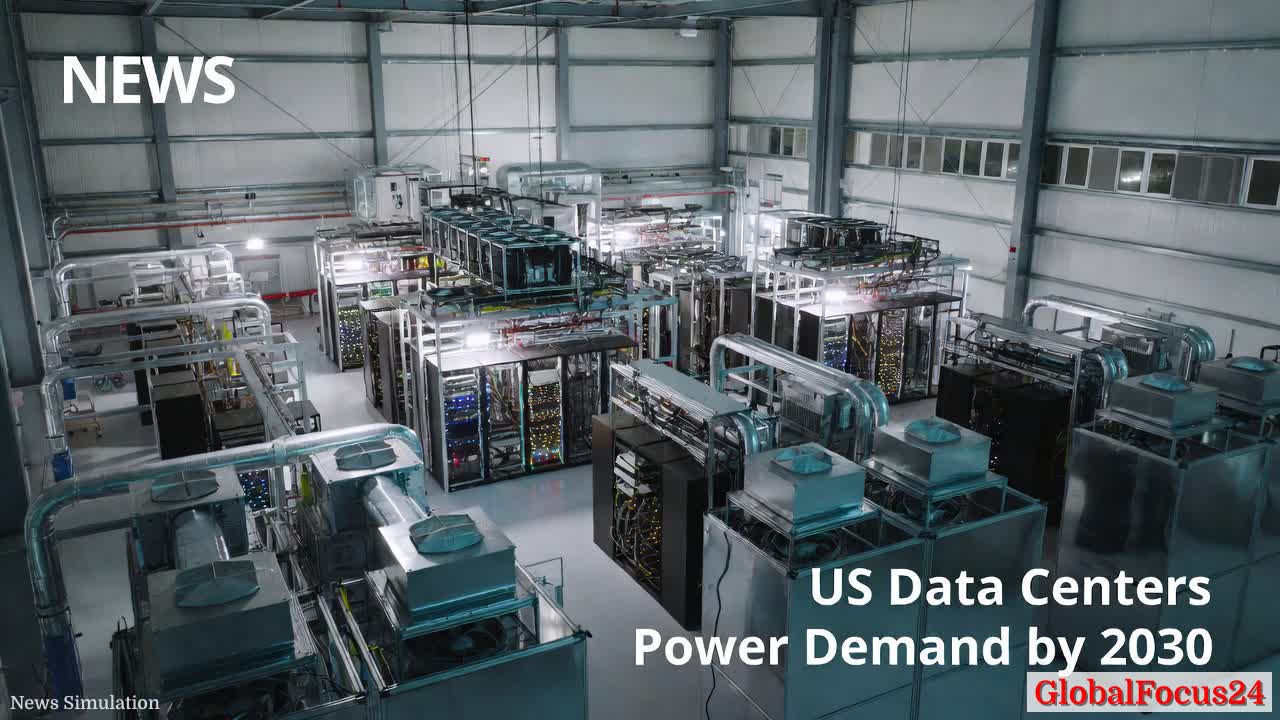
U.S. Data Centres Poised to Drive Surging Electricity Demand by 2030
Data centres are emerging as one of the fastest-growing sources of electricity demand in the United States, with their share of national power consumption projected to climb to nearly 9% by 2030, far outpacing trends in other major regions. This trajectory contrasts sharply with Europe, China, the wider Asia-Pacific region, and the rest of the world, where data centres are expected to remain below 3% of total electricity use over the same period.
Rising Digital Infrastructure and Power Demand
Over the past two decades, digital infrastructure has shifted from a supporting role in the economy to a critical backbone for commerce, communication, and public services. Data centres host cloud computing platforms, streaming services, social media networks, e-commerce systems, and an expanding array of artificial intelligence applications, all of which rely on large-scale, always-on computing capacity.
In the United States, this digital expansion has translated into a steep increase in electricity use by data facilities since around 2020. While their share of national electricity demand hovered around 1.5% in the early 2020s, projections indicate a rapid climb toward nearly 9% by 2030, making data centres a major component of the power system. By contrast, other regions show more gradual growth, with data centres’ share generally rising from roughly 1–2% in 2005 to just under 3% by the end of this decade.
Historical Context: From Niche Load to Major Consumer
Historically, data centres accounted for a relatively modest share of global electricity demand, even as internet usage rose sharply in the early 2000s. Efficiency gains in server hardware, virtualisation technologies, and improved cooling systems helped limit energy growth despite surging data traffic. Through the mid-2010s, global data centre electricity consumption remained comparatively stable as efficiency improvements largely offset rising workloads.
The landscape began to change as cloud computing and hyperscale facilities took hold. Large technology companies consolidated computing into massive data campuses, concentrating electricity demand in fewer, larger sites. The acceleration from around 2020 coincided with a wave of new applications—high-definition video streaming, large-scale cloud migration by enterprises, and, more recently, energy-intensive AI training and inference workloads requiring powerful graphics and specialised processors.
In the United States, the combination of an advanced digital economy, rapid cloud adoption, and a leading role in AI development magnified these trends. This has transformed data centres from a specialized industrial load into one of the most dynamic segments of national electricity demand growth.
Why the United States Is an Outlier
Several structural factors help explain why U.S. data centres’ electricity share is projected to rise far more steeply than in Europe, China, or other regions.
Key drivers include:
- A high concentration of hyperscale cloud providers headquartered or heavily invested in the United States, supporting domestic build-out of large data campuses.
- Strong demand from U.S.-based technology, finance, entertainment, and enterprise sectors for cloud services, big data analytics, and AI applications.
- A relatively favorable environment for infrastructure expansion in many states, including access to land, established transmission networks in some corridors, and policy incentives in certain jurisdictions.
- A significant share of global AI research and deployment occurring in U.S. firms and institutions, amplifying the need for computationally intensive data centre capacity.
In Europe, policy emphasis on energy efficiency, grid emissions, and environmental standards has encouraged stringent performance targets for new data centres and, in some cases, restrictions on siting in constrained urban areas. China and parts of Asia-Pacific have expanded digital infrastructure rapidly, but their projected data centre electricity shares remain lower as a percentage of national totals, in part due to the scale and growth of other industrial and residential loads.
Economic Impact and Investment Signals
The projected rise of data centres’ electricity share in the United States carries significant economic implications, influencing investment flows, job creation, and power system planning.
On the investment side, large-scale capital expenditure is flowing into:
- Construction of new data campuses, including land acquisition, building infrastructure, and advanced cooling systems.
- Upgrades to transmission and distribution networks to accommodate concentrated loads near major data centre clusters.
- Generation capacity, both conventional and renewable, to meet the added demand while maintaining grid reliability.
Data centres also serve as anchors for local technology ecosystems, attracting support services, equipment suppliers, and skilled labor. Regions that successfully attract these facilities may benefit from increased tax revenues, new employment opportunities, and enhanced digital infrastructure that can support broader economic activity. However, the concentration of large electricity users can also place pressure on local grids, potentially influencing electricity prices for other consumers and prompting debates over prioritisation of new capacity.
At the national level, the growing share of electricity directed to data processing underscores the role of digital services as an economic driver. The value added by cloud platforms, online commerce, artificial intelligence, and digital media depends on reliable, power-intensive infrastructure, linking economic competitiveness to energy availability and affordability.
Regional Comparisons: Europe, China, and Asia-Pacific
While data centres are expanding in all major regions, their relative share of electricity demand tells a different story outside the United States. In Europe, data centres’ share is expected to remain below 3% of total electricity use by 2030, rising only modestly from levels of around 1–2% in 2005. European policy frameworks encourage efficiency standards, use of low-carbon power, and, in some markets, waste heat recovery, all of which shape how new facilities are planned and integrated.
In China, rapid digitalisation and cloud adoption are driving significant data centre construction, yet the projected share of national electricity demand still remains under 3% by 2030. The country’s large industrial base and extensive manufacturing sector mean that heavy industry continues to dominate power use, keeping the relative contribution of data centres lower even as their absolute consumption rises.
Across the rest of Asia-Pacific excluding China, and in the broader rest of the world category, data centres show similar patterns: moderate growth in electricity use but stable or only slightly rising shares of total demand, generally staying below 3% through 2030. This reflects both differing levels of digital infrastructure maturity and the weight of other economic sectors in total electricity consumption.
Grid Reliability and Infrastructure Challenges
The steep rise in U.S. data centre electricity demand presents new challenges for grid operators, regulators, and utilities. Concentrated demand growth in specific corridors can test existing infrastructure and require substantial upgrades to transmission lines, substations, and local distribution networks. Coordinating these investments with the build-out of new data campuses is becoming a critical planning task.
Grid operators must:
- Anticipate large, location-specific load additions and integrate them into long-term resource plans.
- Ensure sufficient generation capacity, including flexible resources, to meet peak demand and maintain reliability standards.
- Consider the impact of data centre clusters on congestion, voltage stability, and resilience during extreme weather events or system disturbances.
In some markets, the pace of data centre proposals has already prompted concerns about whether electricity infrastructure can keep up, potentially affecting timelines for new projects and spurring discussions about interconnection queues and capacity allocation. These debates are likely to intensify as the projected share of electricity demand tied to data processing nears 9% nationally by 2030.
Efficiency, Innovation, and Sustainability Strategies
Despite the rapid growth in electricity demand, data centre operators are pursuing a range of strategies to curb energy intensity and manage environmental impacts. Advances in server design, power management, cooling technologies, and data centre architecture have historically allowed more computing to be delivered per unit of electricity.
Key approaches include:
- Deploying high-efficiency servers and storage systems that reduce power consumption per computation.
- Improving cooling systems through techniques such as liquid cooling, advanced airflow management, and operation in cooler climates.
- Locating facilities closer to renewable energy resources or entering into long-term power purchase agreements to support low-carbon electricity supply.
- Using sophisticated software to optimise workloads, shift processing to times or locations with lower grid stress, and balance performance with energy use.
While these measures can significantly slow the growth of electricity consumption per unit of digital output, the sheer scale of new workloads—especially AI—means total demand is still expected to rise. In the United States, efficiency gains are increasingly being outpaced by the expansion of services and applications that depend on intensive computing.
Global Implications and Policy Considerations
The growing share of U.S. electricity consumed by data centres has implications beyond national borders, influencing global debates on digital infrastructure, climate targets, and energy security. As more economic activity moves online, countries are assessing how to balance the benefits of advanced digital services with the requirements of their power systems and emission reduction goals.
Policy makers are beginning to consider:
- How to integrate large data centre loads into national energy and climate strategies.
- Whether to adopt specific efficiency or reporting requirements for new facilities, similar to approaches emerging in some European jurisdictions.
- What incentives might encourage data centres to locate in areas with robust grids and abundant low-carbon generation.
- How to coordinate planning between technology companies, utilities, and regulators to avoid bottlenecks and ensure timely infrastructure expansion.
For other regions, the U.S. trajectory serves as a reference point, illustrating how quickly data centre electricity demand can scale when digital services and AI workloads expand rapidly. The contrasting projections for Europe, China, Asia-Pacific, and the rest of the world highlight that policy choices, economic structure, and technology deployment all play a role in shaping the energy footprint of digital infrastructure.
Outlook to 2030: A Pivotal Decade
By 2030, data centres will occupy a far more prominent place in the U.S. energy landscape, accounting for nearly 9% of electricity demand and marking the country as a clear outlier among major regions. In most other parts of the world, data centres’ share is expected to remain below 3%, even as digital services expand and infrastructure investment continues.
The coming decade will therefore be pivotal. Decisions made now about where and how data centres are built, how they connect to the grid, and what energy sources they use will help determine the balance between digital growth and power system stability. As the United States moves toward this new phase—where computing, cloud services, and AI constitute a central driver of electricity demand—the world will watch closely to see how one of its largest power markets manages the rise of an increasingly indispensable, and power-hungry, digital backbone.