Oil Boom Transforms Brazil's Northern Frontier: The Oiapoque Era Begins
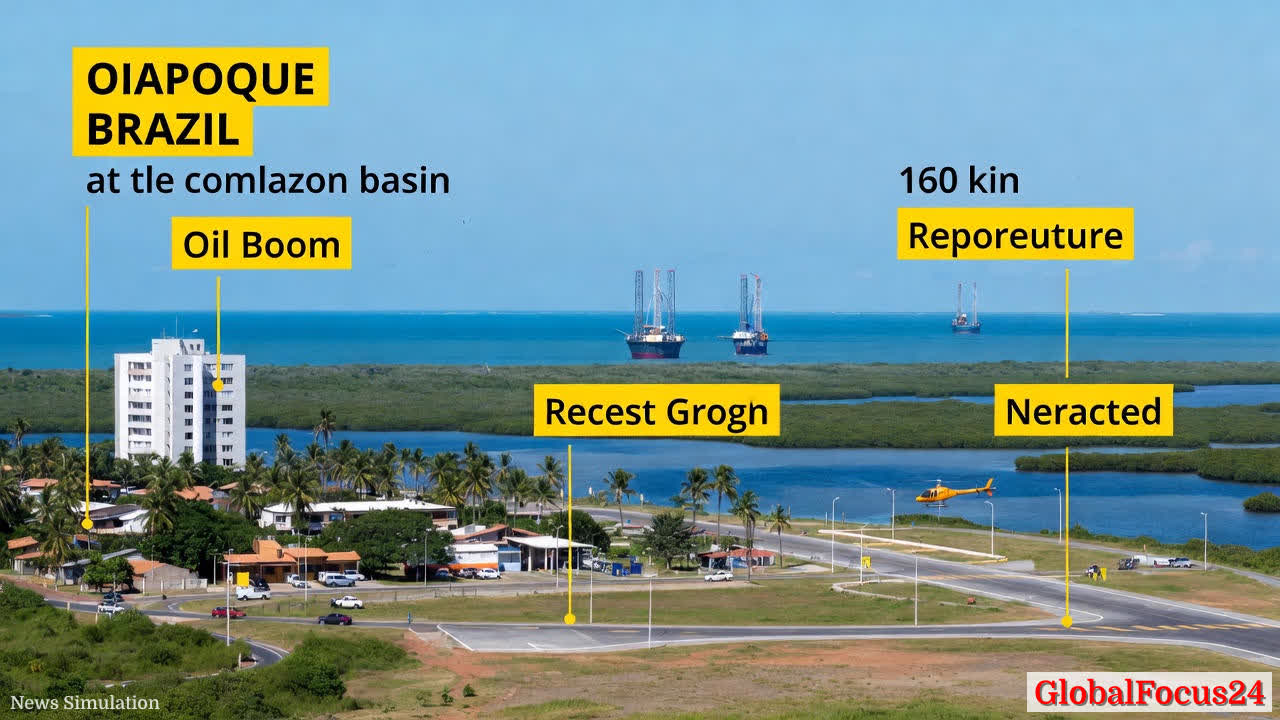
Oiapoque, a remote town at Brazil’s northern tip where the Amazon basin meets the Atlantic, stands at the threshold of a sweeping economic and social transformation. Once a quiet outpost where fishermen barter daily catches and indigenous communities exchange manioc for fuel, the region is rapidly evolving as a potential oil frontier. Along the main street, new hospitality development signals a shift from subsistence-based livelihoods to energy-driven growth. A seven-story hotel slated to open next year embodies a broader transformation shaping regional demographics, infrastructure, and public expectations. The nearby airport has undergone renovations, and the hum of helicopter traffic is increasingly commonplace, underscoring ambitious plans to access offshore reserves.
Oil License and the Equatorial Margin
In October, Brazil’s environmental regulators granted state-owned Petrobras a license to explore for oil approximately 160 kilometers off the coast. This approval is a culmination of years of regulatory and technical preparation tied to the Equatorial Margin, a promising offshore frontier long discussed within policy circles and industry conferences. Estimates circulating in industry analyses place the region’s potential at more than 30 billion barrels of oil, with around 10 billion barrels projected as recoverable. The decision aligns Brazil with a broader regional trend of offshore exploration driven by new seismic data, more capable drilling technology, and favorable market conditions for petroleum products.
Context: Regional momentum and competition
Brazil’s move follows notable breakthroughs in neighboring Guyana, where discoveries have unlocked reserves exceeding 11 billion barrels and spurred rapid, widely discussed economic growth. Suriname has pursued similar exploration pathways, contributing to a regional narrative in which offshore resources reconfigure national development trajectories, public revenues, and foreign investment flows. The Equatorial Margin’s prospects also intersect with a global energy landscape undergoing structural shifts as markets balance energy security, climate commitments, and the evolving mix of renewables. For Brazil, offshore opportunities could offset aging onshore and deep-water fields off Rio de Janeiro that are projected to peak and decline after 2030, raising questions about future energy independence and export dynamics.
Economic implications: Jobs, investment, and regional growth
Brazil’s energy ministry projects substantial economic activity linked to the Equatorial Margin. Investments could reach 280 billion reais, roughly $52 billion, with potential to generate as many as 350,000 jobs across construction, fabrication, logistics, and ongoing operations. The promise of large-scale employment resonates in Oiapoque and surrounding municipalities, where local leaders have long sought diversified income sources beyond traditional fishing and small-scale commerce. Public sentiment toward drilling has shifted: 42% of Brazilians now support exploration, up from 26% in October, while 49% remain opposed. This polarization reflects balanced concerns about job creation and environmental risk, illustrating the nuanced public discourse that often accompanies major energy projects.
Regional comparisons: Northern Brazil and beyond
Oiapoque’s experience will be watched closely in relation to other Brazilian regions and neighboring countries. If the Equatorial Margin delivers on its potential, Brazil could realize a one-third increase in South American oil output by 2030. That pace would place Brazil in a different echelon of regional energy production, potentially contributing to a broader shift away from reliance on older, high-cost offshore fields elsewhere and aligning with growth trajectories seen in North American and Middle Eastern markets. The northern region’s development could serve as a comparative case study against basins in West Africa and Southeast Asia, where offshore infrastructure, environmental safeguards, and community engagement strategies are integral to project viability and social license.
Environmental safeguards and biodiversity considerations
Oiapoque sits within a region renowned for its biodiversity, including extensive mangrove ecosystems, diverse fisheries, and iconic marine life such as pink river dolphins, humpback whales, and manatees. A 1,000-kilometer deep-water reef identified in 2016 adds to the ecological significance of the area. Exploration activities—particularly those involving deep-water operations up to 3 kilometers below the surface—present environmental risks that require robust containment, rapid response capabilities, and continuous monitoring. Strong currents generated by the Amazon River, which contributes a substantial share of freshwater to the Atlantic, complicate drilling and seismic activities, underscoring the need for advanced technology and meticulous environmental stewardship. Indigenous communities have voiced concerns despite assurances of safety and inclusive consultations, highlighting the ongoing importance of consent, Traditional Ecological Knowledge, and transparent risk communication.
Industry leadership and collaboration
Petrobras brings deep-water expertise to the table, leveraging a track record in challenging offshore environments. International partners with rights to prospecting in the area add capital, technology, and diversification of risk. The consortium approach reflects a broader industry trend toward multi-operator collaborations in frontier basins, aiming to accelerate timeline-to-production while reinforcing safety standards and environmental protections. As exploration intensifies, supply chain development—ranging from vessel construction to regional training programs—will be essential to sustain momentum and minimize cost overruns. Local stakeholders can expect investment in infrastructure upgrades, including roads, port facilities, and energy supply reliability, to support both current communities and future industrial activity.
Public revenue and a path toward renewal funding
Given Brazil’s fiscal realities, revenues from oil production could become a significant lever for public investment. Officials have proposed a sovereign wealth fund modeled after Norway’s, designed to manage revenue volatility, stabilize public finances, and fund long-term development priorities. The government has also published a roadmap to reduce fossil-fuel dependence while expanding support for renewable energy and energy efficiency programs. In a country committed to balancing growth with climate objectives, the oil phase could serve as a transitional bridge—bolstering public services, funding social programs, and catalyzing the diversification of the regional economy away from single-commodity dependence.
Societal impact: Migration, services, and public engagement
As in other frontier regions, the potential oil rush is poised to reshape demographics. Rapid migration to Oiapoque and neighboring towns could strain housing, healthcare, education, and municipal services if planning lags behind population growth. Local officials are prioritizing scalable infrastructure solutions, including housing policies, expanded healthcare facilities, and enhanced public safety. Cultural and social dynamics will also evolve as new workers arrive, bringing diverse skills and expectations. Authorities emphasize transparent engagement with indigenous groups and traditional communities to address concerns about land rights, cultural preservation, and the equitable distribution of opportunities.
Operational timeline and risk management
The path from exploration to production in frontier basins is inherently complex and subject to global energy price fluctuations, regulatory milestones, and technological hurdles. The current license represents a foundational step, with subsequent appraisal, drilling campaigns, and environmental impact assessments shaping the pace of development. Risk management will be critical, given the sensitive marine environment, meteorological variability, and the logistical challenges of operating far offshore in a region with powerful river-induced currents. A cautious, highly regulated approach—coupled with robust contingency planning—will help ensure environmental safeguards and community benefits keep pace with economic ambition.
Public perception and market signals
Public reaction to the prospect of oil development in northern Brazil is mixed, reflecting a balance of optimism about job creation and concerns about ecological integrity. Business leaders and labor unions see a path to regional prosperity, while environmental groups emphasize vigilance to prevent spills and protect biodiversity. The market will monitor how Brazil translates oil wealth into social and economic gains, including investments in education, healthcare, and sustainable infrastructure. The broader energy market also watches Brazil’s strategy for balancing domestic energy needs with export opportunities, particularly as demand for diversified energy sources evolves in the global economy.
Future outlook: A nuanced balance of growth and sustainability
Brazil’s northern frontier presents a case study in how a country navigates the crossroads of resource development, environmental stewardship, and social well-being. If managed effectively, the Equatorial Margin could contribute to a more resilient national energy portfolio, reduce reliance on imports, and create pathways for regional advancement in Amapá and neighboring states. Yet the success of this initiative hinges on maintaining rigorous environmental protections, ensuring transparent governance, and delivering tangible benefits to local communities that have long depended on the river and forest for their livelihoods.
In Oiapoque today, life continues with the rhythms of the Amazonian watershed. Fishermen still haul catfish, hake, and oscars from enriched waters, while the horizon hints at a future where energy wealth could redefine everyday life. The coming years will reveal whether this frontier becomes a new epicenter of Brazilian economic momentum or a cautionary tale about balancing ambition with stewardship. What remains clear is that the northern frontier is no longer merely a peripheral outpost; it is a focal point in Brazil’s ongoing pursuit of growth, resilience, and sustainable development in a rapidly changing world.