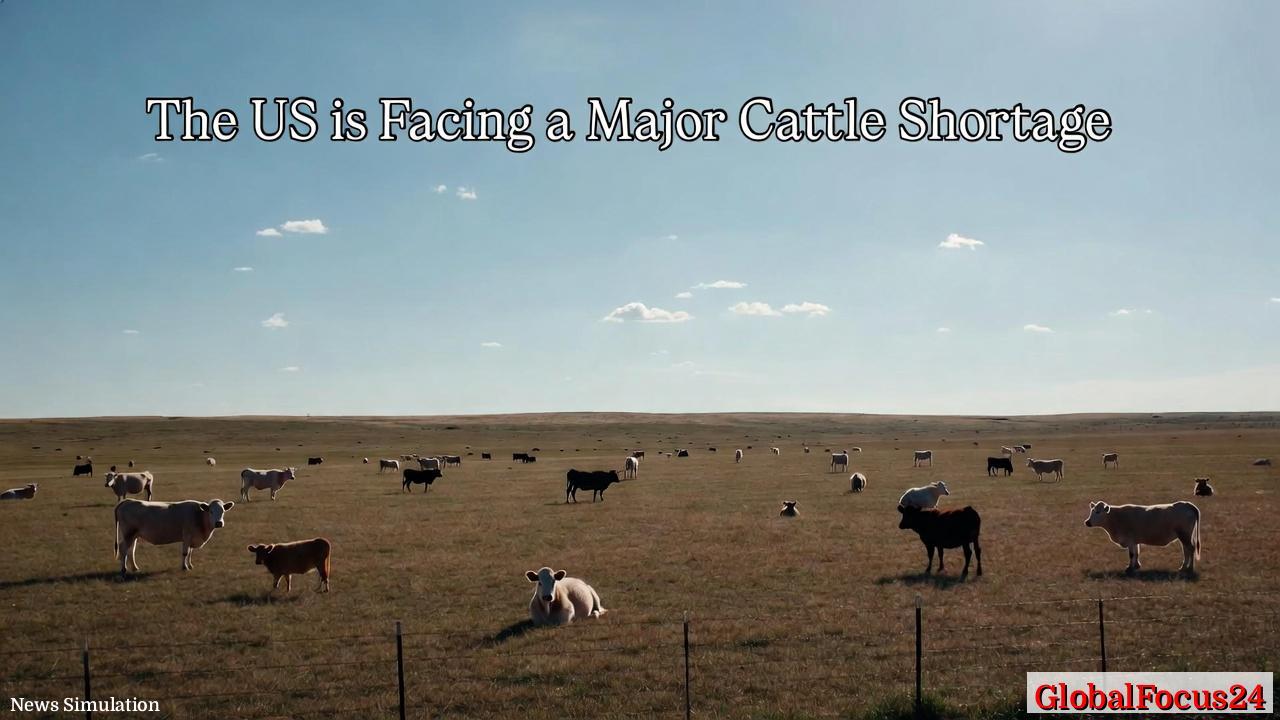
Cattle Inventory Signals a Slower U.S. Cattle Cycle and Shifts in Beef Supply
The U.S. cattle and calves inventory as of January 1 stands at 86.2 million head, the smallest total since 1951. This figure marks a marginal decline from 86.5 million head a year earlier and reinforces a broader pattern of tightening supply that has characterized the beef industry in recent years. With beef cows totaling 27.6 million head—down 1% from the prior year—the landscape of U.S. cattle production continues to adjust to a confluence of market forces, weather patterns, and evolving agricultural practices. The 2025 calf crop is estimated at 32.9 million head, down 2% from the previous year, while the number of cattle on feed totals 13.8 million head, down 3%. Beef replacement heifers, meanwhile, show a 1% increase, highlighting a nuanced shift within the herd composition. Taken together, these indicators point to an ongoing contraction in the cattle cycle, even as certain segments demonstrate resilience or early signs of recovery.
Historical context: tracing the cattle cycle and its milestones Understanding the current figures requires a look back at the long arc of U.S. cattle production. The cattle cycle—characterized by alternating periods of herd expansion and contraction—has long followed roughly a eight- to ten-year rhythm, driven by cost of production, feed prices, and demand dynamics. Post-World War II America saw rapid expansion as feedlots modernized, pasture land turned to grazing, and consumer demand for beef remained robust. In recent decades, external factors such as drought, feed grain price volatility, and shifting cattle genetics have complicated the cycle. The January 1 inventory decline to 86.2 million head, the lowest since 1951, underscores how the cycle remains under pressure from persistent headwinds: higher input costs, competitive crop markets, and evolving export demand.
Economic impact: implications for producers, processors, and consumers
- Producer outlook: A tighter supply base can bolster per-head prices when demand holds steady, yet producers face higher input costs for feed, medicine, and transportation. The 1% drop in beef cows and the 2% decline in the calf crop signal a cautious approach among ranchers, who often adjust herd size in response to expected margins, drought risk, and long-term price signals. Replacement heifers rising by 1% suggests some effort to maintain breeding stocks for future growth, signaling a desire to preserve productive capacity even as immediate expansion slows.
- Feed and input costs: Feed costs—particularly corn and soybeans—profoundly influence cattle economics. When feed prices spike, some ranchers reduce breeding stock or cull cows to manage cash flow, contributing to lower calving rates. Conversely, when feed costs moderate, producers may be more inclined to retain females to rebuild herds, a nuance reflected in the modest uptick in beef replacement heifers.
- Processing and supply chain: A smaller cattle inventory can translate into tighter cattle-on-feed numbers, influencing slaughter schedules, processing capacity utilization, and seasonal price volatility. Meatpackers may adjust procurement strategies to align with anticipated slaughter volumes, while retailers respond to shifts in beef availability and price points with product mix adjustments.
- Consumer impact: For households, gradual supply tightening can translate into steadier prices for beef at retail, though regional differences persist. In drought-prone areas or regions with higher feed costs, retail prices may rise more quickly, influencing consumer purchasing behavior and dietary choices.
Regional comparisons: how the numbers stack up across the United States
- Plains and Midwest: These regions historically account for a large share of cattle on feed and beef production. Droughts or moisture deficits in these areas can pressure pasture and hay inventories, prompting a higher reliance on feedlots and affecting calving distributions. A smaller national calf crop can disproportionately impact producers in these regions, given their historically outsized role in recruitment into feedlots.
- West and Southwest: In states with rangeland-based operations, weather-driven variability frequently shapes herd dynamics. The modest decline in total cattle numbers may be buffered by regional shifts toward more intensive management, genetic improvements, or diversified income streams.
- Southeast and Northeast: The southeastern United States often benefits from steady pasture conditions and supportive agribusiness ecosystems. Regional producers may experience different price signals due to local demand, processing capacity, and transportation logistics, contributing to a mosaic of responses even within a nationwide contraction.
Herd composition and long-term considerations
- Beef cows at 27.6 million head reflect a tightening breeding base. A smaller cow herd can reduce the annual calf supply over time, potentially tightening slaughter-ready cattle volumes in the back half of the decade if current trends persist.
- Calf crop dynamics matter for future supply. The 2025 calf crop estimate of 32.9 million, down 2%, suggests fewer calves to enter feedlots and process into beef products in the future. However, producers often respond to price signals by adjusting calving windows and weaning strategies, potentially moderating longer-term declines.
- Cattle on feed at 13.8 million head show a 3% dip. This metric is closely watched by markets because it directly affects near-term beef availability and price posture. A lower on-feed tally can help avoid oversupply during seasonal gluts but may also constrain short-term production during peak demand periods.
Historical price signals and market expectations
- Price volatility tends to accompany shifts in supply. As the cattle cycle tightens, futures markets and cash prices for fed cattle can display increased sensitivity to weather, grain prices, and export demand. Market participants often monitor cattle-on-feed inventories, calf crop projections, and replacement heifer trends to forecast the trajectory of beef prices.
- Export demand remains a critical variable. In recent years, foreign buyers have mattered for U.S. beef demand dynamics. An environment of global supply constraints or favorable exchange rates can bolster demand, supporting favorable prices for producers even amid a shrinking national herd.
- Alternative protein competition and consumer preferences also influence price dynamics. Shifts toward poultry, pork, or plant-based proteins can moderate beef demand, which in turn affects producer incentives to expand or retain herds.
What this means for the broader agricultural economy
- Investment in genetics and technology: Farmers and ranchers may invest in breeding technologies, precision agriculture, and herd-health management to maximize output from a smaller base. These investments can raise productivity and resilience, potentially offsetting some of the supply constraints.
- Regional adaptation and infrastructure: As herd composition shifts, processing facilities, transport networks, and regional supply chains may adapt to new patterns of cattle movement and slaughter scheduling. Infrastructure investments can improve efficiency and reduce losses from weather events or disease risk.
- Policy and risk management: Crop and livestock producers frequently employ hedging strategies, insurance products, and futures contracts to manage price risk. A tighter cattle cycle can elevate the importance of risk management tools and policy support that stabilizes rural incomes during periods of volatility.
Regional case studies: illustrative snapshots
- The Heartland cattle belt: A midwestern state pairings illustrate how drought relief measures, feed price dynamics, and local processing capacity shape herd decisions. Producers in this region may prioritize calf retention and selective culling to maintain economic viability amid fluctuating feed costs.
- The Pacific Northwest approach: Ranchers in this region might emphasize pasture management, water rights considerations, and diversified revenue streams, including agri-tourism or value-added beef products, to counterbalance a leaner national herd.
- The Southern plains experience: In states with extensive ranching operations, seasonal rainfall and pasture quality play pivotal roles in calving timing and replacement heifer retention, influencing the pace of herd rebuilding and on-feed inventory changes.
Public reaction and sentiment: a background hum Residents in rural communities and agricultural markets watch cattle inventory figures closely. News of tightening herds often sparks discussions about price expectations at farmers markets, feed stores, and meat counters. While some respond with optimism about higher potential prices, others worry about longer-term affordability of beef and the viability of family farms facing elevated input costs. The human thread behind the numbers—farm families, lenders, processors, and processors’ workers—often reflects a cautious mood, tempered by resilience and adaptive strategies honed across generations.
Looking ahead: navigating the next phase of the cattle cycle Analysts anticipate continued adjustment as the cattle cycle evolves. If macroeconomic conditions remain favorable—stable demand, manageable feed costs, and supportive export markets—the industry may gradually stabilize around a leaner but efficient herd. Conversely, adverse weather, persistently high feed costs, or a shift in consumer preferences could accelerate consolidation or slow rebuilding efforts. The path forward will likely hinge on a balance between herd productivity gains, supply discipline, and dynamic market demand for beef products.
Conclusion: a snapshot of a pivotal moment in U.S. cattle production The January 1 inventory data underscore a defining moment for U.S. cattle producers. With the smallest total since 1951 and a series of sub-notable declines across key categories, the figures signal ongoing discipline within the cattle cycle. Yet within the broader trend, the modest uptick in beef replacement heifers hints at a strategic push to preserve breeding capacity for the longer term. As industry stakeholders monitor weather, feed markets, and international demand, the evolving dynamics will shape beef supply, prices, and the livelihoods of farmers and ranchers across regions.
Note: This article presents a factual synthesis of the latest inventory data and situates it within historical, economic, and regional contexts. It aims to inform a broad audience about how cattle numbers affect supply chains, prices, and rural economies without delving into political analysis. It integrates relevant industry indicators and regional considerations to provide a comprehensive understanding of the current state of U.S. beef production.