Trump Issues Direct Warning to Iran After Naval Losses Mount
U.S. and Iran Face New Flashpoint at Sea
President Donald Trump issued a stark warning to Iran on Monday, declaring that the Iranian navy has been “largely destroyed,” with 158 ships reportedly sunk. The announcement marks a major escalation in tensions between Washington and Tehran, reigniting fears of instability in already volatile Middle Eastern waters.
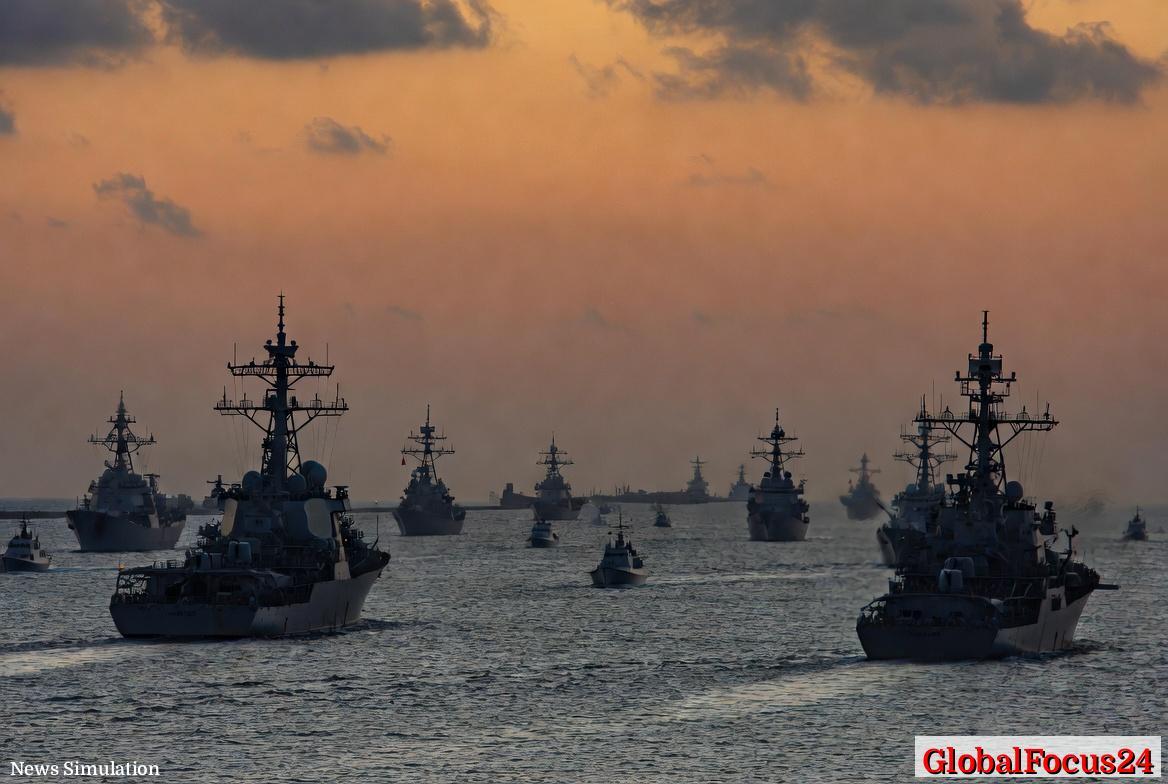
Trump stated that American forces had not targeted Iran’s remaining “fast attack” vessels — small, quick-moving boats often used by the Islamic Revolutionary Guard Corps (IRGC) — but warned that any approach toward the U.S. blockade would meet with immediate and forceful retaliation.
“If any of these ships come anywhere close to our blockade, they will be immediately eliminated, using the same system of kill that we use against the drug dealers on boats at sea,” Trump said, describing U.S. military engagement protocols as “quick and brutal.”
While the administration has not disclosed the exact location of the blockade, defense officials confirmed that American naval power in the Persian Gulf and Arabian Sea remains at its highest readiness level since late 2024.
Background: Decades of Naval Tension in the Persian Gulf
The strained relationship between the U.S. and Iran in maritime waters dates back more than four decades. Following the 1979 Iranian Revolution and the Iran-Iraq War of the 1980s, the Persian Gulf became a recurring flashpoint.
During the late 1980s, the United States launched Operation Praying Mantis, destroying several Iranian naval vessels and oil platforms in response to Iranian mine attacks on Gulf shipping. The confrontation effectively reshaped naval engagement strategies for both nations.
Since then, U.S. naval operations have focused on protecting shipping routes through the Strait of Hormuz — one of the world’s most critical chokepoints for global crude oil exports. Iran has frequently threatened to close the strait during times of political or economic pressure, citing its control of coastal maritime routes.
The tension has often ebbed and flowed with changes in U.S. administrations, economic sanctions, and Iran’s own domestic political climate. Trump’s latest warning follows several months of maritime incidents, including drone surveillance encounters and reported cyber interference targeting navigation systems in the region.
The Scale of Iran’s Reported Naval Losses
Trump’s claim that 158 ships have been “sent to the bottom of the sea” paints a grim picture of Iranian naval capability. Analysts caution, however, that verifying this figure remains difficult, as neither independent organizations nor Iranian state channels have confirmed such losses.
Iran's navy consists of both regular forces and the IRGC Navy, operating a mix of small patrol boats, missile-armed vessels, and aging submarines. Its fast attack craft, often clustered in swarms, have long been used to harass larger ships or threaten oil tankers transiting through narrow waterways.
If the U.S. figures are accurate, such damage would mark one of the most significant maritime defeats for any nation since the Falklands War of 1982. It would also severely degrade Iran’s ability to control or disrupt shipping traffic near Hormuz, effectively weakening its leverage in future regional conflicts.
Regional and Global Reactions
Monday’s announcement sparked immediate concern among regional powers. Gulf Cooperation Council (GCC) members, particularly Saudi Arabia and the United Arab Emirates, welcomed the American show of strength, viewing it as a stabilizing measure for global oil shipping routes.
Conversely, Iraq and Oman — nations that have traditionally balanced relations with both Washington and Tehran — urged restraint. Oman’s Foreign Ministry called for “de-escalation at sea,” warning that further confrontation could threaten international oil supplies and economic recovery efforts across the region.
European officials expressed alarm at the heightened rhetoric. Diplomats in Brussels noted that a collapse in maritime communication channels could derail ongoing efforts to restore transparency around Iran’s nuclear program and regional security coordination.
China, one of Iran’s primary trading partners and oil importers, has continued to emphasize diplomacy, calling for talks to prevent further escalation. Beijing maintains naval presence in nearby waters as part of anti-piracy operations but has avoided direct military involvement.
Economic Impact of Rising Maritime Tensions
The economic repercussions of renewed U.S.-Iran tensions were immediate and widespread. Brent crude futures spiked nearly 4% within hours of the announcement, reflecting investor fears that shipping disruptions in the Persian Gulf could restrict global oil supply chains.
The Strait of Hormuz carries approximately one-fifth of the world’s petroleum. Any sustained conflict in these waters threatens to send prices soaring and inflict collateral damage on fragile economies reliant on energy imports.
For the United States, the current situation highlights the strategic value of domestic energy independence, which has grown since the shale oil boom of the past decade. While the U.S. is less reliant on Middle Eastern crude than in past decades, inflationary ripples from global oil price hikes could still pressure consumer markets and supply lines.
Iran’s economy, already strained under international sanctions, could face additional turmoil if maritime trade routes become too risky for commercial carriers. Insurance premiums for ships traveling through the Gulf have already increased sharply, a recurring symptom of regional conflict that mirrors market conditions following prior naval confrontations.
Comparison to Previous Maritime Crises
The present crisis draws unavoidable comparisons to earlier episodes of U.S.-Iran tension, including the 2019 tanker attacks and the 2020 U.S. strike that killed Iranian General Qassem Soleimani. Each event triggered global concern yet eventually de-escalated before reaching full-scale war.
What sets the current moment apart is scale and scope. The claim of 158 Iranian ships destroyed suggests a far more decisive confrontation than past limited exchanges. Moreover, the establishment of what Trump referred to as a “blockade” indicates a sustained U.S. naval presence designed to enforce control, rather than a reactive measure to isolated incidents.
Historically, blockades have been rare and provocative tools of maritime policy, often used to restrict trade or movement in contested waters. The last major U.S.-enforced blockade in the region occurred during Operations Desert Shield and Desert Storm in the early 1990s, when Washington sought to isolate Iraq following its invasion of Kuwait.
Given that context, current U.S. actions may signal a shift from deterrence to active containment — a change that will shape both military strategy and economic planning across the Gulf.
Strategic Objectives Behind the U.S. Blockade
Defense analysts believe the blockade is intended to accomplish three primary goals:
- Prevent retaliation: By neutralizing Iran’s naval forces, the U.S. reduces Iran’s ability to mount counterattacks or disrupt shipping.
- Protect global trade routes: Ensuring the safe transit of oil tankers through Hormuz reassures markets and protects allied economies.
- Reassert deterrence: The operation reaffirms America’s capability and willingness to project power beyond its shores.
The Pentagon has not disclosed its long-term timeline for maintaining the blockade, citing operational security. However, several carrier strike groups, including missile destroyers equipped with advanced Aegis defense systems, are believed to be operating near the Gulf of Oman and Arabian Sea.
Domestic and Global Implications
Domestically, Trump’s statement reinforces his administration’s emphasis on decisive military deterrence, a theme consistent with his prior foreign policy stances in dealing with perceived aggressors. The assertion of overwhelming force may resonate with audiences favoring security-first doctrines, even as critics caution against the potential for miscalculation in complex maritime environments.
For Iran, the loss of naval capabilities could limit its regional influence but also rally nationalist sentiment. Historically, perceived external threats have unified domestic political factions in Tehran, at least temporarily. Whether this renewed tension strengthens or destabilizes Iran’s leadership remains to be seen.
On the global stage, the unfolding situation further complicates international diplomacy. With energy markets tightening and great-power competition intensifying across multiple regions, the Gulf once again stands as a test of geopolitical balance and resolve.
Outlook: A Fragile Calm on the Horizon
As night fell across the Persian Gulf on Monday, maritime observers reported calmer surface conditions but heightened military traffic. The situation remains fluid, with both sides monitoring each other’s movements via satellite and radar tracking.
Whether this marks the beginning of a prolonged standoff or the high-water mark of confrontation will depend on diplomatic backchannels and regional mediation. For now, energy traders, shipping companies, and military analysts are watching closely — aware that a single miscalculation could disrupt not only Gulf waters, but the stability of global markets.
In the history of U.S.-Iran relations, confrontations at sea have often been preludes to broader strategic shifts. Trump’s remarks and the reported naval losses suggest another turning point — one whose consequences could ripple far beyond the horizon.