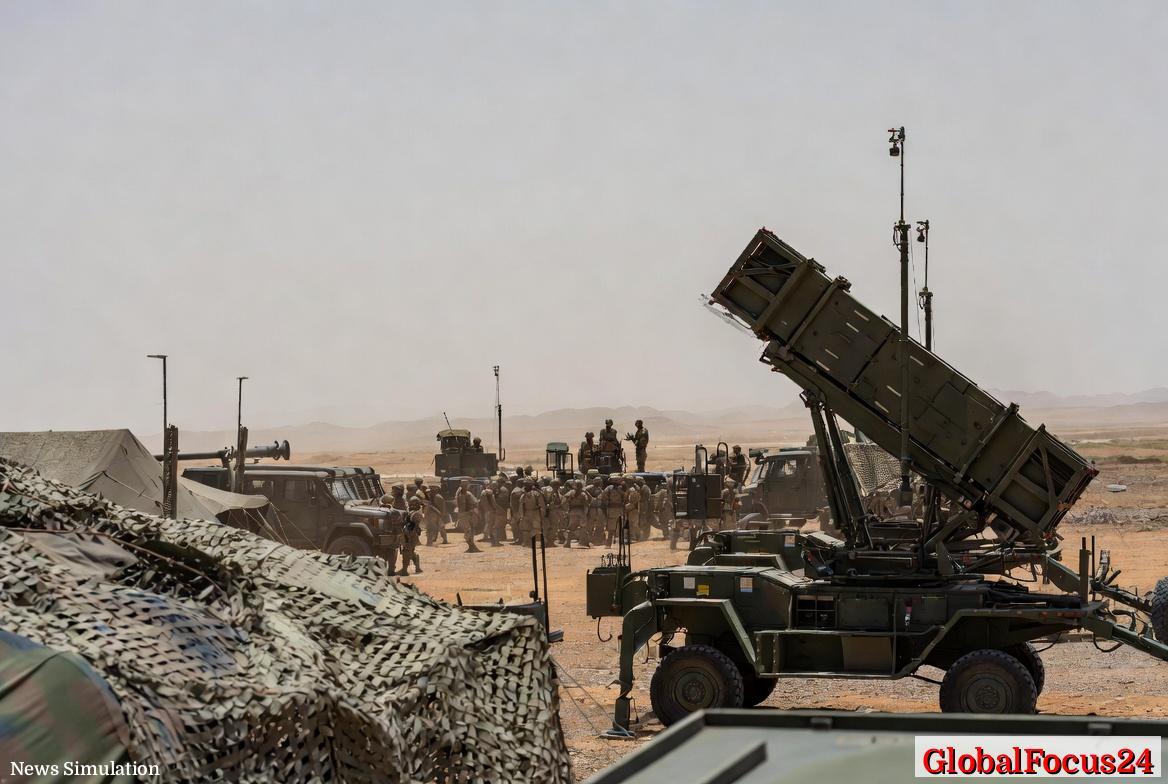
Gulf States Turn to South Korea, Ukraine, and the UK to Rebuild Air Defenses After Iranian Strikes
Regional Defense Stocks Depleted After Six Weeks of Strikes
Saudi Arabia, Qatar, and the United Arab Emirates (UAE) are intensifying efforts to replenish depleted air defense systems after a barrage of Iranian drone and missile attacks left critical gaps in their arsenals. Facing an unprecedented volume of aerial threats over six weeks of bombardment, the Gulf states are rapidly diversifying their defense procurement pipelines—turning to suppliers in South Korea, Ukraine, and the United Kingdom to secure interceptors, radar systems, and counter-drone technologies.
The surge in demand follows a wave of Iranian offensives that struck oil facilities, military installations, and civilian infrastructure across the Gulf. While many of the attacks were intercepted, defense officials in Riyadh, Doha, and Abu Dhabi have voiced concern over dwindling stocks of interceptors, particularly amid delayed deliveries from U.S. manufacturers facing production bottlenecks.
According to regional defense sources, Saudi Arabia has requested accelerated shipments of South Korean M-SAM systems—medium-range surface-to-air missile platforms capable of intercepting drones, cruise missiles, and aircraft. The UAE, which already fields the M-SAM, has reported successful use of the system against Iranian munitions in recent engagements, strengthening interest across the Gulf in expanding South Korean partnerships.
Expanding Military Ties With South Korea
The Kingdom of Saudi Arabia has taken a lead in deepening its defense ties with South Korea. Riyadh’s procurement agencies have contacted both Hanwha Aerospace and LIG Nex1, the South Korean firms behind the M-SAM system, to fast-track deliveries initially scheduled for later in the decade.
The multi-billion-dollar agreement—expected to include joint training and maintenance commitments—reflects a decisive shift toward Asia for advanced defense technology. South Korea’s systems are regarded as cost-effective, field-proven, and export-friendly, a combination that appeals to Gulf buyers seeking immediate operational readiness with limited dependence on U.S. political approvals.
The UAE, among the first Gulf countries to deploy the M-SAM, has highlighted its performance in intercepting Iranian drones during the recent escalation. Officials in Abu Dhabi have since requested additional missile batches and radar upgrades to bolster defenses along key infrastructure corridors.
For South Korea, the contracts mark an important expansion of its defense export portfolio in the Middle East, following similar deals in Egypt and Europe. Seoul’s growing defense diplomacy is anchored in producing reliable alternatives to Western platforms at competitive prices—a strategy that has become increasingly attractive amid global supply constraints.
Deepening Defense Cooperation With Ukraine
While South Korea provides advanced missile systems, Ukraine has emerged as a key partner for tactical innovation and battlefield experience. In a rare public move, Riyadh announced a new defense-cooperation agreement with Kyiv focused on joint weapons production, technology sharing, and exchanging operational expertise in drone interception.
Ukraine’s battle-tested strategies against Iranian-made Shahed drones have captured the attention of Gulf military planners. These lessons are being translated into joint training programs and evaluations of new interceptor drones and radar networks. Officials from Qatar and Saudi Arabia have reportedly visited Ukrainian training grounds to assess counter-drone systems and negotiate production partnerships.
Qatar’s interest in Ukrainian UAV interceptor technology highlights a growing recognition that the future of air defense is hybrid—blending traditional missile-based platforms with agile, AI-guided drones capable of responding to mass attack scenarios. Ukrainian defense manufacturers, having refined cost-effective drone-killer technologies during years of conflict, are now attracting Gulf investment aimed at replicating those successes under local production arrangements.
The UAE, though already well-supplied with Western defense assets, has entered negotiations with Kyiv for similar cooperative agreements. Analysts suggest Abu Dhabi aims to secure licensed production of Ukrainian designs adapted for desert operations, a step likely to complement its existing South Korean systems.
Turning to the United Kingdom for Rapid Solutions
As the Gulf states scramble to fill immediate capability gaps, British defense manufacturers have attracted renewed attention. Cambridge Aerospace has reportedly been approached by multiple Gulf governments over its line of low-cost anti-drone missiles, specifically designed to counter saturation attacks from inexpensive drones and loitering munitions.
British systems—less expensive and faster to produce than high-end interceptors—are seen as a crucial buffer during current shortages of premium missiles such as the U.S.-made Patriot and Terminal High Altitude Area Defense (THAAD) interceptors. These British short-range solutions, when paired with rapid-fire U.S. systems like the Phalanx Gatling gun, could create layered defenses adaptable to different threat levels.
Defense insiders in London describe the inquiries as part of a broader Middle Eastern trend toward “good-enough” systems—technologies that can be mass-produced, deployed quickly, and maintained locally. This pragmatic approach contrasts with the legacy model of relying solely on expensive long-range systems from Western suppliers.
U.S. Supply Strains and Delayed Deliveries
The Gulf’s pivot toward alternative suppliers underscores broader strains on global arms supply chains. U.S. production lines, stretched by large-scale commitments to Ukraine, Taiwan, and other security partners, have caused multi-year delays in missile deliveries.
While Washington has reiterated its commitment to regional defense, existing orders for Patriot systems and associated radar units remain years from completion. Industry analysts note that American defense exports have been hindered by both manufacturing bottlenecks and political debates over arms sales, prompting Gulf buyers to seek more flexible arrangements abroad.
Despite the diversification, Gulf officials emphasize that these new procurement efforts are meant to supplement—not replace—their longstanding partnerships with the United States. Nonetheless, the expansion of defense ties with Asian and European suppliers signals a desire for greater autonomy and supply resilience in an increasingly unpredictable security environment.
Historical Context: Decades of Defense Dependence
The Gulf’s current procurement surge is the latest chapter in a long history of regional defense modernizations driven by perceived threats from Iran. Since the 1980s, Saudi Arabia and its neighbors have invested heavily in air defense to counter Iranian missile capabilities and proxy operations.
The U.S.-supplied Patriot missile system, first deployed in Saudi Arabia during the 1991 Gulf War, became the backbone of the region’s air defense architecture for decades. However, evolving threats—including the advent of low-cost drones and cruise missiles—have exposed limitations in those older systems, especially when pitted against swarm tactics and mixed-attack formations.
Recent conflicts have accelerated this recognition. Iran’s increasing reliance on loitering munitions and precision missiles has blurred the line between conventional warfare and asymmetric assaults. This development has forced Gulf nations to reckon with the need for faster, multi-layered response systems capable of integrating radar, AI, and short-range interceptors.
Economic Impact and Industrial Opportunities
The new wave of defense contracts carries vast economic implications, both for suppliers and local industries. For South Korea and Ukraine, the deals represent billions in export revenue and a chance to expand industrial footprints in the world’s most defense-spending-intensive region.
For the Gulf states, localizing production and maintenance could stimulate job creation and technological transfer, aligning with national strategies such as Saudi Vision 2030 and the UAE’s “Operation 300bn” industrial initiative. These programs aim to diversify economies away from oil dependency by building skilled manufacturing sectors.
Defense analysts predict a surge in joint-venture announcements over the coming months, as Gulf governments press for local assembly lines for missiles, drones, and radar systems. In particular, Saudi Arabia’s newly expanded defense industrial authority is expected to broker licensing deals ensuring that future upgrades and maintenance can be handled domestically.
Regional Comparisons and Strategic Implications
Across the Middle East, the Gulf’s current procurement sprint stands out for its scale and urgency. Neighboring countries such as Israel and Egypt maintain diversified defense sourcing strategies but have not faced the same intensity of recent missile attacks.
By contrast, the Gulf states’ focus on replenishment reflects their direct exposure to Iranian aggression and the vulnerability of their sprawling energy infrastructure. The rapid diversification of suppliers—spanning Asia, Europe, and Eastern Europe—illustrates a new pragmatism: prioritizing delivery speed, interoperability, and cost efficiency over traditional alliances.
Regional analysts suggest this strategy may mark the start of a broader realignment in global defense markets, with mid-tier suppliers such as South Korea rising to fill roles once dominated by Western giants.
The Road Ahead: Building Resilience Amid Uncertainty
With a fragile cease-fire in effect, Gulf nations are racing to rebuild their air defense networks before hostilities resume. Procurement teams are balancing immediate operational needs with long-term restructuring of defense supply chains.
Industry officials caution that even with these accelerated purchases, replenishing interceptor stockpiles will take months. Training, integration, and local infrastructure must all keep pace with the influx of new technologies from diverse origins.
Nonetheless, the coordinated outreach to Seoul, Kyiv, and London demonstrates a clear strategic shift: the Gulf’s determination to secure reliable, diversified defense partnerships that can withstand the pressures of modern warfare.
In the wake of Iran’s missile and drone offensive, this reconfiguration of defense sourcing represents more than a procurement adjustment—it is a signal of regional adaptation to the realities of 21st-century conflict, where resilience depends as much on supply agility as on firepower.