)US Stake in Semiconductor Giants Signals Shifts in Tech Policy and Regional Economic Dynamics
A major development in the global technology landscape unfolded in 2025 as the United States took a strategic equity stake in a leading semiconductor company, marking a notable moment in the intersection of national policy, industrial strategy, and market dynamics. The move, followed weeks later by additional private-sector investments from a prominent technology firm, underscored a period of heightened government involvement in critical supply chains and advanced manufacturing sectors. As policymakers and industry leaders assess the implications, observers point to a range of economic, regional, and strategic effects that could mold the trajectory of semiconductors, cloud computing, and related technologies for years to come.
Historical context: the evolution of semiconductor national strategies The semiconductor industry has long been a focal point of geopolitical thought and economic planning. From the early days of silicon-based computing to the late 20th-century race to miniaturize transistors, nations recognized that microchips are not only a linchpin of consumer electronics but also a strategic asset for defense, telecommunications, and critical infrastructure. In the wake of global supply chain disruptions and geopolitical frictions, several countries established blended approaches that mix public incentives, strategic stockpiling, and selective government equity stakes in domestic champions and allied firms. The 2025 move fits within a broader historical arc in which governments seek to diversify risk, retain cutting-edge know-how, and accelerate domestic production capacity for precision manufacturing and advanced materials.
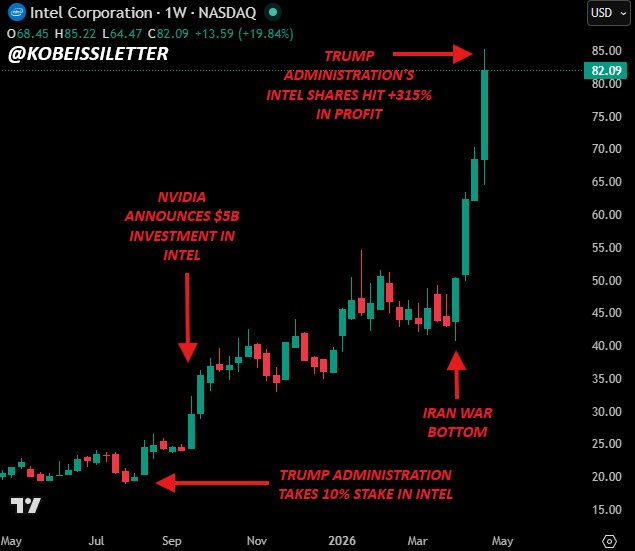
The mechanics of the 2025 investment wave Publicly reported details indicate a substantial equity position acquired by the U.S. government in a leading semiconductor company, with the initial stake valued at approximately $8.9 billion at a price point around $20.47 per share. This entry was followed within weeks by an additional private-sector commitment of roughly $5 billion from a major technology firm renowned for its role in AI and high-performance computing, illustrating a two-pronged approach: core government involvement paired with strategic private-sector participation. Analysts describe this dynamic as a blend of sovereign capability and market-driven capital, aimed at preserving economic security while fostering innovation-led growth.
Economic impact: implications for investment, supply chains, and jobs
- Investment and capital allocation: The initial government stake signals a willingness to deploy public capital in high-tech manufacturing assets, potentially lowering perceived risk for other investors and catalyzing further funding for plant modernization, process innovation, and workforce training. The downstream effect could include improved capital efficiency for the company involved and enhanced funding conditions for suppliers across the ecosystem.
- Supply chain resilience: By anchoring production within a domestic framework, the broader supply chain for semiconductors—ranging from wafer fabrication and lithography equipment to packaging and testing—may gain greater predictability. This can translate into steadier equipment orders, longer-term contracts, and more robust backup options for critical nodes in the chain.
- Market competitiveness: Strategic stakes can influence pricing dynamics, collaboration on research-and-development initiatives, and cross-licensing arrangements. If the government’s involvement aligns with industry needs, it may bolster the country’s competitiveness in next-generation memory, logic, and specialty silicon applications, reinforcing a domestic capability that matters in AI accelerators, autonomous systems, and 5G/6G infrastructure.
- Employment and regional development: Large-scale semiconductor projects typically generate high-skilled employment, feeder jobs in design and software, and supply-chain opportunities in regional hubs. Regions with established research universities and manufacturing clusters could see amplified investment, talent retention, and related economic spillovers.
Regional comparisons: how this development stacks up against peers
- East Asia: The region has long been a powerhouse of semiconductor fabrication and advanced packaging, driven by heavy investments in 300mm fabs, process nodes, and diversified supply chains. Government-backed finance and policy support have complemented private capital to sustain leadership in both mature and cutting-edge processes. The 2025 U.S. move stands as a contrasting model—public equity alongside private capital—highlighting a shift in how Western economies balance strategic ownership with market mechanisms.
- Europe: European policymakers have pursued a similar logic—protecting essential technology assets while stimulating regional ecosystems through funding programs and European-chipped initiatives. The U.S. action could intensify discussions about strategic autonomy, leading to deeper public-private partnerships that mirror pressing regional goals around resilience, cybersecurity, and critical infrastructure.
- Americas: In the Americas more broadly, the investment aligns with efforts to reduce dependence on foreign suppliers for key components. It may spur collaborative networks among North American firms, universities, and research labs, reinforcing a regional ecosystem that emphasizes design, testing, and advanced manufacturing within a comparatively shorter supply chain.
Operational and strategic considerations for the downstream ecosystem
- Innovation trajectories: When a government takes a stake in a core industry, it can catalyze collaboration on long-horizon research programs, including next-generation lithography, energy-efficient architectures, and novel materials. Industry participants often pursue joint ventures and consortia to share risk and accelerate discovery.
- Regulatory and policy alignment: Strategic investments can influence export controls, procurement standards, and incentive schemes. Maintaining a level playing field while enabling rapid innovation remains a central policy balancing act, as governments weigh national security concerns with the benefits of open markets.
- Public perception and market sentiment: Public confidence in the stability of the semiconductor sector can be strengthened when governments demonstrate commitment to domestic capabilities. Conversely, concerns about politicization of corporate governance may prompt calls for transparent oversight and clear governance frameworks to protect shareholder value and operational independence.
The public reaction and societal context Public sentiment around strategic tech investments oscillates between optimism about resilience and concerns about governance. Proponents emphasize the importance of safeguarding critical technologies, reducing vulnerability to external shocks, and fostering a robust tech workforce. Critics may question long-term impacts on market competition, potential distortions in capital markets, or the risk of politicizing corporate strategy. In many communities linked to semiconductor manufacturing, residents closely watch plant activity, job prospects, and local investment in infrastructure and education.
Technological horizons: what the investments could enable
- AI and data center priorities: Investments in semiconductor capacity can accelerate the development of AI accelerators, specialized chips designed to optimize machine learning workloads, and data-center efficiency. A strengthened domestic supply chain may reduce production bottlenecks during peak demand cycles, enhancing innovation cycles across software and hardware ecosystems.
- Energy efficiency and sustainability: The evolution of process technology often brings improved energy efficiency and reduced per-unit power consumption, which matters for large-scale data centers and edge computing deployments. Public-private collaboration can fund research into low-power architectures and materials that minimize heat generation and cooling requirements.
- Advanced manufacturing ecosystems: Investments that target fabrication, packaging, and test services can seed a broader ecosystem of suppliers and service providers. This could lead to more resilient regional clusters, with spillover effects such as workforce development programs, supplier diversification, and cross-industry collaboration with automotive, aerospace, and telecommunications sectors.
Historical context revisited: lessons from previous cycles of public investment Past waves of government involvement in technology sectors offer instructive patterns. In several eras, strategic investments have helped sustain domestic leadership during periods of rapid technological change. However, balance remains essential: sustained government support must coexist with competitive market dynamics to avoid inefficiencies or stifled innovation. The 2025 development can be viewed as part of a continuing exploration of how to reconcile national priorities with global competition, a theme that has shaped policy debates for decades.
Implications for investors and corporate governance
- Valuation and risk management: Market participants will assess the long-term implications of a government stake on governance, minority protections, and strategic alignment. Companies may adjust their risk disclosures to reflect policy shifts, procurement expectations, and potential changes in capital allocation strategies.
- Collaboration versus competition: Strategic partnerships with publicly backed entities can unlock shared investment in research and pilot projects. At the same time, competitive tensions may intensify as nations vie for leadership in critical technologies, shaping licensing arrangements and export strategies.
- Governance transparency: To maintain investor trust, governance frameworks that clarify voting rights, dividend policies, and oversight mechanisms are crucial. Transparent reporting on how the stake is managed and how profits are reinvested can help reassure stakeholders that market discipline remains intact.
A closer look at the broader economic canvas The semiconductor sector sits at a crossroads of manufacturing prowess, intellectual property development, and high-stakes innovation cycles. Investments of this scale act as signposts of a broader economic strategy that emphasizes not only short-term growth but long-term resilience. In regions with thriving research universities and experienced engineering workforces, the impact of such a stake extends beyond a single company. It can stimulate adjacent industries, including software design, chip testing services, packaging and assembly, equipment supplies, and even industrial automation for manufacturing floors.
Public infrastructure and education: building the talent pipeline Sustained success in advanced manufacturing demands a steady flow of skilled workers, researchers, and technicians. Policymakers and industry leaders often pair financial commitments with investments in STEM education, apprenticeships, and retraining programs. Community colleges, technical institutes, and university research centers play a pivotal role in equipping the workforce with hands-on expertise in lithography, materials science, and device integration. A well-prepared talent pipeline helps ensure that the region can absorb investments, translate research into scalable production, and attract further private capital.
Regional competition and collaboration: charting a balanced course
- Collaboration models: Cross-border research consortia, joint ventures with academic partners, and supplier networks can yield shared benefits while preserving competitive differentiation. Coordinated investment approaches may also help manage supply chain diversification, mitigating single-point failures in any one region.
- Competitive positioning: Regions that cultivate a favorable mix of policy stability, skilled labor, reliable infrastructure, and responsive governance tend to attract ongoing investment in semiconductor ecosystems. The ability to align strategic interests across government, industry, and academia emerges as a key differentiator in long-term success.
Potential risks and mitigations
- Market distortions: Public stakes can create distortions if not accompanied by clear governance rules and sunset clauses. Transparent performance metrics and periodic reviews can help maintain alignment with market incentives.
- Concentration and systemic risk: Large government or corporate bets risk amplifying systemic exposure to sector-specific shocks. Diversification through additional investments in related technologies and alternative supply chain options can mitigate this risk.
- Geopolitical sensitivity: High-stakes technology investments can become flashpoints in international relations. Clear, predictable policy frameworks and adherence to international trade norms help reduce volatility.
Conclusion: a pivotal moment with forward-looking implications The 2025 U.S. strategic stake in a leading semiconductor company, together with a subsequent significant private investment, signals a notable shift in how nations mobilize capital to secure critical technology assets. The move sits at the nexus of economic resilience, technological leadership, and regional development. As the digital economy continues to rely on high-performance semiconductors for everything from cloud computing to autonomous systems, stakeholders will watch how this investment reshapes capacity, collaboration, and competition across the global tech landscape.
In the months and years ahead, the unfolding outcomes will likely hinge on governance clarity, market discipline, and the ability of public and private actors to align on shared goals: advancing innovation while maintaining robust, competitive markets that benefit consumers, businesses, and regional economies alike. The story of this investment is not solely about dollars and shares; it is about the broader blueprint for ensuring secure, scalable, and sustainable technology foundations that power the next era of digital advancement.
Would you like a version tailored to a specific region or industry focus, with emphasis on a particular technology segment such as AI accelerators or advanced packaging?