Tether’s Growing Gold Reserves Reshape Stablecoin Landscape and Regional Impacts
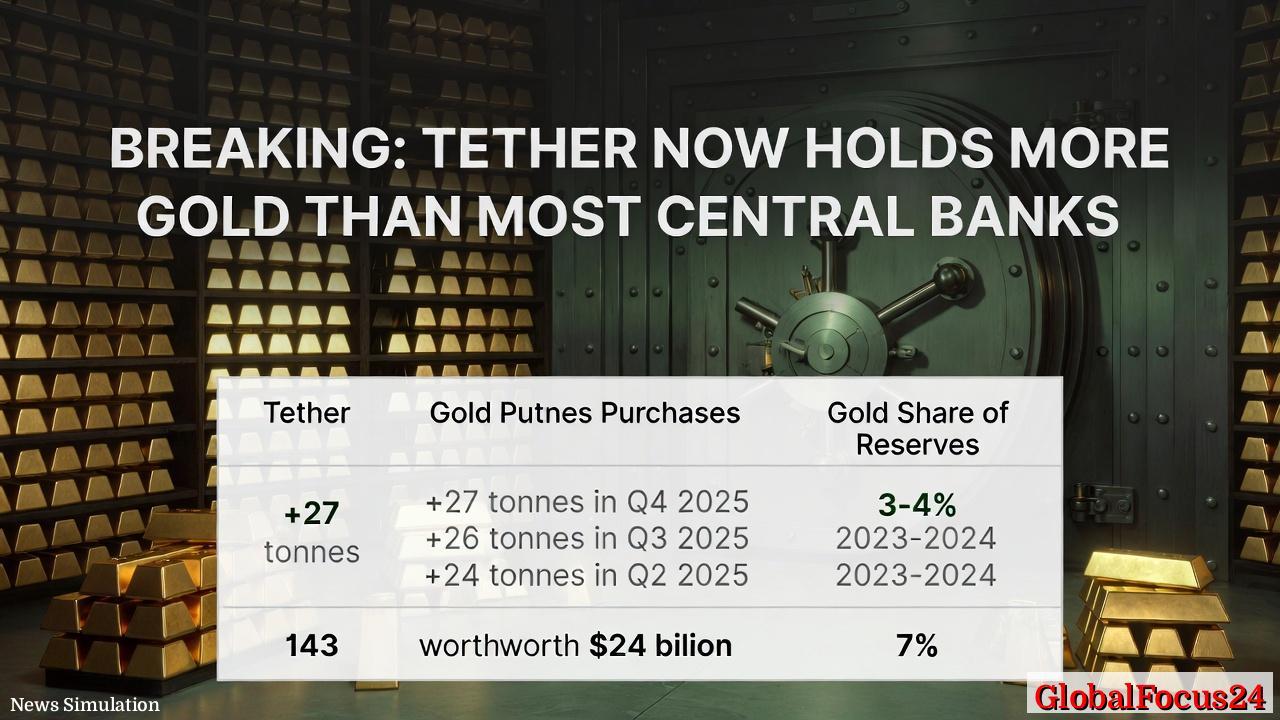
In recent quarters, Tether, the issuer behind the world’s largest stablecoin by market capitalization, has significantly increased its gold holdings as a portion of its reserve assets, a shift with wide-reaching implications for markets, investors, and regional finance ecosystems. As of the third quarter of 2025, the value of Tether’s gold reserves surpassed $15 billion, and gold’s share of total reserves rose to about 7%, a marked increase from the 3–4% levels seen in 2023 and early 2024. This evolving reserve mix underscores a broader trend of diversification among digital-asset issuers seeking to balance liquidity, credibility, and risk management in an increasingly scrutinized regulatory environment.
Historical Context: From Fiat Pegs to Multi-Asset Reserve Profiles
The emergence of stablecoins in the mid-2010s transformed how digital assets could stabilize exposures in volatile crypto markets and facilitate faster cross-border payments. Initially, many issuers anchored their reserves largely to short-term Treasuries and cash equivalents to sustain a 1:1 peg with the underlying token. Over time, market dynamics, regulatory developments, and heightened scrutiny around reserve transparency prompted issuers to reexamine the composition of their holdings. In this context, gold—long perceived as a store of value and a hedge against credit risk—emerged as a potential ballast for stability and confidence. Tether’s decision to expand gold allocations aligns with a broader industry shift toward diversified reserve strategies that blend liquidity with tangible assets, aiming to mitigate counterparty risk while preserving the operational agility required for a global payment token.
Economic Impact: Stability, Liquidity, and Market Perceptions
The growth of gold reserves in Tether’s portfolio carries several notable economic implications:
- Enhanced perceived safety: Gold’s historical role as a financial safe haven can bolster confidence among users and financial partners, particularly in periods of market turbulence or regulatory uncertainty. This perceived safety can contribute to greater adoption of the token in regions where trust in fiat-backed digital currencies faces scrutiny.
- Reserve diversification and risk management: By increasing the gold share in its reserves, Tether signals a move toward diversification beyond traditional fixed-income assets. This can influence other stablecoin issuers to evaluate similar hedging strategies, potentially leading to a broader diversification trend across the sector.
- Liquidity considerations: While gold is not as liquid as cash or Treasuries in the immediate sense, reputable gold holdings can be pledged or monetized through established channels if needed. The balance between liquidity and hedging capacity is a critical operational consideration for stablecoins that aim to maintain peg stability during stress scenarios.
- Regulatory signaling: Transparent reporting of reserve composition, including gold holdings, can be a signal to regulators and market participants that the issuer is pursuing a robust governance framework. This may affect how supervisors assess systemic importance, reserve adequacy, and disclosure requirements for digital assets that function as monetary tools.
Regional Implications: US, Europe, and Emerging Markets
The expansion of gold reserves has particular resonance in several regional contexts:
- United States and North America: Santa Clara-based financial ecosystems and compliant custody services support the secure storage and auditability of gold reserves. The move can strengthen the credibility of stablecoins among institutional users and fintechs seeking compliant onramps and offramps, potentially expanding the role of tokenized dollars in traditional banking rails.
- Europe: European institutions and asset-management firms have shown sustained interest in diversified reserve strategies as part of risk management for crypto exposures. A higher gold allocation can align with European preferences for tangible collateral and diversified hedges within digital asset ecosystems, potentially enhancing cross-border utilization of stablecoins for payments and settlement.
- Emerging markets: In regions where fiat currencies experience higher volatility or limited access to liquid FX markets, a reserve mix that includes gold may offer a sense of stability and asset backing that supports trust in digital payment rails. This can influence remittance flows, cross-border payments, and the adoption of stablecoins as a bridge between local currencies and global valuation standards.
Operational and Governance Dimensions: Transparency, Audits, and Assurance
Tether’s reserve disclosures, including assurance reports overseen by audit firms, play a central role in how market participants interpret the credibility of gold holdings. Independent attestations provide a layer of accountability, enabling users to gauge the fidelity of reported assets and the alignment between outstanding tokens and reserve assets. As the gold component of reserves increases, auditors may devote greater attention to valuation methodologies, auditing procedures, and independence standards to ensure confidence in the peg mechanism and liquidity coverage. This emphasis on governance and transparency dovetails with broader industry expectations for responsible stewardship of customer funds and reserve integrity.
Comparisons with Other Stablecoins: A Growing Spectrum of Approaches
Across the stablecoin landscape, reserve strategies vary widely. Some issuers maintain reserves heavily weighted toward high-quality liquid assets such as U.S. Treasuries, while others explore diversified portfolios that include commodities, cash equivalents, and short-duration bonds. The trend toward asset diversification reflects a broader recognition that no single asset class is sufficient to address liquidity demands, regulatory risk, and market shocks. Gold-backed components, in particular, offer a tangible anchor that complements the cash and near-cash assets typically favored in traditional reserve management. As more issuers disclose and audit their reserve compositions, market participants will gain a clearer sense of comparative risk and resilience across the ecosystem.
Regional Comparisons: Market Access, Liquidity, and Adoption
When weighing regional dynamics, several benchmarks matter:
- Market depth and liquidity: Regions with deep gold markets and robust custody networks can more readily monetize gold reserves if stress conditions occur. This capability supports stablecoin resilience and operational reliability in diverse markets.
- Regulatory clarity: Jurisdictions with clear, consistent regulatory frameworks for digital assets and reserves are more likely to attract institutional participants who value transparency and risk management. Conversely, regions with evolving or uncertain rules may see slower adoption as institutions seek standardized, auditable practices.
- Currency stability: For regions facing currency volatility, the perception of asset-backed stability can influence demand for stablecoins as a hedging mechanism or as a bridge to global payment rails. Gold-backed reserves can be a meaningful signal in such environments.
Implications for Investors and Users
For investors and everyday users, the shift toward greater gold exposure in reserve assets has practical implications:
- Peg reliability: A diversified reserve profile can bolster confidence in the peg during periods of market stress, improving predictability for users who rely on stablecoins for everyday transactions or cross-border payments.
- Risk-adjusted returns: Although gold itself is not a high-yield asset, its inclusion within a diversified reserve mix can contribute to more stable overall risk profiles, potentially reducing the likelihood of abrupt peg de-pegs during volatility spikes.
- Transparency and trust: Independent assurance reports that cover gold holdings strengthen trust in the issuer’s stewardship, which is particularly important for users and institutions considering large-scale usage of the stablecoin for settlement and liquidity management.
Historical Trajectory: From Early 2020s to the 2025 Reserve Milestone
The evolution of Tether’s reserve composition reflects both market forces and strategic choices made in response to shifting regulatory and economic landscapes. After periods of relatively modest gold exposure, the share and value of gold reserves climbed notably through 2024 and into 2025, culminating in the third quarter of 2025 with a gold value exceeding $15 billion and a reserve share around 7%. This trajectory suggests a deliberate strategy to position a portion of reserves in tangible assets, complementing the more liquid components that ensure immediate redemption capacity. While precise allocation details are subject to ongoing audits and assurance processes, the documented growth signals a broader industry trend toward diversified reserve management as a mechanism to reinforce peg stability and stakeholder confidence.
Public and Industry Reactions: Confidence, Caution, and Continued Scrutiny
Market participants have responded with a mix of cautious optimism and prudent scrutiny. Supporters cite the potential for enhanced security of value and mitigated counterparty risk through diversification, particularly in an era of evolving digital asset regulation. Critics emphasize the need for rigorous, independent verification of asset classes and fair valuation practices to avoid overstatement of reserve backing. As the market continues to digest reserve disclosures, sentiment hinges on the consistency of audit procedures, the clarity of reporting, and the alignment between stated reserves and on-chain token supply. In Santa Clara and other tech hubs, innovators and financial services firms monitor reserve developments closely, evaluating how these changes might influence liquidity provisioning, risk management, and cross-border settlement capabilities in a rapidly changing digital asset landscape.
Sustainability, Ethics, and Long-Term Outlook
Looking ahead, the sustainability of a gold-centric reserve approach will depend on several factors:
- Market demand for stablecoins: The volume and variety of use cases for stablecoins will shape the need for durable and trustworthy reserve assets. As demand grows, reserve stability becomes increasingly critical to maintain trust.
- Gold market dynamics: Fluctuations in gold prices and shifts in mining supply, central bank appetite for gold, and the broader commodity cycle will influence the relative value and liquidity of gold-backed reserves. This interplay may affect how reserve managers balance precious metals with other assets.
- Technological and regulatory evolution: Ongoing improvements in audit standards, transparency requirements, and regulatory expectations will shape how reserve assets are disclosed and verified. A robust governance framework will be essential to sustaining confidence and ensuring resilience against market shocks.
Conclusion: A Decisive Step Toward Diversified Stability
Tether’s expanded gold holdings as a portion of its reserves mark a notable development in the evolving playbook for stablecoins. By increasing the gold share of reserves to around 7% in Q3 2025 and elevating the dollar value of gold holdings beyond $15 billion, the issuer signals a commitment to diversification and risk management that could influence industry practices and regional adoption patterns. As global markets continue to evaluate the stability and transparency of digital asset ecosystems, the role of tangible assets like gold in backing digital currencies may become an important pillar of credibility, resilience, and long-term investor and user confidence. The ongoing assurance reports and independent audits will remain essential in translating this strategic shift into measurable outcomes for stability, liquidity, and trust across markets.