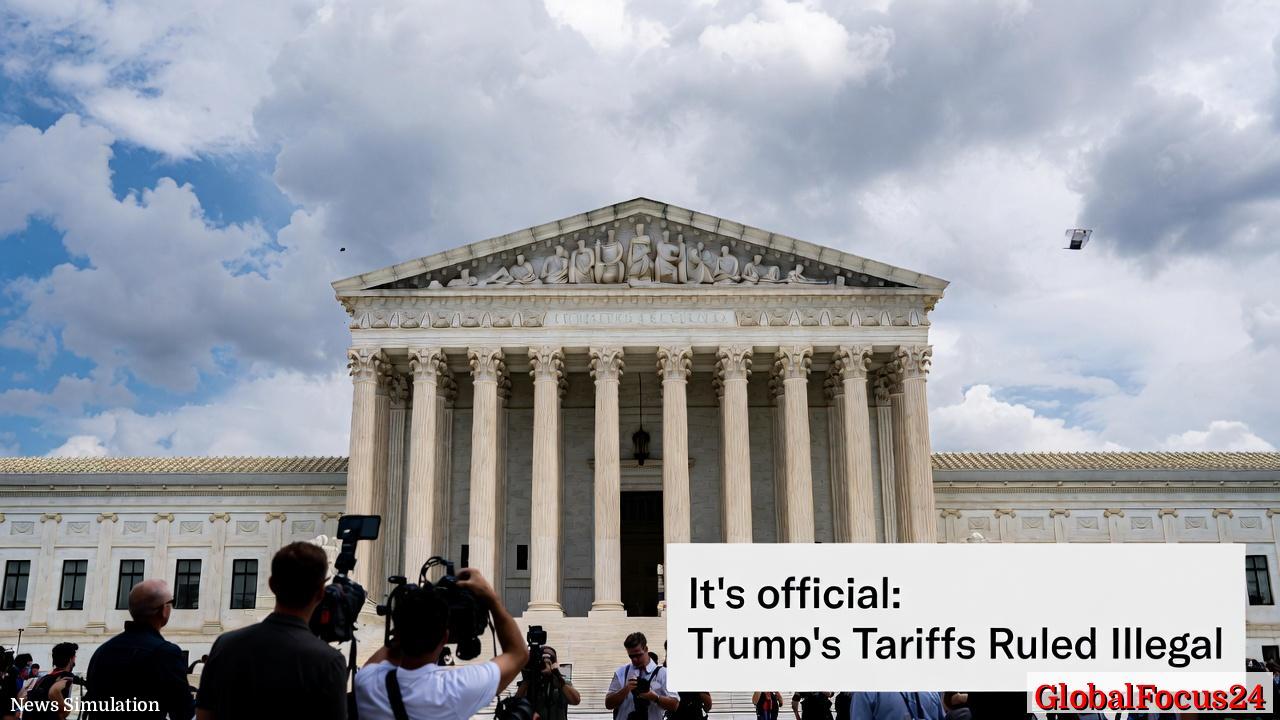
Supreme Court Rules IEEPA Tariffs Illegal; Economic Ripples Emerge Across Markets and Industries
The U.S. Supreme Court has ruled that emergency tariffs imposed by President Donald Trump under the International Emergency Economic Powers Act (IEEPA) are unlawful. The decision centers on the scope of presidential authority during declared or implied national emergencies, and it marks a decisive limit on the executive branch’s tariff toolkit. While the ruling narrows the use of IEEPA-authorized measures, it leaves intact tariffs that were enacted under other statutes, shaping a nuanced policy landscape for trade, industry, and consumers.
Historical Context: Tariffs in U.S. Trade Policy
To understand the ruling's significance, it helps to situate IEEPA within the broader history of U.S. trade powers. IEEPA grants the president authority to regulate international commerce in response to perceived threats to national security, foreign policy, or the economy during emergencies. Over the decades, presidents have invoked IEEPA in various contexts, including sanctions and import restrictions, though its application to broad tariffs has been contested.
Historically, tariffs have toggled between instruments used for revenue, protection, or strategic leverage. The Smoot-Hawley Tariff Act of 1930, for instance, reshaped global trade during the Great Depression, intensifying economic strain and contributing to geopolitical frictions. In more recent decades, the U.S. has relied on targeted measures—under statutes like Section 201 (unfair imports), Section 301 (responding to unfair trade practices), and Section 232 (national security-related tariffs)—to address specific concerns. The Supreme Court’s current decision emphasizes that IEEPA-based tariffs cannot be deployed as a broad emergency power without clear statutory authorization, thereby preserving a path for Congress to authorize such measures explicitly if desired.
Economic Impact: Short-Term Reactions and Long-Term Implications
Immediately after the ruling, markets reflected a mix of cautious optimism and strategic reassessment:
- Equity markets: Major indices showed resilience with modest gains as investors priced in policy clarity and the potential re-pocketing of tariff revenue or refunds. A measured uptick in broad market indices suggested confidence that the ruling would not trigger an immediate, destabilizing shock to supply chains or consumer prices.
- Commodity and currency dynamics: Precious metals, notably silver, experienced notable price movements as investors hedged against policy uncertainty and potential inflationary pressures. The U.S. dollar exhibited limited net movement in the initial response, signaling that currency markets were parsing a complex mix of policy signals and global demand factors. Treasury yields moved slightly higher, reflecting a shift in expectations for fiscal and trade policy near-term trajectories.
- Consumer and business sentiment: Manufacturers and importers faced a heightened need to review supply chains, renegotiate contracts, and evaluate cost pass-through risks. The complexity of tariff refunds, if pursued, raises questions about interim cash flows, inventory carrying costs, and the timing of any potential tariff adjustments or reimbursements.
- Refund implications: The ruling could expose the administration to substantial tariff refunds—an estimated figure approaching or exceeding several hundred billion dollars when accounting for the breadth of affected import categories. The complexity of calculating and disbursing such refunds would involve a wide array of stakeholders, including multinational corporations, small businesses, and individual consumers. The court’s analysis underscored the administrative and regulatory frictions that would accompany any retroactive adjustments or restitution.
Regional Comparisons: How Other Economies Manage Trade Interventions
Examining how similar economies handle emergency trade measures provides context for potential policy responses:
- Canada and Mexico: Neighboring economies with deep trade ties to the United States maintain diversified tariff regimes and broader regional integration through treaties and customs unions. A U.S. policy shift away from emergency measures could influence cross-border supply chains, auto sector incentives, and agricultural trade. In the absence of unilateral tariff actions, Canadian and Mexican producers might recalibrate pricing to reflect a more predictable tariff environment, supporting investment stability and regional trade flows.
- European Union: The EU historically prioritizes rule-based trade and non-discriminatory tariff practices within World Trade Organization rules and regional agreements. Sudden tariff reversals or large refunds could affect transatlantic supply chains, particularly in sectors such as automotive, aerospace, and consumer electronics. The EU’s response—whether through retaliatory measures, negotiation, or seeking WTO adjudication—would likely emphasize preserving open markets while addressing perceived unfair practices.
- Asia-Pacific economies: China, Japan, Korea, and other regional players participate in a sprawling network of global supply chains. Tariff policy in the United States often reverberates through export-heavy sectors, including electronics, machinery, and consumer goods. A constrained use of IEEPA-origin tariff authority could push producers to optimize procurement strategies, diversify suppliers, or accelerate technological investments to offset potential cost changes and regulatory risk.
Industry-Specific Impacts: Sectors Most Affected
- Automobiles and components: Auto manufacturers with supply chains spanning North America and Asia would be particularly sensitive to tariff uncertainties and refunds. Tariff policy changes can influence pricing, regional production strategies, and investment decisions in plants and supplier networks.
- Electronics and consumer goods: Integrated global supply chains in electronics mean tariff decisions have broad reach, affecting end-consumer prices and margins. Companies may prioritize regional sourcing, reorder supplier portfolios, or adjust inventory strategies in response to any policy shifts.
- Manufacturing and industrials: Broad manufacturing sectors that rely on imported inputs stand to benefit from greater policy clarity or, conversely, face higher costs if tariffs persist under alternate authorities. The operational burden of adjusting contracts, tariffs, and compliance obligations can be significant for mid-market firms.
- Agriculture: Agricultural exporters and importers navigate a landscape where tariff changes influence commodity prices, farm incomes, and export volumes. Clearer policy directions can support planning for crop cycles, hedging strategies, and market access negotiations.
Policy Pathways: What Comes Next
- Congressional authorization: The ruling leaves open the possibility that Congress could pass targeted legislation granting broader tariff authority under defined safeguards. Lawmakers weighing such a measure would consider national security, economic resilience, and the potential for unintended consequences in global markets.
- Administrative alternatives: Absent new legislation, the executive branch may pursue tariffs under other legal authorities, including existing statutes like Section 301 (addressing unfair trade practices) and Section 232 (national security considerations). These routes would continue to shape the policy landscape while remaining distinct from IEEPA-based measures.
- Diplomatic and multilateral channels: The U.S. might opt for negotiated settlements, tariff-rate quotas, or other multilateral arrangements to address perceived distortions in trade. Engaging with allies and partners could help harmonize standards and reduce friction across interconnected economies.
Public Reception and Perception
The ruling elicited a broad spectrum of public and business reactions, reflecting a balance between demand for national economic security and the desire for predictable trade relationships. Some business leaders applauded the constraint on executive overreach, emphasizing the importance of legislative clarity and judicial oversight in shaping trade policy. Others expressed concern about potential gaps in protection against unfair trade practices and the ability to respond swiftly to evolving geopolitical threats. Public sentiment in key industries highlighted the tension between safeguarding domestic industries and maintaining the competitive benefits of open markets.
Legal and Constitutional Implications
From a legal standpoint, the decision reinforces the principle that broad tariff powers under IEEPA require explicit congressional authorization or a more narrowly tailored statutory framework. This imposes a check on presidential authority during emergencies and reinforces a doctrine that trade policy is, in large part, a legislative prerogative. The ruling may influence future court interpretations of executive powers in areas where national security and economic policy intersect, prompting lawmakers to consider more precise statutory language to avert similar disputes.
Market Outlook: Short-Term Durability, Long-Term Strategy
- Short-term durability: The market reaction suggests a cautious but stable environment as investors digest the implications of a restrictive reading of IEEPA. In the near term, traders will monitor any moves toward new legislation, official guidance on refunds, and signs of policy recalibration.
- Long-term strategy: For businesses, the event underscores the importance of diversified procurement, transparent cost structures, and robust compliance planning. Companies may increasingly adopt risk management practices that account for policy volatility, including scenario planning for tariffs, refunds, and trade-dispute resolutions.
Conclusion: A Moment of Policy Clarification in a Global Economy
The Supreme Court’s ruling on IEEPA-based tariffs marks a defining moment in the balance between executive action and legislative authority in U.S. trade policy. By clarifying the limits of presidential tariff powers, the decision invites Congress to consider explicit authorization paths if policymakers seek to deploy tariffs in future emergencies. At the same time, tariffs outside the IEEPA framework—under Section 301, Section 232, and other authorities—remain in effect, ensuring that the United States continues to have tools to address specific trade concerns while courts, markets, and businesses adjust to a more predictable legal landscape.
As the policy environment evolves, stakeholders will watch not only for legislative developments but also for market signals, supplier adjustments, and regional shifts in trade patterns. The urgency lies in translating policy clarity into economic stability, ensuring that manufacturers, workers, and communities connected to global supply chains can plan for the months and years ahead with greater confidence.