South Korea Stocks Tumble as Energy Crisis Sparks Regional Market Rout
Sharp Sell-Off Hits Seoul Markets
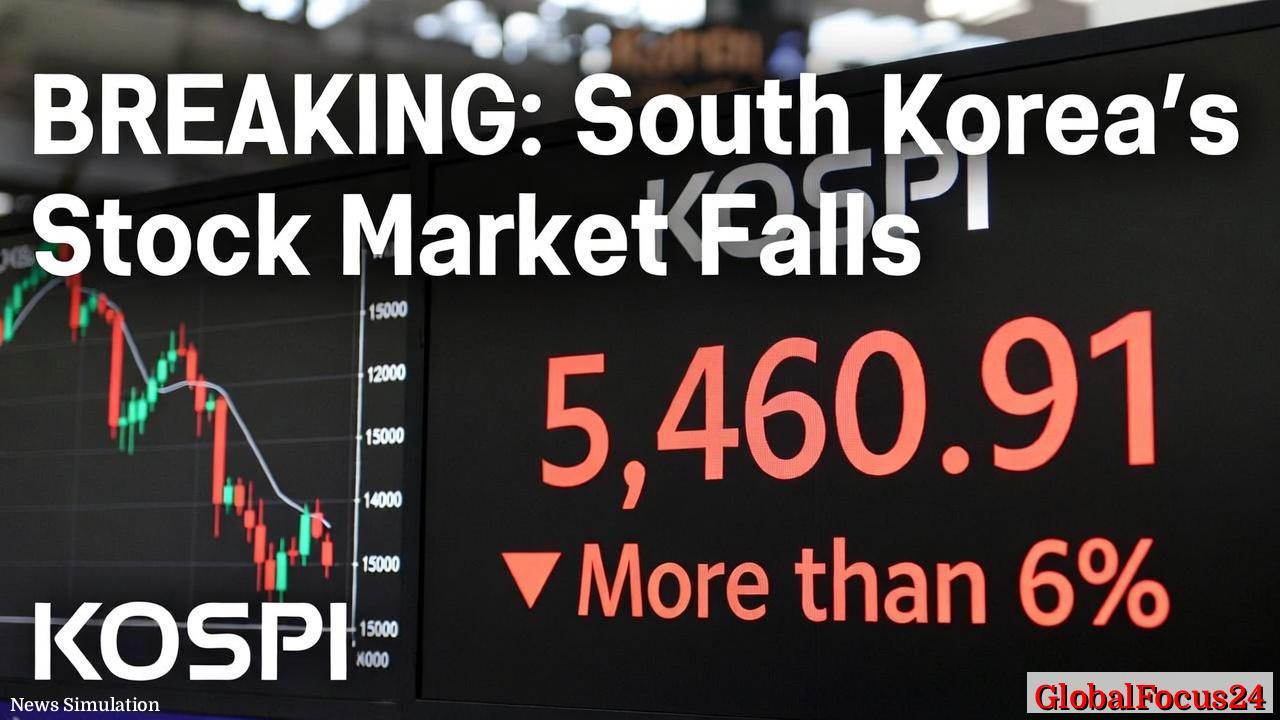
South Korea’s stock market suffered a steep decline on Monday, with the Korea Composite Stock Price Index (KOSPI) plunging more than 6% as investors reacted to a deepening global energy crisis. The benchmark index fell 320 points to close at 5,460.91, marking one of the most significant single-day drops in recent years and underscoring growing anxiety across Asia’s financial markets.
Heavy selling pressure persisted throughout the trading session, driven by mounting concerns over rising energy costs, supply chain disruptions, and the vulnerability of import-dependent economies. Energy-intensive sectors, including manufacturing, chemicals, and transportation, led the decline, while financial stocks also weakened amid fears of broader economic fallout.
Market participants described the sell-off as both swift and widespread, reflecting a sharp shift in investor sentiment as energy risks moved to the forefront of global economic concerns.
Energy Crisis Drives Market Volatility
The ongoing energy crisis has intensified in recent weeks, fueled by constrained supply, geopolitical tensions, and fluctuating demand patterns. Prices for key energy commodities, including crude oil and liquefied natural gas (LNG), have surged, placing pressure on countries heavily reliant on imports.
South Korea, which imports the vast majority of its energy needs, is particularly exposed to these dynamics. The country’s industrial base—anchored by semiconductors, shipbuilding, and heavy manufacturing—depends on stable and affordable energy supplies. As costs rise, corporate margins are squeezed, and concerns grow about reduced output and profitability.
Investors have responded by rapidly reallocating capital away from equities perceived as vulnerable to energy shocks. This has triggered sharp declines not only in South Korea but across several Asian markets facing similar structural challenges.
Regional Markets Reflect Broader Anxiety
The sell-off in Seoul mirrored declines across Asia, where markets reacted to the same underlying pressures. Economies such as Japan and Taiwan, which also rely heavily on imported energy, experienced heightened volatility as investors reassessed growth prospects.
In contrast, energy-exporting countries in the region showed more resilience, benefiting from higher commodity prices. This divergence highlights a growing split in market performance between energy producers and consumers, a pattern that has become increasingly pronounced as the crisis deepens.
Regional analysts noted that the interconnected nature of Asian supply chains amplifies the impact of energy disruptions. When manufacturing hubs like South Korea slow down, ripple effects can be felt across neighboring economies, affecting trade flows and production cycles.
Historical Context: Energy Shocks and Market Reactions
The current market turmoil echoes previous periods when energy crises triggered significant financial volatility. During the oil shocks of the 1970s, global markets experienced prolonged downturns as economies struggled to adjust to higher energy costs and supply constraints.
More recently, energy price spikes in the early 2000s and during the 2008 financial crisis also led to sharp corrections in equity markets, particularly in regions dependent on imports. In each case, the combination of rising costs and economic uncertainty led to reduced investor confidence and capital outflows.
South Korea’s experience during those periods offers important context. The country has historically demonstrated resilience through diversification and technological advancement, but its dependence on imported energy has remained a consistent vulnerability.
Impact on Key Industries
The latest market decline has had a pronounced effect on several core sectors of the South Korean economy:
- Manufacturing firms faced immediate pressure as higher energy costs threatened production efficiency and profit margins.
- Semiconductor companies, a cornerstone of the country’s exports, saw declines amid concerns over increased operating expenses and weaker global demand.
- Transportation and logistics companies were hit by rising fuel costs, which could lead to higher prices for goods and services.
- Financial institutions declined as investors anticipated slower economic growth and potential increases in credit risk.
The broad-based nature of the sell-off suggests that investors are pricing in not just short-term disruptions but also the possibility of sustained economic challenges.
Economic Implications for South Korea
The sharp drop in the KOSPI reflects deeper concerns about South Korea’s economic outlook. As an export-driven economy, the country is highly sensitive to global demand and input costs. Rising energy prices threaten to erode competitiveness, particularly in industries where margins are already under pressure.
Inflation is another key concern. Higher energy costs often translate into increased prices for goods and services, which can reduce consumer spending and slow economic growth. Policymakers may face difficult decisions as they محاولة balance inflation control with the need to support economic activity.
Currency dynamics also play a role. A weakening local currency can exacerbate the cost of energy imports, further intensifying economic pressures. Investors are closely monitoring exchange rate movements as part of their broader assessment of market risk.
Investor Sentiment and Market Outlook
Investor sentiment has shifted markedly in response to the evolving energy landscape. Risk aversion has increased, with many market participants moving toward safer assets or reducing exposure to equities in vulnerable sectors.
Volatility is expected to remain elevated in the near term, as uncertainty surrounding energy supply and pricing persists. Market analysts point to several factors that could influence future trends:
- Developments in global energy production and supply chains.
- Policy responses from governments and central banks.
- Changes in demand patterns, particularly in major economies.
- Technological advancements that could mitigate energy dependency.
While some investors see opportunities in the current downturn, others remain cautious, citing the potential for further declines if the energy crisis intensifies.
Comparisons with Other Import-Dependent Economies
South Korea’s challenges are mirrored in other import-dependent economies, particularly in Europe and parts of Asia. Countries with limited domestic energy resources are facing similar pressures, including higher production costs, inflationary risks, and market volatility.
Japan, for example, has experienced comparable market fluctuations due to its reliance on imported energy. European nations, dealing with their own energy supply issues, have also seen increased market instability.
These parallels highlight the global nature of the crisis and the interconnected risks facing modern economies. As energy markets tighten, the effects are being felt across multiple regions, reinforcing the importance of diversification and energy security.
Long-Term Considerations and Structural Shifts
The current crisis may accelerate long-term changes in how countries approach energy and economic resilience. For South Korea, this could mean increased investment in renewable energy, greater emphasis on energy efficiency, and efforts to diversify supply sources.
Companies may also adapt by optimizing production processes, investing in new technologies, and reevaluating supply chains. These adjustments could help mitigate future risks, but they require time and significant capital investment.
At the same time, global markets may undergo structural shifts as investors reassess the risks associated with energy dependency. Sectors and regions that can demonstrate resilience to energy shocks may attract greater interest, while those perceived as vulnerable could face ongoing challenges.
Public Reaction and Market Confidence
The sharp decline in South Korea’s stock market has drawn widespread attention from investors, businesses, and the public. Concerns about economic stability and the cost of living have become more prominent, reflecting the broader impact of the energy crisis beyond financial markets.
Market confidence remains fragile, with many observers watching closely for signs of stabilization or further deterioration. Government responses and international developments will likely play a crucial role in shaping the trajectory of both the energy crisis and financial markets.
As trading resumes in the coming days, the focus will remain on whether the current downturn represents a temporary shock or the beginning of a more prolonged period of volatility.