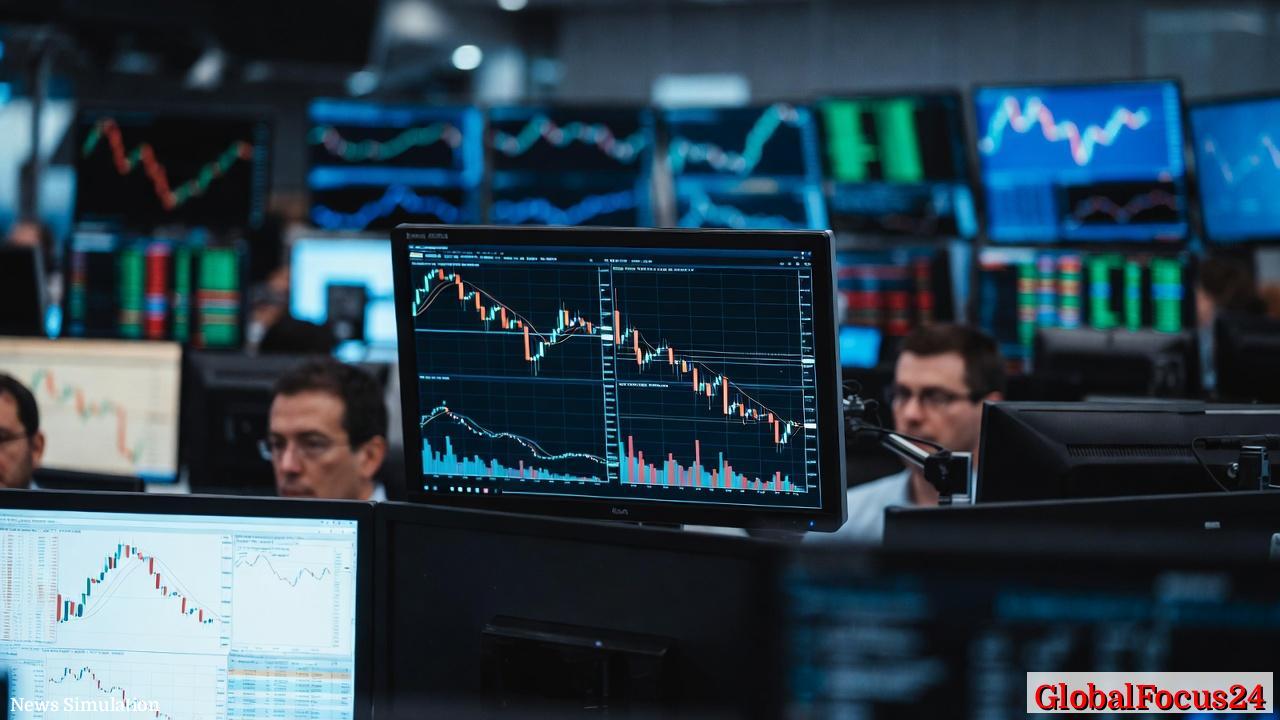
South Korea Halts Program Trading Sell Orders Amid Accelerating Stock Market Downturn
In a decisive move to calm a spiraling market, South Korea’s financial authorities ordered an immediate halt on all program trading sell orders as major stock indexes tumbled and volatility surged. The intervention, designed to curb automated selling pressure that can exacerbate downturns, marks a rare but increasingly notable tool for market stability in a technology-driven trading environment.
Historical Context: From Quiet Declines to Rapid Reactions To understand the significance of this decision, it helps to trace the evolution of program trading in Korea and similar markets. Program trading—often defined as the automatic execution of a basket of securities based on pre-set criteria—has grown alongside computerized platforms and high-frequency activity over the past two decades. Historically, outright bans on program selling have been rare and largely targeted at specific instruments or time windows, typically during episodes when indiscriminate selling could threaten overall market stability or liquidity in key stocks.
South Korea’s equity market has long been characterized by a strong export-driven economy, a diverse technology sector, and a high level of participation from domestic funds and foreign investors. When global risk sentiment shifts, or when domestic macro data triggers a repricing of growth expectations, program selling can amplify declines, especially in technology and manufacturing heavy indices. In such moments, regulators weigh the trade-off between preserving orderly markets and preserving participants’ liquidity and access to capital.
Economic Impact: Immediate Stabilization, Longer-Term Confidence The immediate aim of halting program trading sell orders is to reduce abrupt liquidity withdrawal from the market. By pausing automated sell programs, authorities seek to prevent fire-sale dynamics that could pressure margin requirements, widen bid-ask spreads, and push prices beyond what fundamentals would justify in the near term. The stabilization effect can provide a breathing space for investors to reassess information—ranging from corporate earnings outlooks to macroeconomic indicators—without the compounding force of algorithm-driven selling.
Beyond the short term, the move carries broader implications for market depth and price discovery. While buy-side participants may welcome the temporary pause, traders and market makers will need to adapt as the pause evolves. If the downturn persists, authorities may evaluate additional measures to safeguard liquidity, such as targeted circuit breakers, enhanced disclosure for large block trades, or stepped adjustments to the criteria that trigger program trading rules. The optimal outcome favors a balanced environment where price discovery remains transparent and trading remains orderly, even in periods of heightened uncertainty.
Regional Comparisons: Lessons from Markets with Similar Tools South Korea’s action sits alongside a suite of regulatory responses seen in other major markets to rapid downturns driven by automated trading. For instance, some U.S. and European exchanges have employed circuit breakers that temporarily halt trading across broad swaths of the market or in specific equities when price movements exceed predefined thresholds. In Asia, other markets with robust algorithmic trading ecosystems have experimented with similar pauses or throttling mechanisms to prevent cascading effects during stress periods.
What distinguishes South Korea’s current approach is its targeted focus on program trading sell orders, signaling a willingness to intervene directly in the mechanisms that can amplify selling pressure while trying to preserve the overall functioning of the market. This approach reflects a broader philosophy of maintaining orderly markets without resorting to broad-based restrictions that could impede legitimate trading strategies or erode market liquidity in the longer term.
Market Participants: Recalibrating Strategies Amid Uncertainty For fund managers, proprietary traders, and retail investors, the halt on program selling necessitates a reassessment of risk models and hedging approaches. Firms with exposure to technology and export-oriented sectors may reassess beta exposures, correlations, and carry trades in light of the temporary interruption. Banks and brokerages, meanwhile, monitor liquidity coverage ratios and margin calls to ensure they can navigate any continued volatility without compromising client services or financial stability.
Public reaction to regulatory interventions tends to be mixed. Some investors view such measures as necessary guardians of market integrity, while others see them as distortions that may delay price normalization or complicate decision-making. In volatile times, sentiment is a powerful driver, and the ability of policymakers to communicate the rationale behind interventions—emphasizing stability, liquidity, and orderly price formation—can influence how markets absorb the news.
Regional Economic Links: Trade, Investment, and Confidence South Korea’s stock market performance is intertwined with broader regional and global economic dynamics. Export demand, particularly from semiconductor, automotive, and consumer electronics sectors, can influence corporate profitability and investor mood. If global growth indicators weaken or supply chains experience disruption, the reflexive selling that program algorithms can trigger may magnify the initial shock. The regulatory response, in turn, interacts with foreign investor flows, domestic savings rates, and central bank expectations, all of which shape the environment in which companies raise capital and fund expansion.
Infrastructure and technology ecosystems also matter. South Korea’s capital markets rely on advanced trading platforms, robust data centers, and a highly developed financial services sector. The ability to implement a rapid, precise intervention—such as a halt on program trading sell orders—depends on real-time surveillance, clear rulebooks, and the cooperation of market participants across banks, brokerage houses, and asset managers. The effectiveness of such measures hinges on timely communication, predictable application, and minimal collateral disruption to ordinary trading activity.
Policy and Regulation: Balancing Stability with Growth Regulators typically frame interventions like a halt on program trading within an overarching mandate to maintain market integrity, protect investors, and ensure the smooth functioning of capital markets. The decision to pause program selling is usually accompanied by assessments of market liquidity, order flow, and the potential for unintended consequences, such as reduced price transparency or a sudden re-entry of selling once the pause ends.
Looking ahead, policymakers may consider clarifying or expanding the criteria that trigger program trading pauses, incorporating feedback from market participants, and aligning with international best practices. Such steps can help reduce ambiguity, improve compliance, and foster investor confidence. Clear guidelines on when pauses can be activated, how long they last, and what constitutes a normal reopening can mitigate confusion and facilitate smoother market dynamics.
Background Description: What This Means for Everyday Investors For everyday investors, the halt on program selling can be a relief during a chaotic trading session, offering a moment to reassess positions without the compounding pressure of rapid, automated moves. However, it also introduces a layer of strategic recalibration. Investors may shift focus toward fundamentals, such as earnings trajectories, balance sheet strength, and cash flow resilience, rather than reacting solely to the speed of algorithmic trades. In the longer term, the episode underscores the importance of diversified portfolios and risk management strategies that can withstand periods of elevated volatility.
Technological and Market Structure Considerations The incident highlights the central role of technology in modern markets. Market participants rely on sophisticated order-management systems, risk controls, and connectivity infrastructure to execute trades and manage exposures. When regulators intervene, the systems behind millions of transactions must adapt quickly to new rules, time windows, and reporting requirements. This dynamic underscores the ongoing need for robust cybersecurity measures, reliable data feeds, and clear governance around algorithmic trading practices.
Public Information and Transparency Transparency remains a cornerstone of effective market functioning. Regulators typically provide timely updates on the purpose and expected duration of market pauses, as well as guidance on how and when normal trading will resume. For analysts and journalists, the event offers an opportunity to examine correlations between macro indicators, sector performance, and investor sentiment, while also tracking the flow of international capital and the reaction of domestic households to shifting market conditions.
Conclusion: Navigating a Volatile Landscape The decision to halt program trading sell orders in South Korea represents a calibrated effort to maintain orderly markets amid a sharp downturn. By interrupting a common accelerant of selling pressure, regulators aim to stabilize price formation long enough for investors to digest information, assess fundamentals, and rebalance portfolios. As markets continue to evolve with rapid technological change, similar interventions may recur in other jurisdictions should volatility intensify.
Investors and policymakers alike will be watching how liquidity, volatility, and price discovery respond in the days ahead. If the pause proves effective, it could reinforce the case for targeted, time-bound regulatory tools that address systemic risks without stifling legitimate market activity. The broader takeaway is clear: in an era of instantaneous trading, measured and transparent interventions can help anchor confidence and preserve the integrity of capital markets for households, businesses, and institutions alike.