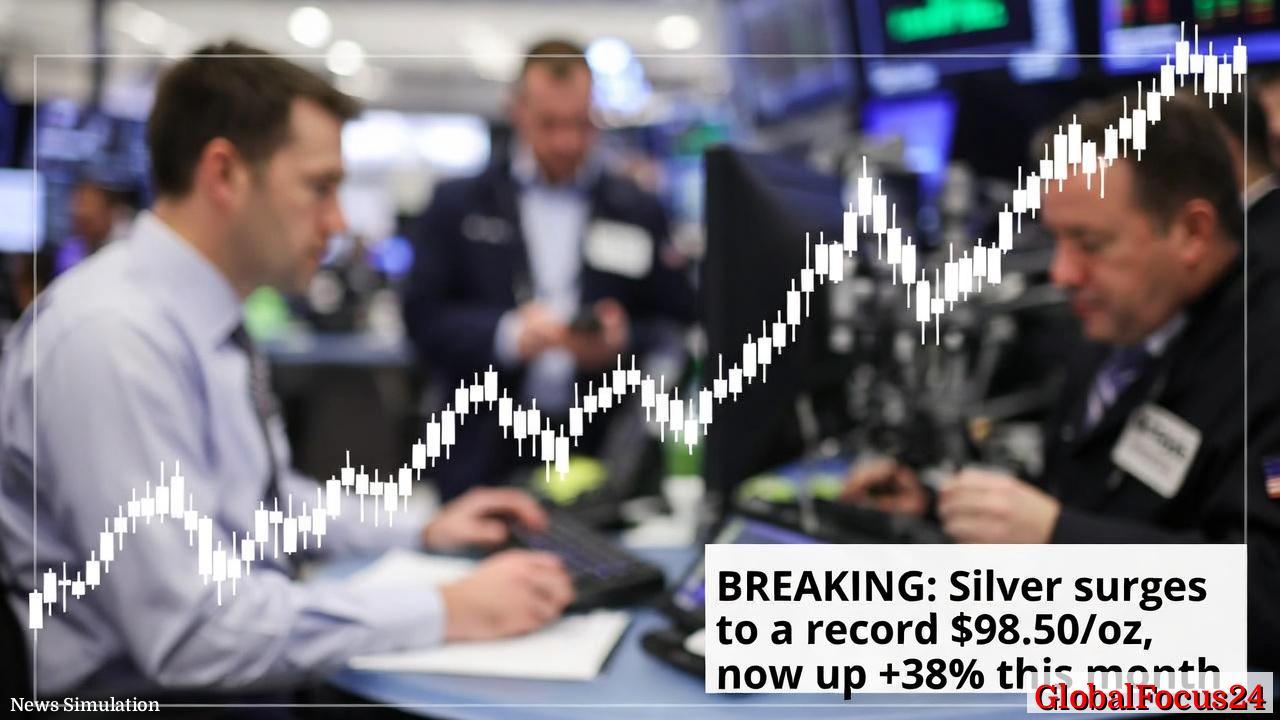
Silver Surges to Record Highs as Markets Brace for New Metal Milestones
A dramatic rally in precious metals has pushed silver to a record-breaking level, signaling a pivotal moment for investors, manufacturers, and regional economies that rely on commodity cycles. In a sequence of trading sessions marked by heightened volatility and shifting risk appetites, silver climbed to an unprecedented price point, approaching a threshold that has only existed in speculative projections and market folklore. The surge is unfolding against a backdrop of broad macroeconomic shifts, including renewed inflation concerns, currency fluctuations, and strategic considerations that shape demand for precious metals as stores of value and industrial inputs.
Historical Context: From Sliver to Safe Harbor
To understand the current ascent, it helps to frame silver’s journey within a long arc of market history. Silver has long occupied a dual role: it is both an industrial metal with wide applications—from electronics and solar panels to medical devices—and a traditional hedge against uncertainty when investors seek safety amid turbulence. The metal’s price movements often reflect a balance between these two identities: the appetite for industrial demand and the impulse to preserve wealth during times of geopolitical strain or monetary instability.
Over the decades, silver has repeatedly demonstrated a capacity for rapid appreciation in response to broader economic signals. Periods of quantitative easing, low interest rates, and heightened concerns about inflation have historically correlated with higher valuations for precious metals, even when industrial demand remains robust. Conversely, periods of normalization and economic resilience can temper the pace of gains. The current escalation builds on that long-running dynamic, but with new layers of complexity added by today’s global supply chains, fiscal policy responses, and technological shifts that alter both demand sources and price sensitivity.
Economic Implications: Inflation, Investment Flows, and Industrial Demand
The immediate economic implications of silver’s rally are multifaceted. For investors, the ascent enhances the appeal of precious metals as a diversification tool and a potential hedge against currency depreciation. Prices near historic highs can attract new inflows from both retail and institutional participants, amplifying market momentum and contributing to further price appreciation in the near term. However, elevated prices also pose questions about affordability for users of silver in manufacturing and technology sectors, potentially prompting price-sensitive buyers to reassess procurement strategies or seek alternative materials.
On the manufacturing side, the surge in silver prices places emphasis on the metal’s role in critical supply chains. Silver’s unique combination of electrical conductivity, reflectivity, and thermal properties makes it essential for electronics, solar energy installations, and several high-tech applications. When prices move sharply higher, producers may explore optimization measures—such as improving recycling, adjusting alloy compositions, or redesigning components to reduce silver content—without compromising performance. The downstream effects can ripple through sectors that rely on silver for efficiency gains and cost management.
From a macroeconomic perspective, the rise in prices can influence inflation indicators indirectly. If silver costs become a more substantial input across a range of products, some downstream prices may experience modest increases. Policy analysts will closely monitor whether this upward pressure is transitory or longer-lasting, particularly in the context of global supply chain adjustments and energy market volatility. Given silver’s position within the broader spectrum of precious metals, investors will also watch the relative behavior of gold and platinum group metals, as differential moves can illuminate shifting risk appetites and economic expectations.
Regional Comparisons: Markets Across the Americas, Europe, and Asia
Regional dynamics provide a useful lens for assessing the current rally. In North America, where industrial users and financial markets are deeply intertwined with precious metals, the price movement reverberates through mining districts and hedging strategies. In mining-heavy regions, a sustained price rise can bolster exploration activity and project financing, though financing conditions—together with regulatory and environmental considerations—will influence the pace and location of new development.
European markets often respond to silver’s trajectory through a combination of manufacturing demand and investment demand linked to safe-haven tendencies. Selling pressures can emerge from currency fluctuations and central bank policy expectations, while strong solar and electronics sectors continue to sustain industrial consumption. In Asia, where manufacturing breadth and technology adoption drive silver demand, price spikes can have a pronounced impact on electronics supply chains and solar energy deployments. The cross-border nature of supply chains makes regional price effects interconnected, with trade flows and currency movements shaping how different economies experience the rally.
Among major economies, contrasts in energy policy, inflation trajectories, and monetary stance help explain how each region absorbs the impact. For example, energy costs, which influence both consumer prices and production costs, can subtly affect the demand for metals used in energy technologies as well as speculative investment patterns. In this complex environment, silver’s ascent reflects a synthesis of speculative momentum, risk management considerations, and practical needs across diverse industries.
Public Reaction and Market Sentiment
Public sentiment around silver’s surge has been deeply varied. Retail investors, attracted by the prospect of outsized gains, have contributed to brisk trading volumes and mobile-based brokerage activity. Longtime precious metals enthusiasts view the move as a reaffirmation of metals’ enduring relevance in portfolios that seek resilience amid volatile markets. Industry observers often describe the current moment as a transitional phase—where the interplay between safe-haven demand and industrial usage will determine the metal’s longer-term trajectory.
Analysts emphasize that the move, while dramatic, does not occur in isolation. It is part of a broader constellation of market signals, including shifts in interest rate expectations, currency valuations, and policy outlooks that influence risk pricing. The combination of technical patterns, momentum indicators, and macroeconomic drivers creates a landscape in which silver can maintain elevated levels for a period, even as intermittent pullbacks occur.
Supply Considerations: Mining Output, Recycling, and Certification
Silver supply dynamics contribute to the pricing narrative. Silver is produced as a byproduct of mining for other metals, such as gold, copper, and lead. This interdependence means that broader mining activity and commodity markets influence silver availability. In times of rising metal prices, mining operations may intensify output to capitalize on favorable economics, potentially expanding supply capacity over the medium term. Conversely, if input costs rise or environmental constraints limit exploration, supply growth could slow, supporting higher prices.
Recycling also plays a meaningful role in the silver market. End-of-life electronics and industrial scrap provide a source of secondary supply that can cushion short-term fluctuations while meeting some demand needs. The efficiency and purity of recycled silver can affect its value in specialized applications, where high-grade silver is preferred for precision components.
Quality assurance and certification remain critical in a market tied to industrial applications. Buyers across electronics, solar, and medical sectors rely on certified purity and metallurgical properties to ensure performance standards. As prices climb, buyers may place a greater premium on verified supply chains and traceability, influencing procurement decisions and supplier relationships.
Strategic Implications for Investors and Policymakers
For investors, the current silver rally reinforces the importance of risk management, diversification, and horizon-setting. Diversified portfolios that incorporate precious metals alongside equities, fixed income, and real assets can provide resilience in the face of shifting market regimes. However, rapid price movements also underscore the need for disciplined position sizing, clear exit strategies, and awareness of liquidity constraints that can arise in extreme market conditions.
Policymakers watching the metal markets may consider the broader economic implications. In regions where silver constitutes a sizable import or export component, price volatility can affect trade balances and domestic manufacturing costs. Transparent communication from central banks regarding inflation trajectories and monetary policy expectations can help stabilize expectations in commodity markets and reduce unintended feedback loops.
Technological and Environmental Dimensions
The silver rally intersects with ongoing technological transformations. The metal’s applications in solar photovoltaics, advanced electronics, and medical devices mean that demand may remain robust even in softer general economic environments. This resilience is complemented by environmental initiatives that accelerate the adoption of solar and energy-efficient technologies, which historically boost metallic inputs like silver. At the same time, efforts to recycle and recover precious metals from electronic waste align with sustainability goals and can influence long-term supply dynamics.
From an environmental, social, and governance (ESG) perspective, producers and investors increasingly factor responsibly sourced silver into their assessments. Certification schemes and responsible mining practices help mitigate reputational risk and align market behavior with broader corporate governance standards. As markets evolve, the combination of responsible sourcing and technological demand could shape the metal’s role in future industrial ecosystems.
Looking Ahead: What to Watch in the Weeks Ahead
Several near-term indicators will help market participants gauge the sustainability of silver’s elevated levels. First, monitor global monetary policy expectations, including central bank statements and inflation data releases. Shifts in interest rate outlooks can amplify or restrain speculative flows, affecting both the pace and durability of price gains. Second, track industrial demand signals from key sectors like electronics and solar energy, where orders, quarterly earnings, and production guidance can provide forward-looking cues about underlying demand. Third, keep an eye on mining and recycling data, which reveal the balance between supply expansion and constraint forces.
Market volatility is likely to remain a characteristic feature as traders react to macro news, geopolitical developments, and shifts in risk sentiment. While past performance is not a guarantee of future results, the current trajectory underscores how a confluence of inflation, investment demand, and industrial use can propel a metal into new territory. For participants across the spectrum—from hedge funds and family offices to small manufacturers and retail buyers—the ongoing price action will require disciplined analysis and adaptive strategies.
Conclusion: A Moment of Reassessment Across Markets
The ascent of silver to record highs marks more than a price milestone. It signals a moment of reevaluation across financial markets, industrial supply chains, and regional economies dependent on metal-intensive technologies. The balance between safety-driven demand and everyday use will help determine whether the rally sustains itself in the longer run or gives way to consolidation. As buyers weigh procurement strategies against budget constraints, and policymakers weigh inflation dynamics against growth considerations, silver’s trajectory will remain a barometer for how investors and industries navigate a complex global landscape. In the near term, observers should anticipate continued attention to silver’s price movements, the catalysts behind them, and the broader implications for markets that hinge on the health and evolution of precious metals.