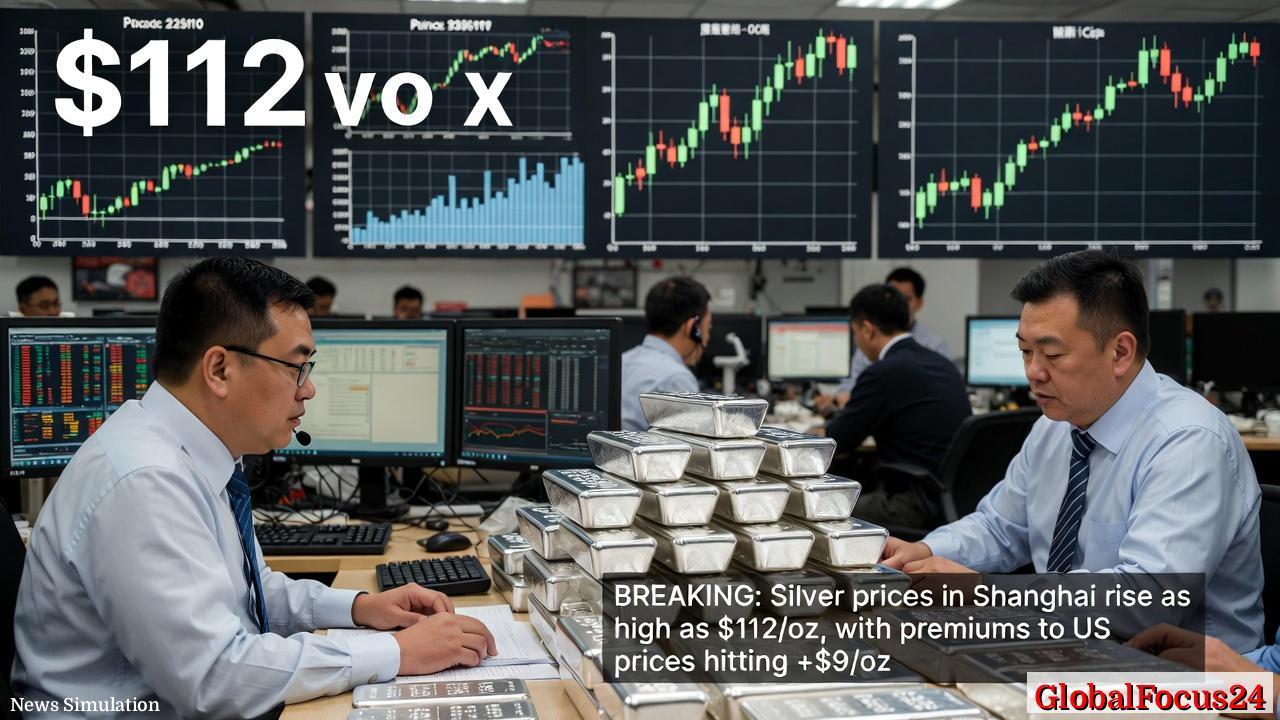
Silver Prices in Shanghai Surge to $112 per Ounce Amid Historic Physical Shortage
Shanghai, January 24, 2026 — Silver prices on the Shanghai market surged to a peak of $112 per ounce, reflecting a premium of as much as $9 over contemporaneous U.S. prices. The move marks a dramatic shift in the global precious metals landscape, underscoring a tightening of physical supply in China and reverberations across regional markets. Market participants say the spike is driven by a confluence of robust investor demand, constrained mine output, and structural shortages in domestic refining and distribution networks.
Historical context and the price trajectory
Silver has long occupied a dual role in financial markets: a precious metal used for jewelry and investment, and an industrial metal critical to electronics, solar panels, and medical devices. In the past decade, price dynamics for silver have often reflected a blend of macroeconomic trends, technical trading levels, and shifts in physical availability. The current episode in Shanghai unfolds against a backdrop of slower mine output growth globally, coupled with a surge in demand from both institutional and retail buyers seeking inflation hedges and portfolio diversification.
Analysts point to a sequence of events that culminated in a tight physical market in China. Early in 2025, refinery bottlenecks emerged as demand for refined silver rose alongside initiatives to bolster domestic solar and electronics manufacturing. By late 2025, stockpiles at key Chinese banks and bullion depositories had tightened, while imports from abroad faced customs and logistical delays that amplified domestic scarcity. The result has been periodic, sizable gaps between paper prices and the cost of securing immediate metal on the ground, with Shanghai prices often serving as a barometer for regional sentiment.
Economic impact and industry ripple effects
The price shock in Shanghai carries multiple implications for the broader economy. For manufacturers reliant on silver inputs, heightened costs can translate into tighter margins unless countered by pricing adjustments or efficiency gains. In the solar sector, where silver is integral to photovoltaic cells, higher input costs may ripple into module pricing, project economics, and sometimes investment timelines, particularly in export-oriented regions that rely on Chinese supply chains.
Financial market participants have started to recalibrate risk models to account for persistent scarcity in physical metal. Banks, commodity traders, and collateral lenders monitor not only the price of silver contracts but also the availability of deliverable metal in key hubs. In markets where silver is used extensively for industrial purposes, the cost of operations could rise if supply chains remain constrained or if export controls and regional dispatch priorities influence movement.
Beyond the industrial and financial sectors, the shortage has implications for consumer behavior and investment preferences. Retail buyers, including jewelry manufacturers and small investors, may face longer lead times and higher premiums to acquire physical metal. This dynamic can widen bid-ask spreads and encourage substitution toward other precious metals or financial instruments that proxy the metal’s value. Public sentiment around the metal’s role as a store of value tends to intensify during periods of scarcity, reinforcing demand at higher price points.
Regional comparisons and global context
The Shanghai price surge occurs in a broader, interconnected metals market where regional developments influence global dynamics. In Europe and North America, silver prices often respond more to macro indicators such as inflation data, central bank policy expectations, and geopolitical risk. While those markets track futures and exchange-traded products, China’s physical market is particularly sensitive to domestic policy signals, mining activity, and the health of the Chinese manufacturing sector.
In recent years, several economies have faced similar mismatches between paper markets and physical availability, though the scale and pace vary. For instance, some Asian markets have experienced more pronounced premiums when supply allocations tighten, reflecting tighter domestic inventories and logistical constraints. By contrast, European and American markets typically observe more visible liquidity in over-the-counter and exchange-traded products, which can moderate price spikes in the short term but may not fully capture the immediacy of physical scarcity in a major consumer hub like Shanghai.
Policy, regulation, and market structure
The pricing dynamic in Shanghai is also shaped by the region’s market structure and regulatory environment. Market participants emphasize the importance of transparent reporting on depository holdings, refinement throughput, and import flows. Regulators in major Chinese markets have signaled interest in monitoring metal availability to ensure the reliability of supply chains for critical industries, particularly those tied to renewable energy, electronics, and healthcare.
From a policy perspective, the event reinforces the emphasis that many governments place on securing essential materials for strategic sectors. As nations pursue supply chain resilience and diversification, markets for precious metals with both investment appeal and industrial usage tend to receive heightened attention from policymakers and industry participants. The current episode in Shanghai may influence future decisions related to stockpiling, import quotas, and domestic refining capacity expansion.
Market participants and outlook
Traders are watching several indicators to gauge the trajectory of silver in Shanghai and beyond. Key factors include changes in mine production levels, refinery throughput, and the pace at which new stockpiles are built or depleted. Additionally, the pace of Chinese demand for electronics, solar modules, and medical devices provides a forward-looking signal about the metal’s usage intensity. Market sentiment, driven bys about shortages and delivery challenges, can sustain elevated price levels even as macroeconomic conditions shift.
Industry professionals caution that while the current premium reflects immediate tightness, it may be countered by improvements in supply chains, new mining projects coming online, or capacity expansions in refining and storage. If inventories stabilize and producers respond with increased output, price volatility could ease, though the psychological impact of scarcity can linger and support a higher floor for metal prices for an extended period.
Supply chains and logistical challenges
The logistics of moving physical metal from producers to refiners, warehouses, and end users are complex. In major markets, the speed of shipments, customs clearance, and the reliability of on-hand inventories determine the practical availability of metal for delivery. In China, where the solar and electronics supply chains are highly integrated with domestic manufacturing ecosystems, any disruption in port operations, transportation networks, or refinery schedules can rapidly translate into higher local prices and broader market premiums.
Institutions that manage large inventories and provide financing against physical metal are also affected by premiums that reflect the risk of short-term delivery. Banks and commodity lenders evaluate the liquidity of collateral, the likelihood of timely delivery, and potential price swings that could affect collateral values. In this environment, robust risk management and transparent disclosure of stock levels become essential tools for maintaining market integrity and preventing abrupt liquidity squeezes.
Investor behavior and public reaction
Public reaction to the surge in Shanghai’s silver price has been mixed. Some investors view the spike as a legitimate reflection of tight physical markets and a hedge against inflation, while others approach it with caution, recognizing the potential for regulatory changes or a shift in supply. Collectors and small-scale buyers may respond by adjusting expectations about immediate availability, while larger institutions explore hedging strategies that balance exposure to silver with diversification across other precious metals and commodities.
Media coverage of the shortage has amplified attention on the metal’s dual role as both a store of value and a critical industrial input. As fear of supply disruption enters mainstream conversations, the market tends to see heightened activity around physical metal purchases, futures positioning, and hedging instruments. The result can be a self-reinforcing cycle: higher prices attract additional buyers seeking to secure supplies, which in turn sustains demand and supports the premium.
Environmental and social dimensions
The scarcity of silver in a major manufacturing hub also intersects with environmental and social considerations. Expanding refining capacity and increasing the efficiency of metal recycling can play a role in alleviating some pressure from primary mining. Investments in circular economy practices, such as reclaiming silver from discarded electronics and reaching higher recovery rates, may contribute to stabilizing supply over the medium term. Additionally, workforce impacts in mining, refining, and logistics sectors can influence regional economic conditions as companies adjust to evolving demand.
Sustainability initiatives in the silver value chain are increasingly intertwined with regulatory expectations and corporate governance standards. As manufacturers pursue responsible sourcing and traceability, the market’s attention to the provenance of silver—its environmental footprint, social implications, and governance practices—remains a critical dimension of market confidence.
Historical benchmarks and regional performance
Looking back at similar episodes in history, spikes in physical metal markets have often been followed by periods of price normalization as inventories rebound and production responds. Yet the unique combination of rapid demand acceleration from industrial users and deliberate stock management by major holders can prolong periods of elevated pricing. In Shanghai and neighboring markets, the premium over international benchmarks may reflect both the immediate scarcity and the anticipation of longer-term supply constraints.
Regional performance comparisons highlight the importance of diversification strategies for investors and manufacturers. Regions with diversified supply chains and robust stockpiling practices may experience less pronounced price volatility in the face of temporary shortages. Conversely, markets with concentrated dependencies on a single supply path or limited refining capacity may see more acute price distortions during periods of tightness.
Looking ahead
The path forward for silver prices in Shanghai and globally will hinge on the balance between demand for industrial use and amendments to supply constraints. If refining capacity expands, imports stabilize, and recycling efforts increase, physical availability could improve, easing premiums over the longer term. However, if demand from solar, electronics, and healthcare sectors maintains momentum while supply lags, the new normal could feature persistent, though perhaps less extreme, price premiums.
In the near term, traders and manufacturers should monitor key indicators, including refinery throughput, stockholding levels at major Chinese depositories, and import clearance times. The broader financial environment—encompassing currency movements, interest rate trajectories, and global inflation expectations—will also color how high prices rise and how long elevated levels endure. Market participants often adapt by adjusting hedging programs, diversifying supplier networks, and accelerating efficiency improvements to manage costs in a high-price environment.
Conclusion
Shanghai’s sharp rise to $112 per ounce signals more than a momentary market blip; it reflects a confluence of supply constraints, investor demand, and strategic considerations shaping the global silver landscape. As the market absorbs the implications of a physically tight market, stakeholders across industries—manufacturers, investors, policy makers, and service providers—are re-evaluating procurement strategies, risk exposures, and resilience planning. The next weeks will be decisive in determining whether the premium sustains, narrows, or evolves in response to new supply dynamics and policy responses, while the broader narrative of silver as both an industrial workhorse and a financial asset continues to unfold.