Saudi Arabia’s Sovereign Wealth Fund Tightens Spending as Vision 2030 Enters Critical Phase
Strategic Retrenchment Signals Shift in Investment Approach
Saudi Arabia’s Public Investment Fund (PIF), one of the world’s largest sovereign wealth funds with assets exceeding $900 billion, is recalibrating its spending strategy as financial pressures mount and priorities evolve. The fund, long associated with bold, high-profile investments and sprawling domestic megaprojects, is now adopting a more disciplined approach aimed at sustaining momentum while reducing capital intensity.
The move reflects a broader shift in how the kingdom is navigating the final stretch of its Vision 2030 economic transformation plan. Designed to reduce reliance on oil revenues and diversify the economy, the initiative has fueled unprecedented spending across sectors ranging from infrastructure and tourism to sports and technology.
However, recent developments suggest a transition from rapid expansion to strategic consolidation.
Mega-Projects Face Scaling Back
Among the most visible signs of this shift is the scaling down of several flagship developments, particularly within the ambitious Neom project. Originally envisioned as a futuristic urban hub featuring “The Line,” a linear city stretching approximately 75 miles through the desert, the project has encountered financial and logistical constraints.
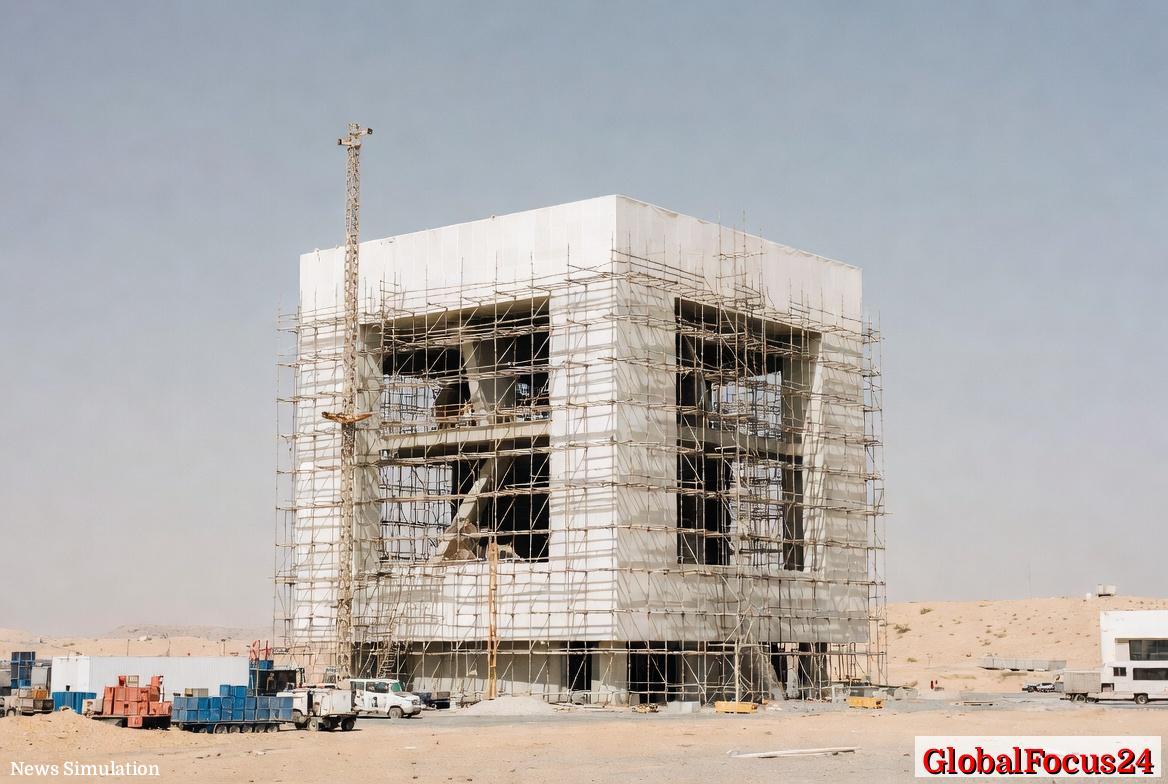
Construction activity in the region now reflects a more restrained vision. A large trench marks the partial footprint of the planned city, but expectations for its scope have been tempered. Additional components, including a high-profile cube-shaped structure intended to serve as a landmark, have reportedly been put on hold.
The recalibration underscores the challenges of executing megaprojects of unprecedented scale, especially amid fluctuating global economic conditions and shifting investor sentiment.
Global Investments Under Review
The PIF’s retrenchment extends beyond domestic initiatives to its international portfolio. One of the most notable developments is the anticipated withdrawal of support for LIV Golf, a professional golf league launched to rival established tours.
Despite attracting top players with lucrative contracts, the league has struggled to achieve financial sustainability, reportedly incurring losses approaching $600 million in 2024. The potential closure of LIV Golf marks a significant moment in the fund’s evolving investment philosophy, signaling a reduced tolerance for prolonged loss-making ventures without clear pathways to profitability.
This reassessment comes as sports investments more broadly—ranging from football club acquisitions to high-profile athlete contracts—have placed increasing demands on the fund’s capital.
Continued Commitment to Strategic Sectors
While scaling back in certain areas, the PIF remains active in sectors deemed critical to long-term economic diversification. Recent commitments highlight a continued focus on technology, media, and advanced industries.
Key initiatives include:
- A planned $100 billion allocation toward artificial intelligence infrastructure, positioning Saudi Arabia as a potential global hub for emerging technologies.
- Participation in major corporate transactions, including a reported $30 billion effort related to Electronic Arts and a $10 billion role in a media consolidation involving Paramount and Warner Bros. Discovery.
- Ongoing support for electric vehicle development, including an additional $550 million investment in Lucid Motors.
- Prospective involvement in future public offerings, including interest in SpaceX.
These investments align with broader global trends emphasizing digital transformation, clean energy, and innovation-driven growth.
Liquidity Constraints and Structural Challenges
Despite its substantial asset base, the PIF faces unique liquidity constraints compared with other sovereign wealth funds. A significant portion of its resources is tied up in domestic infrastructure projects, including roads, utilities, and urban development necessary to support Vision 2030 initiatives.
This contrasts with peers such as Norway’s Government Pension Fund Global or Abu Dhabi’s sovereign funds, which maintain more liquid, globally diversified portfolios.
Much of the PIF’s recent asset growth has come through government transfers, particularly stakes in Saudi Aramco. The fund currently holds approximately 16 percent of the state oil giant, providing a valuable but less liquid source of wealth.
This structure limits flexibility, especially during periods of increased spending or external economic pressure.
Regional Tensions Add Pressure
Geopolitical developments have added another layer of complexity. Ongoing tensions involving Iran have disrupted regional stability and raised concerns about the security of oil exports, a cornerstone of Saudi Arabia’s economy.
These uncertainties can have ripple effects across investment flows, potentially deterring foreign capital and complicating long-term planning. For a country actively seeking to attract international investors as part of its diversification strategy, maintaining stability is a critical factor.
Economic Impact and Domestic Implications
The shift in PIF strategy is likely to have significant implications for Saudi Arabia’s domestic economy. Megaprojects such as Neom and related developments have been central to job creation, tourism ambitions, and the broader rebranding of the kingdom as a global destination for business and innovation.
Scaling back these initiatives may slow certain aspects of economic activity in the short term, particularly in construction and related sectors. However, analysts suggest that a more measured approach could enhance long-term sustainability by reducing financial strain and improving project viability.
At the same time, continued investment in infrastructure and technology sectors is expected to support ongoing economic diversification efforts, albeit at a more gradual pace.
Historical Context of Sovereign Wealth Expansion
The PIF’s evolution over the past decade reflects a broader trend among oil-producing nations seeking to transform resource wealth into diversified economic assets. Since the launch of Vision 2030 in 2016, the fund has expanded rapidly, both in size and scope.
It has played a central role in financing domestic development while also pursuing high-profile international investments designed to generate returns and elevate Saudi Arabia’s global economic influence.
This approach mirrors strategies employed by other Gulf states, such as the United Arab Emirates and Qatar, which have used sovereign wealth funds to build global investment portfolios and reduce reliance on hydrocarbons.
However, Saudi Arabia’s strategy has been distinguished by its scale and ambition, particularly in its focus on transformative domestic projects.
Comparison with Regional Peers
Compared with its regional counterparts, the PIF’s current pivot highlights differing approaches to managing sovereign wealth.
- Abu Dhabi’s funds, including Mubadala and ADQ, have emphasized diversified global investments with a balance between risk and liquidity.
- Qatar Investment Authority has focused on high-profile international assets, particularly in real estate and infrastructure, while maintaining relatively steady spending patterns.
- Saudi Arabia’s PIF has prioritized domestic transformation to a greater extent, resulting in higher capital commitments within the country.
This divergence helps explain why the PIF is now facing more immediate pressure to adjust spending, as domestic projects typically require sustained, large-scale funding over extended periods.
A Transition Toward Sustainability
The fund’s leadership has indicated that the new strategy aims to achieve core objectives with reduced capital outlays. This suggests a growing emphasis on efficiency, prioritization, and return on investment.
Rather than abandoning Vision 2030 goals, the recalibration appears designed to ensure their long-term viability. By focusing on projects with clearer economic benefits and scaling back more speculative ventures, the PIF is positioning itself for a more sustainable growth trajectory.
This transition reflects a broader maturation of the fund’s investment approach, moving from rapid expansion to disciplined execution.
Outlook for Vision 2030
As Saudi Arabia enters the final phase of its Vision 2030 timeline, the success of the initiative will depend on balancing ambition with practicality. The PIF remains a central driver of this effort, but its evolving strategy underscores the challenges of managing large-scale economic transformation.
While some projects may proceed at a slower pace or with reduced scope, the continued focus on key sectors such as technology, infrastructure, and renewable energy suggests that the core objectives remain intact.
The coming years will likely see further adjustments as the kingdom navigates global economic conditions, regional dynamics, and domestic priorities. In this context, the PIF’s shift toward more measured spending may prove to be a necessary step in ensuring that Vision 2030 delivers lasting and sustainable results.