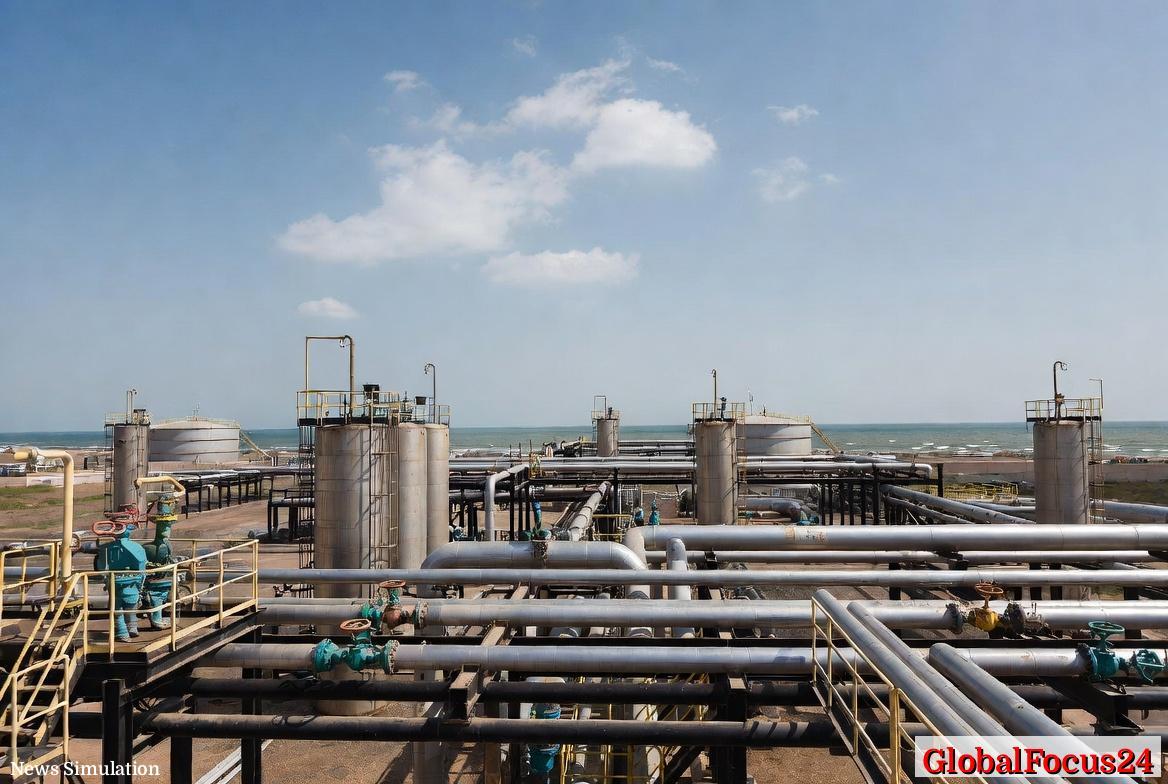
Saudi Arabia Boosts Oil Exports Through Red Sea Despite Drone Strike
Rising Exports Signal Supply Strength
Saudi Arabia’s oil exports have surged sharply in recent weeks, defying expectations of a slowdown following a recent drone attack on its energy infrastructure. Crude flows through the Yanbu terminals on the Red Sea coast have reached approximately 4 million barrels per day, marking a fourfold increase since late February and signaling the kingdom’s determination to maintain output stability despite regional security challenges.
The East-West pipeline, also known as the Petroline, has been a crucial component of this effort. Stretching roughly 746 miles from the kingdom’s eastern oil fields to the Red Sea, the pipeline allows Saudi Arabia to transport large volumes of crude away from the Persian Gulf, bypassing the strategically sensitive Strait of Hormuz. In the final days of March, pipeline throughput surged to 4.5 million barrels per day—near its operational limits—and has remained high since then.
Even after a drone strike briefly disrupted operations by damaging one of the 11 pumping stations along the route, Saudi Aramco, the kingdom’s state-owned oil giant, managed to restore the line to full capacity of 7 million barrels per day within days. Currently, an estimated 2 million barrels per day are allocated for domestic consumption, leaving as much as 5 million barrels available for export.
Drone Strike Briefly Disrupts but Fails to Deter
The latest drone attack, believed to have targeted critical infrastructure within the East-West pipeline network, temporarily reduced throughput by about 700,000 barrels per day. While the extent of the physical damage was limited, the strike underscored ongoing threats to Saudi Arabia’s vast energy facilities. Over the past decade, the kingdom’s oil network has occasionally faced similar assaults from regional militant groups, aiming to undermine its output and global market influence.
However, the swift restoration of full capacity demonstrates the resilience of Saudi Aramco’s operational readiness and the growing importance of redundancy in its national energy strategy. Tanker-tracking data from shipping agencies show that the majority of the additional volumes in March came from crude streams redirected through the Yanbu export terminals, reaffirming the Red Sea as a secure and efficient export route for the foreseeable future.
Strategic Importance of the East-West Pipeline
Constructed in the early 1980s during the Iran-Iraq War, the East-West pipeline was designed as a security measure—a means to safeguard the flow of oil should the Strait of Hormuz be obstructed. At the time, the world’s dependence on the Gulf’s maritime routes made the chokepoint particularly vulnerable to geopolitical tensions.
Four decades later, that foresight has proven invaluable. The pipeline, which can carry up to 7 million barrels per day, offers a lifeline for global energy markets during periods of instability in the Gulf region. By channeling crude from eastern fields such as Ghawar—still the world’s largest onshore oil reservoir—to export terminals on the Red Sea, the system minimizes transit risk and shortens the shipping path to European and North American markets.
The recent rise in Red Sea shipments reinforces Saudi Arabia’s effort to diversify its logistical routes and reduce exposure to maritime disruptions in the Gulf. It also indicates an internal rebalancing of energy infrastructure, focusing increasingly on westward exports that can serve both European and African markets with shorter transit times.
Historical Context and Lessons from Past Crises
Saudi Arabia has faced several significant operational disruptions over the past two decades, yet its ability to restore production has consistently reassured global markets. The most notable instance occurred in September 2019, when coordinated drone and missile strikes on Abqaiq and Khurais production facilities temporarily knocked out more than half of the kingdom’s crude output. Within weeks, production was fully restored, demonstrating both the capacity of Aramco’s emergency response teams and the redundancy built into its infrastructure.
In contrast, the latest incident involved a narrower section of pipeline capacity and did not affect production directly, but it nonetheless revived memories of how vulnerable energy corridors can be in times of regional tension. Analysts note that the current situation differs from 2019 in one key aspect: global oil markets are now more diversified, and inventories remain steady following years of robust investment in energy security. As a result, prices reacted only modestly to the news of the drone strike.
Economic Implications and Market Reaction
The rise in Saudi oil exports comes at a time when global crude demand is rebounding steadily. Economic recoveries across Asia and Europe, coupled with seasonal upticks in consumption, have supported higher export flows and stable prices. Brent crude has hovered around the mid-$80 per barrel range in recent weeks, held in check by adequate supply and cautious optimism surrounding growth prospects in key import markets.
For Saudi Arabia, the export surge reinforces both fiscal stability and strategic positioning. Oil revenues remain the cornerstone of the national budget, funding ambitious infrastructure projects and Vision 2030 initiatives aimed at diversifying the economy beyond hydrocarbons. Each additional million barrels exported contributes significantly to the government’s fiscal balance, especially as global demand trends upward.
Economists estimate that current export levels through the Red Sea account for roughly one-third of Saudi Arabia’s total crude shipments. By sustaining that pace, Riyadh ensures continued liquidity and cost-effectiveness in its export logistics, while mitigating the insurance premiums and geopolitical risks associated with Gulf-based routes.
Regional Comparisons and Energy Security
Compared to its Gulf neighbors, Saudi Arabia has made the most significant progress in developing alternative export infrastructure. The United Arab Emirates operates the Habshan–Fujairah pipeline, which carries crude to the Gulf of Oman, bypassing the Strait of Hormuz altogether. However, its capacity—roughly 1.5 million barrels per day—is far smaller than Saudi Arabia’s East-West system. Kuwait and Iraq remain dependent on southern routes through the Gulf, leaving them comparatively more exposed to maritime disruptions.
This strategic edge allows Saudi Arabia to serve multiple global markets even under heightened security risks. The country’s western export corridor provides shorter shipping distances to the Suez Canal, reducing transport time to Mediterranean refiners. In addition, its ability to maintain robust exports under threat enhances its credibility as a stable supplier—a reputation Riyadh has carefully cultivated over decades.
Operational Resilience and Future Outlook
Saudi Aramco’s rapid restoration of the East-West pipeline emphasizes the company’s long-term investment in system reliability. Over the past decade, Aramco has upgraded pumping stations, storage facilities, and monitoring systems along the route to enable quicker emergency responses. These modernizations include automated pressure controls, remote surveillance, and hardened infrastructure capable of withstanding localized attack damage.
Looking ahead, energy analysts expect Saudi Arabia to continue expanding its downstream infrastructure on the Red Sea coast, including refining and petrochemical capacity at Yanbu. These projects, designed to add value to crude exports and create new industrial opportunities, align with the government’s vision to develop western coastal areas as economic hubs. With the Red Sea positioned as both an export gateway and a manufacturing corridor, the region’s role in global energy logistics is likely to deepen further.
Global Market Stability at Stake
The uninterrupted flow of Saudi crude carries far-reaching implications for energy markets worldwide. As the world’s largest oil exporter, Saudi Arabia plays a central role in maintaining supply stability and price equilibrium. Any significant disruption—whether caused by technical failure, conflict, or sabotage—has the potential to ripple through international markets.
By sustaining exports at near-record levels despite external shocks, Riyadh sends a clear signal of assurance to its customers in Asia, Europe, and North America. The recent increase in Red Sea shipments highlights the country’s logistical depth and its capacity to deliver energy security even under duress.
Conclusion
Saudi Arabia’s decision to ramp up oil exports through the Red Sea following a drone strike demonstrates both resilience and strategic foresight. The East-West pipeline, for decades a quiet component of the kingdom’s energy architecture, has now become central to maintaining global crude supply amid persistent regional volatility.
By rapidly restoring operations and expanding exports, Riyadh reinforces its reputation as a reliable energy supplier and underscores the importance of diversified logistics in a complex geopolitical landscape. As global demand continues to build through 2026, the Red Sea corridor stands poised to play an increasingly pivotal role in ensuring that the world’s energy flows remain steady, secure, and resilient in the face of continuing uncertainty.