US Oil Prices Plunge as Ceasefire Proposal with Iran Sends Shockwaves Through Global Markets
Oil Prices Fall Below $101 Amid Gulf Truce Announcement
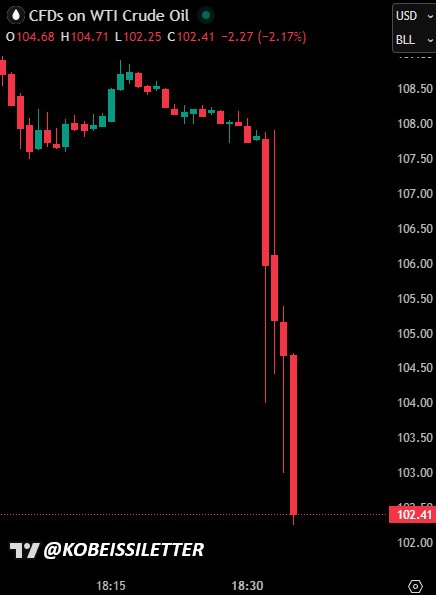
U.S. oil prices tumbled nearly 10 percent on Tuesday, sliding below $101 per barrel after President Trump announced a temporary two-week ceasefire proposal with Iran. The sharp decline marked one of the steepest one-day drops in months, underscoring the energy market’s sensitivity to developments in the Persian Gulf, where geopolitical tensions have long shaped global oil flows.
The proposed truce hinges on the reopening of the Strait of Hormuz — a narrow waterway between Oman and Iran that serves as a critical artery for international energy shipments. Roughly one-fifth of the world’s oil supply passes through this strait, making any disruption a global economic concern. Trump stated that the ceasefire would take effect immediately upon Iran’s compliance with reopening the passage, but as of late Tuesday, Tehran had not publicly responded.
Market Reaction and Investor Sentiment
Oil futures saw an immediate reaction to the announcement. After weeks of rising prices driven by escalating military activity and threats to the Strait of Hormuz, traders reversed course, selling off positions tied to the possibility of prolonged conflict in the region. Brent crude, the international benchmark, also fell sharply, though its decline was slightly less severe.
Analysts described the sudden dip as a “relief correction” following weeks of speculative buying. “When tensions rise in the Gulf, traders typically price in supply risk,” said one energy strategist based in Houston. “Once there’s even a hint of de-escalation, those premiums unwind almost instantly.” This dynamic has long defined oil markets during Middle Eastern crises, where geopolitical risk often outweighs traditional factors like inventories or production levels.
Stock markets mirrored the volatility in energy futures. Major U.S. indices pared early gains as investors recalibrated expectations for energy-sector earnings. Shares of major oil companies, including ExxonMobil and Chevron, fell between 4 and 6 percent during afternoon trading, reflecting concerns that a prolonged ceasefire could push crude prices further down.
Historical Context: Oil and the Strait of Hormuz
The Strait of Hormuz has served as the focal point of oil-market anxiety for decades. During the Iran-Iraq War in the 1980s, attacks on merchant vessels passing through the strait led to global price spikes and prompted U.S. naval intervention. More recently, in 2019, tanker strikes and maritime confrontations triggered similar volatility, illustrating how quickly geopolitical friction can ripple through energy supply chains.
Historically, any disruption or potential closure of the strait sends prices soaring, as traders anticipate shortages and rerouting costs. Conversely, announcements of stability — such as ceasefires or diplomatic negotiations — often bring rapid price corrections. Tuesday’s near 10 percent drop echoed market reactions from early 2020, when diplomatic talks between the U.S. and Iran eased tension after the assassination of Iranian General Qassem Soleimani.
The strategic importance of the Strait of Hormuz cannot be overstated. Approximately 20 million barrels of crude oil pass through it each day, making it the single most vital chokepoint in global energy logistics. Nations reliant on Middle Eastern imports, such as Japan, South Korea, and India, watch developments there closely, knowing that even temporary disruption can cascade into higher transportation and insurance costs for months.
Economic Implications for U.S. Energy Markets
The plunge in oil prices raises immediate questions about the health of the U.S. energy economy, particularly for shale producers in Texas and North Dakota. Many of these companies rely on prices above $90 per barrel to maintain profitability. Analysts warn that if the ceasefire holds and markets normalize, U.S. production growth may slow as smaller drillers scale back expansion plans.
On the consumer side, the sharp decline could translate into lower gasoline prices nationwide, offering short-term relief at the pump. Preliminary data suggest wholesale fuel prices could drop by as much as 25 cents per gallon over the next two weeks if the crude market stabilizes near $95. Transportation and logistics sectors would benefit from lower operating costs, potentially easing some inflationary pressures that have persisted since early 2025.
However, energy economists caution that the impact may be temporary. “Oil markets are reacting tos,” said one analyst with a major commodities research firm. “Unless there’s a durable diplomatic breakthrough, volatility will remain high.” The uncertainty surrounding Iran’s response complicates predictions, as any hesitation or rejection could quickly reverse Tuesday’s price movement.
Global Energy Landscape and Regional Comparisons
The United States is not alone in feeling the impact of Tuesday’s price correction. European and Asian markets experienced similar declines in crude benchmarks, reflecting the globally interconnected nature of oil pricing. In London, Brent futures dropped to just above $104 per barrel, while Dubai crude slid nearly 8 percent. These movements highlight how Middle Eastern stability directly influences economies far beyond the region.
Historically, the Gulf has served as the world’s energy thermostat — its tensions heating or cooling global economic sentiment. By comparison, disruptions in other oil-producing regions, such as West Africa or Venezuela, rarely trigger reactions of this magnitude. The sheer scale of dependence on Persian Gulf exports ensures that even temporary diplomatic shifts command outsized attention.
China and India, two of the largest importers of Iranian oil, may be watching developments particularly closely. Both nations have faced challenges balancing energy supply security with international diplomatic pressures related to sanctions. A reopened Strait of Hormuz could ease concerns about regional bottlenecks, potentially lowering shipping and insurance rates for Asian refiners that depend on Gulf imports.
Historical Patterns of Price Volatility and Diplomacy
The interplay between military tension and oil market volatility has long characterized U.S.-Iran relations. Every major diplomatic overture between the two nations in recent decades has been accompanied by dramatic price swings. In 2013, during the preliminary stages of the nuclear accord negotiations, global crude benchmarks fell nearly 15 percent as optimism briefly surged. Yet subsequent breakdowns in talks erased those gains nearly overnight.
This cyclical pattern — speculation followed by correction — underscores the fragile balance governing oil prices. Unlike other commodities, crude is deeply tied to both real supply factors and geopolitical perception. A ceasefire, even if temporary, shifts sentiment enough to trigger algorithmic trading and speculative movement across international exchanges.
Tuesday’s plunge resonated particularly strongly amid an environment of economic uncertainty. Global demand has begun stabilizing after a mild slowdown last year, but persistent inflation and uneven recovery across Asia and Europe continue to weigh on consumption forecasts. Lower oil prices may help moderate those pressures, though central banks remain cautious about reading too much into short-term market fluctuations.
What Comes Next: Uncertainty and Opportunity
The coming days may prove pivotal for energy markets. If Iran agrees to reopen the Strait of Hormuz and the truce holds beyond two weeks, analysts expect crude prices could stabilize near the mid-$90s range, with potential for further easing as inventories rebuild. Conversely, any sign of noncompliance or renewed confrontation could send futures soaring again, reinstating the geopolitical premium traders removed on Tuesday.
Energy companies, policymakers, and consumers alike will be watching for signals from Tehran and Washington in the days ahead. For oil producers, sustained price declines could pressure balance sheets and limit new investment in drilling operations. For importers and consumers, however, the potential for cheaper fuel brings a measure of optimism after months of high transportation and heating costs.
Despite the dramatic reaction, experts note that volatility is characteristic of modern energy markets, particularly when tied to rapid geopolitical developments. “We’ve seen this movie before,” one analyst commented. “A single announcement reshapes expectations, but durable change depends on lasting diplomatic engagement.”
Conclusion: A Temporary Calm in Turbulent Waters
As of late Tuesday evening, oil traders and market watchers remained cautious. The swift drop below $101 a barrel highlighted the global market’s reliance on stability in the Persian Gulf and the enduring influence of diplomacy over commodity pricing. While the ceasefire proposal has momentarily cooled nerves, much hinges on Iran’s response and the reopening of the Strait of Hormuz.
For decades, this strategic corridor has symbolized the fragile link between peace and prosperity in energy markets. Today’s plunge serves as a vivid reminder: the price of oil is not merely a reflection of supply and demand but of the world’s collective hope for stability in one of its most volatile regions.