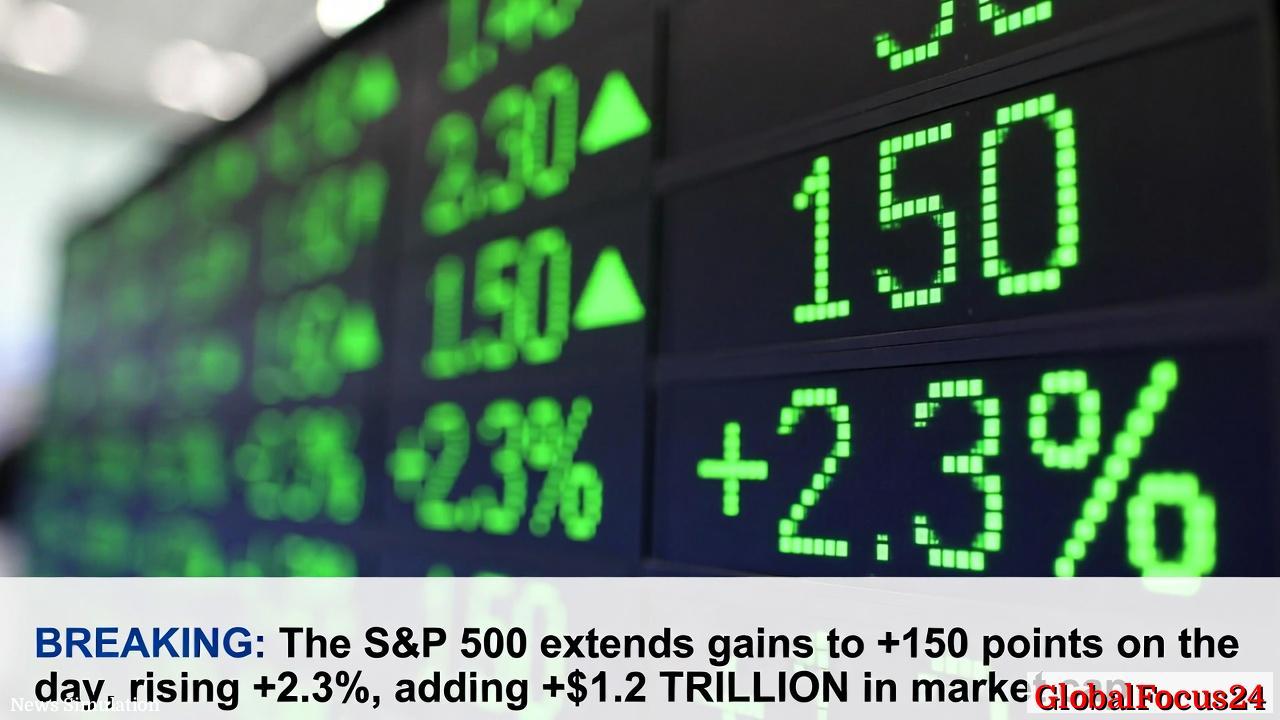
S&P 500 Rallies as Investors Eye Possible End to Iran Conflict
The S&P 500 surged 150 points, or 2.3 percent, on Monday, adding an estimated $1.2 trillion in market capitalization as investors reacted to signs that the conflict involving Iran could be moving toward resolution. The sharp rally marked one of the index’s strongest single-day gains in months, positioning Wall Street for a potential rebound after weeks of volatility tied to geopolitical tensions and energy price fluctuations.
Market Rebounds on Hopes of Stability
The broad-based rally lifted nearly every major sector, with technology, energy, and industrial stocks leading the charge. Many traders interpreted the day’s surge as an early indication that markets are beginning to price in a more stable global outlook after months of uncertainty surrounding the Iran conflict.
Tech giants saw notable advances, with gains among semiconductor producers and cloud computing firms driving the Nasdaq Composite sharply higher. The Dow Jones Industrial Average also climbed more than 600 points, mirroring the upbeat momentum across global markets. European and Asian exchanges posted moderate gains overnight, signaling a cautiously optimistic tone among international investors.
"Markets are responding to the prospect of a tangible reduction in conflict risk," said one New York-based portfolio strategist. "If diplomatic channels continue to show progress, the relief in risk premiums could become self-reinforcing."
Historical Context: Markets and Geopolitical Tensions
Historically, major geopolitical conflicts have carried significant consequences for global financial markets. Episodes in the Middle East, from the 1973 oil embargo to the 1991 Gulf War, have sent energy prices soaring and disrupted trade flows, often triggering temporary downturns in equities. However, when tensions begin to ease or reach resolution, markets typically recover swiftly as investors reallocate capital from safe havens back into risk assets.
The Monday surge evokes memories of similar rebounds following other international de-escalations. For instance, during the early 2000s, the S&P 500 reversed months of losses once U.S.-Iraq hostilities reached a turning point and crude oil prices began to stabilize. The pattern underscores how markets often anticipate geopolitical outcomes before they become concrete, rewarding optimism even before formal agreements are signed.
Energy Prices Show Signs of Cooling
Energy markets reflected the shifting sentiment in tandem with equities. Crude oil futures, which had spiked above $90 per barrel during the height of regional tension, fell back toward the mid-$80 range as traders anticipated reduced supply disruptions. Brent crude registered a decline of nearly 3 percent, marking its steepest one-day fall since January.
Lower energy prices offer immediate relief to both businesses and consumers, particularly in industries sensitive to fuel costs such as aviation and logistics. Analysts noted that if the downward trend in oil continues, it could further ease inflationary pressures in the U.S. economy, strengthening the case for continued consumer spending and steady corporate margins through the coming quarter.
Global Reactions and Investment Flows
Investor optimism was not limited to U.S. markets. European indices, particularly the FTSE 100 and Germany’s DAX, gained approximately 1.5 percent, driven by strong performances in energy and manufacturing sectors. Japanese and South Korean markets also advanced, benefiting from increased risk appetite and the easing demand for traditional safe-haven assets like gold and the U.S. dollar.
Currency markets reflected this shift as well. The dollar weakened slightly against the euro and pound, while emerging-market currencies saw mild appreciation as capital flows returned to regions previously hit by outflows during the conflict’s escalation. U.S. Treasury yields edged higher, another sign that investors were rotating out of defensive positions in favor of equities and corporate bonds.
Economic Impact and Sector Gains
The $1.2 trillion increase in total S&P 500 market capitalization underscores the scale of renewed confidence coursing through Wall Street. Major sectors each contributed to the rally:
- Technology: Semiconductor companies benefited from easing supply chain risks linked to global trade disruptions, while software firms gained from renewed corporate investment expectations.
- Energy: Oil producers experienced mixed results, with integrated energy firms still rising on optimism about long-term stability even as crude prices fell.
- Financials: Banks and asset managers advanced as credit market stress indicators eased, improving prospects for near-term loan growth.
- Consumer Discretionary: Retail and travel stocks jumped, anticipating stronger spending should fuel costs decline.
Together, these movements paint a picture of a market that is repositioning ahead of what investors hope will be a sustained period of geopolitical calm and economic normalization.
Analysts Weigh the Sustainability of the Rally
Despite Monday’s impressive performance, analysts urged caution about overinterpreting a single day’s trading results. While optimism around the Iran conflict’s resolution is real, the underlying diplomatic negotiations remain complex and fluid. Any reversal in talks or sudden escalation could quickly undo the market’s gains.
Still, some analysts pointed out that the underlying fundamentals of the U.S. economy remain relatively strong. Job growth has remained consistent, inflation is moderating, and corporate earnings have generally outperformed expectations in early 2026. These trends provide a supportive backdrop for equities, even when geopolitical risks remain elevated.
“Markets have been looking for a reason to rally, and the potential easing of conflict provides a perfectly timed catalyst,” said a senior economist at a major investment bank. “But sustainability will depend on whether this positive sentiment translates into real economic gains and lasting geopolitical stability.”
Historical Market Resilience
The U.S. stock market’s ability to rebound from political shocks is well documented. During the Cold War, events such as the Cuban Missile Crisis and Middle East conflicts rattled investors but ultimately led to short-lived market corrections. Data from the past five decades indicate that geopolitical-driven declines often dissipate within weeks, provided that disruptions to energy supply and international trade remain contained.
Comparatively, the 2020s have seen a faster market response cycle. Following the 2022 Ukraine invasion, the S&P 500 recovered much of its initial losses within months despite ongoing instability. Analysts attribute this quicker rebound to improved global communication, diversified supply chains, and central banks’ willingness to cushion shocks with timely policy interventions.
Regional Comparisons and Broader Economic Implications
Regional performance following major geopolitical de-escalations offers useful context for the current rally. In Asia, markets have historically responded to improved trade flows with accelerated manufacturing activity. If the current stabilization in the Middle East leads to less disruption in global energy supplies, countries such as Japan, South Korea, and India stand to benefit from reduced import costs.
In Europe, a decline in oil and gas volatility would help mitigate inflationary pressures that have weighed heavily on consumer confidence over the past year. German manufacturing indices, for instance, often track inversely with crude oil volatility—suggesting Europe’s industrial base could receive a timely boost.
For the United States, the most immediate economic benefit may come from improved investor and consumer sentiment. With energy prices stabilizing and inflation expectations easing, the Federal Reserve could find additional leeway to maintain or gradually adjust policy without stifling growth. That combination historically fosters longer equity bull markets, though much depends on future diplomatic developments.
Looking Ahead
Market participants will be paying close attention to official statements and regional diplomacy over the coming days. Any confirmation of progress in talks involving Iran could further strengthen risk appetite and extend the current rally. Conversely, signs of renewed tension or failed negotiations might trigger sharp reversals, especially given the scale of gains logged on Monday.
For now, the mood on Wall Street has shifted distinctly toward optimism. Traders who had spent weeks hedging against worst-case scenarios now appear to be rotating back into growth-oriented positions, betting that the worst of recent volatility may be over.
Conclusion: A Cautious Rally Amid Hope for Peace
Monday’s surge in the S&P 500 captured more than just a technical market rebound—it reflected growing global hope that one of the most disruptive geopolitical flashpoints of early 2026 could soon find resolution. Whether this optimism proves durable will depend on factors far beyond the trading floor, but for the first time in weeks, investors had reason to breathe easier.
If history is any guide, the easing of international tensions, combined with a resilient U.S. economy, could set the stage for a renewed period of growth. For now, the rally stands as a vivid reminder that markets thrive not only on profits and data—but on the enduring power of stability and the collective belief that uncertainty, however daunting, will eventually give way to clarity.