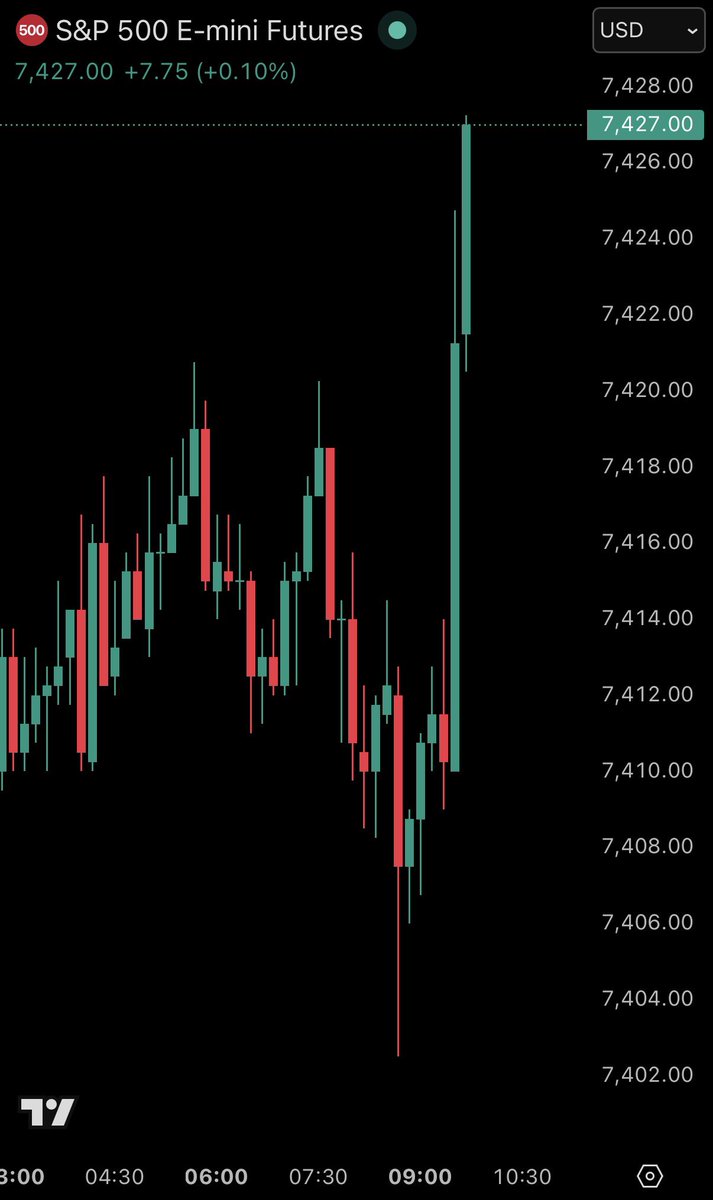
S&P 500 Rebounds to Green as Markets Eye Durable Stability Amid Delicate Peace Talks
In a day marked by mixed signals from the geopolitical front and the steadiness of global markets, the S&P 500 erased its earlier losses and turned firmly green, reflecting a nuanced trader sentiment that steadiness may outpace uncertainty. The broad index’s turnaround—attributed in part to resilient corporate earnings, stabilizing commodity prices, and a cautious optimism about potential pathways to de-escalation—underscores how financial markets are balancing macro risks with the prospect of longer-term economic normalization.
Historical context anchors today’s mood. The S&P 500 has long served as a barometer for investor confidence in the U.S. economy, fluctuating in response to geopolitical events, policy signals, and the health of domestic industries. Over the last two decades, episodes of volatility paired with rapid recoveries have become familiar, often driven by a combination of quantitative easing, shifting inflation expectations, and the resilience of the American corporate sector. The current moment, while cleaved by the stress of ongoing peace talks in the region, echoes a familiar pattern: markets tend to reward clarity over chaos, even if that clarity is partial or provisional. Investors have learned to parse statements from negotiators, track indicators such as inflation persistence, labor market momentum, and consumer demand, and then position portfolios to navigate a landscape where risk sentiment can swing quickly.
Economic impact is the centerpiece of today’s market movement. A rebound in the S&P 500 often translates into a broader sense of confidence that corporate earnings can weather near-term geopolitical headwinds. When equities recover, it can boost consumer and business sentiment by signaling a return to more predictable financial conditions. The immediate beneficiaries tend to be sectors with higher exposure to global demand and those with strong balance sheets, such as technology, healthcare, and consumer staples. Analysts note that a sustained move into positive territory—after a drawdown driven by growth concerns or risk aversion—can have a multiplier effect, supporting hiring plans, capex cycles, and productivity initiatives as companies seek to capitalize on improved access to funding and a calmer macro backdrop.
Regional comparisons provide a helpful lens for understanding the broader picture. In the United States, large-cap indices have historically outperformed during periods of moderate inflation and steady growth, with the S&P 500 representing a broad swath of the domestic corporate landscape. While the European markets can show heightened sensitivity to energy prices and currency dynamics, today’s momentum in U.S. equities is partially explained by strong domestic demand, a disciplined approach to cost management in corporate America, and investor expectations that the Federal Reserve will navigate policy with a balance of caution and pragmatism. In Asia-Pacific, economies with robust export sectors and digital innovation ecosystems have shown resilience, yet investors watch for supply chain normalization, Chinese policy cues, and regional security developments. The connectedness of these regions means the S&P 500’s performance has implications beyond American shores, influencing global capital flows and risk appetites.
Market players are weighing multiple forces shaping the near-term trajectory. Corporate earnings remains a primary driver, with many companies reporting earnings that reflect continued resilience even as input costs fluctuate. Revenue growth, margin expansion, and disciplined cost control are recurring themes in quarterly reports, supporting stock prices even in the face of macro headwinds such as inflation persistence and labor market tightness. Additionally, system-wide liquidity remains a strategic backdrop. Accommodative monetary policy, coupled with the ongoing rebalancing of investment portfolios toward equities, has anchored valuations at levels that reflect both optimism and caution. Traders are particularly attentive to guidance from management teams, which often includes expectations for demand trends, pricing power, and potential capital allocation priorities.
The geopolitical backdrop continues to color risk assessments, even as the market moves higher. The pause or stall in peace talks can create a dichotomy: while such negotiations may not yield immediate breakthroughs, the absence of a sudden escalation provides a ceiling to risk aversion for a period. Market participants are attuned to any signal that could derail stability, whether it comes from political developments, sanctions, or shifts in regional alliances. The current environment highlights how financial markets often price in probabilities rather than certainties, rewarding resilience and forward-looking plans that can endure under shifting policy and security dynamics.
Public reaction to today’s market action mixes optimism with prudent caution. Investor sentiment surveys have shown a tilt toward constructive expectations whens point to potential ceasefires, economic reopenings, or measured progress in diplomatic channels. Yet analysts caution that such sentiment is fragile and sensitive to new data points, including inflation metrics, consumer spending patterns, and employment reports. In this context, the market’s turn into the green zone serves as a reminder that investors are actively seeking a baseline of stability—an environment where corporate profitability can continue to be supported by demand, even as geopolitical frictions persist.
From a policy perspective, the market’s current tone suggests a cautious confidence in the ability of monetary authorities to maintain an accommodative stance without spiraling into destabilizing inflation pressures. The Federal Reserve’s communications in recent months have emphasized a data-driven approach, balancing the need to cool price pressures with the imperative to sustain job creation and economic growth. For participants, the question remains how long this balance can hold, particularly if external shocks become more pronounced or if domestic demand falters. The ongoing narrative is one of adaptability: businesses are adjusting pricing strategies, investors are recalibrating risk models, and policymakers are recalibrating tools to maintain economic momentum while guarding against overheating or a sudden downturn.
Industries with a strong domestic footprint may find particular resonance in today’s market environment. Companies with diversified supply chains, strong balance sheets, and a footprint across multiple regions are well positioned to weather volatility. Sectors such as technology hardware and software, healthcare services, and consumer discretionary goods often demonstrate resilience in the face of geopolitical uncertainty because they are driven by secular demand trends and innovation cycles rather than short-term macro shifts. At the same time, energy and materials sectors, which can be sensitive to commodity price swings, may experience periods of volatility as markets react to global supply dynamics and policy signals aimed at energy transition and inflation containment.
Investors also monitor technical indicators that can provide a rhythmic sense of momentum. Moving averages, market breadth, and volatility indices contribute to a composite view of market health. The current rebound, if sustained, could attract a broader wave of participation from both institutional and retail investors, potentially deepening liquidity and supporting a more robust price discovery process. Yet traders remain mindful of the possibility that a misalignment between stock valuations and underlying earnings could reintroduce volatility if earnings guidance or macro data diverges from expectations.
The regional dimension of today’s market movement cannot be overlooked. Within the United States, financial centers, technology corridors, and manufacturing hubs have all contributed to a mixed but steadily improving growth picture. Cities with diversified economies, such as those that blend tech innovation with traditional industries, tend to experience more stable earnings growth and more resilient job markets. Internationally, the pace of recovery and the resilience of export-driven sectors will continue to influence cross-border capital flows. Economic regions that have successfully navigated post-pandemic adjustments, energized by structural reforms or favorable trade dynamics, can serve as benchmarks for others seeking to stabilize after earlier shocks.
Looking ahead, analysts emphasize the importance of not over-interpreting a single day of market movement. While today’s green turn on the back of reduced downside risk is encouraging, lasting progress will depend on several reinforcing factors. These include sustained earnings traction from a broad-based set of companies, continued improvements in supply chain efficiency, and a credible path toward inflation containment without compromising labor market strength. In this framework, the S&P 500’s trajectory will likely be a function of how well the domestic economy absorbs incoming data and how global developments evolve in tandem with policy responses.
In the broader context of financial markets, today’s action aligns with historical cycles where periods of uncertainty give way to incremental improvements as information becomes clearer and risk premiums adjust. The market’s ability to navigate persistent geopolitical tensions without derailing the macroeconomic recovery demonstrates a nuanced equilibrium where patience, disciplined investing, and diversified exposure can coexist with a sense of urgency to capitalize on improving fundamentals.
For individual investors, the takeaway is twofold. First, diversification remains a cornerstone of resilience. A well-balanced portfolio that spans equities, fixed income, and alternative assets can help weather sector-specific shocks while capturing broader growth. Second, staying informed about earnings trends, policy signals, and geopolitical developments is essential. Investors should monitor quarterly reports, management guidance, and macro indicators to gauge the sustainability of the current recovery and to identify potential inflection points that could alter risk sentiment.
As markets continue to absorb evolving information, the day’s performance serves as a reminder that the financial ecosystem thrives on a delicate balance between risk and opportunity. The S&P 500’s move into positive territory reflects a moment of cautious optimism, underpinned by solid corporate fundamentals and a tempered expectation that geopolitical tensions, while challenging, do not necessarily derail the longer arc of economic resilience. In the weeks ahead, market participants will be watching for confirmatory signals—whether in earnings beats, inflation trends, or policy communications—that could solidify this momentum and further integrate today’s gains into a more durable uptrend.