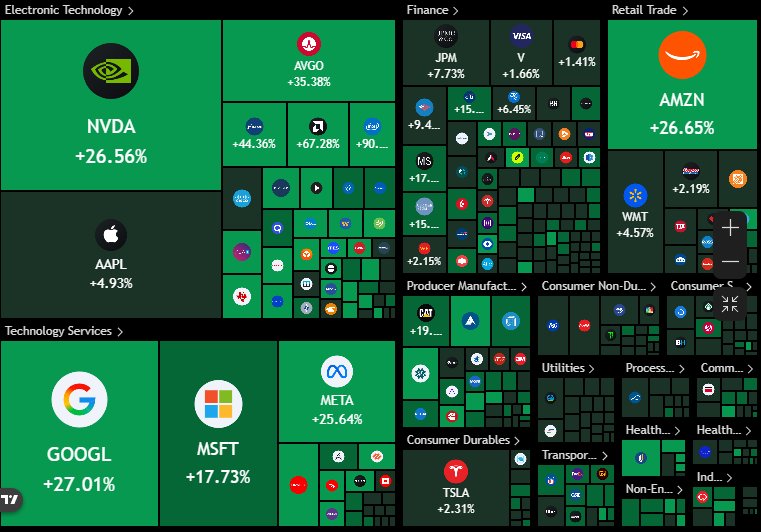
S&P 500 Records Peak as Markets Rally: A 13.6% Rise Since March Bottom Drives $7.8 Trillion in Value
The stock market surged to new heights, with the S&P 500 closing at its all-time high as investors welcomed a sustained rally that has lifted the index 13.6% from its March 30 bottom. In a span of just over three weeks, broad optimism across sectors, from technology and consumer discretionary to financials and industrials, has translated into a dramatic revaluation of the market’s capitalization, adding roughly $7.8 trillion in aggregate market value over 20 trading days. The momentum underscores a pivotal moment for U.S. equities, prompting renewed attention from portfolio managers, market strategists, and ordinary investors who have weathered a period of volatility and uncertainty.
Historical context: a cycle of resilience and repricing
To understand the current ascent, it helps to place it within a longer arc of market history. The S&P 500’s trajectory since the pandemic-era lows in 2020 has been characterized by episodes of swift repricing—often driven by shifts in monetary policy expectations, geopolitical developments, and earnings resilience. The recent climb follows a pattern familiar to longtime observers: an initial wave of relief when macro data confirms a cooling inflation trajectory, followed by a reassessment of growth prospects as corporate earnings discipline and technological innovation demonstrate continued relevance in a changing global economy.
Historically, periods of sharp recoveries after deep pullbacks tend to be accompanied by broad-based participation. In this episode, technology and megacap leaders have helped anchor the advance, while cyclical sectors have begun to recover on the back of improving demand signals and reaccelerating capital expenditure. The expansion of market value across a wide swath of constituent stocks has contributed to a virtuous circle: higher prices improve liquidity, attract more buying interest, and encourage companies to pursue strategic investments that support future growth.
Economic impact: a broadening of market confidence
The rapid increase in market capitalization has several tangible implications for the economy. First, higher equity prices can improve household balance sheets, increasing consumer confidence and potentially nudging discretionary spending higher. For households with investment portfolios, gains in equity markets often translate into a broader sense of financial security, which can support consumer activity and, in turn, contribute to economic growth.
Second, a rising stock market can influence corporate behavior. When access to capital improves and valuation multiples expand, companies are more inclined to pursue mergers, acquisitions, and share buybacks, which can affect capital allocation decisions across sectors. This dynamic can have a multiplier effect: stronger investment in research and development, plant modernization, and workforce training can emerge from improved financing conditions, boosting productivity over the longer term.
Third, the market’s trajectory may influence monetary policy expectations. Traders closely monitor equity performance as a proxy for risk appetite and economic momentum. A sustained rally can shape the narrative around inflation, growth, and interest rates, contributing to a shift in pricing for fixed-income assets and influencing debt markets. While policymakers emphasize data-driven approaches, market expectations can subtly affect the timing and scope of policy adjustments.
Regional comparisons: how the U.S. market stacks up against peers
From a regional perspective, the U.S. equity market has often served as a barometer for global risk appetite. The recent surge has drawn comparisons with equity recoveries in other major economies, where structural differences—such as industrial composition, regulatory regimes, and the pace of innovation—shape the speed and durability of rallies.
- Europe: European equities have benefited from a rebound in corporate earnings expectations, an energy price stabilization path, and measures to support credit markets. While regional indices have faced headwinds from energy sector exposures and regulatory considerations, a broadening recovery in consumer and manufacturing activity suggests the continent could participate in upside alongside U.S. markets.
- Asia-Pacific: In Asia, technology and export-oriented sectors have driven notable performance. Semiconductor demand, supply-chain realignments, and infrastructure investments have threaded through regional indices, contributing to a diversified global rally. The pace of growth in emerging markets within the region also adds a layer of resilience to the overall market narrative.
- Other markets: Across North America and beyond, the synchronization of risk-on sentiment reflects a shared optimism about inflation cooling, earnings resilience, and the prospect of capital deployment in a shifting macro environment.
Sector dynamics: leadership and where bets are being placed
A closer look at sector performance reveals the uneven yet broad-based nature of the rally. Tech-enabled sectors continue to exhibit growth potential driven by digital transformation, cloud computing, and AI-adjacent opportunities. Financials have benefited from improving credit metrics, stable funding conditions, and expectations for favorable monetary policy alignment. Industrials and energy participate through productivity enhancements and secular demand drivers, respectively, while consumer-oriented sectors respond to a combination of demand recovery and pricing power.
- Technology and communications: The leadership here reflects ongoing investments in digital infrastructure, artificial intelligence, and platform ecosystems. Market participants are particularly attentive to earnings streams from software, semiconductors, and hardware providers with scalable models.
- Financials: Banks and other financial institutions have regained confidence amid improving loan quality and capital adequacy. The rally in financial equities suggests renewed appetite for balance-sheet strength and the potential for value through capital deployment strategies.
- Industrials and energy: Productivity improvements and energy-market normalization contribute to sturdier earnings trajectories. Increased activity in manufacturing, logistics, and energy transition initiatives can provide consistent catalysts for stock performance in these sectors.
- Consumer discretionary and staples: With improving consumer sentiment and resilient demand, these sectors offer a balance of growth and stability, helping sustain broad market breadth even as interest-rate expectations fluctuate.
What investors should watch next: signals and potential risks
While the current momentum is encouraging, investors should remain mindful of several factors that could shape the next phase of the market cycle.
- Inflation and rates: The path of inflation data and the trajectory of interest rates will continue to influence valuations. Even with recent gains, market participants are weighing the trade-off between growth and the cost of funds.
- Corporate earnings: Earnings growth remains a central driver of sustained performance. Analysts will scrutinize guidance, margins, and productivity gains as companies navigate supply-chain normalization and demand dynamics.
- Global developments: Geopolitical developments, currency movements, and trade policy can introduce volatility. A synchronized global growth backdrop would support further upside, while geopolitical tensions could create pullbacks or regime changes in risk sentiment.
- Climate and energy transitions: Investments in energy resilience and decarbonization initiatives may continue to affect capital allocation and sector leadership. Markets could respond to large-scale infrastructure projects and policy incentives that shape the energy landscape.
Public reaction and market psychology: sentiment in flux
Public reaction to the market’s advancement has been a mix of optimism and cautious reevaluation. For some, the rally reinforces faith in an eventual normalization of growth and inflation, encouraging renewed participation in the equity market. Others remain vigilant, mindful of the possibility that a rapid revaluation could be followed by a period of consolidation if earnings momentum falters or if external shocks disrupt the growth trajectory.
Analysts emphasize that while price action has been robust, it does not guarantee a permanent trajectory. The market’s resilience has been supported by a combination of strong corporate fundamentals, favorable financing conditions, and a sense that the macro environment may be on a more stable footing than at the end of prior cycles. This nuanced sentiment underscores the importance of disciplined investing and diversification as market dynamics evolve.
Historical context of market breadth: breadth and breadthless rallies
One important consideration in evaluating the strength of a rally is market breadth—the extent to which both large-cap and smaller-cap stocks participate. Broader participation generally signals a more durable advance, while narrow leadership can leave markets vulnerable to sharper pullbacks if the primary drivers stall. Observers will be watching for continued breadth expansion, as it often accompanies a more sustainable climb in major indices.
Asset allocation implications: how investors might position
For investors reassessing portfolios, a few practical approaches can align risk tolerance with market dynamics:
- Maintain diversification: Broad exposure across sectors and geographies can help manage sector-specific risks that accompany a rally.
- Emphasize quality earnings: Companies with strong balance sheets, durable cash flows, and competitive advantages tend to weather volatility better and sustain earnings growth.
- Consider time horizons: A longer-term perspective can smooth out near-term fluctuations and capture the potential for continued upside as the macro environment evolves.
- Use disciplined risk controls: Stop-loss considerations and position-sizing discipline remain important to navigate potential pullbacks.
Regional economic context: underlying fundamentals beyond the index
Beyond themomentum, regional economic indicators offer a fuller picture of where sustained growth might emerge. Labor markets, consumer spending patterns, manufacturing activity, and export data collectively shape the environment in which equities operate. A steady or improving set of fundamental indicators can reinforce confidence in the continued ability of companies to generate earnings growth, which in turn supports further upside in the stock market.
Conclusion: a moment of calibrated optimism
The S&P 500’s record close and the substantial uptick in market capitalization over a short period reflect a moment of calibrated optimism. Investors appear to be balancing the prospect of continued economic resilience with the awareness that inflation dynamics, policy normalization, and global developments will influence the pace and durability of the rally. As markets navigate these forces, the current uptrend serves as a reminder of the intricate link between corporate performance, macro conditions, and investor sentiment in shaping the path of leading indices.
In sum, the sustained rally signals a period of renewed confidence in the resilience of U.S. equities. With broad participation across sectors and a renewed willingness to deploy capital, the market’s trajectory will hinge on how quickly inflation cools, how earnings trajectories unfold, and how global conditions influence risk appetite in the months ahead. The coming quarters will reveal whether this surge translates into a durable expansion or a more measured, term-by-term improvement in market fundamentals.