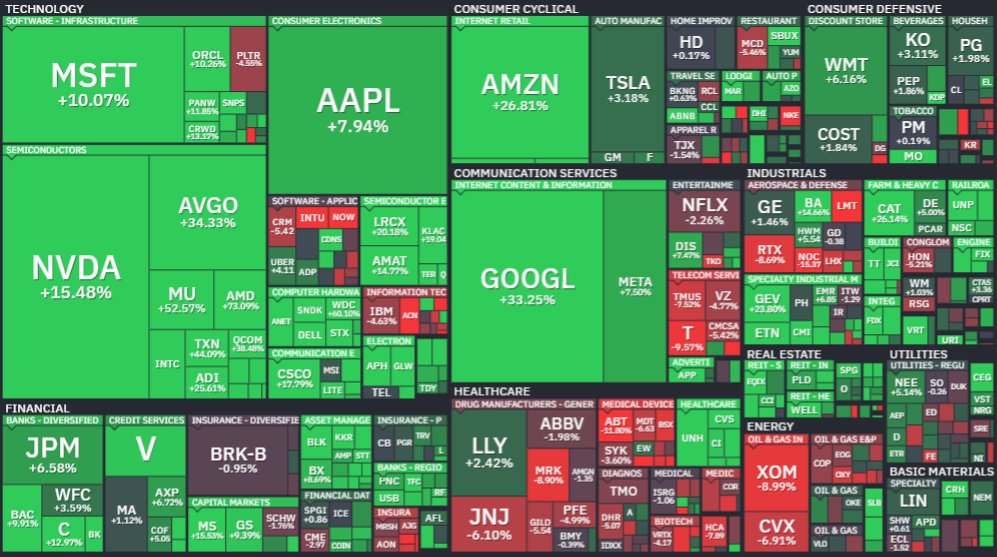
)
Records Fall as S&P 500 Reaches All-Time High: A Deep Dive into the Rally, Its Roots, and Regional Echoes
The S&P 500 has closed at a record high, extending a rapid rebound that began in late March and proving durable across sectors. The benchmark index, representing a broad swath of the U.S. equity market, surged to its latest peak after a sprint of roughly three weeks that propelled it higher by more than 14 percent from the March 30 trough. The move translates to a gain in market capitalization on the order of trillions of dollars, underscoring how quickly investor sentiment can swing on macroeconomic signals, corporate earnings, and policy expectations.
Historical context: how today’s rally fits into market cycles Stock markets move in cycles, alternating between risk-on optimism and risk-off caution. The current ascent follows a period of volatility that traders had labeled as a return-to-normal after a period of heightened uncertainty. Historically, such rallies often unfold in three phases: a speculative lift from improving macro indicators, a consolidation as investors reassess valuations, and a broader rotation into sectors with durable earnings growth. In this instance, the speed and breadth of the rally mirror episodes in past decades when a combination of favorable earnings revisions, resilient consumer demand, and easing financial conditions sparked rapid gains across major indices.
From a historical lens, the S&P 500’s ascent can be contrasted with earlier recoveries from drawdowns. After deep market declines, decisive policy action or a sharper-than-expected improvement in macro data tends to unlock a period of sustained upside, though not without interim pullbacks. The current move, while record-setting on the day, must be weighed against longer-term fundamentals, including corporate profitability, labor market resilience, and the trajectory of inflation and interest rates.
Economic impact: what the rally means for businesses, households, and risk appetite
- Corporate financing and investment: A rising equity market often improves corporate confidence, enabling easier access to capital through equity financing and shareholder-friendly actions such as buybacks. When stock prices reflect higher valuations, companies can revisit expansion plans, fund research and development, and optimize balance sheets. This dynamic can accelerate investment, particularly in industries with embedded growth potential like technology, healthcare, and energy transition sectors.
- Household wealth and spending: Stock market gains can boost household wealth, particularly for individuals with retirement accounts and investment portfolios. In a broad sense, higher asset prices can lift consumer sentiment and support discretionary spending, though the magnitude of these effects depends on how widely assets are distributed across income groups.
- Currency and trade implications: A strong equity rally can influence expectations for monetary policy and currency values. If investors interpret the rally as evidence of robust economic momentum, it may contribute to a more hawkish stance from central banks or shift capital flows toward higher-yielding assets, with knock-on effects for import costs, inflation expectations, and international competitiveness.
- Sector rotation: The performance of the S&P 500 often reflects shifts in sector leadership. When technology, communication services, or consumer-discretionary stocks lead the charge, the rally can indicate a belief that growth drivers remain resilient. Conversely, leadership by more cyclical or defensive groups can signal different risk tolerances among investors. In the current phase, a diversified uplift across multiple sectors suggests broad-based enthusiasm rather than a single-issuer surge.
Regional comparisons: how other major markets are performing Outside the United States, several regional markets have responded to global liquidity conditions and synchronized macro cues in similar ways, though dynamics vary by country. European equities, for example, often track global risk appetite but are tempered by regional growth differentials, energy prices, and fiscal policies. Asian markets may display sensitivity to commodity swings, supply chain normalization, and inflation trajectories in major economies like China and Japan. In many cases, stronger U.S. market performance can influence regional indices through capital flows and relative valuation adjustments, even as local factors—such as domestic demand, monetary policy, and regulatory developments—continue to shape outcomes.
Historical context of market capitalization and liquidity A rise in market capitalization alongside a broad market advance signals improved liquidity and investor confidence. When a 14 percent gain in a short span translates into trillions of dollars of added value, it reflects a combination of fresh capital inflows, reallocation by institutional investors, and repricing of risk premia across equities. Liquidity conditions—measured by bid-ask spreads, trading volumes, and market breadth—play a critical role in sustaining such moves. In periods of ample liquidity, markets can experience stronger upside momentum; conversely, liquidity tightening can amplify volatility during pullbacks.
Key metrics and what to watch next
- Valuation anchors: Price-to-earnings ratios, dividend yields, and price-to-book values provide a snapshot of how expensive the market is relative to fundamentals. While spurts of optimism can push valuations higher, a balanced view considers earnings growth trajectories, margins, and capital discipline across sectors.
- Earnings outlook: Corporate earnings guidance and consensus estimates help anchor expectations. A broad uplift in earnings revisions, especially among high-quality franchises with durable cash flows, tends to support a sustainable rally.
- Inflation and policy path: The trajectory of inflation remains a central determinant of future monetary policy. Market participants monitor CPI readings, wage data, and core inflation trends to gauge the likelihood of rate adjustments, which in turn influence discount rates and equity valuations.
- Global growth signals: Manufacturing indices, service-sector activity, and consumer sentiment across major economies inform the global backdrop. A synchronized improvement can sustain risk appetite, while divergences may introduce volatility.
Public reaction and market psychology: how investors are interpreting the surge The rapid ascent has produced a mix of enthusiasm and caution. For some investors, the rally confirms a return to risk-on behavior following a period of uncertainty. For others, it raises questions about sustainability, given the speed of the move and the potential for subsequent pullbacks in the face of shifting macro signals. Public commentary often emphasizes the importance of diversification, risk management, and disciplined rebalancing, especially in a market wheremilestones can tempt overconcentration in a few winning names or sectors.
Sector-specific dynamics: where the gains are concentrated
- Technology and growth equities: Historically, tech and growth-oriented sectors have been pivotal in broad-market rallies, buoyed by expectations of ongoing innovation, digital transformation, and scalable business models. If these areas continue to show resilient earnings and improving margins, their leadership can help sustain a broad advance.
- Financials: A rising market can influence bank earnings through improved loan demand, net interest margins, and trading activity. However, banks are also sensitive to interest rate expectations and credit quality, which remain pivotal to the sector’s trajectory.
- Energy and materials: Commodities-sensitive sectors can benefit from macro improvement and inflation dynamics, particularly if energy prices stabilize or retreat from elevated levels. Capital expenditure cycles in energy, mining, and materials can also affect the pace of sector-wide gains.
- Consumer discretionary and healthcare: These areas often reflect both consumer confidence and demographic trends. Sustained performance in these sectors can contribute to the durability of the rally, especially if earnings sturdiness aligns with secular demand drivers.
What this means for investors: practical considerations
- Diversification remains essential: Even in a broad rally, diversification helps mitigate idiosyncratic risk and can protect portfolios from sudden reversals.
- Risk management: Traders should consider stop-loss strategies, position sizing, and hedging techniques to navigate potential volatility as macro conditions evolve.
- Time horizon alignment: Long-term investors may prioritize fundamental quality and cash flow durability, while shorter-term traders may focus on technical levels and liquidity dynamics.
Regional economic parallels: learning from nearby markets In nearby regions with similar economic fabrics, market cycles often mirror U.S. dynamics with local nuances. For example, markets with substantial tech ecosystems and robust consumer sectors may show parallel strength, while countries with tighter fiscal constraints or different monetary policy reactions can experience lagged or moderated rallies. Observers often compare inflation trajectories, employment trends, and fiscal stimulus measures to gauge how closely regional markets track the U.S. impulse.
The road ahead: uncertainty, resilience, and opportunity Markets rarely advance in a straight line. After a rapid ascent to record levels, investors should brace for potential pullbacks or consolidation as new data arrives on inflation, growth, and policy stance. Yet the current breadth of gains across multiple sectors suggests underlying momentum, supported by improving macro indicators and an environment of accommodative financing. The challenge for market participants is to balance optimism with prudent risk controls, ensuring portfolios stay aligned with long-term objectives while remaining adaptable to shifting conditions.
Conclusion: a moment of calibrating expectations The S&P 500’s latest record close marks a notable moment in the ongoing market narrative—one that combines historical precedent with contemporary drivers. By examining the rally through the prisms of historical cycles, economic impact, regional comparisons, and sector dynamics, readers gain a clearer picture of what sustained strength may require: disciplined earnings growth, stable inflation, and a conducive policy backdrop. As investors digest this milestone, the emphasis remains on thoughtful allocation, resilience, and a measured understanding of how global forces shape local markets.
Would you like a more concise executive summary or a version tailored to a specific audience, such as institutional investors or individual savers?