Concentration Pulse in the S&P 500 Reaches Fresh Highs, Reframing Market Dynamics
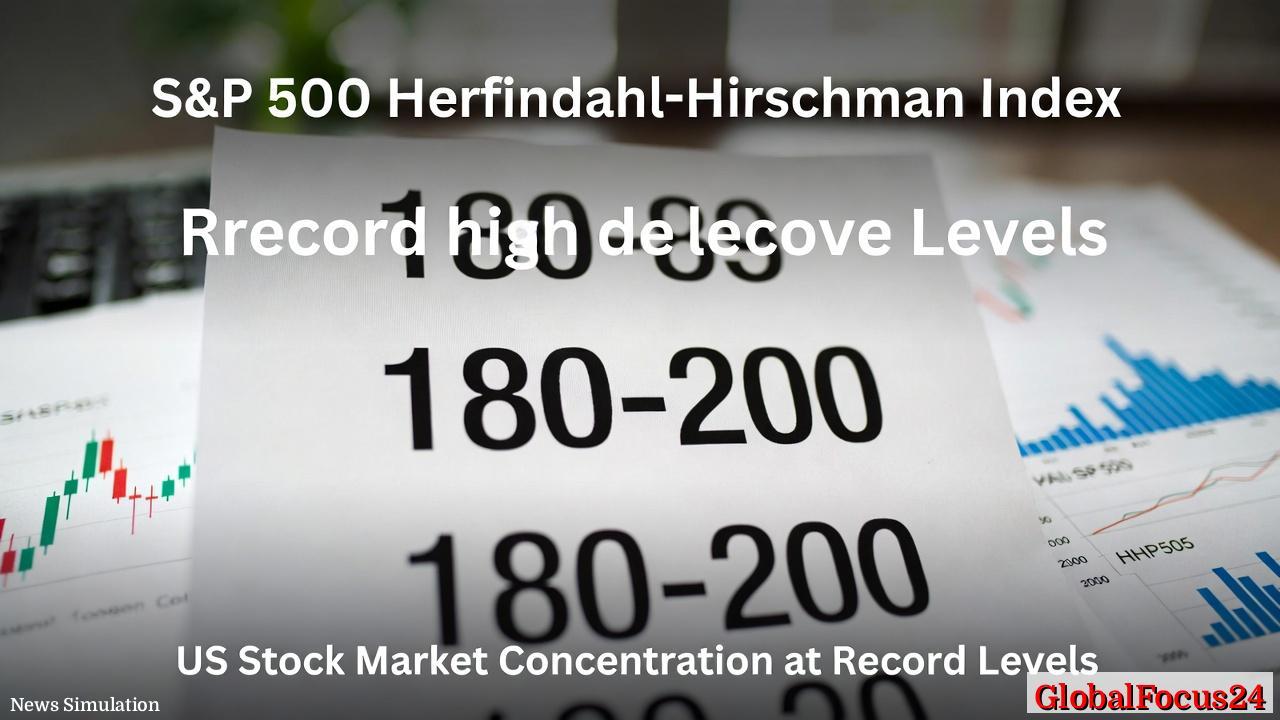
The measured concentration of the S&P 500 has climbed to levels not seen in recent history, according to the Herfindahl-Hirschman Index (HHI), signaling that a smaller set of large firms now accounts for a growing share of the index’s performance. The latest readings, based on Bloomberg estimates and ongoing economic analysis, show HHI values pushing into ranges around 180–200 on the index scale, a stark contrast to the more dispersed leadership of the 1990s and early 2000s. This shift has implications for investors, policymakers, and regional economies that rely on the health and direction of large-cap tech, financials, and consumer services giants that drive the benchmark.
Historical context helps frame this transformation. From the 1990s onward, the S&P 500 was characterized by broad participation across a wide swath of sectors, with relative market breadth often supporting diversification and more uniform risk-reward profiles for passive index strategies. Over time, however, a handful of behemoths—especially in technology, communication services, and select healthcare and financial services franchises—have grown disproportionately in market cap, earnings, and investor attention. As a result, even as the number of constituents remains large, the effective membership of the index—how many stocks truly drive the benchmark—has declined, leaving greater weight with a smaller cohort of leaders. The shift mirrors longer cycles in financial markets where scale and platform dominance concentrate capital flows, amplified by index fund and passive investing dynamics.
Economic impact emerges as a central question for this development. When a few firms carry a larger share of the index’s performance, the health of the broader market becomes more sensitive to the fortunes of those entities. Positive earnings, strategic acquisitions, and secular tailwinds for these dominant players can lift the entire benchmark, but any hiccup in the flagship names can reverberate through portfolios, retirement funds, and institutional holdings that track the index. This concentration effect may influence trading volumes, liquidity in certain pockets of the market, and the risk-reward calculus for passive vs. active management strategies. At the same time, the broader economy benefits if large-cap leaders translate innovation, productivity gains, and investment into tangible growth, job creation, and regional competitiveness—especially in technology hubs and urban centers where these firms have deep footprints.
Regional comparisons illuminate how this concentration unfolds beyond the national stage. In the United States, the concentration trend aligns with the dominance of a few technology and financial service giants, while other markets exhibit different patterns depending on sector composition, regulatory environments, and the maturity of growth industries. For example, in Europe and Asia, where market breadth has historically differed, concentration dynamics can vary due to structural differences in corporate ownership, capitalization, and the pace of digital transformation. Investors watching regional indices or sector-specific benchmarks often observe that the spillover effects of U.S. concentration are most pronounced in cross-border portfolios, where global funds reallocate toward the scale and liquidity offered by premier U.S. names. Such dynamics underscore the importance of regional context, especially for Santa Clara-area investors and regional economies that are closely tied to the performance of leading tech firms and their supply chains.
A closer look at the mechanics behind the shifting balance reveals several contributing factors. First, revenue and earnings growth have tended to consolidate around a smaller number of global platforms that command outsized market power, pricing leverage, and network effects. Their success often spells amplified earnings visibility and strategic flexibility, attracting a disproportionate share of capital and index inflows. Second, the rise of strategic capital deployment—ranging from buybacks to accelerated share issuance during favorable market conditions—can boost a few stocks more than the broader array of constituents. Third, macroeconomic conditions, including interest rate cycles, inflationary pressures, and global supply chain dynamics, have at times favored scale and defensible moats over more diversified but smaller players. Together, these elements create a feedback loop where concentration reinforces leadership in the index and shapes investor expectations for future performance.
The “effective membership” concept—derived from inverting the HHI to reveal how many stocks are truly driving the benchmark—offers a practical lens for assessing market breadth. When effective membership declines, the index’s moves may increasingly reflect the orientation of the core few rather than a broad market rally or pullback. This nuance matters for index-based investment strategies, risk management, and portfolio construction, as investors weigh the trade-offs between exposure to a concentrated set of leaders and the diversification benefits of a wider pool of constituents. For regional players in tech-rich corridors, including areas like Santa Clara County, the concentration dynamic translates into both opportunities and vulnerabilities—opportunities in collaboration, supplier networks, and talent ecosystems while also highlighting exposure to sector-specific shocks.
Historical patterns offer instructive benchmarks. In the late 1990s and the early 2000s, the S&P 500 exhibited moments of higher concentration during tech-driven booms and subsequent market corrections, yet those periods did not sustain the elevated concentration levels observed in recent years. The current trajectory, with HHI readings that imply a higher degree of market dominance by a limited set of names, underscores a structural shift in the composition of the benchmark and the role of mega-cap entities within it. Analysts emphasize that while concentration can accompany robust compound growth among leading firms, it also necessitates vigilant risk management for investors whose portfolios are tethered to the index’s performance through passive vehicles.
From a regional economic perspective, the implications of this concentration are nuanced. In tech-forward ecosystems like Silicon Valley, the success of a few marquee companies often spills over into job creation, supplier demand, and regional innovation activity. Yet, when market moves are driven predominantly by the same handful of firms, local economies may experience amplified sensitivity to corporate decisions, regulatory developments, and global demand cycles that affect those leaders. Businesses within the ecosystem—ranging from component manufacturers to service providers—may experience both elevated opportunities during expansions and heightened risk if a flagship company stumbles. Policymakers and regional planners watch these dynamics closely, seeking to balance incentives for entrepreneurship with resilience against sudden shifts in the fortunes of a small number of megacap players.
Industry observers also consider the broader implications for corporate governance and market competition. Higher concentration can spark discussions about competition policy, antitrust considerations, and the role of diversification in driving long-term market health. At the same time, it can prompt calls for enhanced transparency around index construction, measurement methodologies, and the interpretation of concentration metrics by investors. Clear communication about what the HHI and its inverse mean for the index’s underlying drivers helps market participants navigate expectations and build robust risk frameworks. As market structures evolve, so too does the emphasis on informed, evidence-based decision-making by asset managers, financial advisors, and institutional endowments that steward capital across regions.
In practical terms, what should readers take away from this concentration testimony? For individual and professional investors, the key takeaway is an enhanced awareness of market breadth and the potential implications for portfolio volatility and return dispersion. A highly concentrated benchmark can magnify the impact of a few corporates on overall performance, making due diligence on mega-cap leaders and their competitive positioning even more crucial. For regional communities with deep ties to the technology industry, the concentration dynamics translate into both structural advantages and exposure to sector-specific cycles, reinforcing the importance of diverse local ecosystems, education pipelines, and complementary industries to sustain long-term growth.
Looking ahead, analysts expect the concentration trend to persist as long as a handful of scale-driven platforms maintain differentiated competitive advantages, sustained monetization opportunities, and global reach. However, the market’s breadth remains a topic of ongoing discussion among investors who favor diversification and risk parity. The balance between leadership in the S&P 500 and the broader health of the U.S. equity market will likely continue to evolve in response to earnings trajectories, policy shifts, and shifts in global demand for technology-enabled services. For regional stakeholders, the evolving landscape underscores the need for adaptive business strategies, investment in workforce development, and strengthening ties between innovation clusters to maintain resilience and growth potential.
In summary, the latest readings on market concentration within the S&P 500 highlight a pivotal moment for investors, policymakers, and regional economies alike. The ascent of concentration, as captured by the HHI and its interpretation through effective membership, signals a market where leadership concentrates risk and opportunity in a smaller cadre of mega-cap firms. Understanding this dynamic—and its historical context, economic repercussions, and regional ramifications—offers a practical framework for navigating today’s complex equity environment while remaining mindful of the broader health and resilience of the economy. The evolving narrative invites ongoing monitoring of earnings momentum, competitive positioning, and policy developments that could shape the trajectory of the benchmark in the months ahead.