Retail Investors Drive Historic Silver ETF Surge as Prices Top $90 an Ounce
Record-Breaking Inflows Signal a New Phase for Precious Metals Markets
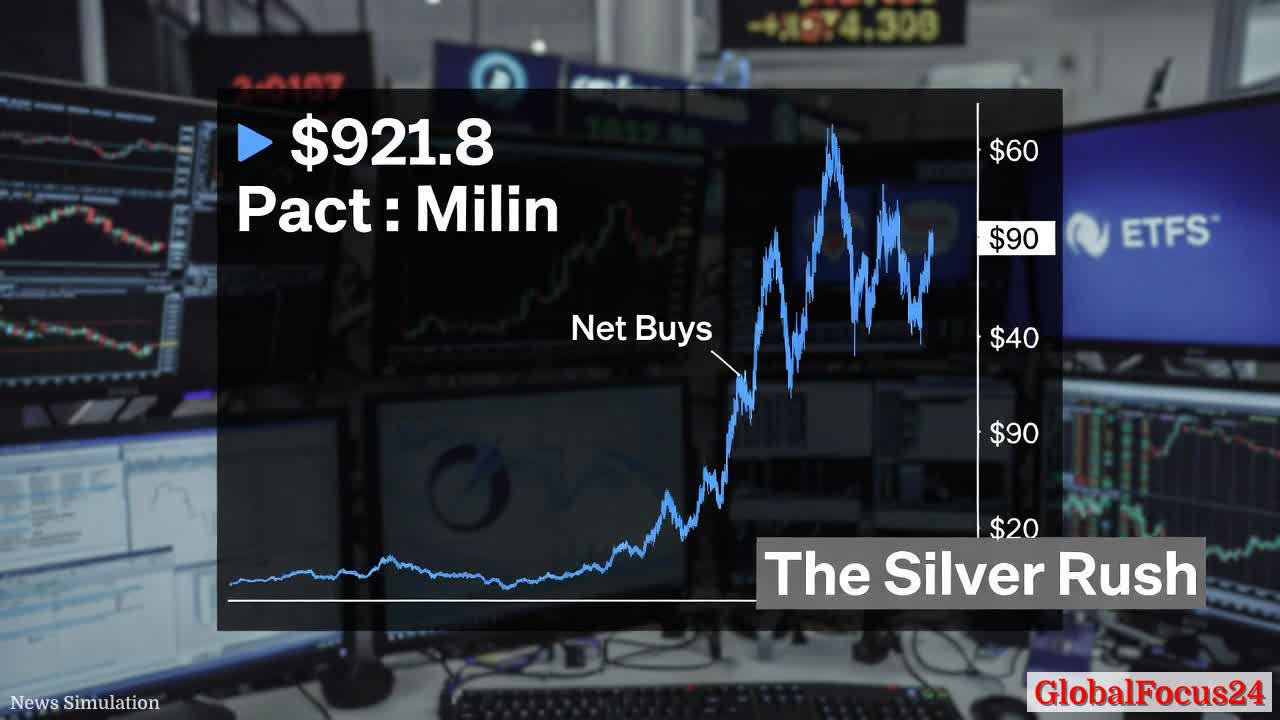
Retail investors have poured an unprecedented $921.8 million into silver-backed exchange-traded funds (ETFs) over the past 30 days, marking the largest monthly inflow ever recorded. The bulk of these funds has been directed toward the iShares Silver Trust, which has now logged an extraordinary 169 consecutive days of positive net buying. The momentum culminated in a single-day inflow of $69.2 million—its second-largest on record—signaling a powerful shift in retail sentiment toward precious metals as 2026 begins.
This dramatic surge in investor participation comes as silver prices have soared to levels not seen in more than four decades. After climbing steadily through the final quarter of 2025, silver breached the $93 per ounce mark in early January before stabilizing near $90, up sharply from price averages near $30 just a few years earlier. The pace and scale of this advance have caught both institutional traders and analysts off guard, underscoring renewed demand for hard assets in a volatile global economy.
The iShares Silver Trust at the Center of the Rally
Launched in 2006, the iShares Silver Trust (SLV) has long served as the primary vehicle for investors seeking exposure to physical silver without owning the metal directly. The fund’s recent performance illustrates its dominant role in channeling retail and institutional capital toward silver markets. The sustained streak of daily net inflows—stretching nearly half a year without interruption—is unprecedented for any precious metal ETF.
ETF analysts note that this consistent buying pressure has amplified price momentum across global silver markets. “We have not seen this kind of persistent inflow, day after day, in over a decade,” one market strategist observed. “It reflects not just speculative enthusiasm but a deeper conviction among retail investors that silver remains undervalued relative to gold and industrial commodities.”
The inflows have pushed the trust’s total holdings to their highest level since 2021, when a social media-driven surge briefly sent silver prices skyrocketing during the retail trading boom that also enveloped certain stocks. This time, however, the backdrop is notably different: rather than a short-lived frenzy, analysts describe today’s demand as broad-based and structurally supported by both macroeconomic and industrial trends.
Silver’s Dual Role: Safe Haven and Industrial Powerhouse
Silver occupies a unique position in the global economy as both a precious metal and an essential industrial input. Its dual role has made it increasingly attractive amid persistent inflation, rising geopolitical tensions, and accelerating investment in renewable energy technologies.
As a hedge against currency depreciation, silver has historically moved in tandem with gold during periods of economic uncertainty. However, while gold’s performance over the past year has plateaued, silver’s appeal has been bolstered by growing industrial demand. The metal’s conductivity and reflectivity make it indispensable in solar panels, electric vehicles, and advanced electronics—all sectors experiencing rapid expansion.
In particular, the global push toward decarbonization has amplified consumption forecasts for silver. According to industry analysts, photovoltaic manufacturing alone accounted for more than 15% of silver demand in 2025, a figure expected to rise significantly over the next decade. This structural demand, combined with constrained mine supply and lower above-ground inventories, has added fundamental strength to silver’s current rally.
Economic Forces Behind the Retail Rush
The sharp rise in retail participation mirrors broader economic undercurrents shaping financial behavior worldwide. Persistent inflation in major economies, uneven equity market performance, and a softening U.S. dollar have encouraged investors to diversify into tangible assets. Silver’s lower price per ounce relative to gold has made it a more accessible store of value for small investors seeking inflation protection.
In addition, online trading platforms and commission-free brokerage models have lowered barriers for retail participants. Communities of retail traders, often active on social media, have amplified the narrative around silver as an overlooked asset class with asymmetric upside potential. This dynamic, while reminiscent of the 2021 retail movement, is unfolding in a more mature and economically grounded context, driven less by viral enthusiasm and more by sustained macroeconomic drivers.
Economists also point to interest rate expectations as a key factor. With central banks signaling potential policy shifts after years of tightening, the weakening yield advantage of cash and bonds may be pushing investors toward metals that can preserve value during periods of policy transition. The real interest rate environment remains a closely watched variable for precious metal traders, and silver appears particularly sensitive to its fluctuations.
Comparing Global Precious Metal Trends
The surge in silver prices stands out even against the broader backdrop of strong performance across the precious metals complex. Gold, the traditional benchmark for safe-haven investment, has continued its steady climb, hovering near historical highs above $2,200 per ounce. However, silver’s much sharper percentage gains—nearly tripling in two years—have rekindled discussions about the long-term gold-to-silver ratio, which has compressed from over 80 in 2022 to below 25 today.
This shift indicates that investors are re-evaluating silver’s relational value relative to gold, driven by both speculative and structural factors. In Asia, particularly in India and China, rising middle-class incomes and seasonal jewelry demand have reinforced physical silver consumption. Meanwhile, European buyers have increased their holdings through ETFs and certified bars, viewing silver as a hedge against energy price volatility and geopolitical instability.
Latin American economies, home to some of the world’s largest silver producers including Mexico and Peru, are also experiencing renewed attention from investors. Production costs, environmental regulations, and labor challenges in these regions could influence global supply dynamics if demand remains elevated. Analysts note that any disruption in major mining operations could tighten the market further, intensifying upward price pressure.
Historical Context: Silver’s Cyclical Surges
Silver’s latest rally is not without precedent. The metal’s history is punctuated by sharp cyclical surges, often triggered by macroeconomic inflection points. In 1980, silver spiked above $50 per ounce during a speculative rush driven by inflation fears and heavy accumulation by the Hunt brothers. More recently, in 2011, silver again touched near $50 amid post-financial-crisis stimulus and heightened investor interest in commodities.
The present rally differs in scale and composition. Whereas previous spikes tended to stem from short-term speculation or concentrated buying, today’s ascent reflects a confluence of structural factors—industrial demand, constrained supply, and changing retail investment behavior. Moreover, inflation-adjusted comparisons reveal that even at $90, silver remains below its 1980 peak in real terms, suggesting room for further growth if momentum holds.
Industrial Supply Constraints and Long-Term Outlook
On the supply side, silver mining operations have struggled to keep pace with rising consumption. Many of the world’s largest mines are also primary producers of other metals such as lead, zinc, or copper, meaning silver is often a byproduct rather than the main extraction target. As a result, higher demand does not automatically trigger proportional increases in production.
Declining ore grades, environmental restrictions, and higher energy costs have added layers of complexity for producers. The World Silver Institute reported a third consecutive annual supply deficit in 2025, with inventories continuing to draw down into early 2026. Such conditions have magnified the impact of ETF inflows on spot prices, as even small capital surges can accelerate price swings in a tightening market.
Looking forward, analysts see potential for silver to maintain elevated levels if both industrial and monetary demand remain strong. While volatility is likely, the metal’s expanded role in emerging technologies could anchor a higher long-term price base compared with historical averages.
Investor Sentiment and Market Psychology
Retail sentiment remains overwhelmingly bullish, though some cautionary voices have emerged. Technical indicators show overbought conditions in the short term, and a period of consolidation is possible as traders take profits. Still, the depth of recent inflows suggests that the underlying conviction is substantial, with many investors viewing pullbacks as accumulation opportunities rather than exit signals.
Market psychologists have highlighted that silver’s appeal often extends beyond purely financial motives. For many retail investors, holding silver carries symbolic value—representing independence from fiat systems and a tangible form of wealth preservation. This blend of emotional and rational motivation has historically sustained demand cycles longer than fundamentals alone would predict.
Outlook: Can Silver Sustain Its Momentum?
As 2026 advances, market participants are watching whether silver can sustain its remarkable ascent or if profit-taking and macro shifts might temper enthusiasm. Factors including global interest rate trajectories, manufacturing growth in Asia, and continued demand from renewable energy sectors will be central to its trajectory.
Regardless of short-term fluctuations, the recent record-breaking inflows into silver ETFs demonstrate a profound change in how retail investors perceive tangible assets. For now, silver has reclaimed the spotlight among precious metals—its surge not merely a reflection of speculation, but of deeper structural forces resonating across markets worldwide.