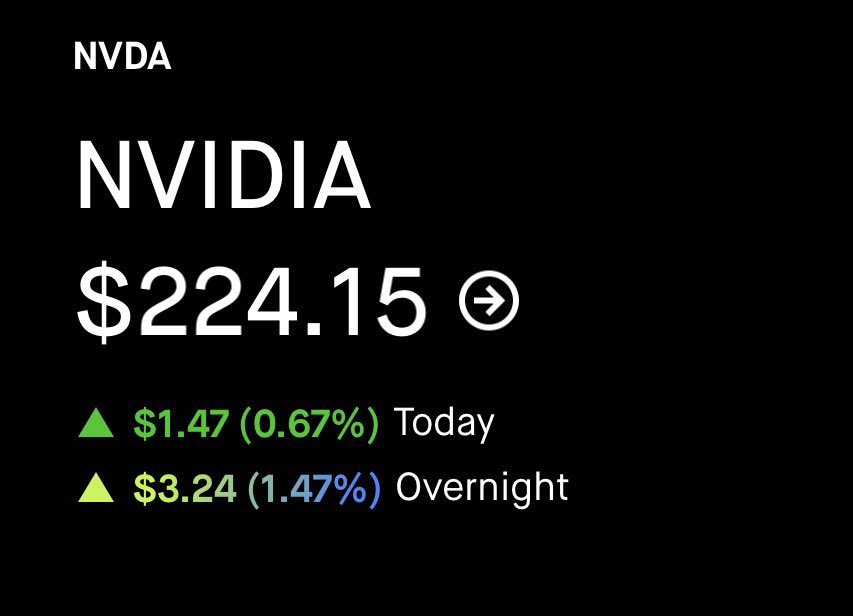
Nvidia Surges to Record High Amid AI Boom and Geopolitical Shifts
Nvidia Corp. surged to an all-time high as market optimism intensified around the company’s role in the global artificial intelligence ecosystem and the evolving U.S.-China technology landscape. The stock advance sent the company’s market capitalization toward unprecedented levels, underscoring investor enthusiasm for chips that power AI workloads, data centers, and high-performance computing. The latest price action arrives in a broader context of semiconductor supply dynamics, corporate strategy, and policy developments that influence the trajectory of one of the world’s most valuable technology brands.
Historical context: Nvidia’s ascent and the AI demand cycle
Nvidia’s rise in the public market has tracked a long arc of innovation in semiconductors, software ecosystems, and AI deployment. Beginning with its early dominance in graphics processing units (GPUs) for gaming, the company broadened its reach into parallel computing architectures that enable complex machine learning tasks. Over the past several years, Nvidia has transitioned from a hardware-centric, gaming-focused player to a cornerstone of enterprise AI infrastructure. Data center demand for GPUs to accelerate training and inference has become a primary driver of revenue growth, while strategic product generations—paired with robust software platforms—have expanded the company’s addressable market across industries such as healthcare, finance, manufacturing, and research.
The latest market movement reflects a convergence of factors that often accompany a major tech megacap: a recognition that AI-driven productivity gains will require specialized hardware, a perception that Nvidia is uniquely positioned to supply critical components, and a broader willingness among investors to attach high multiple valuations to secular growth stories. In this environment, Nvidia’s market value has grown to levels that place it among a handful of global corporate leaders by market capitalization, illustrating the lasting impact of AI-enabled computing on asset pricing and capital allocation.
Economic impact: ripple effects across supply chains and markets
The surge in Nvidia’s value carries implications beyond a single company. A few key channels illustrate the economic footprint of its AI hardware cycle:
- Capital investment in data-center infrastructure: As enterprises scale AI workloads, there is rising demand for server deployments, networking capabilities, and optimized cooling and power solutions. Nvidia’s accelerators, combined with software frameworks and developer ecosystems, help justify and accelerate capex in enterprise IT budgets. This translates into opportunities for cloud providers, equipment manufacturers, and system integrators that cater to AI-ready data centers.
- Innovation spillovers and productivity gains: AI accelerates performance in research and development across sectors. organizations that leverage Nvidia-powered platforms may accelerate drug discovery, climate modeling, logistics optimization, and financial analytics. These improvements can influence productivity metrics, potentially impacting growth trajectories for consumer and business services that rely on faster, more capable computational capabilities.
- Regional competitiveness and supplier dynamics: Regions that cultivate AI-focused hardware ecosystems—through research institutions, talent pipelines, and favorable policy environments—stand to attract investment and high-value manufacturing. The geographic distribution of AI computing supply chains remains a strategic consideration for policymakers and industry participants alike, highlighting the importance of regional comparisons in assessing economic resilience.
- Stock market breadth and capital access: The performance of a single AI leader can influence broader investor sentiment toward technology equities, potentially affecting capital flows into semiconductor equities and adjacent tech sectors. While the valuation of a few marquee firms can set benchmarks, market participants remain mindful of the sensitivity of high-growth equities to macroeconomic developments, interest-rate trajectories, and global trade dynamics.
Regional comparisons: AI hardware leadership across geographies
Global competition in AI hardware is dispersed across several hubs, each with distinguishing advantages:
- United States: Home to many design and software frontiers, the U.S. remains a central node for high-performance computing, AI software ecosystems, and venture-backed startups. The coexistence of strong R&D institutions, a deep talent pool, and a robust venture and public market environment supports ongoing innovation in AI accelerators and related technologies.
- Asia-Pacific: The region hosts significant manufacturing capacity and a rapidly expanding base of AI developers. Countries with large semiconductor manufacturing ecosystems have pursued investments to strengthen supply chains, balance trade considerations, and foster collaboration between academia and industry. The region’s pace of AI adoption in enterprise settings creates a vibrant demand backdrop for the next wave of accelerator architectures.
- Europe: European players emphasize a combination of computational capabilities and privacy-conscious AI deployment. Government-backed initiatives and collaboration across universities and industry aim to accelerate AI research while addressing regulatory and ethical considerations. The regional market presents both opportunities and challenges for hardware providers seeking to establish strong local footprints.
- Other markets: Emerging tech hubs in various regions contribute to a diversified global supply chain, reflecting the interconnected nature of AI development. As ecosystems mature, cross-border partnerships and harmonization of standards will influence how hardware, software, and services are delivered to end users.
Industry dynamics: demand drivers and competitive landscape
Several forces shape Nvidia’s position within the broader AI hardware ecosystem:
- GPU performance and software integration: Nvidia’s continued emphasis on processor performance, energy efficiency, and developer-friendly software ecosystems remains central to its competitive edge. The alignment of hardware capabilities with software toolchains determines the practicality and speed of AI model deployment across industries.
- Alternative architectures and competition: While Nvidia dominates many segments of the AI accelerator market, competitors and alternative approaches—such as specialized accelerators and emerging architectures—continue to shape pricing, feature sets, and the pace of innovation. The competitive landscape influences product roadmaps and strategic partnerships.
- Supply chain resilience: The semiconductor supply chain has faced periodic constraints and geopolitical considerations. Companies that invest in diversified manufacturing, inventory planning, and supplier relationships can mitigate disruptions and sustain customer commitments during peak demand.
- Policy and export controls: Government policies governing technology transfers and strategic exports can influence the availability of advanced chips to certain markets. Companies operating in this space navigate a complex policy environment that can affect pricing, lead times, and regional access to essential components.
Public reaction and market sentiment: broader implications for stakeholders
Investor communities, employees, customers, and partners watch these developments with a mix of optimism and caution. The market’s exuberance around Nvidia’s growth prospects reflects confidence in AI-enabled productivity and the potential for new business models built around intelligent computing. At the same time, stakeholders recognize that sustained growth will depend on factors such as supply chain stability, platform interoperability, and continued advancement in AI safety and governance practices. The public’s response often mirrors this complexity, combining enthusiasm for technological progress with prudent attention to managing risk and ensuring broad-based benefits.
Performance and prospects: what to watch next
Several indicators will help gauge Nvidia’s near-term trajectory and the health of the wider AI hardware market:
- Revenue growth and mix: Analysts and investors will monitor quarterly results for changes in revenue, particularly the contribution from data center GPUs, software subscriptions, and the value of enterprise agreements. A shift in revenue mix toward higher-margin software and services can influence profitability trends.
- Gross margins and operating efficiency: Profitability metrics will be scrutinized to determine how well the company translates top-line growth into sustainable earnings. Cost management, manufacturing efficiencies, and the impact of supply chain dynamics will factor into these assessments.
- Product roadmap and partnerships: New generations of accelerators, system-level architectures, and collaborations with cloud providers or enterprise customers can influence demand and adoption rates. Timelines for product launches and proof points from pilot deployments will be important signals.
- International policy developments: Policy shifts affecting semiconductor exports, technology transfers, and cross-border research collaborations can reshape the addressable market for Nvidia’s products. Investors will weigh potential scenarios that could either unlock greater access to key markets or introduce new constraints.
- Market valuations and risk factors: Given the outsized multiples often assigned to AI-enabled growth stories, assessment of valuation discipline, macroeconomic risks, and competition will remain relevant. Market participants may pay close attention to interest-rate trajectories, inflation, and global trade tensions that influence the cost and availability of capital.
Conclusion: a pivotal moment in AI-enabled infrastructure
Nvidia’s record-setting market capitalization underscores a turning point in how the market values AI-enabled infrastructure. The company’s role as a catalyst for enterprise-scale AI deployments—paired with a broader ecosystem of software, services, and hardware—is shaping investment decisions, strategic partnerships, and regional development strategies. As global demand for advanced computing continues to rise, Nvidia’s trajectory will likely remain intertwined with the evolution of AI across industries, the resilience of supply chains, and the policy environment governing international technology trade. Stakeholders across the technology and investment communities will be watching closely as the AI era continues to unfold, driven by relentless innovation and a dynamic, interconnected global economy.