Record Number of Americans Working Two Full-Time Jobs Nears All-Time High
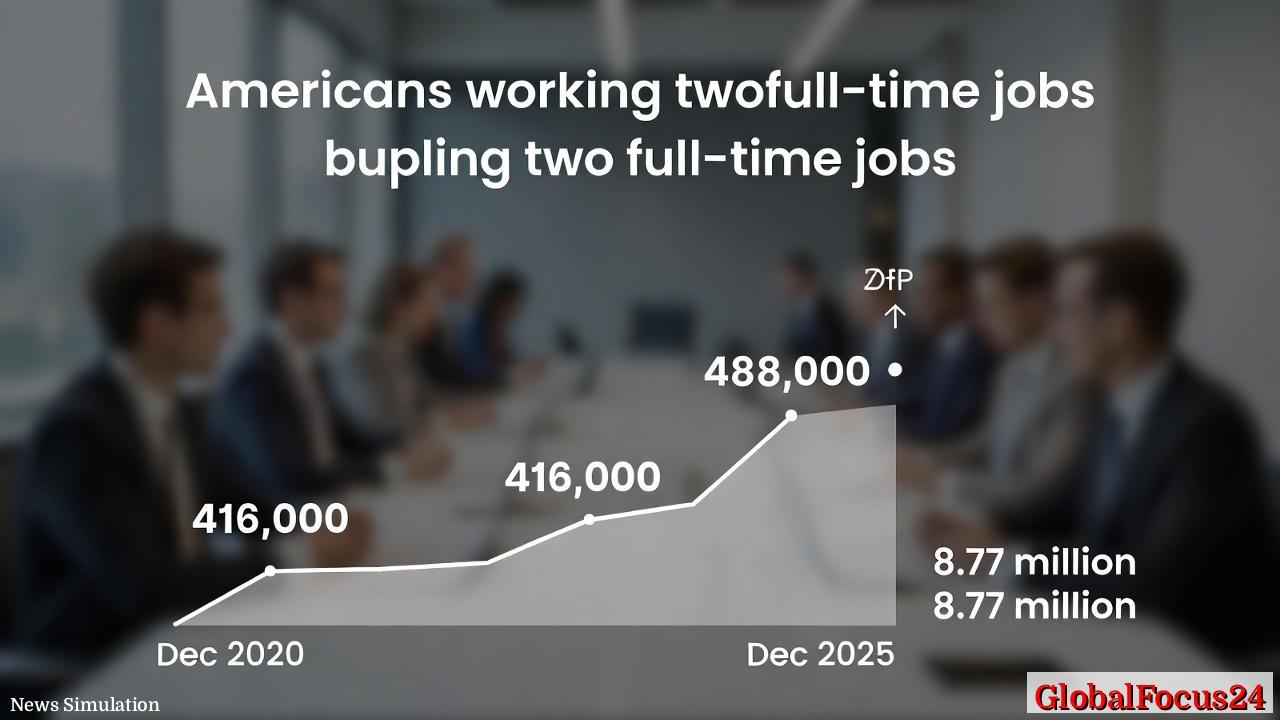
The number of Americans holding two full-time jobs has surged to 476,000, approaching an all-time record and underscoring intensifying pressure on U.S. households. This figure, revealed in the latest federal employment data, falls just short of the 488,000 mark recorded in December 2025 — the highest on record. It marks the second-largest total since tracking began, signaling both resilience and strain across the labor market.
A Growing Segment of the Workforce
The trend reflects a broader rise in multiple jobholding. In total, 8.77 million Americans are now working more than one job — a number that exceeds levels seen during the 2008 financial crisis by roughly 700,000. Among them, a growing subset are managing two full-time roles simultaneously, often clocking more than 80 hours a week to keep pace with mounting living costs.
Since 2020, the number of workers holding dual full-time positions has nearly doubled. During the height of the Dot-com bubble in July 2000, that total reached 416,000 — a benchmark that stood for two decades before being surpassed in the post-pandemic economy. The new figures reveal how shifting economic realities, remote work flexibility, and persistent inflation have reshaped Americans’ relationship with labor and income.
Changing Patterns in Post-Pandemic Employment
The rise of hybrid and fully remote employment models has made it easier for some workers to balance two demanding roles. Professionals in technology, customer service, and creative industries have quietly taken advantage of this flexibility, working overlapping schedules or alternating focus between employers. Social media has given rise to the term “overemployment,” describing workers who maintain multiple full-time positions under the radar.
While this practice gained notoriety during the pandemic, the latest data suggests that “overemployment” may be evolving from an internet phenomenon into a structural feature of the labor market. For many, it’s not a lifestyle experiment but a financial necessity. Soaring costs in housing, healthcare, and childcare continue to outpace wage growth, pushing even high-skilled professionals to seek additional streams of income.
Historical Context: Echoes of Economic Shifts
Looking back, surges in multiple jobholding often coincide with periods of economic transition. In the late 1990s, a booming tech economy drew workers into side ventures and new entrepreneurial roles, lifting the number of multi-job workers to what was then a record. In the wake of the 2008 financial crisis, the figure rose again as households scrambled to recover lost income.
Today’s increase carries a different signature. The unemployment rate remains historically low — below 4% for much of the past two years — yet wage growth has not kept up with cumulative inflation since 2021. Real purchasing power has stagnated, leaving some workers seeking additional jobs even while full-time employment remains readily available.
Inflation and the Cost of Living Squeeze
One of the most significant forces behind the rise in double full-time employment is cost pressure. Although inflation has cooled from its 2022 peak, prices remain elevated, particularly in housing and essential services. Rent in major metropolitan areas such as New York, Los Angeles, and San Jose has climbed more than 25% since 2020, far outpacing average wage growth. Childcare costs have risen by over 30% nationwide, while grocery and utility bills remain stubbornly high.
As a result, middle-income families — once considered stable — are increasingly experiencing financial vulnerability. Many Americans who turn to a second full-time job are attempting to preserve savings, pay off debt, or meet mortgage obligations. Rising credit card balances, now topping $1.3 trillion, reflect the same pressure.
Regional Comparisons and Economic Dynamics
Regional differences also play a role in the growing phenomenon. In high-cost states such as California, Massachusetts, and Washington, workers are more likely to hold two full-time jobs, particularly in technology and professional services. By contrast, in regions with lower living costs, such as the Midwest and parts of the South, dual full-time employment often arises in healthcare, logistics, or education, where staffing shortages make extra hours readily available.
In California, for instance, significant portions of the technology workforce transitioned to remote roles during the pandemic. According to local labor economists, the ability to juggle multiple full-time positions became technically feasible for the first time in decades. Yet even in smaller markets, such as Kansas City or Birmingham, rising rents and property taxes have driven a similar search for secondary income.
Broader Labor Market Implications
Economists are divided on how to interpret the surge. Some view it as an indicator of worker adaptability — evidence that Americans are responding creatively to financial headwinds. Others see potential warning signs that could foreshadow burnout, reduced productivity, and unreported conflicts of interest between employers.
Despite these concerns, the trend also signals an economy operating at full tilt. Job vacancies remain high, and employers — particularly in service industries — continue to report difficulty finding enough staff. In such an environment, workers seeking extra hours or an additional position often find opportunities quickly, sometimes negotiating remote or part-time flexibility to accommodate dual roles.
The Challenge of Measuring True Workload
Tracking multiple full-time jobholders is complex. Federal labor data categorize “multiple jobholders” broadly, ranging from individuals combining part-time and full-time work to those with two demanding full-time positions. The subset of 476,000 individuals juggling dual full-time schedules only scratches the surface of how Americans are stacking employment arrangements.
Analysts note that the figure may undercount reality. Workers often avoid disclosing secondary employment to avoid contractual violations or reputational risk. The actual number of dual full-time earners could therefore be significantly higher than official statistics indicate, particularly in sectors that rely on remote work and independent contracting.
A Reflection of Shifting Work Culture
Beyond the numbers, the rise in double full-time employment may represent a transformation in work culture itself. For decades, multiple jobholding was associated primarily with lower-wage earners seeking to make ends meet. Today, it spans entire strata of the labor force, including engineers, marketers, and analysts. The blending of personal and professional time — accelerated by home offices and digital connectivity — has made long working hours both more feasible and more common.
However, labor advocates warn that the costs are steep. Sustained 70-to-80-hour workweeks can lead to physical and mental exhaustion, deteriorating work quality, and weakened family dynamics. As more workers blur the line between side income and secondary careers, the need for labor protections, clearer employer policies, and access to mental health support may rise sharply.
Comparing to International Trends
The United States is not alone in facing this shift. Similar increases in multiple jobholding have appeared in developed economies such as Canada, the United Kingdom, and Australia. In these markets, inflation shocks and rising housing costs have mirrored U.S. dynamics, driving workers to seek supplementary employment. However, the American case is distinct in scale and speed, reflecting both the size of its labor market and the rapid spread of remote work technology.
In Europe, stricter labor regulations and employer oversight have slowed the growth of dual full-time employment. In the U.S., where labor contracts are generally more flexible, the practice has expanded with minimal institutional friction. That cultural difference may amplify the trend as digital platforms continue to enable multiple streams of salaried work.
Potential Economic Consequences
While more Americans working two full-time jobs may temporarily boost disposable income and consumer spending, it could also mask deeper imbalances in the labor economy. Household savings rates remain well below pre-pandemic levels, suggesting that additional income is often going toward maintaining rather than improving living standards. Moreover, as hours worked per person rise, the risk of long-term burnout could pose challenges for workforce sustainability.
Some economists warn that the dual full-time job trend could dampen productivity growth in the long run. When employees operate beyond normal capacity, innovation and performance may suffer. Businesses might face rising turnover rates and difficulty maintaining consistent standards of work output. At the same time, the phenomenon may distort wage data, giving the appearance of stable income even as cost pressures erode real purchasing power.
Looking Ahead
Whether the number of Americans holding two full-time jobs continues to climb will depend on several forces: inflation trends, wage adjustments, and the persistence of remote work. If consumer prices stabilize and real wages begin to recover, the necessity of a second full-time income may recede. On the other hand, if affordability challenges persist — particularly in housing — many workers may find little choice but to maintain punishing schedules well into the future.
As the U.S. economy navigates this new era of labor intensity, the dual full-time jobholder stands as both a symbol of modern flexibility and a warning sign of economic strain. The resilience of American workers remains evident, but so does the pressure they face to keep pace with an evolving economy that demands more time, energy, and commitment than ever before.