Record Inflows Surge into Emerging Markets ETFs Amid Global Reallocations
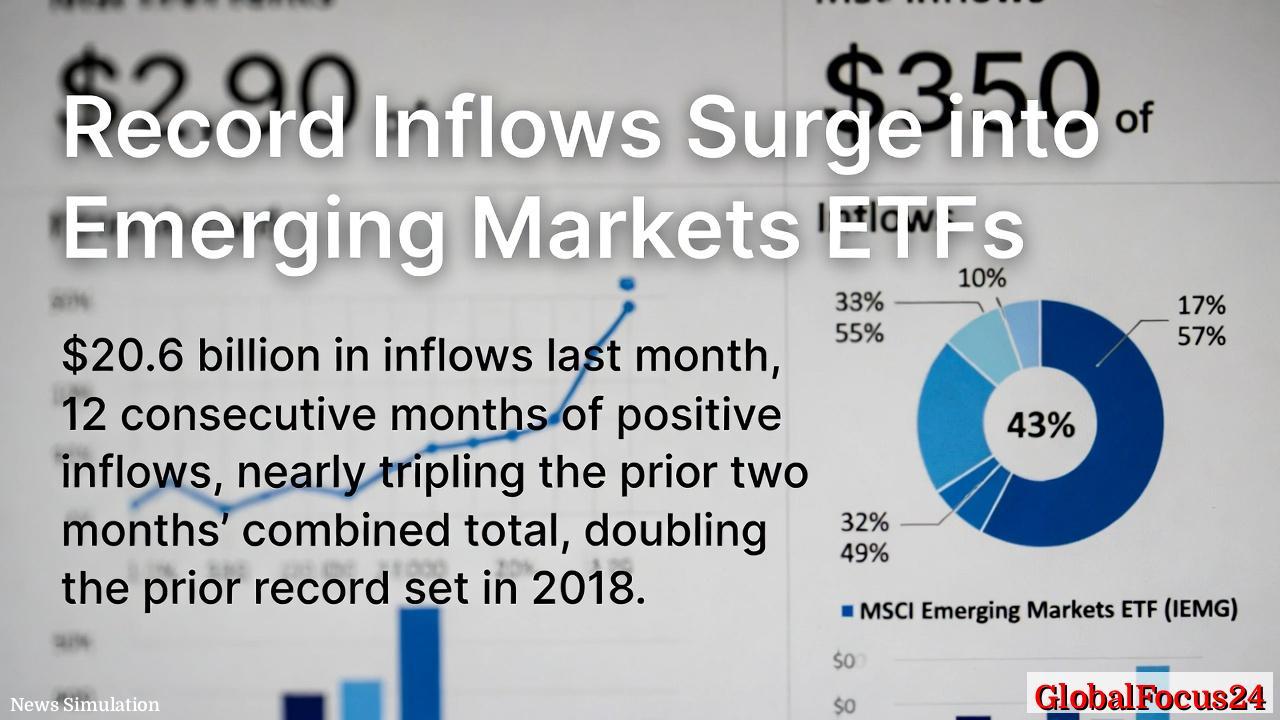
In a watershed moment for global asset allocation, investors funneled a record $20.6 billion into emerging markets exchange-traded funds (ETFs) in the latest monthly tally. The figure, which marks the largest single-month inflow on record, extends a sustained streak of positive momentum that has persisted for 12 consecutive months. The surge underscores a broad reevaluation of growth prospects in developing economies, driven by improving macro data, favorable policy environments, and shifting risk appetites among global investors.
A New Milestone for Emerging Markets ETFs
The scale of the January inflows signals a decisive shift in the market’s appetite for emerging market exposure. Within the broader category, the MSCI Emerging Markets ETF, known by its ticker IEMG, captured $8.9 billion of inflows—roughly 43% of the total. This level of buy-side demand is notable for its breadth: IEMG covers 24 emerging market economies, offering regional diversification that appeals to investors seeking exposure to a heterogeneous group of growth drivers beyond traditional developed-market benchmarks. The ETF’s intake represents its strongest monthly cycle since its inception in 2012, highlighting the perseverance of capital flows into developing economies despite cycles of global volatility.
Market response was swift. The MSCI Emerging Markets Index advanced 8.8% in January, marking its strongest start to a calendar year since 2012. The performance reflects a confluence of factors: improving earnings visibility among multinational corporations with significant exposure to Asia, Latin America, and parts of Africa; a more accommodative stance from policymakers amid inflationary pressures; and a global labor market that remains resilient enough to sustain consumer demand across multiple regions. For many investors, the encouraging start to the year validated a thesis that emerging markets can offer compelling growth at a more attractive price point relative to developed markets, particularly when core inflation cools and real yields compress.
Historical Context: Lessons from Prior Cycles
To appreciate the current inflows, it helps to consider historical patterns in emerging markets investing. The late 2000s and early 2010s were defined by periods of exuberance followed by retrenchment, as capital cycles swung between risk-on and risk-off after global shocks. In more recent years, inflows into emerging markets ETFs have often traced the health of domestic macro engines—growth momentum, consumer demand, and fiscal and monetary policy credibility. The January surge is consistent with a broader pattern of investors rotating into geographic regions that exhibit improving balance-of-payments dynamics, burgeoning middle-class consumption, and a diversified revenue base for multinational firms.
Economies beyond the obvious growth engines—China, India, and Brazil—have increasingly attracted investor attention. Southeast Asia’s digital and manufacturing transitions, Africa’s resource-driven growth, and Latin America’s restructuring of energy, infrastructure, and technology sectors have contributed to a multi-speed global growth story. In that context, ETFs that bundle diverse markets provide a convenient vehicle for participating in a range of trajectories without over-concentrating risk in any single country. The latest inflows demonstrate that market participants are comfortable with this approach when signals point toward sustainable earnings trajectories, improving governance, and the potential for currency resilience.
Economic Impact: Capital Flows and Market Liquidity
The impact of record ETF inflows on emerging markets is multifaceted. On one hand, stronger demand for EM assets tends to lift liquidity conditions in local markets, easing the execution of large trades and potentially narrowing bid-ask spreads. This can support more efficient price discovery and lower trading costs for participants, from institutions to individual investors. On the other hand, when inflows surge in a short period, there is a heightened need for monitoring to ensure that liquidity remains balanced across asset classes, especially during episodes of global risk appetite reversal or sudden shifts in macro sentiment.
Currency markets often respond to sustained inflows as well. A broader allocation into EM equities can exert upward pressure on local currencies, particularly in countries with credible monetary frameworks and solid external balances. While currency movements can introduce added volatility for USD-based investors, diversification benefits from owning assets denominated in a basket of emerging market currencies can help dampen overall portfolio risk if managed with appropriate hedging and risk controls.
Sector and Style Implications
Within the EM ETF cohort, exposure is inherently diversified across sectors, regions, and company sizes. The January inflow momentum may reflect several thematic drivers:
- Structural reforms in several EM economies aimed at attracting investment and raising productivities, such as improvements in rule of law, governance, and anti-corruption measures.
- The technology and consumer sectors' growth, including e-commerce and financial technology, which have shown resilience and expansion potential even amid global inflationary pressures.
- A tilt toward cyclical and export-oriented industries in regions benefiting from global manufacturing rebounds and recovering commodity demand.
- A continuing search for value in markets where price-to-earnings multiples are pricing in slower growth relative to the actual or anticipated acceleration in economic activity.
Investors commonly use EM ETFs as a way to access a broad set of growth opportunities while mitigating idiosyncratic risk associated with single-country bets. The latest inflows suggest that investors are embracing this balance, seeking exposure to a diversified growth engine rather than pinning bets on a handful of high-profile markets.
Regional Comparisons: Where the Funds Flowed
While IEMG captured a sizable portion of the inflows, regional dispersion within the EM bucket remains important. Historically, Asia has been a dominant driver of EM growth, with manufacturing, exports, and service sector expansion undergirding sentiment. In contrast, Latin America and parts of Europe and the Middle East offer different dynamics—commodities cycles, domestic consumer demand, and infrastructural investments—that influence ETF inflows in varied ways.
- Asia-focused emerging markets tend to benefit when global demand for electronics, autos, and consumer goods improves, as well as when policymakers maintain credible inflation targets and stable financial conditions.
- Latin American markets are often more sensitive to commodity prices, fiscal discipline, and external financing conditions, with currency movements closely tied to global risk sentiment and commodity cycles.
- Eastern Europe and the Middle East present a mix of energy-based economies and transition-era markets where policy clarity and investment in key sectors can shift capital flows significantly.
Long-Term Growth Outlook: What the Inflows Imply
The sustained inflows into EM ETFs suggest a long-run investor view that emerging markets can deliver productive growth, benefiting from young and expanding workforces, urbanization trends, and ongoing digital transformation. However, this outlook is not without caveats. Global macro factors—interest rate trajectories, dollar strength, geopolitical tensions, and commodity price volatility—continue to shape the risk-reward profile for EM assets. As central banks recalibrate policy, inflation dynamics in major economies will influence cross-border capital flows. In this environment, EM equities may continue to outperform when investor confidence is buoyed by tangible progress in structural reforms, improved governance, and credible macroeconomic stewardship.
Investor Demand Drivers
Several forces appear to be sustaining the current wave of inflows:
- Relative valuation: EM equities often trade at attractive multiples compared with developed markets, offering potential for higher earnings growth given rising domestic demand in many economies.
- Economic cycles: A synchronized but differentiated global recovery can lift exports and manufacturing activity in EMs, especially those with diversified trade links and solid commodity positions.
- Policy backdrop: If monetary and fiscal policies in major EMs align toward growth stabilization and financial stability, investor confidence can strengthen, encouraging further allocations to EM assets.
- Risk diversification: As global portfolios seek to balance risk, EM equities provide diversification benefits due to their distinct economic cycles and exposure to rapid urbanizing consumer markets.
Market Participants and Tactical Considerations
The January inflows likely reflect a mix of institutional and retail investor behavior. Institutional buyers, including pension funds and sovereign wealth funds, often pursue diversified exposure to growth-oriented assets with moderate correlations to traditional risk factors. Retail investors, increasingly comfortable with ETF structures, may be attracted by accessible liquidity, transparent pricing, and the potential for cost-efficient exposure to a broad market basket.
Tactically, investors monitoring EM ETFs should consider several factors:
- Currency risk management: Diversification across currencies and hedging strategies can help mitigate currency-driven volatility.
- Economic indicators to watch: Inflation trends, fiscal policy signals, and external current account balances provide clues about the health of EM economies.
- Liquidity and trading costs: While ETFs generally offer strong liquidity, evaluating tracking error and fund-level liquidity remains prudent, especially during periods of sudden capital shifts.
- Regional exposure balance: Maintaining a diversified regional mix can help manage idiosyncratic country risks while capturing broad growth themes.
Public Reaction and Market Sentiment
The record inflows have generated a mix of optimism and careful caution among market participants. Investors welcomed the clear signal that demand for emerging markets remains robust, even amid a shifting global policy backdrop. Analysts pointed to the breadth of participation, suggesting that the phenomenon reflects a broader search for growth opportunities outside mature markets. At the same time, market watchers emphasized the need for discipline, noting that sustained inflows require continued improvements in macro resilience, corporate governance, and currency stability across EM economies.
Comparative Performance and Benchmarking
From a benchmarking perspective, the January performance of the EM ETF complex stands out against historical averages. The notable start to the year mirrors earlier episodes when technical factors—such as index rebalancing, large-cap stock outperformance, or thematic rotations—pushed fund flows higher. For investors, this environment underscores the importance of aligning allocation decisions with long-term goals, risk tolerance, and time horizons, rather than chasing short-term momentum.
Sustainability and Future Prospects
Beyond immediate inflows, the sustainability of capital allocations to EM ETFs hinges on several enduring themes:
- Structural reforms: Ongoing efforts to improve ease of doing business, strengthen legal frameworks, and reduce policy uncertainty can enhance foreign investment appeal.
- Demographic dividends: Young populations in many EMs can support rising consumption and productivity growth, reinforcing long-term growth stories.
- Technology and financial inclusion: The expansion of mobile payments, fintech, and digital infrastructure is likely to boost financial inclusion and elevate growth trajectories.
- Trade integration: Deeper participation in global value chains, regional trade agreements, and infrastructure investments can bolster export resilience and investment demand.
Conclusion: A Turning Point in Global Asset Allocation
The record inflows into emerging markets ETFs in the latest reporting period mark a turning point in global asset allocation. Investors appear to be signaling confidence in the long-run growth potential of developing economies, while recognizing the need for prudent risk management amid a complex macro landscape. The convergence of favorable macro conditions, structural reforms, and diversified exposures through ETFs creates a compelling case for ongoing participation in EM markets, even as the path ahead remains nuanced and subject to evolving global dynamics. As these markets continue to mature and integrate into the global financial system, their role in diversified investment portfolios is likely to remain prominent, with the potential for sustained liquidity, price discovery, and diversified growth across multiple regions.