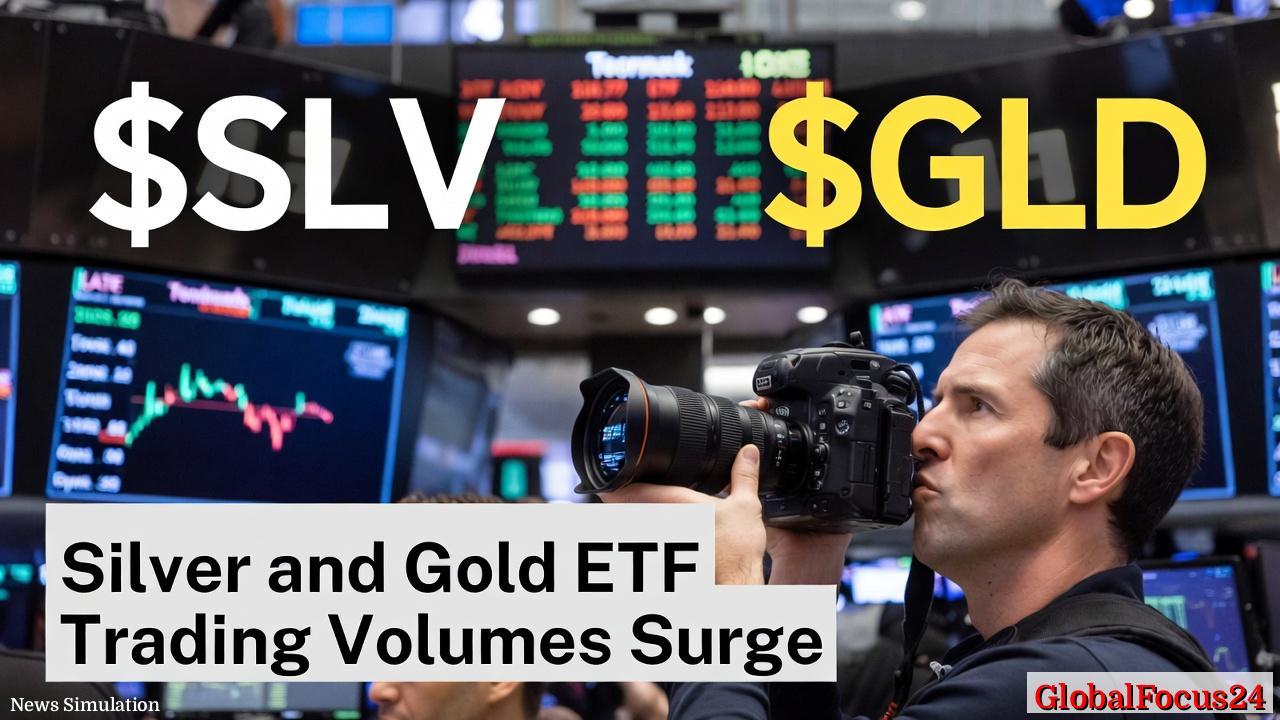
Record-Setting Volume Triggers Historic Week for Precious Metals ETFs
In a standout week for the investment landscape, silver and gold exchange-traded funds (ETFs) posted record-breaking trading activity, underscoring intense investor interest in precious metals as both a hedge and a potential inflationary barometer. The surge in daily turnover and the sheer scale of weekly volume mark a pivotal moment for the sector, with implications for liquidity, market structure, and regional investment dynamics.
Historical Context: A Century-Long Cycle of Raw Metal and Market Demand
Precious metals have long occupied a dual role in financial markets: tangible stores of value and instruments traded through securities like ETFs. Gold has historically served as a safe haven during times of macro volatility, while silver has balanced its role as both an industrial input and an investment asset. Over the last two decades, ETFs have democratized access to these metals, enabling broad participation from retail investors, institutional portfolios, and sovereign wealth funds alike. The current week’s volume spike sits within a longer arc of evolving investor behavior, where liquidity, efficiency, and transparency offered by listed vehicles have become central to precious metals exposure.
Key figures from the week point to an extraordinary level of activity. The leading silver-backed ETF registered a daily trading volume surpassing $40 billion on one trading day, illustrating a feverish pace of turnover that far outstrips typical daily activity. The premier gold-backed ETF likewise achieved an all-time high in daily turnover, approaching $40 billion. For context, the next most active asset class that day was the stock of an electric vehicle company, which recorded approximately $35 billion in turnover. The preceding day showed robust numbers as well, with gold and silver ETFs posting about $25 billion and $20 billion in daily volumes, respectively. Across the entire week, combined turnover in both ETFs approached $280 billion, a level that not only eclipsed prior peaks but also significantly exceeded volumes observed in the 2020 period of heightened market stress and in the October 2025 peak.
Economic Impact: Liquidity, Price Discovery, and Market Resilience
- Liquidity and price formation. The extraordinary volumes in precious metals ETFs enhance price discovery by increasing the number of participants and the speed at which trades are executed. High liquidity tends to narrow bid-ask spreads, reduce execution costs, and improve the reliability of metal price signals for users ranging from producers hedging to asset allocators seeking ballast in diversified strategies.
- Portfolio allocation implications. A surge in ETF turnover can reflect broad changes in portfolio risk appetite. When investors tilt toward precious metals, either as a hedge against inflation, currency devaluations, or geopolitical uncertainty, ETF flows can signal shifts in macroeconomic expectations. In this week’s context, the demand for gold and silver ETFs suggests a applying of risk-off or diversification considerations across global portfolios, including those managed in regions with heightened sensitivity to commodity exposures.
- Impact on mining and refining markets. Elevated ETF activity can influence the physical market through increased demand for underlying metals, potentially tightening spot inventories or influencing lease rates. While ETFs themselves do not directly move the global supply chain for gold and silver, sustained inflows can indirectly affect mine production plans, refining capacity utilization, and recycling dynamics as market participants reassess price signals and marginal costs.
Regional Comparisons: Global Appetite for Precious Metals ETFs
- North America. Investors in the United States and Canada have historically comprised a substantial portion of gold and silver ETF flows. The current week’s numbers reinforce the region’s continued appetite for liquid precious metals exposure, particularly through familiar ETF structures that offer clear tax and custody treatments, real-time liquidity, and transparent holdings. This environment supports ongoing product innovation, including themed funds and strategies that blend physical metal exposure with related income-generation tactics.
- Europe and the United Kingdom. European investors have increasingly embraced precious metals ETFs as a straightforward way to access a historically dominant asset class. The week’s activity aligns with broader regional trends toward diversified portfolios incorporating real assets and inflation-sensitive instruments, alongside currencies and sovereign bonds. Currency movements, regulatory developments, and European market structure will continue to shape flows into and out of regional ETFs.
- Asia-Pacific. The Asia-Pacific region, with major financial centers and a growing cohort of retail and institutional buyers, has shown heightened interest in gold and silver ETFs as a way to diversify away from purely equity or fixed-income allocations. The week’s volume surge may reflect cross-border investment flows, central-bank considerations, and local demand for hedging against domestic inflation or growth volatility.
Market Structure and Investor Behavior: What the Week Suggests
- The role of passive versus active strategies. ETFs, by design, offer cost-efficient, transparent exposure to precious metals. The record volumes indicate a broad-based move rather than a single, concentrated bet by a handful of institutions. This diversification of participation can strengthen the resilience of the market, though it also raises questions about potential shifts in price efficiency during periods of extreme liquidity.
- Risk management and hedging. For corporate treasuries, funds, and high-net-worth portfolios, thinly veiled exposure to gold and silver via ETFs can serve as a hedge against systemic risk. The current episode may prompt risk managers to revisit hedging models, collateral arrangements, and liquidity buffers to accommodate heightened turnover without impacting other liquidity needs.
- Operational and clearing considerations. Surging ETF volumes test the capacity of exchange ecosystems, clearinghouses, and settlement infrastructures. Market participants will be looking for efficient trade settlement, accurate pricing data, and robust risk controls as volumes reach levels not seen in recent memory. In some cases, market utilities may need to adjust collateral requirements or processing timelines to maintain smooth operations.
Public Reaction and Market Sentiment: The Social Pulse
- Investor psychology. A week of outsized activity in precious metals ETFs often coincides with a palpable sense of caution among investors. While some participants interpret the surge as a signal that inflation expectations remain elevated or that risk premia are shifting, others see it as a healthy sign of market depth and liquidity. Public sentiment in financial media typically centers on questions about whether the move will sustain or fade, and how much of the activity is driven by short-term traders versus long-term holders.
- Media and analyst discourse. Financial commentators may frame the week as a barometer of macro conditions, tying precious metals demand to currency stability, interest rate trajectories, and geopolitical anxieties. Analysts may also weigh the opportunity costs of allocating to physical metals through ETFs versus other inflation-hedging instruments, such as real assets or commodity-linked equities.
Sustainability and Long-Term Outlook: Is This a Pivot Point?
- Structural factors supporting gold and silver demand. Over the long term, several trends underpin continued interest in precious metals ETFs: ongoing inflation risk in multiple major economies, currency debasement concerns, geopolitical tension, and demand from technology and industrial sectors that use silver as a critical input. If these drivers persist, ETFs linked to physical metals may retain their appeal as part of diversified portfolios.
- Potential normalization risks. A spike in ETF volumes can be followed by consolidation or a retracement in volatility. Market participants should monitor how new liquidity levels interact with macroeconomic developments, central-bank policy shifts, and shifts in consumer demand for industrial metals.
- Comparison with other asset classes. While equities, bonds, and cash instruments remain central to many investment plans, the extraordinary turnover in precious metals ETFs highlights the enduring role of real assets as a complement to traditional financial assets. The week’s activity may reshape perceptions about hedging programs and the use of commodity-linked vehicles within multi-asset strategies.
Conclusion: A Milestone Week for Precious Metals ETFs
The record trading activity across silver and gold ETFs signals more than a momentary spike in market interest. It reflects a confluence of factors: heightened inflation concerns, currency market dynamics, central-bank policy expectations, and a broad-based investor search for liquidity and diversification. As market participants digest the implications, regulators, custodians, and exchanges will likely evaluate capacity to sustain such volume levels and to ensure that price discovery remains accurate and transparent.
For regions and investors watching precious metals markets closely, the week’s data provide a clear signal: gold and silver ETFs remain deeply integrated into contemporary portfolios as tools for risk management, diversification, and strategic positioning. The coming weeks will reveal whether this week’s momentum translates into a sustained shift in allocations or represents a temporary intensification driven by short-term trading dynamics. In either case, the episode underscores the continuing relevance of tangible metals in the modern financial ecosystem and the enduring appeal of ETF-based access to those metals for a global audience.