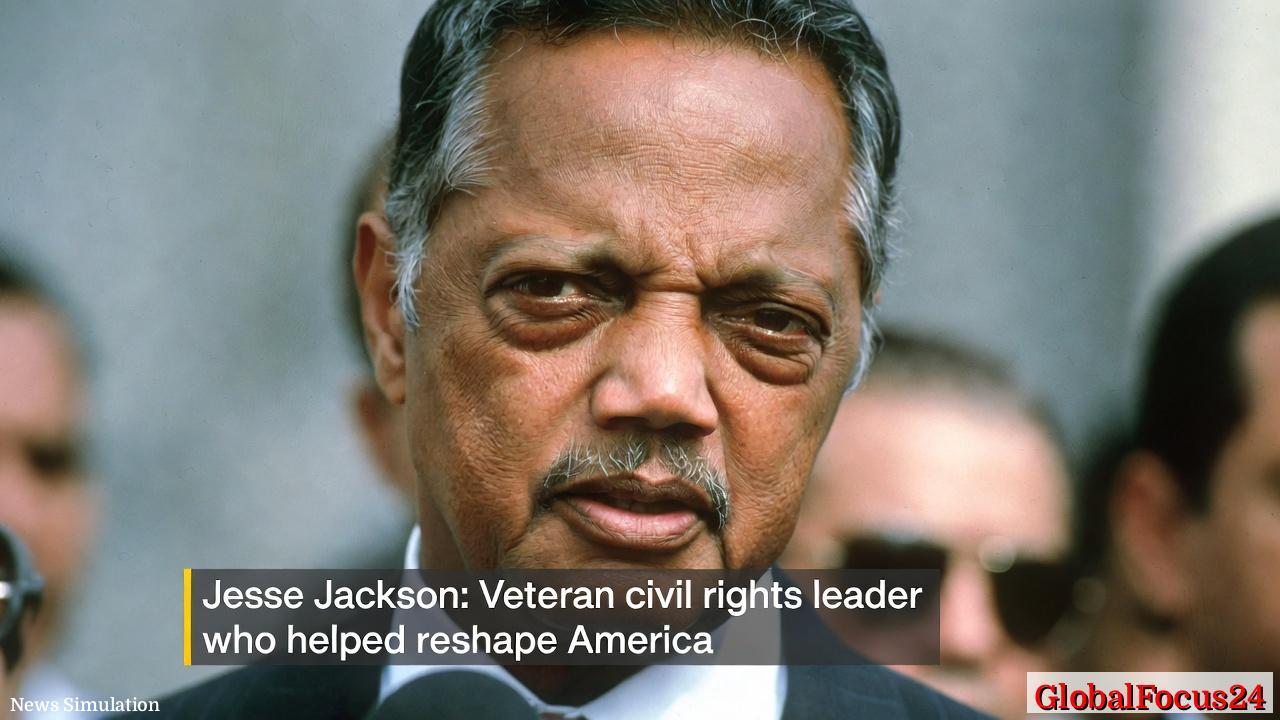
Jesse Jackson Memorial: A Legacy of Civil Rights, Economic Empowerment, and Social Activism
In a moment that reverberates across communities, the passing of Jesse Jackson marks the end of an era defined by relentless advocacy for racial equality, economic opportunity, and social justice. Jackson, a veteran civil rights leader and longtime political figure, helped shape a generation of activists, reframe national conversations about race and opportunity, and leave a lasting imprint on America's public life. His work spanned decades, crossing paths with movements for labor rights, education reform, healthcare access, and electoral empowerment, solidifying his role as a pivotal force in the modern civil rights movement.
Historical context: from movement days to national influence
Jackson rose to prominence in the crucible of the 1960s civil rights era, aligning with and later challenging the boundaries of established leadership to broaden participation in the quest for equality. He built a coalition culture that brought together faith leaders, community organizers, student activists, and working families. His approach combined rhetoric with pragmatism, aiming not only to condemn injustice but to present tangible paths toward opportunity. As national dynamics shifted in the following decades, Jackson transformed from a local and regional figure into a national voice who could articulate a comprehensive vision of socio-economic advancement.
Economic initiatives and the push for opportunity
A central thread of Jackson’s work was economic empowerment. He consistently argued that civil rights could not be fully realized without parity in employment, access to capital, and equitable education. His efforts supported programs designed to expand minority entrepreneurship, improve job training, and advocate for fair lending practices. The economic dimension of his leadership highlighted how social justice and economic policy are intertwined: the prosperity of underserved communities strengthens the broader economy, while systemic barriers to opportunity hamper economic growth for all.
Jackson’s public advocacy contributed to broader conversations about corporate responsibility and inclusive growth. By elevating the importance of minority-owned businesses and advocating for pathways to financial literacy and capital access, he helped lay groundwork that influenced policy discussions at local, state, and national levels. The emphasis on economic inclusion complemented civil rights aims, reinforcing the belief that equality requires both legal protections and practical tools for everyday financial resilience.
Regional comparisons: echoes and differences across the country
Across different regions, Jackson’s influence manifested in varied but complementary ways. In urban centers with long-standing civil rights histories, his messages often reinforced ongoing struggles for housing equity, education quality, and mass transit access, all of which affect daily life and long-term opportunity. In mid-sized cities and rural communities, his work underscored the need to address disparities in healthcare access, workforce development, and infrastructure investment that shape regional competitiveness. The common thread—an insistence on opportunity as a right, not a privilege—translated into concrete programs and partnerships that aimed to connect people to stable jobs and fair chances for advancement.
Economic impact on communities and policy trajectories
The economic impact of Jackson’s advocacy can be traced through several policy trajectories and community initiatives. His leadership helped elevate grant programs, workforce training collaborations, and community development projects that sought to rebuild neighborhoods and create sustainable business ecosystems. These efforts often sparked partnerships between public institutions, philanthropic organizations, and private sector actors, driving capital toward districts that had historically been overlooked. In many regions, the result was a measurable improvement in small business formation, job placement rates, and consumer confidence. While no single initiative solved all systemic barriers, the cumulative effect contributed to a more dynamic, inclusive local economy.
Public reaction and legacy in daily life
Public reaction to Jackson’s passing reflects the breadth of his influence. Across communities, tributes emphasize both the moral clarity of his advocacy and the practical outcomes his work produced. People recall his ability to connect faith, ethics, and policy in a way that resonated with a broad audience, from neighborhood advocates to policymakers. The sentiment echoes the lasting impression of a leader who appeared at the front lines of protests, rallies, and town halls, always ready to translate big ideals into accessible, actionable steps for everyday life.
Newsworthy milestones and evolving influence
Over the years, Jackson’s career included pivotal moments that extended his reach beyond traditional civil rights spheres. He navigated the political arena as an organizer, mentor, and public figure who sought to channel the energy of grassroots movements into sustained institutional change. His involvement in campaigns, educational initiatives, and interfaith dialogues reflected a comprehensive approach to reform—one that recognized the interdependence of civil rights, economic opportunity, and social welfare in shaping a resilient society.
Intersections with health, education, and governance
Jackson’s work frequently intersected with essential public services and governance challenges. Education reform was a recurring theme, with emphasis on equitable funding, high-quality teaching, and access to higher education. Health care access and affordability also featured prominently in his public agenda, underscoring how health outcomes are bound to economic stability and social support networks. In governance terms, his approach stressed the importance of inclusive policy design that engages diverse communities in decision-making processes, ensuring that reforms reflect the needs of those most affected by inequality.
The path forward: sustaining momentum from a lasting legacy
The passing of Jesse Jackson invites reflection on how communities can continue the momentum he helped ignite. Sustaining progress requires ongoing investment in education, entrepreneurship, and civic participation. It also calls for efforts to ensure that economic gains are broadly shared and that marginalized communities are not left behind in the transition to new industries and digital economies. The lessons from his life—combining moral clarity with strategic action, linking civil rights to economic empowerment, and building broad-based coalitions—offer a blueprint for continuing impact.
Regional resilience and comparative lessons
Looking beyond one region, communities can draw lessons from Jackson’s integrated approach to civil rights and economic development. For cities rebuilding after economic shocks, the emphasis on inclusive growth, workforce training, and neighborhood revitalization provides a practical framework. Regions facing disparities in healthcare, education, or housing can adapt his emphasis on cross-sector collaboration to craft solutions that leverage public, private, and philanthropic strengths. The broader takeaway is clear: durable progress rests on a combination of justice-centered policy, community engagement, and sustainable investment.
Conclusion: a tribute to an enduring advocate for equality and opportunity
Jesse Jackson’s life work stands as a testament to the enduring belief that civil rights and economic opportunity are interwoven. His leadership helped to redefine the contours of social justice in America, leaving a blueprint for future generations to pursue a more equitable and prosperous society. As communities honor his memory, the task remains to translate his ideals into measurable improvements in people’s lives, ensuring that every neighborhood has the chance to thrive and every citizen can participate fully in the economy and the civic life of the nation.